Connect with us

Education

CBSE opens Class 12 re-evaluation portal: Key dates, fees and rules explained for UAE students and parents


Published

on

Spread the love

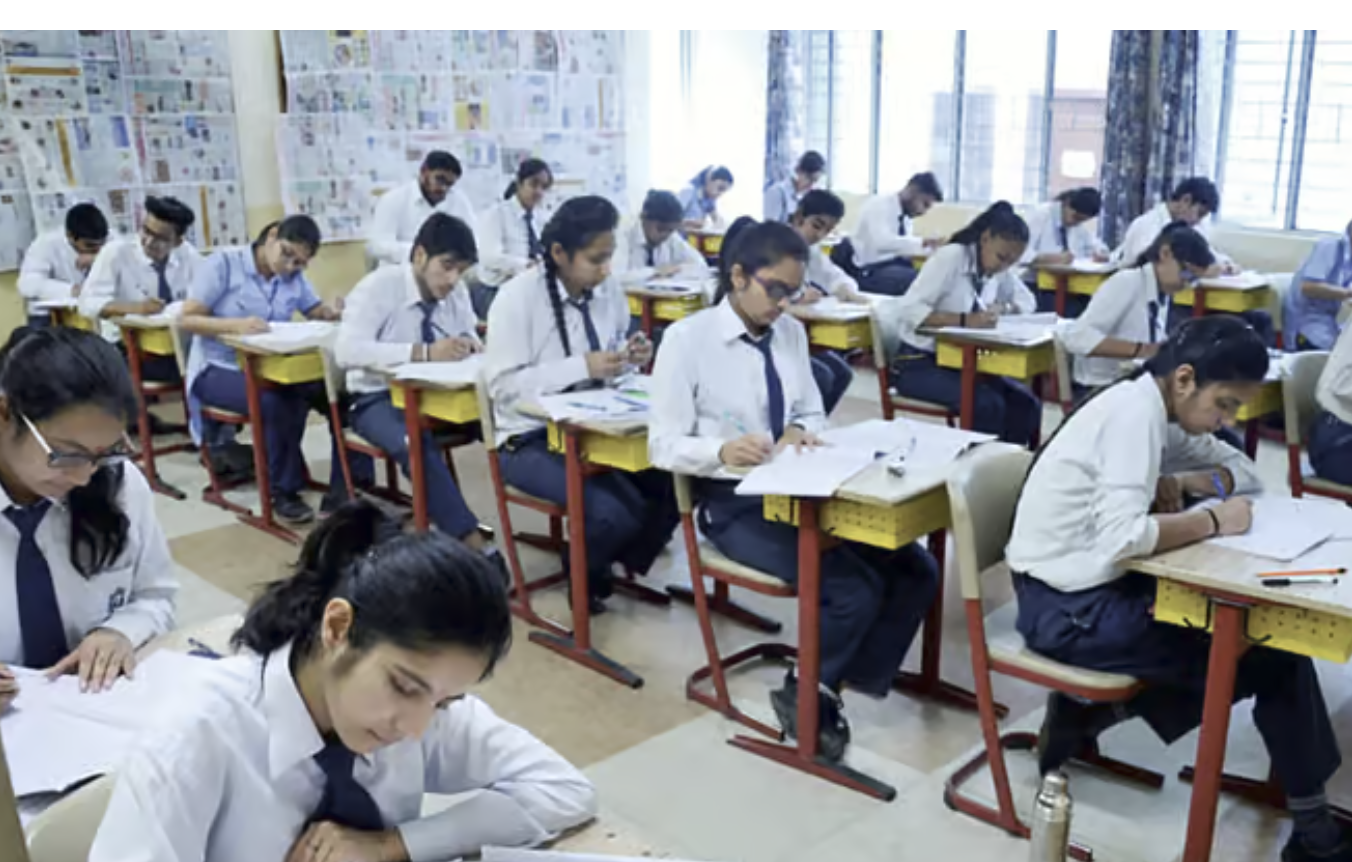
Students who appeared for the CBSE Class 12 board examinations now have an opportunity to review their results, with the board opening its verification and re-evaluation process following a brief delay.

The online facility allows eligible students to examine scanned copies of their answer scripts, report discrepancies and request a fresh assessment of specific responses if they believe errors may have occurred during evaluation.

The development is particularly relevant for students studying in the UAE, where many candidates faced disruptions during the examination period and completed only a limited number of papers under regular conditions.

Short application window

The Central Board of Secondary Education (CBSE) portal is open between June 2 and June 6, giving students just a few days to submit requests.

Applications can be filed entirely online, with no provision for offline submissions once the deadline passes.

However, only candidates who have already obtained their scanned answer sheets are eligible to proceed with verification or re-evaluation requests.

What students can review

Students are to check whether their answer scripts contain any technical or administrative issues.

These may include missing pages, unreadable scans, omitted supplementary sheets, absent diagrams or maps, incorrect question paper allocation, or other discrepancies that could affect the accuracy of evaluation.

Students can raise concerns across multiple subjects within a single application.

Fresh assessment of answers

Those who believe a particular answer may not have been assessed correctly can apply for re-evaluation.

The process allows candidates to identify specific questions they want reviewed. Applicants must provide the relevant question numbers and supporting details when submitting their request.

CBSE permits students to seek re-evaluation for multiple questions, although only one consolidated application can be submitted by each candidate.

Fees and payment

Students applying for verification will need to pay Rs100 (about Dh3.85) per answer script, while re-evaluation requests are charged at Rs25 (Dh1 approx) per question.

All payments must be completed through the online portal.

Once an application has been finalised and payment has been processed, no edits or modifications can be made. Students are therefore advised to carefully review their selections before confirming submission.

Evaluation transparency

The latest process comes at a time when discussions around digital evaluation methods have gained attention among students and parents.

In recent weeks, some families have raised questions regarding CBSE’s On-Screen Marking system and the role of technology in the assessment process. Education leaders, however, have stressed that multiple safeguards remain in place to maintain fairness and consistency during marking.

School administrators across the UAE have also encouraged students to make use of the official review process rather than rely on speculation or social media discussions.

What happens if marks change?

One of the most important aspects of CBSE’s re-evaluation policy is that any revised score becomes final.

If a review leads to higher marks, the improved score will be awarded. However, if the reassessment results in fewer marks than originally awarded, the lower score will replace the previous result.

Students, therefore, need to consider their applications carefully before proceeding.

Results to be released later

CBSE will now examine all verification and re-evaluation requests before announcing revised outcomes.

For students who have concerns about their marks, the process offers an official route to seek clarification and ensure their answer scripts have been assessed accurately before final results are confirmed.

With over 35 years of experience in journalism, copywriting, and PR, Michael Gomes is a seasoned media professional deeply rooted in the UAE’s print and digital landscape.

Education

Dh500,000 fine, immediate closure: UAE cracks down on unlicensed universities

Published

on

Spread the love

  1. Unlicensed or unauthorised higher education institutions in the UAE could face immediate closure and fines of up to Dh500,000 under new rules taking effect on September 12.
  2. The measures are part of a stronger government push to regulate the higher education sector and protect students.
  3. Immediate closure for unlicensed Ilnstitutions
  4. The Ministry of Higher Education and Scientific Research will enforce the new violations schedule and impose administrative penalties on institutions that breach regulations.
  5. Any institution or premises operating without the required licence or approval may be ordered to close immediately.
  6. Stronger action will apply to providers that continue operating after a closure order or repeat violations after a ban has expired.
  7. Authorities may also work with local government bodies and economic departments to prevent illegal operations from reopening under another name or structure.
  8. Students’ rights must be protected
  9. The new rules require institutions affected by enforcement action to protect students’ academic and financial rights.
  10. Providers must take steps to ensure students can continue their education if regulatory action disrupts their institution.
  11. Institutions may also be required to refund fees or other payments collected without legal entitlement.
  12. Permanent bans for repeat offenders
  13. The rules also introduce permanent bans for individuals behind institutions that repeatedly violate regulations.
  14. The offending institution, its owners and anyone with effective control could be permanently prohibited from establishing, owning, managing or controlling higher education or technical and vocational education and training providers.
  15. The ban can apply both directly and indirectly.

Continue Reading

Education

No more homework for UAE students in KG to Grade 2

Published

on

Spread the love

Students in UAE public schools, from Kindergarten to Grade 2, will not be given homework in the 2026-27 academic year, under a new Ministry of Education (MoE) policy.

The move aims to improve learning during school hours while creating a better balance between education and family life, the ministry said.

Instead of traditional homework, schools will encourage daily reading at home, with selected students encouraged to read with their parents at least once a day.

The approach is designed to strengthen children’s language and cognitive skills during their early years.

Less screen time for Grade 6

Grade 6 students will also see changes in the classroom. Screen use will be removed from subjects including Maths, Science, English and Arabic, with schools placing greater emphasis on group work and collaborative learning.

The MoE said it will continue assessing the effectiveness of digital tools in education.

Dubai Police ready for back-to-school

Meanwhile, Dubai Police have launched a back-to-school security and traffic plan to improve safety and ease congestion around schools.

The operation includes 253 patrols, 28 drones, mounted and bicycle patrols, and more than 200 student safety ambassadors.

A total of 775 police personnel will also engage directly with students, while awareness campaigns will be held with 16 government and private entities.

Authorities say keeping students safe is a shared responsibility involving police, schools, families and the wider community.


Continue Reading

Education

Dubai launches first accredited Bachelor of Music degree for aspiring musicians

Published

on

Spread the love

For years, the UAE’s aspiring musicians, producers, and songwriters have had to look abroad to turn their creative spark into a formal qualification. That changes this year.

In a major boost to the country’s growing creative economy, SAE University College Dubai is set to launch the city’s first accredited, three-year Bachelor of Music programme this September, blending hands-on studio craft with rigorous academic and industry training. 

With admissions now open and scholarships worth up to Dh50,000 up for grabs, the move marks a pivotal moment for grassroots talent looking to make noise on the global stage.

What will the degree cover?

The full-time programme has been designed around the skills needed in today’s rapidly changing music industry.

Students will study a range of creative and technical subjects, including:

  • Songwriting and composition
  • Electronic music production
  • Studio recording and production
  • Live performance
  • Stagecraft
  • Creative musicianship
  • Music business
  • Entrepreneurship

Rather than focusing solely on classroom-based learning, the course will combine practical assignments with industry projects.

Students will also complete a major project before graduation, allowing them to develop a professional portfolio that can support their entry into the music industry.

Students will get access to professional studios

As part of the programme, students will have access to professional-standard recording facilities, music equipment and specialist software at SAE University College Dubai.

They will also work with academics and industry professionals throughout their studies.

The university has developed the programme alongside industry partners including Melody House, Muzikminds and Hungarian-American songwriter and music producer Miklos Malek.

What jobs can graduates pursue?

The degree is aimed at students who want to build careers across both the music business and the wider creative economy.

Potential career paths include:

  • Music producer
  • Songwriter or composer
  • Audio engineer
  • Performing artist
  • Artist development professional
  • Music supervisor
  • Entertainment professional
  • Content creator
  • Music entrepreneur

The programme also places significant emphasis on business and entrepreneurship, reflecting the growing need for musicians to understand both the creative and commercial sides of the industry.

Why Dubai is investing in music education

The launch comes as the UAE seeks to expand its creative industries and increase their contribution to the national economy.

Under the UAE National Strategy for Cultural and Creative Industries, the country has set a target for the sector to contribute 5 per cent of GDP by 2031.

The regional music market is also expanding. According to figures cited by SAE University College, recorded music revenues across the Middle East and North Africa grew by 15.2 per cent in 2025.

The new degree therefore arrives at a time when opportunities across music, entertainment, digital content and other creative fields are growing across the region.

Applications are open

Students interested in joining the new Bachelor of Music programme can apply for the September 2026 intake if they meet the university’s admission requirements.

Those unable to join in September will have further opportunities, with intakes scheduled for February and May 2027.

Scholarships of up to Dh50,000 are available to eligible applicants.

Continue Reading

Popular

Exit mobile version
https://headline.ae/