60 seconds review
Doogee has been busy pushing out rugged smartphones like there’s no tomorrow. The S100 is the fourth in as many months (the V Max, the V30 and the S96 GT), a sign perhaps that the market is expanding in an otherwise morose macroeconomic environment. Doogee’s latest outdoor powerhouse shuns 5G connectivity while sticking to a tried and tested form factor that tends to be more practical and less about aesthetics. All the ingredients of a solid handset are here: a big battery, plenty of memory and storage, a huge camera sensor – but above all, a cracking price if you buy before March 26th.
Doogee S100: Pricing and availability
The phone will be available from Aliexpress for $199.99 (opens in new tab) from March 20th to March 26th, after which it will revert to £249.99. Customers can choose from three color schemes: Cyber yellow, black and Ice blue. Remember that you may have to pay extra taxes and handling fees depending on where you live.


Doogee S100: Pricing and availability
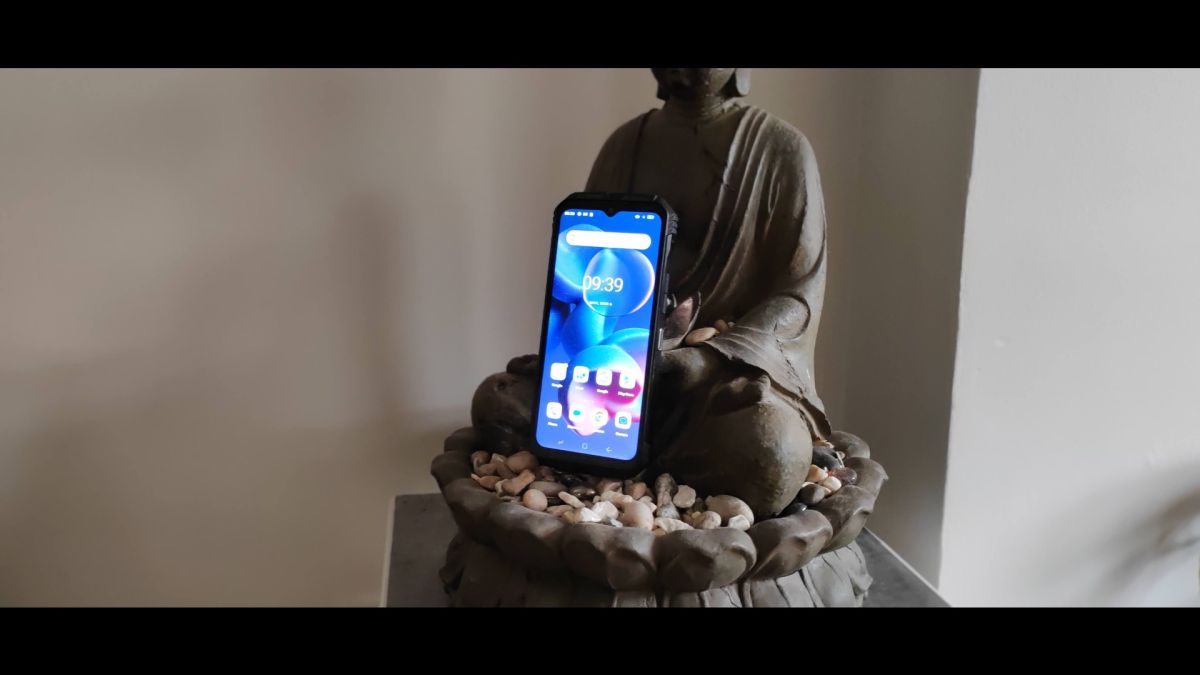
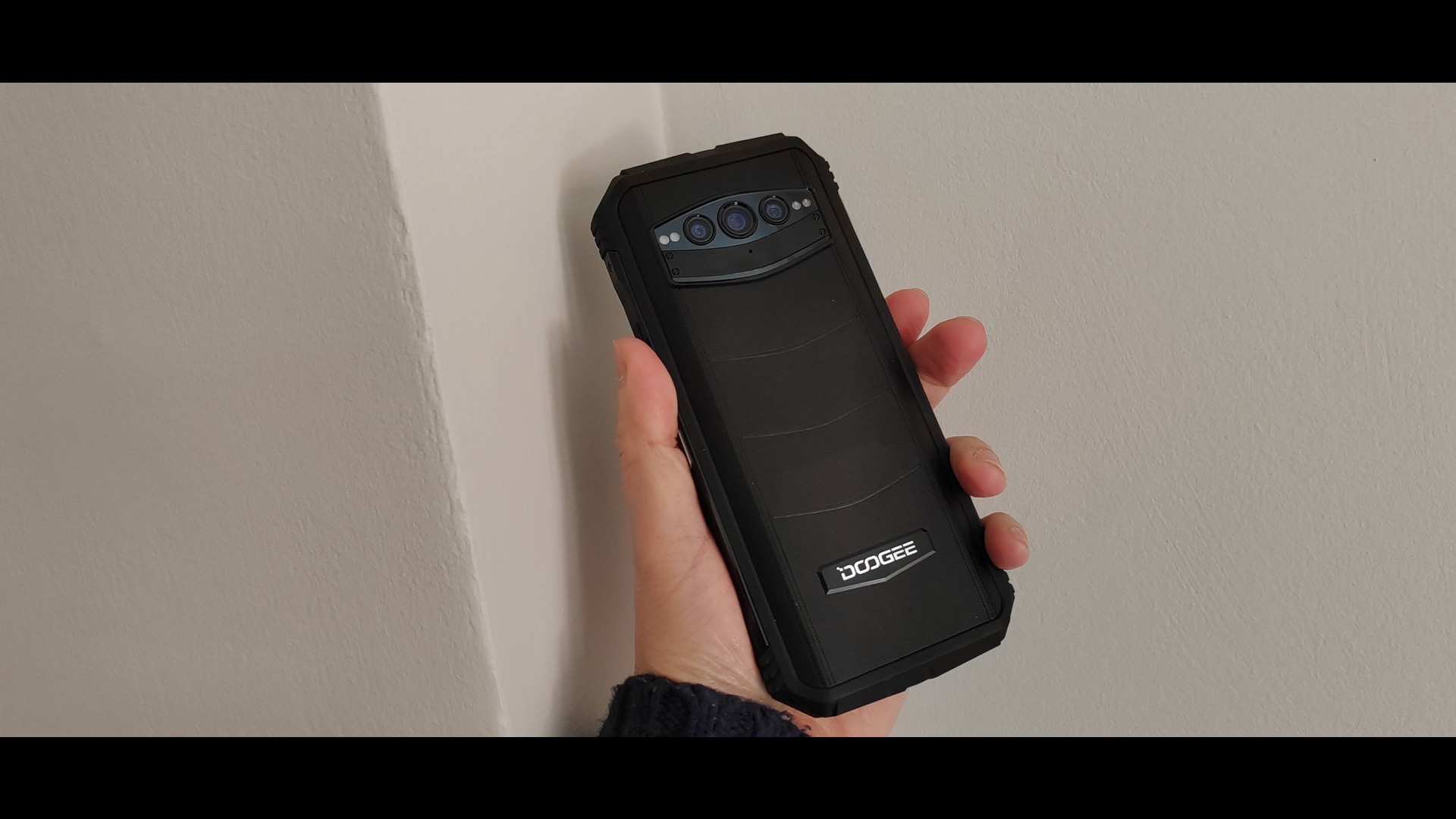
The S100 is not as heavy or thick as the V Max, the 22000mAh monster that Doogee released earlier this year. It does try its best to appear stylish but in a slightly awkward manner that’s so characteristic of Chinese brands. As one of my colleagues put it succinctly, “the best description of this phone is techno-brutalism, a monolithic block that has some chamfered corners and beveled edges added to make it seem less like a brick.”
The button layout is the now the de facto standard that all rugged handset manufacturers have adopted, where the thumb-print reader/power and volume rocker is located on the right and a custom button with the SIM card slot.
Doogee used what it calls an alloy enamel process (AEP) for part of the outer body of the S100. The side edges use AEP, a high-grade metal texture and a unibody flat edge design to offer a comfortable grip with a fine leather-like (PU leather) texture at the rear. We’d expect a reasonable amount of rubber as well plus a steel frame to protect the internal components and the screen. The phone is certified MIL-STD-810H and IP68 & IP69K.
There’s two speakers located at the top and bottom of the smartphone, an improvement on previous versions. At 372g with a maximum thickness of 18mm, it is a chunky handset that will require a strong grip in order to avoid any accidental falls.
Doogee S100: Hardware
The 4G-only Mediatek Helio G99 is what powers the S100; it’s a capable mid-range processor with a reasonably fast graphics subsystem (ARM Mali-G57 MC2) and the surprising ability to summon up to 20GB of RAM – that’s more than most laptops.
It turns out, though, that the actual amount of (real) system memory that the S100 has is 12GB, which is still sizable. It can also summon/earmark, as extended RAM, 8GB from the 256GB UFS 2.2 main storage. We don’t know of any mobile application that would require that much memory, so would have preferred to swap the extra memory for 5G capability, perhaps via the Dimensity 700 SoC.
The rest of the specification includes Wi-Fi 6E, Bluetooth 5.2, that 10.8Ah battery, a 66W fast charger and NFC connectivity.
The only feature lacking of note was that the dual Nano SIM card tray only takes one SIM if you use a MicroSD card. A better solution might have been to offer e-SIMs on this phone, preventing the MicroSD card from limiting the phone to a single SIM.
But conversely, this phone has a feature we’ve not seen before: it uses a dual-frequency GPS, allowing for even greater positional accuracy even in urban environments.
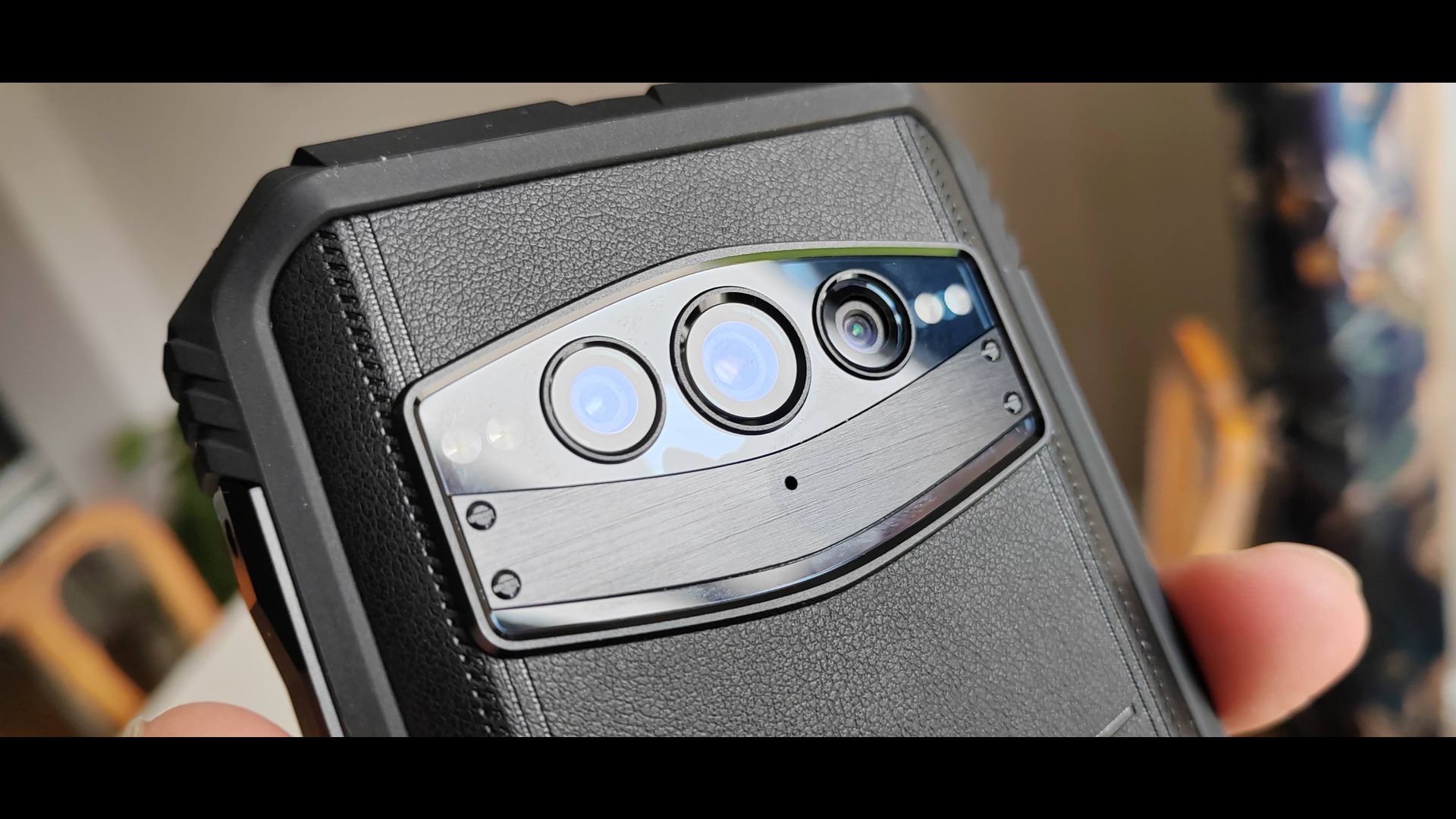
The Doogee S100 has four cameras, the same used on the V30 and the V Max – with a rim that protects the optics from any bump, two rear flash lights and two infrared night vision lights. It’s a classic example of economies of scale at work; buying in bulk and using an established subsystem is a no-brainer.
We’ve seen the 108MP Samsung S5KHM2 sensor before, and while it has limitations in that the full resolution comes without all the clever features, it is still an excellent image-capture device. If you want special beauty modes, then pictures are limited to 12MP, although these modes operate with shake compensation and other enhancements.
Image 1 of 5


Alongside the headline 108MP Samsung sensor are a 16MP OmniVision OV16B10 Ultra-Wide lens and a 20.2MP Sony IMX350 Night Vision sensor, extending the camera capabilities even further. Like the Doogee V30, which uses the same Samsung S5KHM2 sensor, the S100 can capture video up to 4K in resolution. But like the V30 and the Ulefone Armor 17 Pro, it isn’t possible to have any control over the frame rate.
Not being able to trade resolution for frame rate is possibly one of the few things keeping the likes of GoPro in business, as many of the phone makers don’t exploit the sensor hardware fully.
As for the results, with a sensor this big, they’re generally very good, and it only made a mess either because of focusing issues caused by sunlight refraction or exposure compensation for highlights. The camera has a full PRO manual mode where ISO, EV, WB, manual focus and shutter speed can all be directly controlled. In short, like the V30 that came before it, the S100 has a high-quality camera that could have been incredible with a better camera application.
We should also mention that while you can capture 4K video and play it back scaled down on the 1080 x 2408 resolution screen, you won’t be streaming content in 4K or even 1080p. You can find camera samples taken by our own Mark Pickavance in the V30 review.
Doogee S100: Performance
Unlike the V30, the S100 aims for the more value-sensitive slice of the market, which explains why Doogee opted for the G99. It is still a capable system-on-chip, almost matching its bigger brother, the Dimensity 1080 on compute but falling short when it comes to graphics grunt.
As a side note, it excelled on Javascript benchmarks like Webxpert, Kraken and Octane, perhaps more of a sign of major improvements in the underlying OS used (Android 12) and Chrome’s rendering engine, Blink.
Its weakness though is its graphics performance and that’s expected given that it has only two cores compared to four in the SoC that powers the V30. No surprise therefore that its overall numbers in tests are about half those of Doogee’s most powerful smartphone to date. You can play games but don’t expect the S100 to excel at those with intensive graphics.
The 6.58″ FHD+ IPS waterdrop screen is covered with a Gorilla Glass 5 layer. Doogee claims that it has a refresh rate of 120Hz which, on a phone, means more power consumption (and shorter battery life) but also – in theory – less motion blur and more – in Doogee’s own words – “silky screen sliding”.