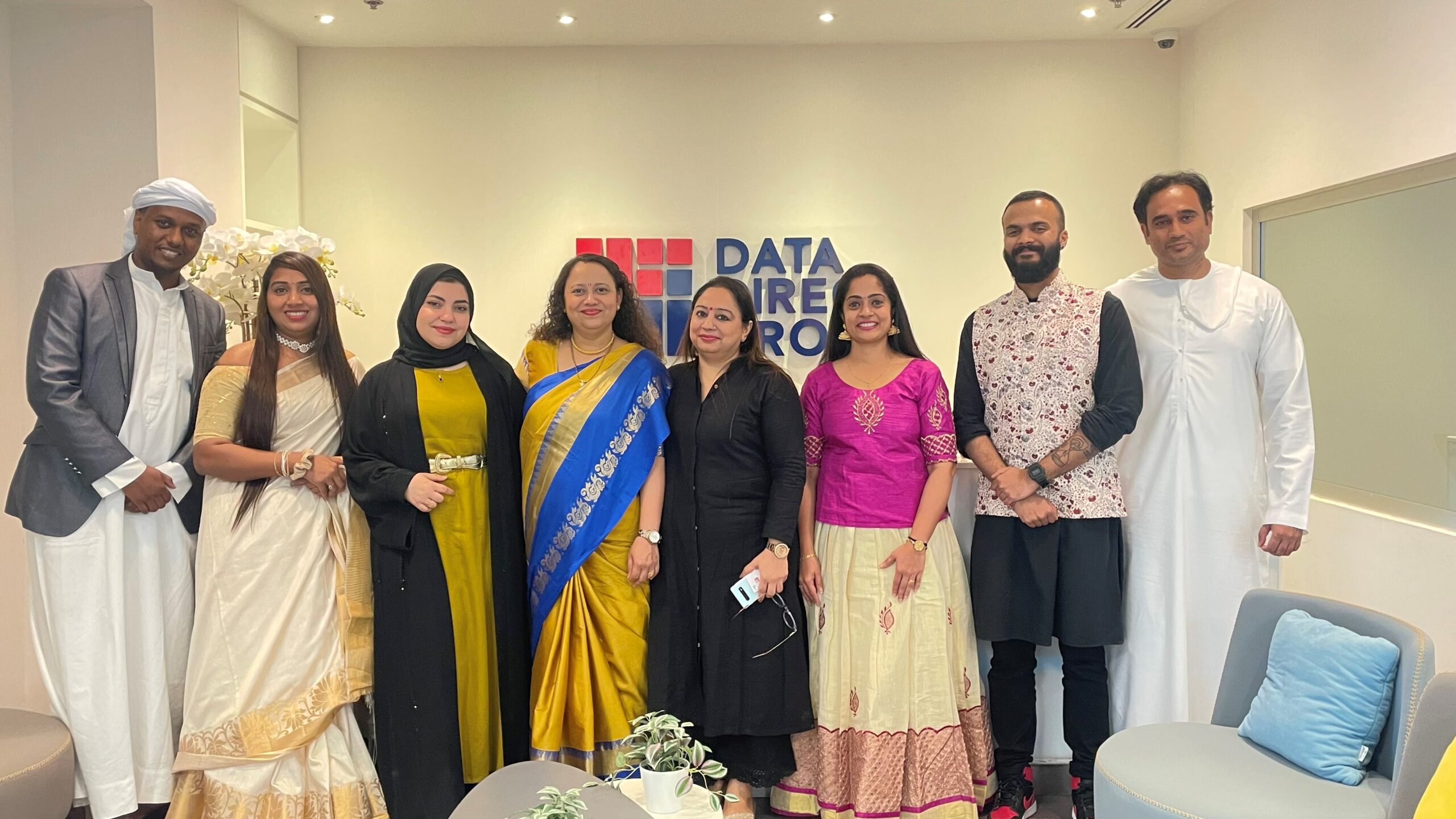
The UAE is a melting pot of cultures and the World Day for Cultural Diversity for Dialogue and Development fell on Sunday 21. Many organisations celebrated the occasion in the poster city of Dubai over the weekend while some opted to beat the Monday blues with the right excuse.
Data Direct Group, a leading business group in Dubai since 2002, chose to start early with lot of fun activities at their Deira headquarters. DDG’s core arm is digitally driven Business Process Outsourcing. With 26 nationalities working on ensuring good customer experiences, unity in diversity and cultural amalgamation comes naturally at the organisation.
“May 21 is a very important day for us,” said Rajiv Dalmia, the group founder and chairman. “Diversity of cultures is an extended requirement of the business, but it is also very vital to our ethos if we have to remain true to our values to enhance customer experience.” DD is also an equal opportunity employer to more than 580 employees with around 290 of them as females.
Data Direct has nearly 30 nationalities represented in a roster of around 580 employees. Pictures supplied
According to the Ministry of Foreign Affairs, there are more than 200 nationalities living in the UAE, with 10% Emiratis and an eclectic mix of expatriates. That is more than the member states registered with the United Nations at 195.
As a leading group handling the customers of many government and private companies, the DDG roster is an ideal microcosm of the varied and colourful mix of religions, race, ethnicity, caste or creed. “Many call centres in the UAE try to cater to the top nationalities by numbers among the population by keeping a dedicated option for customers to converse in the language of preference,” said Dalmia.
Data Direct keeps gender equality a priority just as being an equal opportunity employer.
“We also keep evolving and try to incorporate inclusion to the best extent possible, even if there is only so much you can do.”
Girish Ojha, the chief human resource officer, agrees. “While language can be a barrier at times, our instructions to the staff is to be understanding and try to reach out to them in all means possible. On a daily basis, with each call that tries to reach out to our clients through us, our employees are duty bound to make data available through any source of contact possible.”
One of the key members of Data Direct, on condition of anonymity, said: “I am a global citizen when I am here in the UAE. The charm of working in this country and at this workplace is that you get to learn so much about the world without travelling anywhere.”
Ajman has announced the establishment of a new Rental Dispute Resolution Centre, aimed at streamlining landlord-tenant disputes and strengthening stability in the emirate’s real estate sector.
His Highness Sheikh Humaid bin Rashid Al Nuaimi, Supreme Council Member and Ruler of Ajman, has issued Law No. (1) of 2026, formally creating the centre and replacing the existing rental disputes committee.
Clearer, Faster Rental Dispute Resolution
The new law introduces transparent and clearly defined mechanisms for reviewing and adjudicating rental disputes, with the objective of:
Protecting the rights of landlords and tenants
Enhancing confidence in Ajman’s property market
Supporting a stable and attractive investment environment
Jurisdiction and Scope
The specialised centre will have authority over all rental-related disputes between landlords and tenants, including:
Residential and commercial properties
Properties located within free zones
Cases will be handled using procedures aligned with recognised legal and judicial standards, ensuring fairness and consistency.
Boosting Market Stability
Officials said the new centre is designed to:
Speed up dispute resolution
Reduce litigation timelines
Ensure swift and effective justice
The move is expected to contribute to social and economic stability in Ajman’s leasing and real estate sector, while reinforcing investor confidence.
Paying for everyday services in the UAE could soon be as simple as showing your face or palm.
The Central Bank of the UAE (CBUAE) has introduced the region’s first biometric payment solution, allowing users to make payments using facial recognition or palm biometrics, without cards, cash, or mobile phones.
The new system is currently being tested in a pilot phase at the Dubai Land Department, where customers authenticate payments through biometric scans in a controlled environment.
How Biometric Payments Work
The pilot enables:
Payments using face or palm recognition
No need for physical cards or smartphones
Faster, more secure transactions
The initiative is part of the CBUAE Sandbox Programme and Innovation Hub at the Emirates Institute of Finance, developed in collaboration with Network International and powered by PopID.
Focus on Security and User Experience
The Central Bank said the pilot is designed to assess security, efficiency, and operational readiness before any wider rollout. No timeline has yet been announced for expanding the system beyond the testing phase.
CBUAE officials say biometric payments could significantly enhance transaction security while improving customer convenience. Industry leaders also expect biometric technology to play a growing role in digital commerce and cashless payments globally.
A Step Towards Cashless Payments
The pilot reflects the UAE’s broader push towards financial innovation, smart services, and cashless payment systems, positioning the country at the forefront of next-generation payment technology in the region.
Dubai Municipality has launched a global challenge to construct the world’s first residential villa built entirely using robotic construction systems, reinforcing Dubai’s position as a global testbed for advanced building technologies.
The project will be delivered by a consortium of more than 25 local and international technology companies and academic institutions, led by Dubai Municipality. Officials say the initiative aims to develop scalable, next-generation construction models that boost productivity, sustainability, and quality.
The announcement was made during the launch of 04 ConTech Valley, Dubai’s new Construction Innovation and Research Centre, developed in partnership with Expo City Dubai.
Global ConTech Momentum
At the event, Dubai Municipality also unveiled the Global ConTech Report, which projects that global construction technology investment will exceed $30 billion by 2033, growing at 17.5% annually.
Key findings highlight:
Labour shortages are a major global challenge
Rising investment in robotics and additive manufacturing
Rapid adoption of AI, robotics, prefabrication, and infrastructure technologies
Building a Stronger Innovation Ecosystem
Dubai Municipality also launched the ConTech Working Group, in collaboration with Dubai Chambers, bringing together government, developers, contractors, investors, researchers, and tech firms to accelerate innovation across the sector.
70–70 Strategy for 2030
Dubai also launched the 70–70 Strategy, aiming to shift 70% of construction to off-site manufacturing and achieve 70% factory automation by 2030, driving higher efficiency and sustainability.