Connect with us

Announcements

Dubai Loop explained: What Elon Musk’s underground transport project means for city’s residents

Published

on

Spread the love

Getting around Dubai could soon become much faster and easier. The city has confirmed that work on the Dubai Loop, an underground high-speed transport system developed by Elon Musk’s Boring Company, is set to begin soon, starting in some of Dubai’s busiest areas.

The announcement was made by Matar Al Tayer, Director General and Chairman of the Board of Executive Directors of the Roads and Transport Authority (RTA), at the World Government Summit.

The project aims to cut travel times, reduce traffic congestion, and make daily commutes smoother, especially in high-density districts.

So, what exactly is the Dubai Loop?

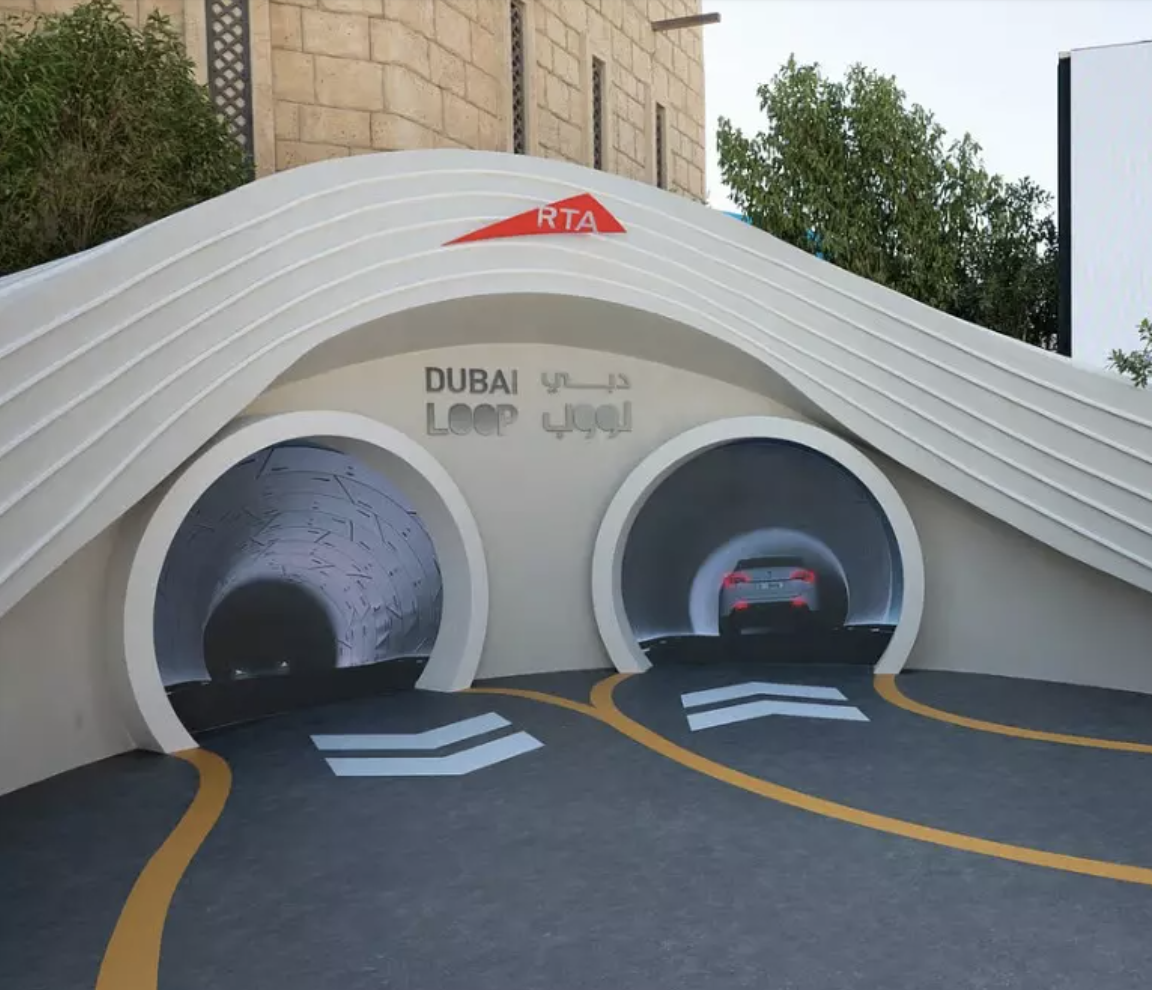
The Dubai Loop is a network of underground tunnels where electric vehicles will transport passengers directly from one station to another, without stopping in between. Think of it as skipping traffic lights, junctions and road congestion altogether.

Once completed, the system will span 24 kilometres and could move up to 20,000 passengers every hour, with plans to expand capacity even further in the future.

Where will it start?

The first phase of the project will launch in key areas that many residents already commute through daily:

  • Dubai International Financial Centre (DIFC)
  • Dubai Mall area

These locations were chosen because they see some of the heaviest traffic in the city, especially during peak hours.

When is it happening?

According to Dubai’s Roads and Transport Authority (RTA), construction on the first phase will start immediately once contracts are finalised.

  • First phase: 6km (costing Dh600 million)
  • Total project: 24km (Dh2.5 billion)
  • Estimated completion: Around two years

How fast will it be?

Very fast. The vehicles inside the Dubai Loop could travel at speeds of up to 160km/h, meaning residents could move between major destinations in just minutes.

Why underground?

By going underground, Dubai avoids:

  • Road closures and surface disruption
  • Weather-related delays
  • Expensive road expansion projects

The tunnelling technology used is also cheaper and faster than traditional road construction, helping the city deliver infrastructure efficiently.

How will this help residents?

For people living and working in Dubai, the Dubai Loop could mean:

  • Shorter commutes in congested areas
  • Less time stuck in traffic
  • Better connections between business districts, malls and transport hubs
  • A smoother “first and last mile” journey to metro stations

The system is expected to serve around 13,000 passengers daily in its early stages, with numbers growing as the network expands.

Has this worked elsewhere?

Yes. A similar underground transport system already operates in Las Vegas, where it has carried more than 2 million passengers since 2021. Dubai’s version will build on that experience, adapted for local needs.

What’s next?

Dubai Loop is part of the emirate’s broader push towards smart, sustainable transport. If successful, the network could expand to more areas of the city, helping residents get from A to B faster, without adding more cars to the roads.

For Dubai residents, this could mark the beginning of a new era of stress-free commuting beneath the city streets.







With over 35 years of experience in journalism, copywriting, and PR, Michael Gomes is a seasoned media professional deeply rooted in the UAE’s print and digital landscape.

Announcements

How UAE’s new banking plan will support businesses and individuals

Published

on

Spread the love

The Central Bank of the UAE has rolled out a new financial support package designed to keep banks strong and ensure they continue supporting and safeguarding the broader economy amid global and regional uncertainty.

The package was endorsed during a high-level board meeting chaired by Sheikh Mansour bin Zayed Al Nahyan, underscoring the UAE leadership’s proactive approach to maintaining economic stability.

Built around five key pillars, the initiative is designed to provide banks with greater liquidity, enhanced flexibility, and temporary regulatory relief, ensuring they can continue to support businesses and individuals during uncertain times.

Under the new measures, banks will gain expanded access to liquidity, including the ability to utilise reserve balances and secure term funding in both dirhams and US dollars. This step is expected to keep credit flowing across key sectors of the economy.

The Central Bank has also introduced temporary easing of liquidity and funding requirements, giving financial institutions more room to continue lending. Capital buffer requirements will be relaxed as well, allowing banks to deploy excess capital to support economic activity.

Additionally, new provisions will offer greater flexibility in managing credit risk, including delaying the classification of certain loans affected by current market conditions—providing relief to borrowers facing temporary challenges.

Authorities emphasised that banks are expected to maintain lending and continue supporting customers as part of the UAE’s broader economic response strategy.

Despite global pressures, the UAE’s financial system has shown strong resilience. During its meeting, the Board confirmed that current market conditions have had no significant impact on the health of the banking sector or the efficiency of payment systems.

The Central Bank also highlighted the country’s robust financial position, with foreign exchange reserves exceeding AED 1 trillion and a strong monetary base. The UAE’s banking sector, valued at over AED 5.4 trillion, continues to demonstrate solid fundamentals.

With liquidity levels remaining high and reserves strong, the CBUAE reaffirmed its readiness to take further action if needed to protect financial stability and sustain economic growth.

Continue Reading

Announcements

UAE announces early spring break for all educational institutions

Published

on

Spread the love

The Ministry of Education, along with the Ministry of Higher Education and Scientific Research, on Wednesday, March 4, announced that the commencement of spring break for all academic institutions has been pushed forward to March 9, with the last working day to be March 6. Normal classes are scheduled to resume from March 30. 

The academic calendar placed the spring break dates originally from March 16 and ending on March 29 which has now moved from March 9 to March 22. The change comes in light of the ongoing regional conflict, with the safety of students and staff at schools and universities as the highest priority. 

Classes had transitioned to online learning at the beginning of this week as a precautionary measure for all students and staff, which was further extended up to the end of this week. Exams for students have also been shifted to a remote format, allowing them to complete their assessments safely from home. 

Students, parents, and staff are advised to stay updated via official channels only, as the measures aim to protect the safety of all in the education sector.

(By Shura Kola)

Continue Reading

Announcements

Inside The Plaza at Uptown Dubai: An open-air venue set to transform the city’s business and events scene

Published

on

Spread the love

In a city that thrives on bold ambition and global connection, a new landmark has quietly taken its place at the heart of Dubai’s business future.

DMCC has officially opened The Plaza at Uptown Dubai, a 21,000 square metre open-air destination designed to host everything from high-level corporate summits to large-scale concerts and community gatherings.

For UAE residents and business leaders alike, this isn’t just another development announcement. It’s a signal that Uptown Dubai is stepping into a new era.

A new gathering space in town

Strategically positioned at the centre of Uptown Dubai, The Plaza physically connects the iconic Uptown Tower with the district’s wider commercial and residential community.

Designed to accommodate up to 4,000 guests, the venue features advanced staging, lighting and digital display infrastructure, enabling year-round programming and rapid event turnover.

For Dubai’s fast-moving corporate ecosystem, that means seamless hosting of:

  • Global trade conferences
  • Finance and technology forums
  • Industry expos
  • Cultural performances
  • Community celebrations

In a city known for world-class event venues, The Plaza adds something different: scale, accessibility and integration within a thriving business district.

For UAE residents, the venue offers more opportunities for networking, collaboration and global visibility without leaving the city.

Next business hub taking shape

The Plaza’s launch comes as Uptown Dubai moves into its next development phase.

Currently under construction:

  • Two commercial towers (23 and 17 storeys)
  • 62,000 square metres of additional Grade A commercial and retail space

Once complete, the full district will deliver:

  • 538,000 square metres total gross floor area
  • 232,000 square metres dedicated to Grade A commercial office space

What’s in it for residents

For professionals, it means:

  • More international events are hosted locally
  • Increased networking and industry exposure
  • Expanded commercial opportunities

For residents, it offers:

  • Open-air concerts and cultural events
  • Community experiences within a premium urban setting
  • A new social hub integrated into Dubai’s skyline

Continue Reading

Popular

Exit mobile version
https://headline.ae/