Connect with us

Announcements

Emirates Unveils Electric Privacy Screens in Premium Economy

Published

on

Spread the love

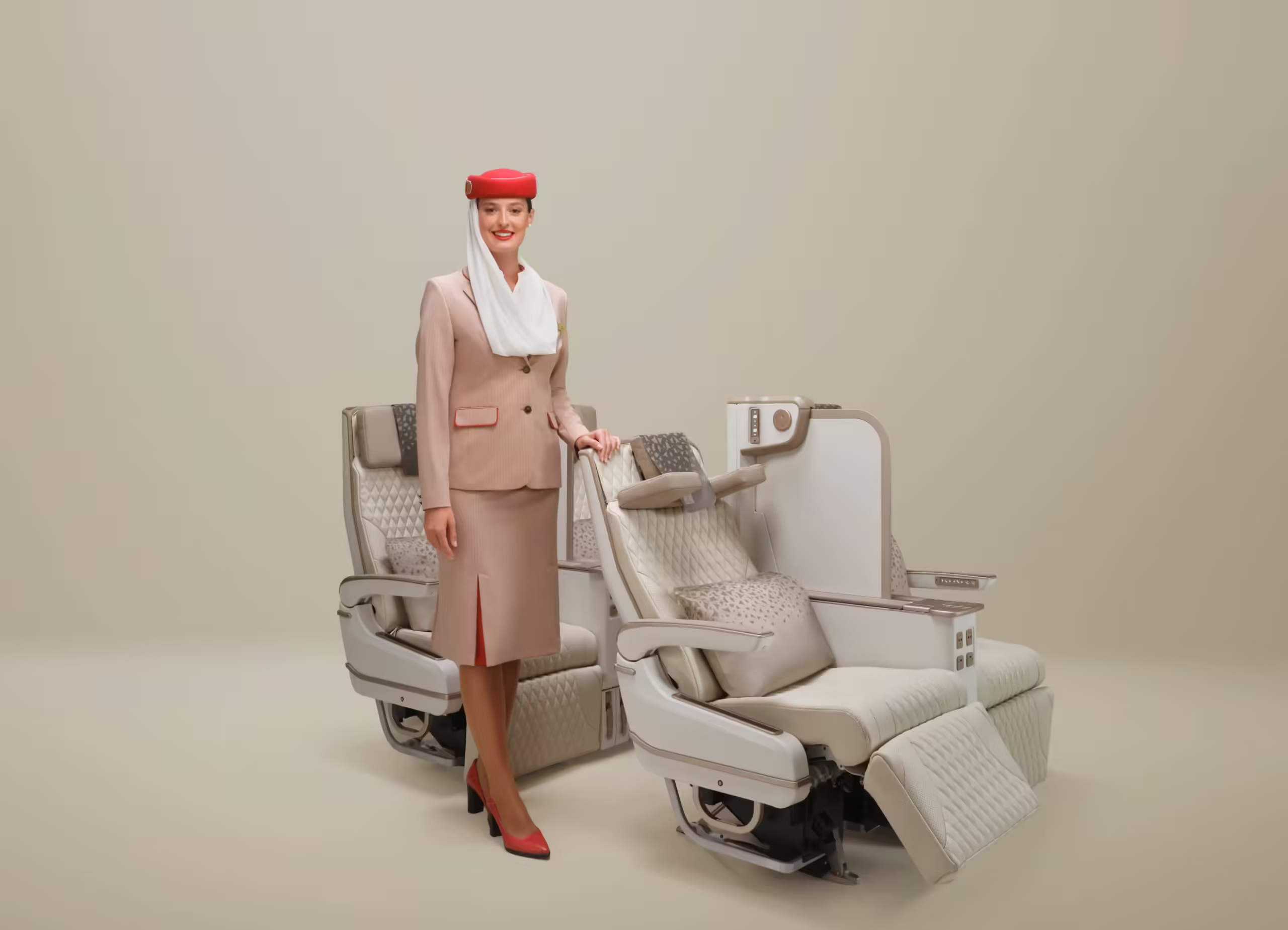
Emirates is taking its award-winning Premium Economy cabin up another notch, introducing what it says is the world’s first electrically powered Premium Economy seat with a full-height adjustable privacy screen.

The new seats will debut aboard the airline’s newly delivered Airbus A350 aircraft, giving passengers greater control over their personal space while adding a host of comfort and technology upgrades to the cabin.

Configured in a spacious 2-3-2 layout with just 28 seats, Emirates’ latest Premium Economy cabin features seats measuring 20 inches wide, with up to 39 inches of pitch. The seats recline into a cradle position designed to provide a more comfortable sleeping experience without encroaching on the passenger behind.

At the centre of the new design is the electrically operated privacy divider. Passengers can raise or lower the screen at the touch of a button and lock it at their preferred height, creating a more secluded space for working, dining or relaxing.

The new seats are also Emirates’ first fully electrically powered Premium Economy seats. Through an integrated Passenger Control Unit, travellers can adjust their seating position and select dedicated settings including lounge and meal modes.

More comfort, from head to foot

Emirates has also introduced Safran Seats’ U-Dream headrest, a leather design featuring adjustable wings that can be positioned to provide additional support for the head and neck.

A manually deployable leather footrest adds another layer of comfort, particularly on long-haul flights, helping passengers relax and reduce leg fatigue.

For passengers travelling with multiple devices, the cabin introduces wireless charging in Premium Economy for the first time on Emirates. Each seat also comes with USB-C charging and a redesigned tray table featuring an integrated phone holder, allowing travellers to use their smartphone as a second screen while eating or watching content.

A sharper entertainment experience

Passengers on the new A350s will have access to Emirates’ ice inflight entertainment system through a 13.3-inch 4K HDR touchscreen, offering high-resolution images and faster, more responsive navigation.

The aircraft itself will also provide an enhanced view of the journey. New A350 aircraft will feature additional exterior camera perspectives, adding left- and right-facing views to the existing forward and downward cameras.

Premium dining remains part of the experience

The upgraded seat comes alongside the dining service that has helped distinguish Emirates Premium Economy from many competing products.

Passengers are served regionally inspired menus prepared by Emirates chefs, with meals presented on Royal Doulton fine china, accompanied by linen napkins and stainless-steel Robert Welch cutlery.

The beverage programme includes Chandon Vintage Brut 2021, an Australian sparkling wine available exclusively to Emirates Premium Economy customers worldwide.

From September, passengers on selected routes can also expect wines including Chablis Premier Cru Jean-Marc Brocard 2024 from Burgundy and La Parde de Haut-Bailly 2014 from Bordeaux.

October will bring another first, with Wiston Estate Brut NV becoming Emirates’ first English sparkling wine. It will be served exclusively in Premium Economy on UK routes.

Emirates says it has invested more than US$1 billion in its wine portfolio since 2006, underscoring the importance the airline places on its onboard beverage programme.

Sustainable amenity kits add another touch

On long-haul flights, Premium Economy passengers will also receive reusable amenity kits created in partnership with United for Wildlife.

The collectible bags are designed around endangered wildlife and four natural habitats, with bio-based materials used throughout. For the first time in Emirates Premium Economy, the kits will include plant-based skincare products from Aveda, alongside travel essentials such as socks, eyeshades, earplugs and dental kits.

Emirates continues to expand Premium Economy

Emirates launched Premium Economy in 2022 as a product positioned between its Economy and Business Class cabins. Since then, the airline has steadily expanded the cabin across its fleet, with the product now available across markets served by its Airbus A350 aircraft.

The latest generation is clearly designed to push Premium Economy closer to the Business Class experience, combining wider seats, generous legroom, greater privacy, upgraded dining and high-end entertainment.

The product has already collected several industry accolades, including Best Premium Economy Class at the Business Traveller Middle East Awards in 2024 and 2025, as well as Airline with the Best Premium Economy Class at the 2025 ULTRAs Awards.

With the introduction of its electrically powered seat and full-height privacy screen, Emirates is once again betting that the future of Premium Economy will be defined not simply by extra legroom, but by greater personal space, technology and control.

For passengers, that could mean a Premium Economy seat that feels less like an upgraded economy chair — and increasingly like a private space of its own.

With 20 years of experience across print, TV, and digital journalism, Sudhashree is a seasoned media professional with a keen eye for news. A true news bug, she thrives on curating stories that capture the pulse of fashion, film, and all things trending. Deeply immersed in the fast-evolving media landscape, she swears by the power of social media to shape narratives and spark conversations.

Continue Reading
Advertisement
Click to comment

Leave a Reply

Your email address will not be published. Required fields are marked *

Announcements

How to rent a car at Etihad Rail stations from Dh80 with no deposit

Published

on

Spread the love

Etihad Rail passengers now have another option for getting around after they step off the train, with a new car rental service offering vehicles from Dh80 to Dh200 per day.

The Rail to Road service, launched through Thrifty Car Rental’s Flexy offering, is currently available at Etihad Rail’s Abu Dhabi and Fujairah passenger stations. The service is designed to solve the first- and last-mile transport challenge for travellers continuing their journey by road.

One of the biggest advantages is that no security deposit is required. Rentals also come with 60km of included driving and prepaid fuel, meaning passengers do not need to worry about refuelling before returning the vehicle.

Three car categories to choose from

Travellers can select from three vehicle categories depending on their needs and budget.

Essential is aimed at passengers looking for a practical and affordable option, with cars such as the Toyota Yaris, Suzuki Baleno and Hyundai Accent.

Comfort steps up to larger cars and compact SUVs, including models such as the Mazda CX-3, Hyundai Creta and Mazda 6.

For those wanting something larger or more premium, Stretch includes vehicles such as the Audi A3, Mazda CX-90, Jeep Cherokee, Nissan Patrol and Jeep Wrangler.

Prices range from around Dh80 to Dh200 per 24-hour rental, depending on the vehicle category.

You can rent a car when you arrive

Passengers do not have to book weeks in advance. The service allows travellers to reserve a vehicle before their train journey, book after reaching the station or simply walk in and rent a car, subject to availability.

The rental period is based on a 24-hour cycle rather than being linked to the customer’s train arrival or departure time. This gives passengers more flexibility if their travel plans change.

Additional kilometres beyond the included 60km can also be purchased for an extra fee.

Cars can be returned to other Thrifty locations

The service is primarily designed for passengers to collect and return their vehicles at the same Etihad Rail station.

However, customers can arrange to return the car at another Thrifty location for a nominal one-way fee. This gives travellers more flexibility when their onward journey does not bring them back to the original station.

Car rental can be added to your train booking

The rental option has been integrated into the Etihad Rail booking journey, allowing passengers to add a car when arranging their train travel.

The system is expected to be further developed to make the car rental option more visible and easier to use.

The Rail to Road initiative forms part of a five-year partnership between Etihad Rail and Thrifty, focused on improving connections between passenger stations and final destinations.

Thrifty plans to invest more than Dh10 million over five years in expanding its fleet, digital systems and customer services. An initial fleet of around 500 vehicles is planned, with the potential to grow as demand increases and Etihad Rail expands its passenger network.

The wider rollout is also expected to include digital kiosks and customer assistance desks across Etihad Rail’s 11 passenger stations.

With train travel connecting more parts of the UAE, the new service could make the journey considerably easier for passengers whose final destination is beyond the rail station.

EtihadRail RailToRoad UAE AbuDhabi Fujairah UAETransport DubaiTransport PublicTransport CarRental Thrifty UAETravel AbuDhabiTravel FujairahTravel TravelUAE UAETravelNews FirstMile LastMile SmartMobility UAENews TravelUpdate

Etihad Rail passengers can now rent cars from Dh80 a day with no deposit

Etihad Rail passengers now have another option for getting around after they step off the train, with a new car rental service offering vehicles from Dh80 to Dh200 per day.

The Rail to Road service, launched through Thrifty Car Rental’s Flexy offering, is currently available at Etihad Rail’s Abu Dhabi and Fujairah passenger stations. The service is designed to solve the first- and last-mile transport challenge for travellers continuing their journey by road.

One of the biggest advantages is that no security deposit is required. Rentals also come with 60km of included driving and prepaid fuel, meaning passengers do not need to worry about refuelling before returning the vehicle.

Three car categories to choose from

Travellers can select from three vehicle categories depending on their needs and budget.

Essential is aimed at passengers looking for a practical and affordable option, with cars such as the Toyota Yaris, Suzuki Baleno and Hyundai Accent.

Comfort steps up to larger cars and compact SUVs, including models such as the Mazda CX-3, Hyundai Creta and Mazda 6.

For those wanting something larger or more premium, Stretch includes vehicles such as the Audi A3, Mazda CX-90, Jeep Cherokee, Nissan Patrol and Jeep Wrangler.

Prices range from around Dh80 to Dh200 per 24-hour rental, depending on the vehicle category.

You can rent a car when you arrive

Passengers do not have to book weeks in advance. The service allows travellers to reserve a vehicle before their train journey, book after reaching the station or simply walk in and rent a car, subject to availability.

The rental period is based on a 24-hour cycle rather than being linked to the customer’s train arrival or departure time. This gives passengers more flexibility if their travel plans change.

Additional kilometres beyond the included 60km can also be purchased for an extra fee.

Cars can be returned to other Thrifty locations

The service is primarily designed for passengers to collect and return their vehicles at the same Etihad Rail station.

However, customers can arrange to return the car at another Thrifty location for a nominal one-way fee. This gives travellers more flexibility when their onward journey does not bring them back to the original station.

Car rental can be added to your train booking

The rental option has been integrated into the Etihad Rail booking journey, allowing passengers to add a car when arranging their train travel.

The system is expected to be further developed to make the car rental option more visible and easier to use.

The Rail to Road initiative forms part of a five-year partnership between Etihad Rail and Thrifty, focused on improving connections between passenger stations and final destinations.

Thrifty plans to invest more than Dh10 million over five years in expanding its fleet, digital systems and customer services. An initial fleet of around 500 vehicles is planned, with the potential to grow as demand increases and Etihad Rail expands its passenger network.

The wider rollout is also expected to include digital kiosks and customer assistance desks across Etihad Rail’s 11 passenger stations.

With train travel connecting more parts of the UAE, the new service could make the journey considerably easier for passengers whose final destination is beyond the rail station.

Continue Reading

Announcements

UAE announces new music fees for businesses: Who will have to pay from December

Published

on

Spread the love

Businesses across the UAE that play music for commercial purposes will face a new licensing system from December 2026, under rules announced by the Ministry of Economy and Tourism.

The new framework introduces licensing fees for a wide range of businesses and organisations that use music commercially, including restaurants, cafes, hotels, shopping malls, gyms and airlines.

Radio and television broadcasters, as well as concert organisers, will also fall under the new system.

The changes are outlined in the ministry’s new Collective Management in Music Guide, which sets out how music copyright and related rights will be managed across the UAE.

Which businesses will have to pay?

The new licensing requirements will apply to venues and businesses that commercially use music.

This includes:

Restaurants
Cafes
Hotels
Shopping malls
Gyms
Airlines
Radio stations
Television channels
Concerts and other commercial music events

The amount businesses pay will not be the same across the board. Instead, fees will be calculated using a sliding-scale system, taking into account factors such as the type of music use and the size or nature of the business.

When do the new UAE music fees start?

The new licensing fees are scheduled to come into effect in December 2026.

Businesses that require a licence will receive a renewable one-year licence. The fees will be collected through the organisations responsible for managing music rights, including the Emirates Music Rights Association and Music Nation.

These organisations represent rights holders across the music industry, including composers, songwriters, singers, instrumentalists, record producers and music publishers.

Why is the UAE introducing the new system?

The government says the new framework is designed to create a more structured system for managing copyright and related rights in the UAE.

According to the Ministry of Economy and Tourism, standardising licensing requirements and fees should help reduce copyright violations while bringing the UAE’s approach more closely in line with international practices.

For businesses, that means music used as part of the customer experience, whether in a restaurant, hotel, gym or another commercial setting, will be subject to clearer licensing requirements.

Who is exempt from the music licensing fees?

Not every organisation or event will be covered by the new commercial licensing requirements.

The guide identifies exemptions that include:
Schools and academic institutions
Non-commercial celebrations
National events

This means the new fees are primarily focused on the commercial use of music rather than private or educational settings.

New fund will support UAE music talent

The new framework also includes a support mechanism for the country’s music industry.

A Cultural Support Fund in the Field of Music will be established to provide financial assistance and technical support to artists, performers and producers.

Under the new system, 10 per cent of the fees collected will be directed towards the fund.

The money will be used to support emerging musical talent and help promote Emirati music internationally.

What does this mean for UAE businesses?

For businesses that regularly play music for customers, the biggest change will be the introduction of a formal licensing requirement and associated annual fees.

The exact amount will depend on how the music is being used and the characteristics of the business, rather than being a single flat charge for every venue.

Businesses that rely on music as part of their atmosphere or entertainment offering will therefore need to factor the new licensing requirements into their operations from December 2026.

At the same time, the government says the system is intended to ensure creators and other rights holders receive appropriate recognition and compensation when their work is used commercially.

Music licensing rules: 

Start date: December 2026
Licence period: One year, renewable
Applies to: Commercial users of music
Examples: Restaurants, cafes, hotels, malls, gyms and airlines
Also covered: Radio, television and concerts
Fee structure: Sliding scale based on use and business characteristics
Exemptions: Schools, academic institutions, non-commercial celebrations and national events
Music support fund: 10% of collected fees

For UAE businesses, the new rules mark a significant change in how commercial music use will be licensed, while the accompanying support fund is designed to put part of those revenues back into the country’s developing music sector.

Continue Reading

Announcements

Indian tourists can get UAE visa fees waived for Abu Dhabi: Who qualifies

Published

on

Spread the love

Indian travellers planning a holiday in Abu Dhabi can now have the cost of their UAE entry visa covered under a new tourism initiative.

The Department of Culture and Tourism – Abu Dhabi (DCT Abu Dhabi) has launched a limited-time programme for eligible Indian passport holders who book qualifying Abu Dhabi holiday packages through participating travel companies and online travel agencies.

The offer is available until October 31, 2026, during an initial pilot that will support up to 20,000 visas.

However, the offer comes with specific booking requirements. Travellers must book a package that includes both a return flight from India and at least three consecutive nights at an Abu Dhabi hotel.

Who is eligible for the free UAE visa offer?

The programme is aimed at Indian passport holders travelling from India to Abu Dhabi.

To qualify, travellers must book through a participating travel partner or online travel agency. The holiday package must include:

  • A minimum three-night stay at an Abu Dhabi hotel
  • A return flight from India
  • Booking through an eligible participating travel partner or OTA

The visa benefit cannot be claimed through an independent application. It is tied to qualifying holiday bookings made through the programme’s participating partners.

When is the Abu Dhabi free visa offer available?

The initiative runs from:

August 1 to October 31, 2026

DCT Abu Dhabi says the pilot programme will initially support up to 20,000 visas.

For eligible bookings, the tourism authority will cover the full cost of the UAE entry visa, potentially reducing the upfront expense for Indian visitors planning a trip to the emirate.

How does the visa fee waiver work?

Travel partners participating in the scheme have two ways to process the visa arrangements.

One option is to work with a DCT-appointed destination management company (DMC). In this case, DCT Abu Dhabi will pay the visa costs directly.

Travel companies can also use their existing DMC partners. Under this arrangement, DCT Abu Dhabi will reimburse Dh285 for each visa issued under the programme.

For travellers, the key point is that the benefit is handled through the participating travel partner rather than by applying for reimbursement independently.

Why is Abu Dhabi targeting Indian travellers?

India continues to be an important international source market for Abu Dhabi’s tourism sector.

According to DCT Abu Dhabi, the new programme is part of wider efforts to make the destination more accessible to Indian visitors while strengthening relationships with travel companies and improving connectivity between India and Abu Dhabi.

The initiative also aims to encourage visitors to spend more time in the emirate exploring its hotels, cultural attractions, entertainment options and natural landscapes.

Is the UAE visa completely free for all Indian tourists?

No.

The offer does not mean that every Indian passport holder automatically receives a free UAE tourist visa.

The visa fee is covered only when travellers meet the programme’s conditions and book through a participating travel partner or online travel agency.

The booking must include at least three consecutive hotel nights in Abu Dhabi and a return flight from India.

Travellers should therefore check with their chosen travel provider before booking to confirm that the package and visa arrangement qualify for the offer.

Abu Dhabi holiday offer: 

Who: Eligible Indian passport holders travelling from India
Destination: Abu Dhabi, UAE
Offer period: August 1–October 31, 2026
Hotel requirement: Minimum three consecutive nights
Flight requirement: Return flight from India
Booking requirement: Participating travel partner or OTA
Visa cost: Covered by DCT Abu Dhabi for eligible bookings
Pilot capacity: Up to 20,000 visas
Independent applications: Not eligible for the programme

For Indian travellers already considering an Abu Dhabi getaway, the initiative could make an eligible holiday package more affordable, but checking the participating travel provider and meeting all the booking conditions will be essential.

Continue Reading

Popular

Exit mobile version
https://headline.ae/