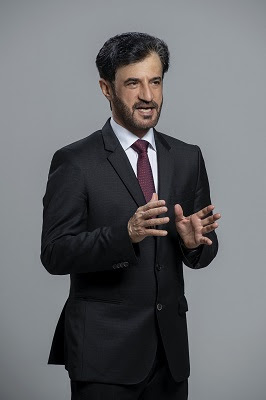
FIA President Mohammed Ben Sulayem says his stance on Formula 1 driver health and safety is part of a clear vision for the federation, and motorsport’s future, which he will back with decisive action.
From next weekend’s Belgian Grand Prix, new measures will be in place to address the physical effect on drivers from the aerodynamic bouncing of F1 cars known as ‘porpoising’.
Ben Sulayem implemented a revised Technical Directive covering the measuring and monitoring of the vertical forces acting on the cars, or ‘porpoising’, after extensive consultation with F1 teams, drivers and his own FIA technical and medical staff.
His handling of the issue has drawn international media acclaim. It follows his decision earlier in the season to enforce a long-standing rule preventing drivers from wearing jewelry when competing, to protect them in the event of a crash.
“This is not just the way forward for driver health and safety in F1 – it’s the direction the FIA must take to ensure a better future for motor sport overall,” he said.
“We have a responsibility to do what is in the best interests of the sport, and I’ll work closely with all our main stakeholders to get their input on all key decisions.”
“But I won’t back away from any big issues. I’ll confront them, discuss with my own team, make the right decisions and back them with decisive action.”
What is porpoising? When a F1 car goes on track, the downforce tends to lower the car height even more. Initially this phenomenon is favorable, the downforce generated by the bottom increases, but as soon as the critical height of the stall is reached, the problems begin. As soon as the downforce produced collapses, the car raises from ground. When you increase the ride height, however, the bottom is no longer stalled and the downward aerodynamic force increases, making the car lower again. This creates an oscillating movement of the car along the transverse axis. A hysteresis cycle is obtained on the dowforce value, the machine starts to oscillate and porpoising is born.
Ben Sulayem, who took over as FIA President last December, has an overall strategy aimed at doubling global motorsport participation within four years, and his actions have been winning plaudits from F1 journalists in particular.
He places a heavy emphasis on grass roots and regional motorsport development, as well as diversity initiatives, and wants to ensure that FIA championships leave legacies wherever they compete.
There are challenges at every turn, but he faces up to them with conviction. After 100 days in office Ben Sulayem wrote to member club presidents to say that operating losses will completely overwhelm the FIA’s resources in the next five years if allowed to continue.
“We need to make tough decisions in our portfolio, and in the way the organisation is structured and works,” he said. “Together we can only improve the sport, and to improve the sport we must be all together.”
“There’s a long way to go, and we have to deliver for the new generation. That means we have to update our rules accordingly, not just for F1, but for motor sport as a whole.”
Ben Sulayem’s desire to drive the FIA forward with strong, decisive leadership applies equally to the federation’s role and responsibilities in tourism, mobility and road safety.
In order to ensure continuity for FIA initiatives, he has ordered the recruitment of a full-time CEO to help drive the federation’s approach in the years ahead.
He also believes intensive training is essential to deliver a steady follow of highly qualified individuals who can share responsibilities in key areas across the FIA.
This approach began with the appointment of two alternating F1 race directors, which Ben Sulayem emphasises is only a start. Similarly, he wants the virtual race control that he instituted to trickle down to other race series.
When F1 proposed in increase from three to six sprint races for next year, Ben Sulayem demanded further details on the financial and operational implications on organising clubs and officials.
“Many race officials and marshals are club members, and we have a duty of care towards them,” he says. “I did not say no more sprint races. I left the door open, but only if we understand the implications. I owe that to the clubs.”
He believes, meanwhile, that expanding the scope of the FIA University, which previously focused only on mobility, will crucially give more people the chance of career opportunities in motor sport.
“The university now includes sport, and I would like to see it include engineering as well,” he said. “Not everyone is going to be a Formula 1 or WRC champion. But there are people who can be involved in the motorsport community when it comes to education, and engineering.”
“We must help those who have the talent, but currently do not have the opportunity. This is where we have to go in the future.”
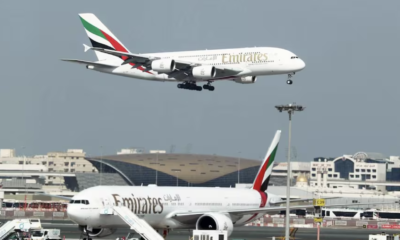
Travellers arriving at Dubai International Airport are being greeted with a unique souvenir, a special stamp on their passports celebrating the Dubai World Cup 2026.
The initiative, launched by the General Directorate of Identity and Foreigners Affairs (GDRFA), marks the 30th edition (Pearl Jubilee) of one of the world’s most prestigious horse racing events.
A grand sporting celebration
The iconic Dubai World Cup will take place on Saturday, March 28 at Meydan Racecourse, drawing global attention from racing fans and elite stables.
This year’s event promises high-stakes action:
100 horses from top international stables
Nine races across the evening
Total prize pool of $30.5 million
Spotlight on the main race
The highlight of the night is the $12 million Dubai World Cup race, sponsored by Emirates Airline.
Run over 2,000 metres on dirt, the Group 1 race will feature some of the world’s top thoroughbreds, including:
“Hit Show” – last year’s winner
“Forever Young” – UAE Derby and Saudi Cup champion
“Imperial Emperor”
“Meidan” – Super Saturday winner
A memorable arrival experience
The commemorative passport stamp adds a celebratory touch for visitors landing in Dubai, tying their arrival to one of the city’s biggest sporting spectacles.
With excitement building ahead of race day, Dubai is once again showcasing its ability to blend world-class sport with unique visitor experiences.
Soccer superstar Erling Haaland has announced a major investment in Norway Chess, backing the launch of a new global competition format, the Total Chess World Championship Tour.
The initiative, unveiled in Oslo, aims to transform chess into a more spectator-friendly and widely accessible sport. Haaland has partnered with Norwegian business leader Morten Borge to establish a new company, Chess Mates, which will become a significant stakeholder in Norway Chess.
Haaland said his investment reflects a strong belief in chess as both a mental discipline and a global spectator sport.
“Chess is an incredible game. It sharpens your mind, and there are clear similarities to football. You have to think quickly, trust your instincts, and think several moves ahead,” he said.
The newly announced Total Chess World Championship Tour is set to feature four tournaments annually across different cities, bringing together the world’s top players. The competition will crown an overall world champion based on combined performance in three formats: Fast Classic, Rapid, and Blitz.
The tour has been approved by the International Chess Federation for a minimum of 16 years, underscoring its long-term ambition and significance within the global chess calendar.
A pilot tournament is scheduled for autumn 2026, with the first full season expected in 2027. Each season will include four events and offer a minimum prize pool of $2.7 million.
Kjell Madland, CEO of Norway Chess and Total Chess, welcomed Haaland’s involvement, describing it as a major step forward for the sport.
He said Haaland’s global influence and appeal would help attract new audiences and elevate the profile of chess worldwide, adding that preparations are now in the final stages to secure host cities for the inaugural tour.
With millions of fans worldwide, Haaland’s move into chess investment signals a growing crossover between elite sport and strategic mind games, potentially reshaping how chess is consumed and followed globally.
The ICC Men’s T20 World Cup 2026 has been thrown into uncertainty after the Pakistan government announced that its national cricket team will boycott its league-stage match against India, scheduled for February 15 in Colombo.
The announcement was made on Sunday via an official government post on X, granting approval for Pakistan to participate in the tournament but explicitly instructing the team not to take the field against India. No reason was cited for the decision.
ICC Issues Strong Warning
The International Cricket Council (ICC) reacted sharply, warning that selective participation threatens the integrity of global tournaments and could have long-term consequences for Pakistan cricket.
In a statement, the ICC said it “expects the PCB to explore a mutually acceptable resolution that protects the interests of all stakeholders,” while stressing that the decision could harm the global cricket ecosystem.
“Selective participation is difficult to reconcile with the fundamental premise of a global sporting event where all qualified teams are expected to compete on equal terms,” the ICC said, adding that it is still awaiting formal communication from the Pakistan Cricket Board (PCB).
An important fixture
The India–Pakistan fixture is the most commercially valuable match of ICC tournaments, accounting for a significant share of global broadcasting and sponsorship revenue. If the match is forfeited:
Pakistan will lose two group-stage points
Its net run rate will be negatively impacted
Broadcasters and sponsors could seek compensation
Under ICC Playing Conditions, India must be present at the venue at the time of the toss for the match to be officially forfeited in their favour.
PCB Revenue and PSL at Risk
Despite financial struggles, the PCB currently receives $34.5 million annually from the ICC, the fourth-highest share among member boards, largely driven by India–Pakistan matches.
If compensation is deducted from this revenue, the PCB could lose up to 70–80% of its annual ICC earnings. The ICC is also reportedly considering denying No Objection Certificates (NOCs) for overseas players seeking to participate in the Pakistan Super League (PSL).
There is further concern that major cricket boards such as England and Australia could reconsider bilateral series with Pakistan.
Background to the Crisis
Tensions escalated after the ICC replaced Bangladesh with Scotland in the tournament following Bangladesh’s refusal to play matches in India due to security concerns. PCB chairman Mohsin Naqvi accused the ICC of double standards and warned that Pakistan’s participation would ultimately depend on government approval.
Pakistan are placed in Group A alongside India, USA, Namibia and the Netherlands, with matches scheduled in Sri Lanka, a co-host of the tournament with India. Pakistan are due to play:
Netherlands on February 7
USA on February 10
Namibia on February 18
The India match now remains in serious doubt.
What Happens Next
The ICC has reiterated that its priority is the successful delivery of the T20 World Cup and has urged the PCB to consider the broader impact on fans, players and the future of Pakistan cricket.
With millions of viewers worldwide and enormous commercial stakes involved, the cricketing world is watching closely as the situation continues to unfold.