Connect with us

Tech

HOW FAR AWAY ARE WE FROM A FUTURE WITH DRIVERLESS CARS AND COMPLETE ROAD AUTONOMY?

Published

on

Spread the love

Driving, pfft, a thing of the past.

Remember ‘Back to the Future 2’, when Marty and Doc tore through the space-time continuum to head into the future and it’s filled with cool gadgets and flying cars? Well, we’re not saying that this is near but we’re saying you may not have to drive your own cars anymore, and no, we’re not talking about chauffeurs.

There have been a few examples of autonomous cars, namely Tesla’s, and unlike most technology, the hype hasn’t really died down. Nadia Qazi, a car enthusiast has been praying to ‘drive’ one ever since she heard about the technology.

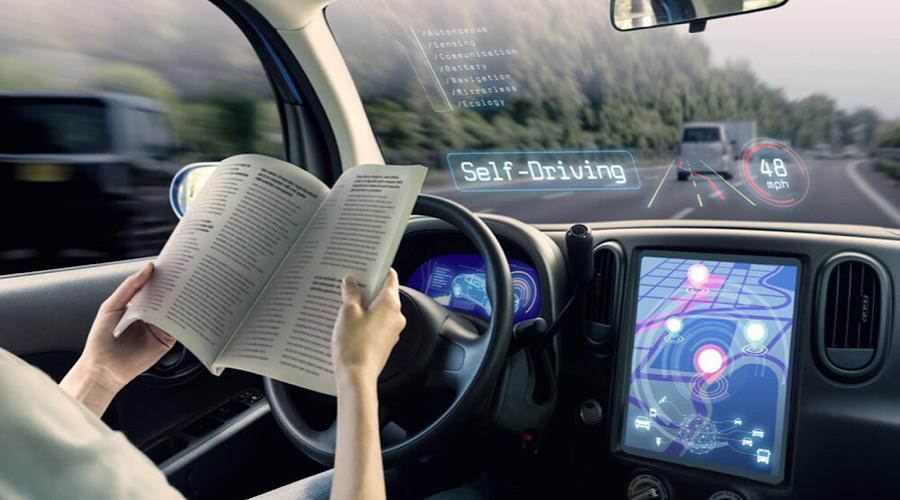
Autonomous cars revolve around Artificial Intellgence or AI tech for short. The technology maps out the route the ‘driver’ wants to travel in and, well, the best way to put phrase this is, drive itself.

“If we can send rockets to space, why is it taking so long to make an autonomous car?” adds Nadia.

The 20-year old’s frustration is understandable and not unfounded.

Data and AI

“We’ve been saying that the technology will take about 10 years to develop for about a decade. We’ve made progress but there’s still alot to be done in this space,” said Seham Al Behissy, Former Digital and Connected Cars general manager/ Renault international group of Artificial Intelligence.

Al Behissy also highlights a critical point, which leads to the question – what happens to all the data?

“I would say that now the question revolves around safety, not only on the roads but also data quality assurance. We have to be able to interpret real time and accurate data as the car moves across specific areas, and ensure this data is stored. We need to have serious conversations with different key players and manufacturers,” she adds.

Education

Don’t worry we’re not talking about sending you back to school. But according to Al Behissy, drivers need to be educated on the potential hazards they face while operating an automatic car and learn how to navigate through these hurdles.

“It’s not only about a smar car but you have to integrate the mechanical, eletrical and education with it,” said Dr. Jassim Haji, President of International Group of Artificial Intelligence in Bahrain.

We need to enable users to operate these vehicles and need to educate them while changing their mindset from being a driver to a supervisor. They should also possess a set of skills to know how to use the vehicle in certain spaces and emergencies.

How can businesses benefit from this?

If autonomous cars and vehicles can be scaled and mass-produced, businesses might jump on the driverless bandwagon soon.

“We’re talking about everything from autonomous vehicles and drones all the way to applying data science to enhance the customer experience,” said Mohammed Sleeq, Chief Digital Officer at Aramex. Trust Aramex when it comes to logistics; the company has been a solutions leader and innovator in Dubai and operates in over 65 countries with over 16,500 employees.

Alexander Pope said, “To err is human”. But wouldn’t it sting significantly more  if that error cost you thousands in your business? Imagine you kickstarted a company from the root-level and now you need a way to get your products across to the customer. With proper AI backing you could eliminate human error altogether and save cost, which is a pillar of any smart business.

Hmm, Skynet from Terminator is starting to make alot more sense.

So, what now?

“The AI community needs to network more together to make autonomous cities and movement a reality,” said Dr. Haji.

“To build an autonomous car, you need to build it in different stages and challenge it with obstacles and safety courses around it. Furthermore, we cannot make an AI car without having AI security measures,” he adds.

He has a point. Just visualise how you would react if YOUR CAR WAS BEING HACKED!

There seems to be a considerable ways to go but noteworthy process has been made in this space. Question is can we replace our love for driving with being driven around? I’ve been debilitating an answer to this question for hours and it’s driving me crazy. Let us know in the comments what your prefer – driving yourself or your car driving you?


Continue Reading
Advertisement

News

Dubai set to unify government services within one year under new digital vision

Published

on

Spread the love

Dubai is taking a bold leap into the future of governance, with a sweeping directive aimed at making government services faster, simpler, and smarter for everyone.

Sheikh Hamdan bin Mohammed bin Rashid Al Maktoum has announced that all Dubai government entities must integrate their services into a single unified digital ecosystem within one year. The goal? Cut through complexity and deliver seamless, user-friendly experiences for both individuals and businesses.

Speaking during a visit to Digital Dubai, Sheikh Hamdan emphasised reducing the number of platforms people need to use, replacing them with streamlined, specialised systems that save time and effort.

“Our goal is to make life easier, and strengthen Dubai’s competitiveness as a global hub for business and investment,” he said.

Government powered by AI and data

This isn’t just about merging apps; it’s about reimagining how government works.

Dubai is building a fully AI-driven model, where:

  • 100% of government performance will be data-based
  • An algorithm bank will store ready-to-use machine learning models
  • AI accelerators will power faster decision-making

The ambition is huge:

  • Boost GDP by over Dh10 billion within two years
  • Rank among the world’s top 10 cities in AI readiness
  • Ensure 80% of policies are backed by AI-driven insights
  • Upskill leaders so 100% are proficient in AI and analytics

Smarter systems, smoother services

Sheikh Hamdan also reviewed next-gen projects designed to make government operations more connected and efficient:

  • Unified resource planning systems covering finance, HR, payroll, and procurement
  • Agentic AI assistants that let users complete services through simple conversations
  • Smart city sensors (IoT) that can detect risks like smoke or fires and instantly alert authorities

Imagine requesting a government service just by chatting with an AI, and having it completed in seconds. That’s the direction Dubai is heading.

By putting technology, data, and people’s needs at the centre, Dubai is aiming to create a system where government services feel less like bureaucracy and more like a seamless, everyday experience.

Continue Reading

News

Dubai rolls out self-driving taxis in Jumeirah and Umm Suqeim, giving commuters a glimpse of the future

Published

on

Spread the love

Ever wondered what it’s like to hop into a taxi with no one behind the wheel? In Dubai, that future has officially arrived.

The Roads and Transport Authority (RTA) has kicked off commercial operations of autonomous taxis in Umm Suqeim and Jumeirah, two of the city’s coastal hotspots. You can now book an auto cab as easily as ordering your usual ride.

Through partnerships with WeRide and Apollo Go, these rides are available via the Uber and Apollo Go apps.

The first phase brings 100 self-driving taxis onto Dubai’s roads, with plans to expand the fleet as more residents warm up to the idea of AI-powered commuting. Behind the scenes, these vehicles rely on a mix of artificial intelligence, smart sensors, and real-time decision-making to safely navigate busy streets, traffic lights, and even unpredictable pedestrians.

And if you’re wondering about safety, these aren’t robots. The technology powering them has already clocked over 150 million kilometres and completed more than 10 million trips worldwide.

So, next time you hail a taxi in Jumeirah, don’t be surprised if the driver’s seat is empty.


Continue Reading

Crime

Dubai scam alert: Authority warns of fake QR code scams as cyber fraud attempts rise

Published

on

Spread the love

The Dubai Electronic Security Centre (DESC) has issued a warning over a growing number of scams involving fake QR codes, especially those sent through email.

According to the authority, cybercriminals are exploiting how quickly information spreads by sharing QR codes that appear to offer urgent updates or important services. However, scanning these codes can expose users to serious risks.

DESC explained that such QR codes may install malware on devices or redirect users to fake websites designed to steal personal and financial information.

How to protect your device

Residents are being urged to stay cautious by verifying the source of any email before scanning QR codes, avoiding suspicious messages, and never entering sensitive details on untrusted links.

To boost online safety, DESC also recommends using the RZAM app, which provides real-time alerts about unsafe websites and allows users to scan links before opening them.

Continue Reading

Popular

Exit mobile version
https://headline.ae/