In a city that thrives on bold ambition and global connection, a new landmark has quietly taken its place at the heart of Dubai’s business future.
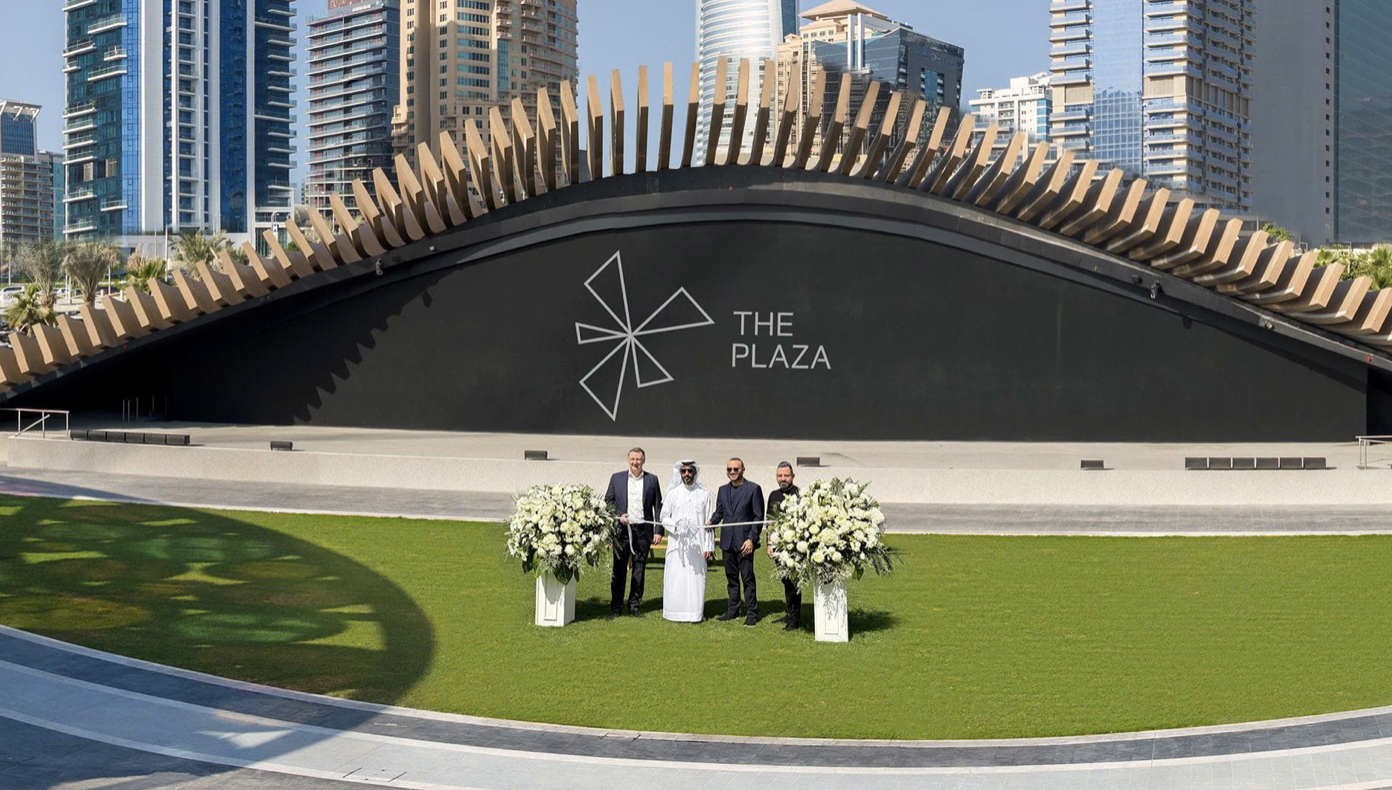
DMCC has officially opened The Plaza at Uptown Dubai, a 21,000 square metre open-air destination designed to host everything from high-level corporate summits to large-scale concerts and community gatherings.
For UAE residents and business leaders alike, this isn’t just another development announcement. It’s a signal that Uptown Dubai is stepping into a new era.
A new gathering space in town
Strategically positioned at the centre of Uptown Dubai, The Plaza physically connects the iconic Uptown Tower with the district’s wider commercial and residential community.
Designed to accommodate up to 4,000 guests, the venue features advanced staging, lighting and digital display infrastructure, enabling year-round programming and rapid event turnover.
For Dubai’s fast-moving corporate ecosystem, that means seamless hosting of:
Global trade conferences
Finance and technology forums
Industry expos
Cultural performances
Community celebrations
In a city known for world-class event venues, The Plaza adds something different: scale, accessibility and integration within a thriving business district.
For UAE residents, the venue offers more opportunities for networking, collaboration and global visibility without leaving the city.
Next business hub taking shape
The Plaza’s launch comes as Uptown Dubai moves into its next development phase.
Currently under construction:
Two commercial towers (23 and 17 storeys)
62,000 square metres of additional Grade A commercial and retail space
Once complete, the full district will deliver:
538,000 square metres total gross floor area
232,000 square metres dedicated to Grade A commercial office space
What’s in it for residents
For professionals, it means:
More international events are hosted locally
Increased networking and industry exposure
Expanded commercial opportunities
For residents, it offers:
Open-air concerts and cultural events
Community experiences within a premium urban setting
With over 35 years of experience in journalism, copywriting, and PR, Michael Gomes is a seasoned media professional deeply rooted in the UAE’s print and digital landscape.
Dubai authorities have announced a series of business support measures aimed at strengthening resilience, easing financial pressures, and sustaining economic growth across key sectors.
The initiatives are part of a wider Dh1 billion economic incentive package unveiled by Sheikh Hamdan bin Mohammed bin Rashid Al Maktoum, Crown Prince of Dubai and UAE Deputy Prime Minister.
Relief for tourism and hospitality
To support hotels and tourism-related businesses, the government will allow:
Deferral of 100% of sales fees on rooms and food & beverage
Postponement of Tourism Dirham fees
These relief measures will be valid for three months starting April 1 and apply to:
Hotels
Hotel apartments
Holiday homes
The goal is to enhance liquidity and reduce short-term financial strain on the hospitality sector.
Wider support for businesses
Additional measures have been introduced across the broader economy, including fee deferrals for three months on:
Premium business names
Licence amendments
Newspaper announcements
Local service fees
Accommodation and waste management fees
Service improvement charges
These apply to both new business licences and renewals, with further updates expected after the three months.
Additional reforms
The broader package also includes:
Extended grace periods for customs data
Streamlined processes for issuing and renewing residency permits
Officials from the Dubai Department of Economy and Tourism emphasised that the emirate’s economic success is built on proactive policymaking and strong collaboration with industry stakeholders.
Abu Dhabi has introduced a new set of regulations through the Department of Municipalities and Transport (DMT) to strengthen oversight of the property market and protect investor interests. Here’s a simple breakdown of what’s changing and why it matters.
What are these new decisions about?
The rules are part of updates to the emirate’s real estate law and aim to:
Improve transparency
Protect buyers’ money
Reduce disputes
Create a more investor-friendly market
They are being implemented with oversight from the Abu Dhabi Real Estate Centre.
Stricter rules for escrow accounts
Developers often use escrow accounts to fund construction.
What’s new?
Withdrawals before 20% project completion are now tightly regulated
Developers must provide bank guarantees and approved cost plans
Why it matters: This ensures buyers’ money is not misused and projects stay financially secure.
Clearer rules for jointly owned properties
This applies to buildings, communities, and shared facilities.
What’s new?
Defined roles for owners, developers, and property managers
Standardised management of common areas
Why it matters: Better maintenance, fewer disputes, and clearer accountability.
Owners’ committees get a unified framework
Owners’ committees help manage residential communities.
What’s new?
Standard bylaws across Abu Dhabi
Clear rules on how committees are formed and operate
Why it matters: More organised community management and stronger owner participation.
Compensation and refunds made clearer
Covers situations where:
Buyers default on payments
Projects are cancelled and units resold
What’s new?
Defined compensation percentages for developers
Clear timelines and procedures for buyer refunds
Why it matters: Creates a fair balance between developers and buyers while speeding up dispute resolution.
These changes aim to:
Boost investor confidence
Strengthen market transparency
Align Abu Dhabi with global real estate standards
In short, the new framework is designed to make the property market safer, clearer, and more efficient for everyone involved, from first-time buyers to large-scale investors.
The Central Bank of the UAE has rolled out a new financial support package designed to keep banks strong and ensure they continue supporting and safeguarding the broader economy amid global and regional uncertainty.
The package was endorsed during a high-level board meeting chaired by Sheikh Mansour bin Zayed Al Nahyan, underscoring the UAE leadership’s proactive approach to maintaining economic stability.
Built around five key pillars, the initiative is designed to provide banks with greater liquidity, enhanced flexibility, and temporary regulatory relief, ensuring they can continue to support businesses and individuals during uncertain times.
Under the new measures, banks will gain expanded access to liquidity, including the ability to utilise reserve balances and secure term funding in both dirhams and US dollars. This step is expected to keep credit flowing across key sectors of the economy.
The Central Bank has also introduced temporary easing of liquidity and funding requirements, giving financial institutions more room to continue lending. Capital buffer requirements will be relaxed as well, allowing banks to deploy excess capital to support economic activity.
Additionally, new provisions will offer greater flexibility in managing credit risk, including delaying the classification of certain loans affected by current market conditions—providing relief to borrowers facing temporary challenges.
Authorities emphasised that banks are expected to maintain lending and continue supporting customers as part of the UAE’s broader economic response strategy.
Despite global pressures, the UAE’s financial system has shown strong resilience. During its meeting, the Board confirmed that current market conditions have had no significant impact on the health of the banking sector or the efficiency of payment systems.
The Central Bank also highlighted the country’s robust financial position, with foreign exchange reserves exceeding AED 1 trillion and a strong monetary base. The UAE’s banking sector, valued at over AED 5.4 trillion, continues to demonstrate solid fundamentals.
With liquidity levels remaining high and reserves strong, the CBUAE reaffirmed its readiness to take further action if needed to protect financial stability and sustain economic growth.