Connect with us

Education

KHDA releases new 2026 guide to end remote learning stress for Dubai parents

Published

on

Spread the love

In a move to protect family well-being and clarify the boundaries of home-based education, the Knowledge and Human Development Authority (KHDA) has launched a comprehensive new manual: The Parent Guide to Supporting Your Child During Distance Learning.

The core message of the guide is a massive relief for parents: You are not expected to be the teacher.  The Responsibility Split: Who Does What?

The KHDA is drawing a firm line in the sand to prevent parental burnout.

  • The school’s job: Teaching, planning lessons, delivering content, monitoring progress, and providing academic support.
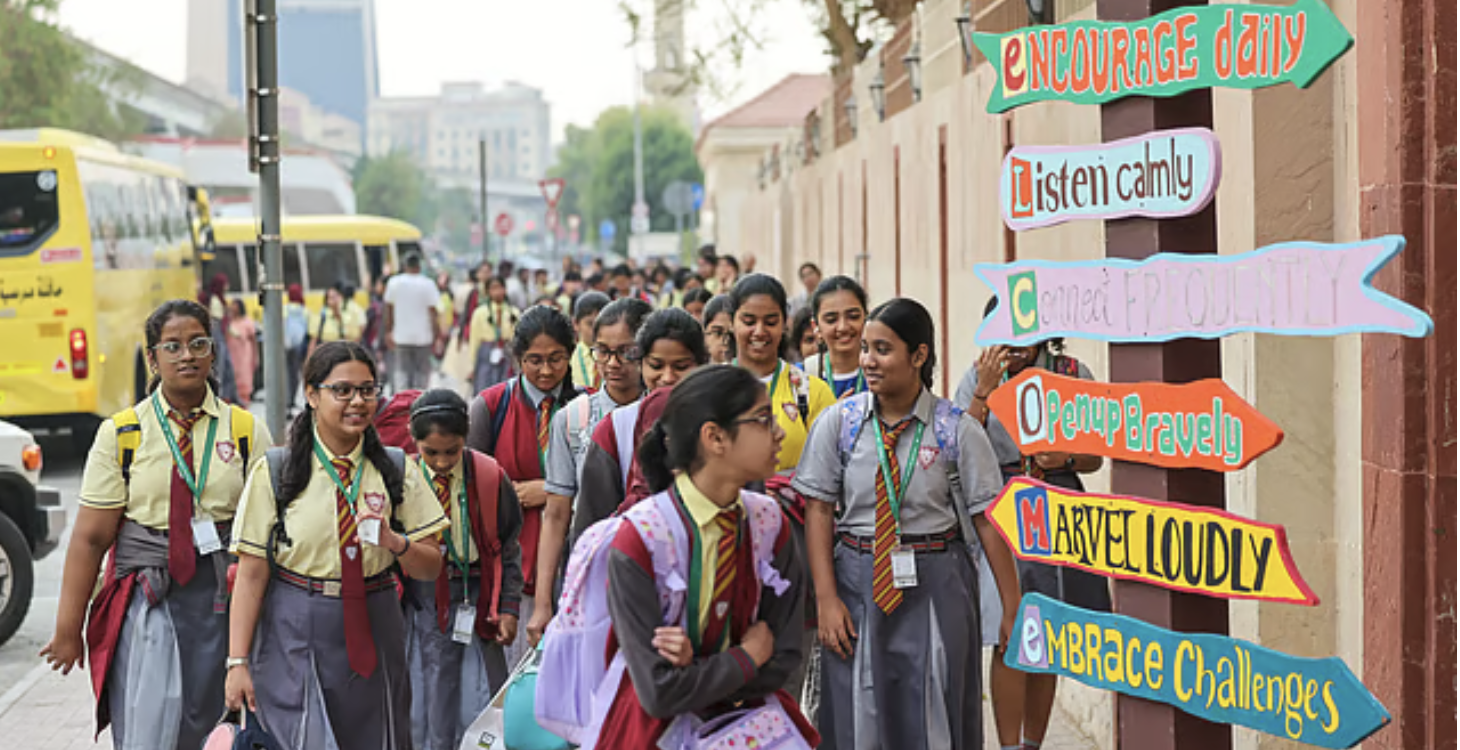
  • The parents’ job: Providing a calm environment, maintaining consistent routines, and keeping the lines of communication open with the school.

Five priorities for success

The guide outlines five key pillars to help caregivers manage learning without feeling overwhelmed. While the full document is on the KHDA website, the strategy focuses on progress over perfection.

Tailored advice by age group

The KHDA recognises that a five-year-old and a 15-year-old have vastly different needs:

Early years and primary students: Younger children require hands-on support. The KHDA recommends focusing on short, simple activities rather than long blocks of screen time. Consistent routines and frequent, reassuring breaks are essential to prevent overstimulation.

Secondary and senior students: While older students are more independent, they are susceptible to “engagement fatigue.” They still require a clear daily structure and regular check-ins from parents to prevent them from feeling overwhelmed or losing focus on advanced coursework.

Students of determination: The guide provides targeted advice for students with additional learning needs, focusing on managing anxiety and behavioural barriers. It emphasises the need for a direct, transparent link between parents and the school’s inclusion team to ensure IEP (Individual Education Plan) goals are met at home.

The wellness check

A significant portion of the 2026 guide is dedicated to mental health. It provides practical steps to identify if a child is struggling with “engagement fatigue” or family pressures, offering a roadmap for parents to seek help from the school early, before the student falls behind.

How parents can access the guide

Dubai parents are encouraged to download the digital handbook directly from the KHDA website (https://web.khda.gov.ae). It serves as a living document that will be updated as distance learning technologies continue to evolve through 2026.

With over 35 years of experience in journalism, copywriting, and PR, Michael Gomes is a seasoned media professional deeply rooted in the UAE’s print and digital landscape.

Announcements

CBSE to hold exams in 40 subjects for Class 12 students affected by conflict disruption

Published

on

Spread the love

Students in the UAE who received their Class 12 board results under a special assessment scheme will have another opportunity to sit exams in subjects that were cancelled earlier this year.

The Central Board of Secondary Education (CBSE) said examinations would be held in 40 subjects, comprising 20 academic and 20 skill-based subjects.

The exams will cover students in seven West Asian countries: the United Arab Emirates, Bahrain, Iran, Kuwait, Oman, Qatar and Saudi Arabia.

The CBSE had cancelled examinations in these countries because of the prevailing situation. On 27 March, it introduced a special assessment scheme to prepare results for affected students.

Results for regular candidates in the Middle East were announced on 13 May, alongside those for Class 12 students in India and overseas. Results for private candidates from the affected countries were released later under the same scheme.

The latest decision follows a ruling by India’s Supreme Court. Further details, including the examination schedule and registration process, are expected to be announced by the CBSE.

Continue Reading

Education

Some UAE schools enforce tough rules on qaza haircuts, hoodies and energy drinks

Published

on

Spread the love

Students face tighter appearance and food rules as schools warn that banned items could be confiscated, recorded and punished under conduct policies, according to local media reports.

The new school year has barely got into its second week,  but some UAE students are already discovering that the rules are getting serious.

The UAE Ministry of Education’s 2026–27 public-school uniform guide requires approved uniforms and says hair should be styled appropriately according to local customs and remain its natural colour

Several public and private schools have now stepped up checks on student appearance, behaviour and food, introducing tougher controls covering everything from hairstyles and hoodies to what youngsters can bring in their lunch bags.

Among the biggest no-go items are qaza-style haircuts, long hair for male students, hoodies worn inside school premises, energy drinks, fizzy drinks, tea, coffee and chips.

And schools are warning that ignoring the rules could have consequences.

Haircuts under the microscope

Students sporting a qaza haircut, in which part of the head is shaved while another section is deliberately left long, have been put on notice.

Long hairstyles for male students are also among the appearance rules being enforced.

Schools say the measures are designed to promote a consistent appearance and discourage behaviour they believe conflicts with educational and social values.

The message to students is clear: what might pass as a trendy look outside the school gates may not make the cut once they walk into school.

Hoodies? Not inside school

The crackdown doesn’t stop at hair.

Schools have also prohibited students from wearing hoodies inside school premises, with the appearance requirements applying from the moment students enter through the gates.

Parents and students have been informed through circulars and official communications outlining the restrictions.

Your lunchbox could also land you in trouble

It isn’t just what’s on students’ heads that’s being scrutinised.

Schools are also tightening controls over what youngsters bring through the gates.

Tea, coffee, soft drinks, energy drinks and chips of all types have been listed among the prohibited food and beverages.

And there’s an important detail: students don’t necessarily escape a violation simply because they haven’t consumed the item.

Schools have warned that having a prohibited food or drink in a student’s possession can itself trigger action.

The item may be confiscated, the incident officially recorded and the school’s conduct code applied, potentially including deductions to the student’s conduct grade.

Students are instead being encouraged to rely on the nutrition and food options supplied by the school’s approved canteen service.

Schools say it’s about more than looks

School administrations say the tighter rules are not simply about policing fashion or deciding what ends up in a lunch bag.

They argue that appearance, conduct and nutrition are part of creating a structured educational environment and reinforcing respect for teachers, classmates and the wider school community.

The schools have also connected the measures to the qualities they want to develop in Emirati students, including national pride, responsibility, discipline, respect, academic ambition and a commitment to excellence and creativity.

In their view, a smart and appropriate appearance is not merely about looking the part. It is intended to reflect a student’s attitude towards themselves, their teachers and fellow students.

The new school-year message

With the academic year now gathering pace, students and parents are being urged to pay close attention to individual school circulars and requirements.

For pupils, that could mean checking the hairstyle before leaving home, leaving the hoodie behind and thinking twice before slipping a can of fizzy drink or a packet of chips into the school bag.

Because this year, UAE schools appear to be taking the message very seriously: school rules start at the gate, and they don’t end with the uniform.


Continue Reading

Education

Dubai school holiday dates changed: Parents need to know about new October half-term

Published

on

Spread the love

Dubai parents may need to rethink their October plans after some schools brought forward their half-term holiday by one week.

Several private schools in the emirate have revised their academic calendars, moving the October break from October 19–23 to October 12–16.

The change affects schools including Dubai British School, Safa British School and Arab Unity School, according to reports.

For families at these schools, the earlier holiday means children will finish classes on Friday, October 9 and return on Monday, October 19.

With the weekends included, students will effectively have nine consecutive days away from school, from October 10 to October 18.

Why has the October break changed?

Parents at affected schools were notified of the revised dates through school communications.

The updated calendars are intended to bring school holidays in line with the academic calendar set by Dubai’s Knowledge and Human Development Authority (KHDA) and the Ministry of Education (MoE).

The adjustment means families who had been planning trips around the originally published October 19–23 break should check their school’s latest calendar before finalising arrangements.

Is every Dubai school changing its dates?

No, and this is important. The revised dates do not automatically apply to every private school in Dubai.

Holiday schedules can differ depending on the curriculum a school follows and the regulations under which it operates. Schools following curricula other than the British curriculum may have different term and holiday dates.

Parents should therefore rely on the latest information issued directly by their child’s school rather than assuming that all schools will follow the same October schedule.

Could Dubai students get another mid-term break?

There is another possibility parents should be aware of.

The current academic calendar does not include a February half-term for schools that follow this schedule. Some private schools may choose to divide their mid-term holiday and introduce a break in February instead.

However, schools cannot simply add extra days off. Any change would require the necessary approvals, and the total break must remain within the permitted five school days.

What are the revised dates?

For schools that have adopted the earlier October break:

Last day before holiday: Friday, October 9
Half-term: October 12–16
Weekend: October 17–18
Students return: Monday, October 19

That gives students a break of nine days when the two weekends are included.

What parents need to know?

Before booking flights or making October holiday plans, parents should check their school’s latest academic calendar or parent circular.

Continue Reading

Popular

Exit mobile version
https://headline.ae/