Connect with us

News

Need a domestic worker? The UAE just made getting a visa way easier

Published

on

Spread the love

Employers in the UAE can now handle all domestic worker visa services through a single unified digital platform, eliminating the need to navigate multiple government agencies for routine procedures.

The Ministry of Human Resources and Emiratisation (MoHRE) has centralised visa applications, renewals, cancellations, and mandatory medical tests on the Work in UAE portal (workinuae.ae), representing a major simplification of domestic worker regulations.

What the platform offers

The digital portal consolidates services previously scattered across different government entities, allowing employers to manage the complete visa lifecycle from one location:

Visa services:

  • New visa applications for domestic workers
  • Visa renewals and extensions
  • Visa cancellations and transfers
  • Status tracking and updates

Medical requirements:

  • Required medical test bookings
  • Health screening coordination
  • Medical certificate processing
  • Test result retrieval

Administrative functions:

  • Document submission and verification
  • Fee payments
  • Application status monitoring
  • Digital record management

The multi-agency challenge solved

Previously, employers navigated a complex system requiring interactions with the Ministry of Human Resources and Emiratisation, Federal Authority for Identity, Citizenship, Customs and Port Security (ICP), Emirates Health Services, Abu Dhabi Department of Health and various typing centres and service providers

Each agency maintained separate systems, requiring multiple visits, redundant documentation, and lengthy processing times.

The new platform integrates these services through backend collaboration among all participating entities, presenting employers with a single interface.

The domestic worker visa platform is part of MoHRE’s Work Bundle initiative, which aims to streamline labour services across the UAE’s employment ecosystem.

Why domestic worker regulations matter

Domestic workers represent a significant segment of the UAE’s labour market, with hundreds of thousands employed across the country in roles including housekeepers, nannies, cooks, drivers, and caregivers.

Simplifying the administrative framework for this sector serves multiple objectives:

For employers: Reduced time spent on bureaucratic processes, clearer procedures, lower administrative costs, and faster processing times.

For workers: Greater transparency in employment status, improved documentation of legal rights, clearer pathways for status changes, and reduced dependency on intermediaries.

For the system: Better compliance tracking, reduced fraud opportunities, improved data collection, and more efficient resource allocation.

How employers benefit

The centralised platform eliminates common pain points in domestic worker visa management:

Time savings: No need to visit multiple agencies or government offices for different steps in the visa process.

Simplified procedures: Single login provides access to all required services rather than maintaining accounts across multiple platforms.

Reduced costs: Elimination of typing centre fees and reduced transportation costs from multiple agency visits.

Faster processing: Backend integration among agencies speeds approval workflows and reduces waiting periods.

24/7 access: Digital platform allows employers to initiate and track processes at any time rather than being constrained by office hours.

Document storage: Digital records eliminate paper documentation and provide easy retrieval of historical information.

Implementation and access

Employers can access the platform immediately through workinuae.ae using their existing UAE Pass credentials or by creating new accounts.

The platform provides step-by-step guidance for each process, with support available through MoHRE’s customer service channels for employers requiring assistance.

All new visa applications, renewals, and cancellations for domestic workers should now be processed through the unified platform rather than through legacy channels.

What hasn’t changed

While the platform simplifies administration, core requirements for domestic worker employment remain in effect:

  • Employer eligibility criteria
  • Worker qualification standards
  • Mandatory medical examinations
  • Contract registration requirements
  • Minimum wage and benefit obligations
  • Insurance requirements

The platform streamlines how these requirements are met but doesn’t alter the fundamental regulatory framework.

Looking ahead

The successful consolidation of domestic worker visa services may serve as a model for further service integration across other employment categories and government functions.

MoHRE’s Work Bundle initiative is expected to expand with additional features and service categories as the digital infrastructure matures and user feedback is incorporated.

Platform Details:

Website: workinuae.ae
Access: UAE Pass or platform registration
Services: Visa applications, renewals, cancellations, and medical tests
Availability: 24/7 online access


With over 35 years of experience in journalism, copywriting, and PR, Michael Gomes is a seasoned media professional deeply rooted in the UAE’s print and digital landscape.

Education

Dubai freezes private school fees for academic year 2026–27

Published

on

Spread the love

The Knowledge and Human Development Authority (KHDA) has confirmed that private school fees across Dubai will remain unchanged for the 2026–27 academic year following a leadership directive aimed at supporting families and maintaining stability in the education sector.

The decision was issued under the guidance of Sheikh Hamdan bin Mohammed Al Maktoum, Crown Prince of Dubai and Chairman of The Executive Council of Dubai, and comes as part of wider measures designed to strengthen Dubai’s private education system while easing financial pressure on parents.

The announcement follows approval of Dubai’s second economic incentives package worth Dh1.5 billion, bringing the total value of recent support measures introduced across the emirate to Dh2.5 billion.

Financial support for schools and nurseries

As part of the latest package, private schools regulated by KHDA will receive several forms of operational support, including deferred licence renewal fees and delayed payment of fines.

Early childhood centres will also benefit from exemptions on licence renewal fees, fines and Dubai Municipality market fees.

Additional support from Knowledge Fund Establishment will include partial rent exemptions and extended rent-free periods for centres currently under development.

Authorities said the measures are intended to help education providers maintain operational stability while ensuring families continue to have access to affordable learning options.

Stability for families

Officials said the fee freeze and support measures aim to balance the needs of both families and education providers while reinforcing long-term confidence in Dubai’s education system.

Additional measures announced include temporary freezes on rent increases, deferred rental payments and suspension of certain contractual penalties for education institutions

Continue Reading

News

Dubai announces free parking and extended public transport timings for Eid

Published

on

Spread the love

Roads and Transport Authority has confirmed a series of transport and parking changes across Dubai for the Eid Al Adha 2026 holiday, including free public parking, extended Dubai Metro operating hours and updated public bus schedules.

The announcement covers public parking zones, the Dubai Metro, Dubai Tram, buses, marine transport services and customer happiness centres during the long Eid break.

Free parking across city

Dubai residents and visitors will be able to use public parking spaces free of charge from Monday, May 25, until Friday, May 29.

The RTA clarified that the free parking arrangement applies to all public parking zones except multi-storey parking terminals, which will continue operating with regular paid tariffs.

The update comes shortly after Parkin expanded its smart parking system across parts of Dubai using AI-powered parking cameras and digital payment technologies.

Metro and tram timings

Dubai Metro Red and Green Line stations will operate daily from 5am until 1am the following day between May 25 and May 31, giving commuters and Eid visitors extended travel flexibility across the city.

Meanwhile, Dubai Tram services will run from 6am to 1am the following day during the Eid holiday period.

The extended operating hours are expected to support increased movement across shopping destinations, tourist attractions and Eid events taking place around Dubai.

Bus schedules

RTA also confirmed temporary adjustments to some bus services during the holiday.

Passengers travelling between Dubai and Abu Dhabi should note that the Bus Route E100 from Al Ghubaiba Bus Station will be suspended from May 25 to May 31.

Travellers heading to Abu Dhabi are instead advised to use Bus Route E101 operating from Ibn Battuta Bus Station.

Updated bus schedules and timings will remain available through the S’hail smart application.

RTA centres

All RTA Customer Happiness Centres will remain closed during the Eid Al Adha break.

However, Smart Customer Happiness Centres at Umm Ramool and smart kiosks across locations, including Deira, Al Barsha, Al Tawar, Al Kifaf and the RTA Head Office, will continue operating 24 hours a day throughout the holiday.

Dubai typically sees a major rise in public transport usage during Eid holidays as residents and tourists move across shopping malls, beaches, entertainment destinations and family gatherings throughout the emirate.

Continue Reading

Crime

Why UAE banks are moving beyond SMS, OTPs and security codes

Published

on

Spread the love

The Central Bank of the UAE has instructed financial institutions across the country to strengthen fraud prevention systems and tighten customer authentication procedures as digital banking scams continue evolving globally.

The move comes as the UAE expands its efforts to protect consumers and strengthen confidence in the country’s financial system amid growing use of online banking and digital payment services.

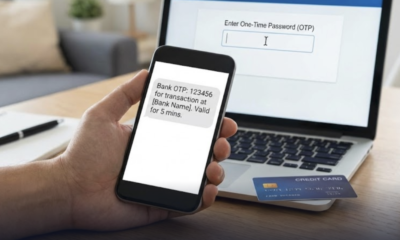
According to the Central Bank, banks and financial institutions are now required to improve how they verify transactions and avoid depending on a single authentication method, such as SMS alerts or one-time passwords (OTPs), which fraudsters increasingly target through sophisticated cyber scams.

Real-time fraud monitoring

The regulator also confirmed it has started building a new Anti-Fraud Operations Centre known as CAFOC, which will act as a central platform for monitoring suspicious activity in real time and coordinating rapid responses across the banking sector.

The new centre is expected to combine advanced tracking systems, analytical tools and data-driven fraud detection capabilities designed to identify emerging threats faster and improve coordination between banks and government authorities.

The Central Bank added that the anti-fraud framework will also help collect and analyse fraud trends and behavioural patterns, allowing regulators to develop more targeted supervisory policies and interventions.

The latest measures arrive as financial fraud risks continue rising worldwide alongside rapid digital transformation and increased reliance on mobile banking, online transactions and electronic payment systems.

Authorities said ongoing engagement with banks and licensed financial institutions has helped strengthen implementation of the updated requirements and improve the sector’s readiness to deal with increasingly complex fraud threats.

Cybersecurity and financial fraud prevention have become major priorities for regulators globally, with many countries introducing stricter digital authentication standards as online scams become more advanced.

Continue Reading

Popular

Exit mobile version
https://headline.ae/