Connect with us

Education

Parents alert: Abu Dhabi introduces stricter rules for student pick-up and drop-off

Published

on

Spread the love

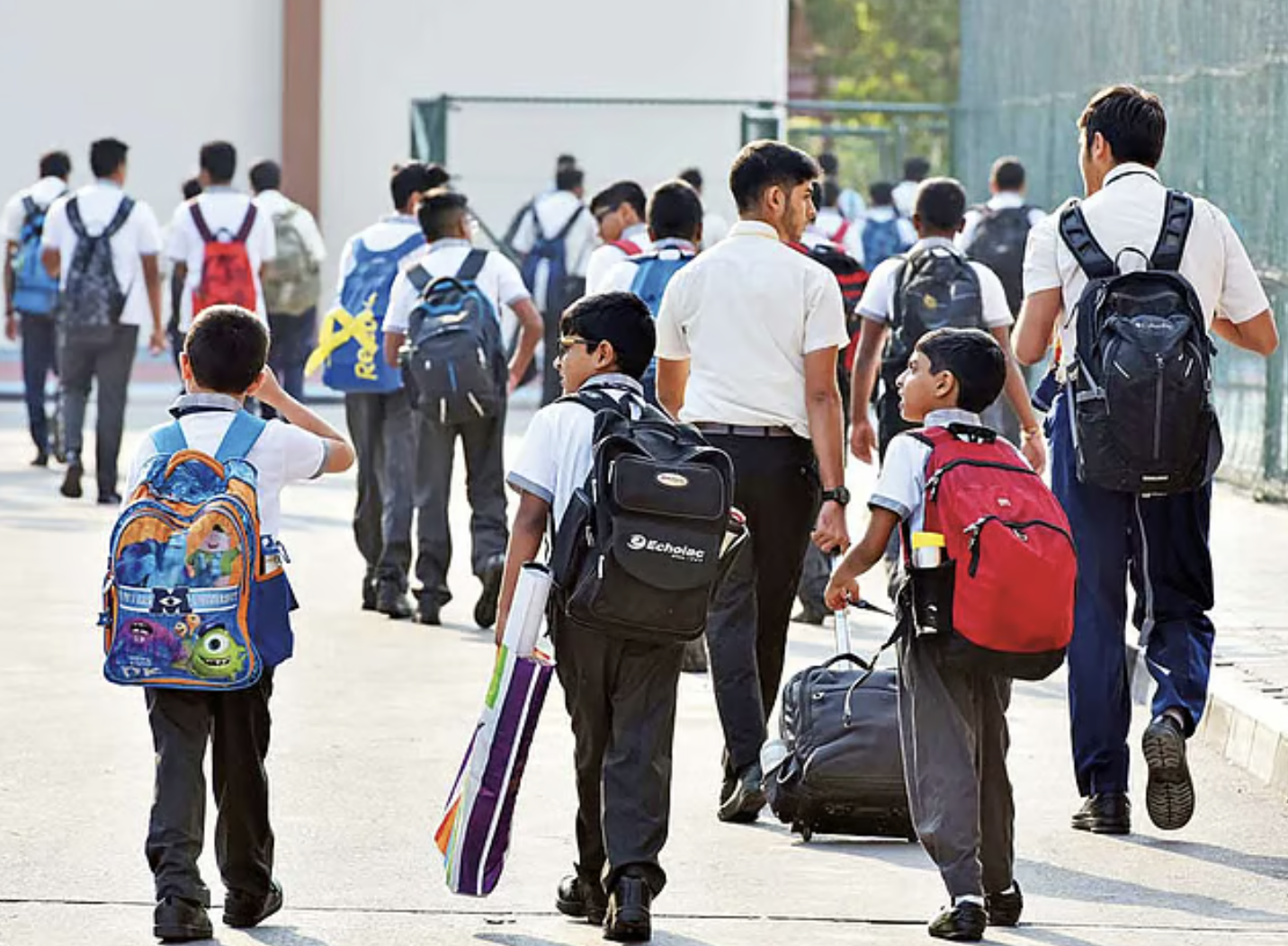
Parents in Abu Dhabi are adjusting to new regulations governing how students arrive at and leave private schools, following a directive from the Department of Education and Knowledge (ADEK) aimed at boosting child safety and transportation security.

Under the updated rules:

  • Schools must assign supervisors to monitor students 45 minutes before classes start and 90 minutes after classes end.
  • Children under 15 years old can no longer arrive at or leave school unaccompanied — this includes walking alone, taking taxis, private cars, ride-shares, or non-school buses.
  • Older students (typically grades 9–12) may travel independently only with signed parental consent, and schools are not responsible for them once they leave campus using non-school transportation.

ADEK requires schools to establish formal handover procedures, ensuring children are released only to authorised adults. Parents must provide advance written notice for any change in who collects their child, including last-minute adjustments. Schools must verify IDs at the gate and maintain records of all authorised pickups.

In addition, schools must have 24/7 security guards at all entry points, logging visitor details and maintaining protocols to manage unauthorised intrusions.

The new rules clarify that school supervision only covers the prescribed windows and does not extend to students dropped off outside those times without the school’s knowledge. Parents of older students must sign waivers acknowledging that schools bear no responsibility for incidents involving non-school transportation, such as scooters or bicycles.

ADEK has warned that non-compliance could lead to legal or administrative penalties, and the authority may intervene directly if a school is found neglecting its obligations.


With over 35 years of experience in journalism, copywriting, and PR, Michael Gomes is a seasoned media professional deeply rooted in the UAE’s print and digital landscape.

Education

Dubai schools to continue distance learning until April 3, KHDA confirms

Published

on

Spread the love

Schools across Dubai will remain on distance learning for at least two more weeks, with authorities extending remote education measures to ensure student safety.

The Knowledge and Human Development Authority (KHDA) confirmed that all public and private schools, as well as university students, will continue online classes until Friday, April 3. The arrangement came into effect on Monday, March 23, following the spring break.

The decision also applies to teachers and administrative staff, who will continue working remotely during this period.

Situation under weekly review

The Ministry of Education and the Ministry of Higher Education and Scientific Research will monitor developments on a weekly basis to determine when normal classroom learning can safely resume.

Authorities said the temporary shift to distance learning is aimed at safeguarding the health and well-being of students and the wider community.

Private educational institutions, including nurseries, may submit requests to resume in-person learning, which will be reviewed on a case-by-case basis.

Students begin Term 3 online

Hundreds of thousands of students across the UAE have resumed Term 3 remotely after the spring break, which was brought forward by one week.

The move follows directives from UAE education authorities to ensure continuity of learning while prioritising public safety.

Continue Reading

Education

CBSE Class 10 exam changes in UAE: What students and parents need to know

Published

on

Spread the love

The Central Board of Secondary Education (CBSE) has announced a special assessment scheme for Class 10 students in the region after several exams were cancelled due to the ongoing regional conflict.

If you’re a student or parent wondering how results will now be calculated, here’s a simple breakdown.

Why were exams cancelled?

CBSE cancelled the remaining Class 10 board exams on March 5, 2026, after reviewing the situation across several countries, including the UAE, Saudi Arabia, Qatar, Kuwait, Oman, Bahrain, and Iran.

However, exams held between February 17 and 28 were completed successfully.

How will marks be calculated?

Your result depends on how many exams you were able to take:

If you appeared for all exams

  • Your result will be based on your actual marks

If you appeared for 4 exams

  • Missing subjects = average of your best 3 subjects

If you appeared for 3 exams

  • Missing subjects = average of your best 2 subjects

If you appeared for only 2 exams

  • All remaining subjects = average of those 2 subjects

What about internal assessment?

  • Internal assessment marks (already submitted by schools) will remain unchanged
  • These will be included in your final result as usual

If you changed your exam centre

  • If you moved to another country and took exams there
    Your result will be based on your actual performance

Can students improve their marks?

  • Yes. You will get a chance to improve your scores by appearing in the second board exams
  • This will follow CBSE’s regular improvement policy

When will results be announced?

  • Results for Middle East students will be declared along with all CBSE students

Points to remember

  • This assessment scheme is final
  • No special exams will be held outside CBSE’s policy
  • CBSE’s decision will be final and binding

What about Class 12 students?

  • CBSE has said that the Class 12 assessment plan will be announced separately

CBSE is using a fair average-based system to ensure students are not disadvantaged due to missed exams. If you wrote more papers, your result reflects more of your actual performance. If you wrote fewer, averages are used to fill the gaps, while still giving you a chance to improve later.

Continue Reading

Education

UAE extends remote learning: Schools roll out plans to ensure seamless continuity of studies

Published

on

Spread the love

In a proactive move to support student well-being and ensure uninterrupted education, the UAE has announced a two-week extension of distance learning across nurseries, schools, and higher education institutions.

The decision, led by the Education, Human Development and Community Development Council, reflects a balanced approach, prioritising safety while maintaining academic continuity for students nationwide.

All public and private institutions will continue remote learning, with the situation subject to weekly review. Officials stressed that updates will be communicated through official channels, ensuring transparency and clarity for families.

To accommodate varying institutional needs, a flexible mechanism will allow private schools and universities to apply for a return to in-person learning when necessary, based on operational and academic requirements.

Supporting families further, flexible remote work arrangements will be introduced for federal government employees who are caregivers of children from nursery through Grade 8—reinforcing the UAE’s broader commitment to family wellbeing.

Schools outline clear learning roadmaps

As the extended distance learning period begins, GEMS Education has provided parents with a detailed roadmap outlining how learning will continue across its network.

In a communication, the group confirmed staggered timelines based on curricula and emirate-specific regulations:

  • International curriculum schools will shift to online learning from March 23
  • Indian curriculum schools (CBSE, ICSE, ISC):
    • In Sharjah (SPEA) and Abu Dhabi (ADEK): online learning from March 30 to April 6
  • Dubai schools under the Knowledge and Human Development Authority (KHDA) will begin the new academic year on April 6

All GEMS schools are expected to return to in-person learning from April 6, in line with regulatory guidance.

Seamless learning experience

During the remote learning period:

  • Students will follow regular timetables
  • Attendance and engagement will continue as normal
  • Assessments and academic progress will remain on track

Schools will share detailed schedules and access instructions directly with families.

With strong coordination between authorities, schools, and families, the UAE continues to demonstrate a forward-thinking, resilient approach, ensuring education remains uninterrupted while prioritising safety and wellbeing.


Continue Reading

Popular

Exit mobile version
https://headline.ae/