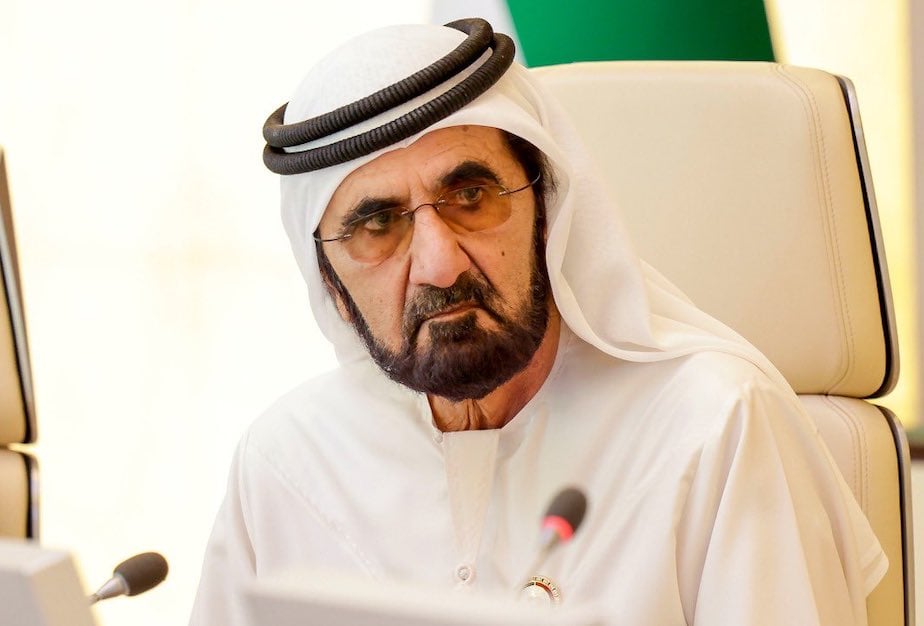
An integrated project to develop a rain drainage network in Dubai has been approved at a cost of Dh30-billion, announced Sheikh Mohammed bin Rashid Al Maktoum, Vice-President and Prime Minister of UAE, and Ruler of Dubai, on Monday.
الأخوة والأخوات .. اعتمدنا اليوم مشروعاً متكاملاً لتطوير شبكة تصريف الأمطار بدبي بكلفة 30 مليار درهم . . أكبر مشروع لتجميع مياه الأمطار في نظام واحد على مستوى المنطقة . . والذي سيرفع الطاقة الاستيعابية لتصريف مياه الأمطار في الإمارة بنسبة 700% ويعزز جاهزية الإمارة لمواجهة… pic.twitter.com/uPLXistjcF
Named ‘Tasreef’, the project will enhance the capacity of Dubai’s rainwater drainage system by 700%, covering all areas of the emirate.
The project is set to be completed by 2033 with construction to start immediately. It will serve Dubai for the next hundred years, added Sheikh Mohammed.
The project, which will cover all areas of Dubai and absorb more than 20 million cubic meters of water per day, is likely to be the largest such network to collect rainwater in the region.
‘Tasreef’ is a continuation of drainage projects launched by Dubai in 2019, covering the Expo Dubai area, Al Maktoum International Airport City, and Jebel Ali.
It comes around two months after unprecedented rains flooded the UAE. As a sustainable strategic project, it aims at addressing future climate change impacts, such as increased rainfall, with a network designed to seamlessly adapt to all rainfall events.
The project will utilise the latest Tunnel Boring Machines (TBM), the largest of their kind in the Middle East, known for their efficiency, speed, and high precision in excavation, and their ability to handle various topographical conditions.
The Central Bank of the UAE has rolled out a new financial support package designed to keep banks strong and ensure they continue supporting and safeguarding the broader economy amid global and regional uncertainty.
The package was endorsed during a high-level board meeting chaired by Sheikh Mansour bin Zayed Al Nahyan, underscoring the UAE leadership’s proactive approach to maintaining economic stability.
Built around five key pillars, the initiative is designed to provide banks with greater liquidity, enhanced flexibility, and temporary regulatory relief, ensuring they can continue to support businesses and individuals during uncertain times.
Under the new measures, banks will gain expanded access to liquidity, including the ability to utilise reserve balances and secure term funding in both dirhams and US dollars. This step is expected to keep credit flowing across key sectors of the economy.
The Central Bank has also introduced temporary easing of liquidity and funding requirements, giving financial institutions more room to continue lending. Capital buffer requirements will be relaxed as well, allowing banks to deploy excess capital to support economic activity.
Additionally, new provisions will offer greater flexibility in managing credit risk, including delaying the classification of certain loans affected by current market conditions—providing relief to borrowers facing temporary challenges.
Authorities emphasised that banks are expected to maintain lending and continue supporting customers as part of the UAE’s broader economic response strategy.
Despite global pressures, the UAE’s financial system has shown strong resilience. During its meeting, the Board confirmed that current market conditions have had no significant impact on the health of the banking sector or the efficiency of payment systems.
The Central Bank also highlighted the country’s robust financial position, with foreign exchange reserves exceeding AED 1 trillion and a strong monetary base. The UAE’s banking sector, valued at over AED 5.4 trillion, continues to demonstrate solid fundamentals.
With liquidity levels remaining high and reserves strong, the CBUAE reaffirmed its readiness to take further action if needed to protect financial stability and sustain economic growth.
The Ministry of Education, along with the Ministry of Higher Education and Scientific Research, on Wednesday, March 4, announced that the commencement of spring break for all academic institutions has been pushed forward to March 9, with the last working day to be March 6. Normal classes are scheduled to resume from March 30.
The academic calendar placed the spring break dates originally from March 16 and ending on March 29 which has now moved from March 9 to March 22. The change comes in light of the ongoing regional conflict, with the safety of students and staff at schools and universities as the highest priority.
Classes had transitioned to online learning at the beginning of this week as a precautionary measure for all students and staff, which was further extended up to the end of this week. Exams for students have also been shifted to a remote format, allowing them to complete their assessments safely from home.
Students, parents, and staff are advised to stay updated via official channels only, as the measures aim to protect the safety of all in the education sector.
In a city that thrives on bold ambition and global connection, a new landmark has quietly taken its place at the heart of Dubai’s business future.
DMCC has officially opened The Plaza at Uptown Dubai, a 21,000 square metre open-air destination designed to host everything from high-level corporate summits to large-scale concerts and community gatherings.
For UAE residents and business leaders alike, this isn’t just another development announcement. It’s a signal that Uptown Dubai is stepping into a new era.
A new gathering space in town
Strategically positioned at the centre of Uptown Dubai, The Plaza physically connects the iconic Uptown Tower with the district’s wider commercial and residential community.
Designed to accommodate up to 4,000 guests, the venue features advanced staging, lighting and digital display infrastructure, enabling year-round programming and rapid event turnover.
For Dubai’s fast-moving corporate ecosystem, that means seamless hosting of:
Global trade conferences
Finance and technology forums
Industry expos
Cultural performances
Community celebrations
In a city known for world-class event venues, The Plaza adds something different: scale, accessibility and integration within a thriving business district.
For UAE residents, the venue offers more opportunities for networking, collaboration and global visibility without leaving the city.
Next business hub taking shape
The Plaza’s launch comes as Uptown Dubai moves into its next development phase.
Currently under construction:
Two commercial towers (23 and 17 storeys)
62,000 square metres of additional Grade A commercial and retail space
Once complete, the full district will deliver:
538,000 square metres total gross floor area
232,000 square metres dedicated to Grade A commercial office space
What’s in it for residents
For professionals, it means:
More international events are hosted locally
Increased networking and industry exposure
Expanded commercial opportunities
For residents, it offers:
Open-air concerts and cultural events
Community experiences within a premium urban setting