Connect with us

Business

UAE and Oman launch major economic zone project in Al Buraimi

Published

on

Spread the love

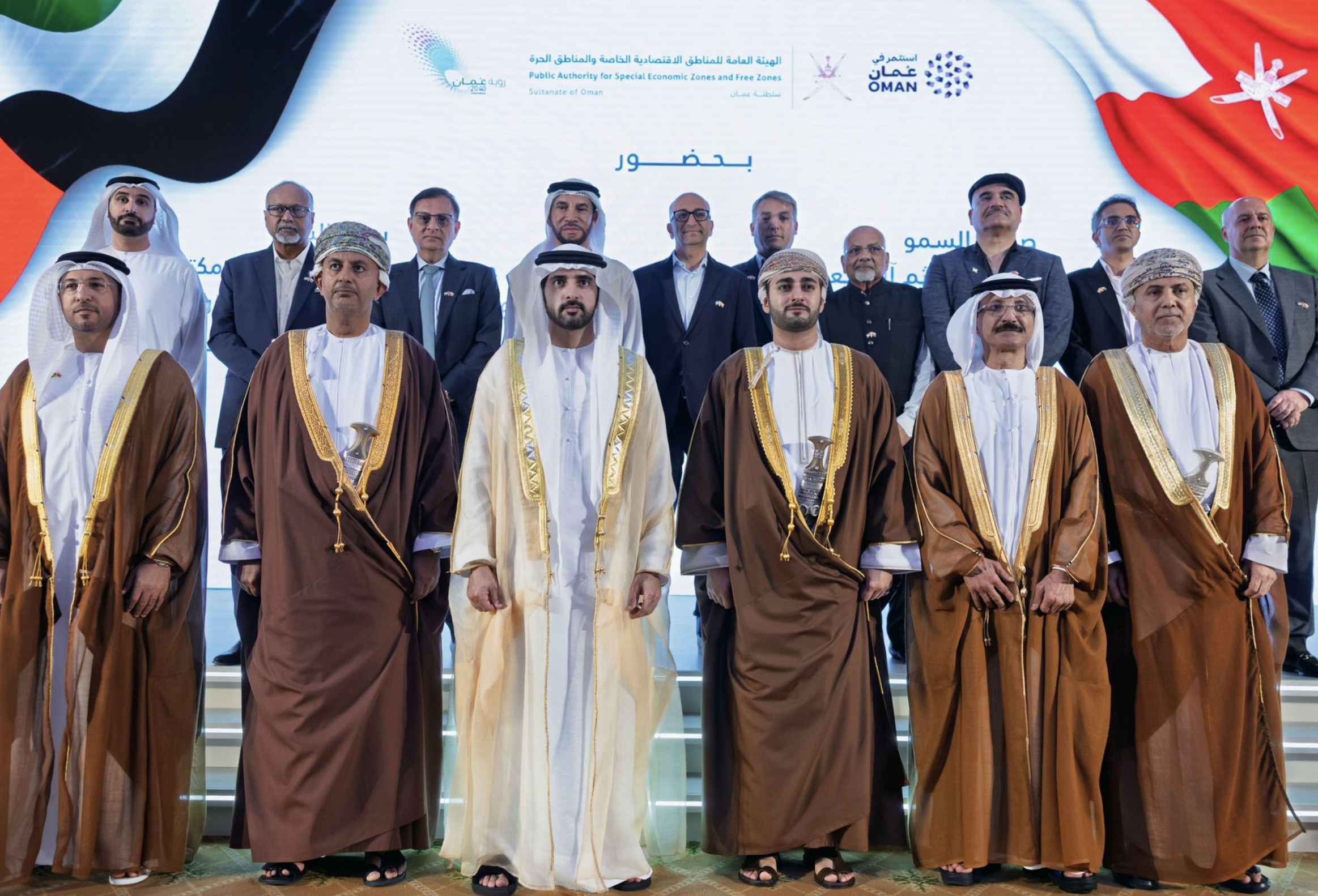
The UAE and Oman have signed an agreement to launch the first phase of the Al Rawdah Special Economic Zone in Al Buraimi Governorate, marking a key milestone in the two nations’ growing economic partnership.

The signing took place in Muscat during the official visit of Sheikh Hamdan bin Mohammed bin Rashid Al Maktoum, Crown Prince of Dubai and the UAE’s Deputy Prime Minister and Minister of Defence, who led a high-level UAE delegation to the Sultanate.

The Al Rawdah SEZ will be developed by Mahadha Development Company, a joint UAE-Oman venture in which DP World holds the majority stake. The first phase will span 14 square kilometres, with plans to expand the zone to 25 sq.km. in the future.

Strategically located to enhance regional connectivity, the zone will focus on key industries including logistics, manufacturing, pharmaceuticals, and food processing. It is expected to serve as a vital trade and transport link between Jebel Ali and Sohar ports.

Omani officials said the new zone supports the country’s Vision 2040 goals by creating jobs, attracting foreign investment, and driving sustainable development across critical sectors.

DP World Group Chairman and CEO Sultan Ahmed bin Sulayem said the project is a testament to the strengthening ties between the UAE and Oman and is poised to deliver long-term economic value to both countries.

With over 35 years of experience in journalism, copywriting, and PR, Michael Gomes is a seasoned media professional deeply rooted in the UAE’s print and digital landscape.

Business

Bank fraud in UAE: New measures in place to protect residents from money scams

Published

on

Spread the love

From convincing phone calls by fake bank officials to bogus shopping websites designed to steal credit card details, financial scams are growing increasingly sophisticated across the UAE.

In response, federal authorities, the Central Bank, and police forces are rolling out a multi-layered defence strategy designed to intercept fraud before it reaches consumers.

The approach focuses on three core pillars: making scams harder to execute, speeding up real-time detection, and providing direct avenues for victims to report crimes and recover losses.

Central Bank mandates

The Central Bank of the UAE (CBUAE) has significantly increased compliance requirements for all licensed financial institutions, shifting the burden of fraud detection directly onto banks.

  • Phasing Out SMS OTPs: The CBUAE is pushing institutions away from single-factor, SMS-based one-time passwords, favouring biometric verification and dynamic app-based authentications to combat SIM-swap and phishing attacks.
  • Anti-Fraud Hub: The regulator established the Central Bank Anti-Fraud Operations Centre (CAFOC) to enable real-time threat monitoring, rapid incident response, and instant data sharing across UAE financial entities.
  • Strict monitoring: Banks are legally required to maintain continuous monitoring systems to flag suspicious transactions, combat social engineering, and immediately report unauthorised activities.

Safety for online shoppers

With cybercriminals increasingly targeting online shoppers, the UAE’s consumer protection framework now treats digital storefronts with the same legal scrutiny as physical retail.

  • E-Commerce Regulations: Federal Decree-Law No. 14 of 2023 sets clear technical standards, legal liabilities, and data protection rules for digital trading platforms operating in the country.
  • Tougher Anti-Counterfeit Penalties: Federal Decree-Law No. 42 of 2023 on Combating Commercial Fraud equips authorities to crack down on fraudulent sellers, corrupt goods, and misleading online commercial practices.
  • Statutory Rights: Federal Law No. 15 of 2020 guarantees data privacy, fair dispute settlement, and monetary compensation for consumers facing fraudulent domestic transactions.

Where residents can report scams 

Authorities urge residents never to absorb financial losses quietly. Several official channels provide dispute resolution and criminal reporting:

  • Ministry of Economy and Tourism: Handles formal consumer disputes, misleading sales complaints, and requests for product recalls, facilitating amicable settlements or judicial referrals.
  • Dubai Police e-Crime Platform: Provides a dedicated portal for reporting cybercrime, identity theft, and electronic banking fraud.
  • Local Consumer Protection Departments: Each emirate maintains direct channels to investigate deceptive trade practices and unauthorised merchant activity.

Scam warning: Dubai Police recently warned against fraudulent Consumer Protection websites that lure users into downloading remote-access apps, allowing criminals to hijack devices and drain linked bank accounts.

Do’s and Don’ts to keep your accounts safe

While state-level defences continue to tighten, personal vigilance remains essential:

  1. Don’t share details: No bank or government entity will ever ask for your password, PIN, or multi-factor authentication code via phone, email, or WhatsApp.
  2. Don’t give remote access: Never download third-party software (such as AnyDesk or TeamViewer) at the request of an unsolicited caller.
  3. Do URL check: Check domain spellings carefully and ensure e-commerce platforms use verified, secure payment gateways before entering card numbers.
  4. Don’t wait, act immediately: If you suspect compromised details or notice an unauthorised charge, freeze your card via your banking app and notify your bank’s fraud unit without delay.

Continue Reading

News

Dubai’s iconic Toyota Building to be demolished in 2027

Published

on

Spread the love

One of Dubai’s most recognisable landmarks on Sheikh Zayed Road is set to disappear, with the Toyota Building scheduled for demolition in 2027.

The confirmation comes from the real estate division managing the property, following recent social media videos showing residents moving out and sharing memories of their time in the building.

Tenants with existing rental contracts are understood to be able to remain in the property until December 2026. However, a specified timeline for the demolition has yet to be set according to reports.

A Sheikh Zayed Road landmark since the 1970s

Officially known as the Nasser Rashid Lootah Building, the 15-storey residential building was completed in 1974, at a time when Sheikh Zayed Road looked dramatically different from the densely developed skyline seen today.

Standing at around 65 metres tall, the building was among the first three structures to rise in the area around what was then known as the First Roundabout.

Over the decades, it became an unmistakable part of Dubai’s cityscape.

Why was it called the Toyota Building?

The building earned its famous nickname thanks to the large Toyota sign that once illuminated its rooftop.

The bright red Toyota logo was installed in 1981 and remained a familiar sight above Sheikh Zayed Road for almost four decades.

The sign was eventually removed in 2018 after the advertising agreement ended, briefly changing the appearance of the landmark.

But Dubai residents got a nostalgic surprise in June 2022, when Toyota UAE brought the iconic logo back, restoring one of the building’s most recognisable features after nearly four years.

A piece of old Dubai

The building has housed generations of residents in its one-, two- and three-bedroom apartments and has watched Dubai transform from a relatively low-rise city into the global metropolis it is today.

For many people who have lived in or travelled along Sheikh Zayed Road over the years, the Toyota Building has been more than just a residential property — its rooftop sign became part of the visual identity of the road.

With residents preparing to leave by the end of 2026 and demolition planned for 2027, another piece of old Dubai is set to make way for the city’s next chapter.

The demolition will mark the end of more than five decades for a building that became an unlikely icon of Dubai’s rapidly changing skyline.

Continue Reading

Announcements

How to rent a car at Etihad Rail stations from Dh80 with no deposit

Published

on

Spread the love

Etihad Rail passengers now have another option for getting around after they step off the train, with a new car rental service offering vehicles from Dh80 to Dh200 per day.

The Rail to Road service, launched through Thrifty Car Rental’s Flexy offering, is currently available at Etihad Rail’s Abu Dhabi and Fujairah passenger stations. The service is designed to solve the first- and last-mile transport challenge for travellers continuing their journey by road.

One of the biggest advantages is that no security deposit is required. Rentals also come with 60km of included driving and prepaid fuel, meaning passengers do not need to worry about refuelling before returning the vehicle.

Three car categories to choose from

Travellers can select from three vehicle categories depending on their needs and budget.

Essential is aimed at passengers looking for a practical and affordable option, with cars such as the Toyota Yaris, Suzuki Baleno and Hyundai Accent.

Comfort steps up to larger cars and compact SUVs, including models such as the Mazda CX-3, Hyundai Creta and Mazda 6.

For those wanting something larger or more premium, Stretch includes vehicles such as the Audi A3, Mazda CX-90, Jeep Cherokee, Nissan Patrol and Jeep Wrangler.

Prices range from around Dh80 to Dh200 per 24-hour rental, depending on the vehicle category.

You can rent a car when you arrive

Passengers do not have to book weeks in advance. The service allows travellers to reserve a vehicle before their train journey, book after reaching the station or simply walk in and rent a car, subject to availability.

The rental period is based on a 24-hour cycle rather than being linked to the customer’s train arrival or departure time. This gives passengers more flexibility if their travel plans change.

Additional kilometres beyond the included 60km can also be purchased for an extra fee.

Cars can be returned to other Thrifty locations

The service is primarily designed for passengers to collect and return their vehicles at the same Etihad Rail station.

However, customers can arrange to return the car at another Thrifty location for a nominal one-way fee. This gives travellers more flexibility when their onward journey does not bring them back to the original station.

Car rental can be added to your train booking

The rental option has been integrated into the Etihad Rail booking journey, allowing passengers to add a car when arranging their train travel.

The system is expected to be further developed to make the car rental option more visible and easier to use.

The Rail to Road initiative forms part of a five-year partnership between Etihad Rail and Thrifty, focused on improving connections between passenger stations and final destinations.

Thrifty plans to invest more than Dh10 million over five years in expanding its fleet, digital systems and customer services. An initial fleet of around 500 vehicles is planned, with the potential to grow as demand increases and Etihad Rail expands its passenger network.

The wider rollout is also expected to include digital kiosks and customer assistance desks across Etihad Rail’s 11 passenger stations.

With train travel connecting more parts of the UAE, the new service could make the journey considerably easier for passengers whose final destination is beyond the rail station.

EtihadRail RailToRoad UAE AbuDhabi Fujairah UAETransport DubaiTransport PublicTransport CarRental Thrifty UAETravel AbuDhabiTravel FujairahTravel TravelUAE UAETravelNews FirstMile LastMile SmartMobility UAENews TravelUpdate

Etihad Rail passengers can now rent cars from Dh80 a day with no deposit

Etihad Rail passengers now have another option for getting around after they step off the train, with a new car rental service offering vehicles from Dh80 to Dh200 per day.

The Rail to Road service, launched through Thrifty Car Rental’s Flexy offering, is currently available at Etihad Rail’s Abu Dhabi and Fujairah passenger stations. The service is designed to solve the first- and last-mile transport challenge for travellers continuing their journey by road.

One of the biggest advantages is that no security deposit is required. Rentals also come with 60km of included driving and prepaid fuel, meaning passengers do not need to worry about refuelling before returning the vehicle.

Three car categories to choose from

Travellers can select from three vehicle categories depending on their needs and budget.

Essential is aimed at passengers looking for a practical and affordable option, with cars such as the Toyota Yaris, Suzuki Baleno and Hyundai Accent.

Comfort steps up to larger cars and compact SUVs, including models such as the Mazda CX-3, Hyundai Creta and Mazda 6.

For those wanting something larger or more premium, Stretch includes vehicles such as the Audi A3, Mazda CX-90, Jeep Cherokee, Nissan Patrol and Jeep Wrangler.

Prices range from around Dh80 to Dh200 per 24-hour rental, depending on the vehicle category.

You can rent a car when you arrive

Passengers do not have to book weeks in advance. The service allows travellers to reserve a vehicle before their train journey, book after reaching the station or simply walk in and rent a car, subject to availability.

The rental period is based on a 24-hour cycle rather than being linked to the customer’s train arrival or departure time. This gives passengers more flexibility if their travel plans change.

Additional kilometres beyond the included 60km can also be purchased for an extra fee.

Cars can be returned to other Thrifty locations

The service is primarily designed for passengers to collect and return their vehicles at the same Etihad Rail station.

However, customers can arrange to return the car at another Thrifty location for a nominal one-way fee. This gives travellers more flexibility when their onward journey does not bring them back to the original station.

Car rental can be added to your train booking

The rental option has been integrated into the Etihad Rail booking journey, allowing passengers to add a car when arranging their train travel.

The system is expected to be further developed to make the car rental option more visible and easier to use.

The Rail to Road initiative forms part of a five-year partnership between Etihad Rail and Thrifty, focused on improving connections between passenger stations and final destinations.

Thrifty plans to invest more than Dh10 million over five years in expanding its fleet, digital systems and customer services. An initial fleet of around 500 vehicles is planned, with the potential to grow as demand increases and Etihad Rail expands its passenger network.

The wider rollout is also expected to include digital kiosks and customer assistance desks across Etihad Rail’s 11 passenger stations.

With train travel connecting more parts of the UAE, the new service could make the journey considerably easier for passengers whose final destination is beyond the rail station.

Continue Reading

Popular

Exit mobile version
https://headline.ae/