Etihad Rail passengers now have another option for getting around after they step off the train, with a new car rental service offering vehicles from Dh80 to Dh200 per day.
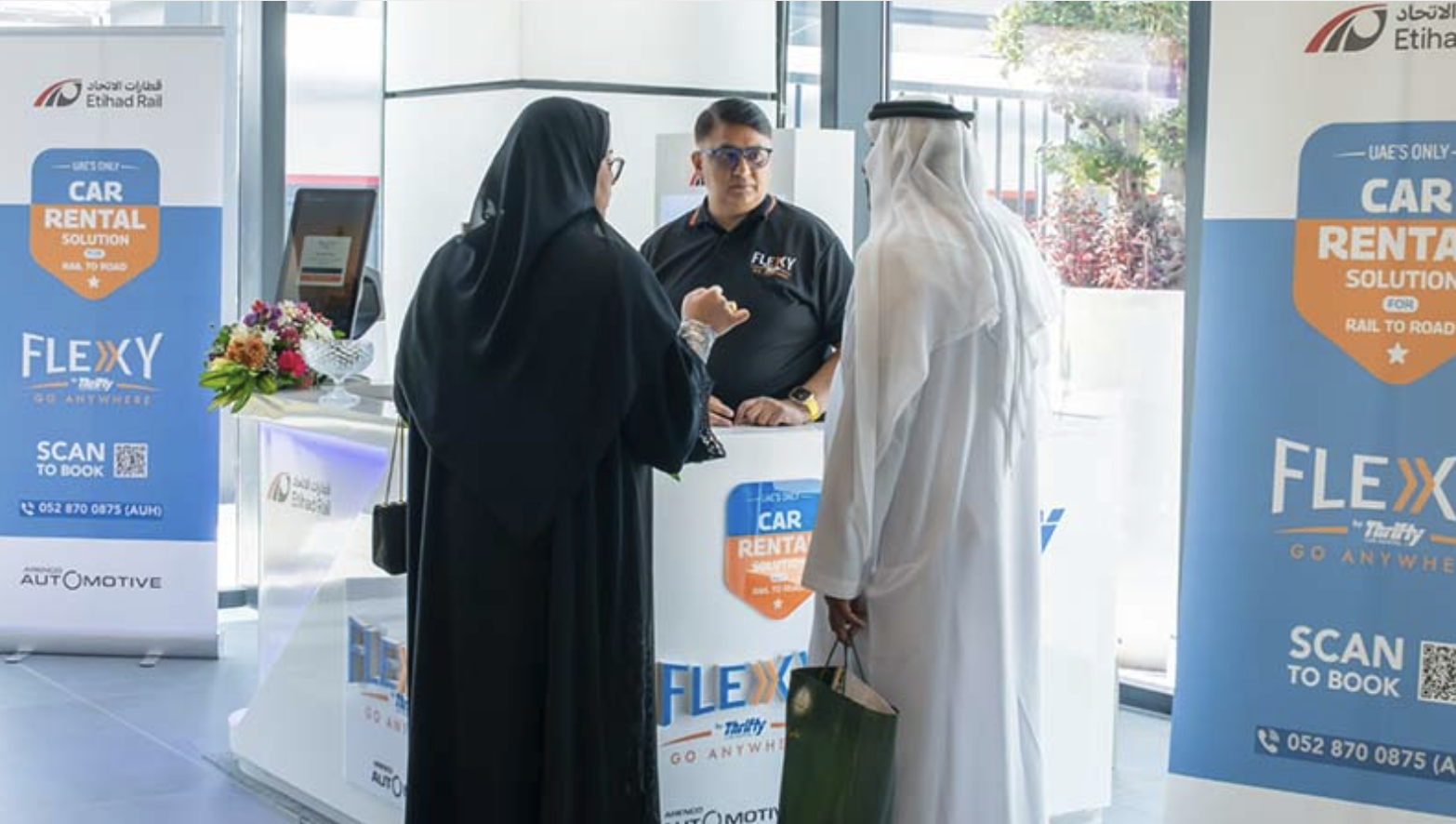
The Rail to Road service, launched through Thrifty Car Rental’s Flexy offering, is currently available at Etihad Rail’s Abu Dhabi and Fujairah passenger stations. The service is designed to solve the first- and last-mile transport challenge for travellers continuing their journey by road.
One of the biggest advantages is that no security deposit is required. Rentals also come with 60km of included driving and prepaid fuel, meaning passengers do not need to worry about refuelling before returning the vehicle.
Three car categories to choose from
Travellers can select from three vehicle categories depending on their needs and budget.
Essential is aimed at passengers looking for a practical and affordable option, with cars such as the Toyota Yaris, Suzuki Baleno and Hyundai Accent.
Comfort steps up to larger cars and compact SUVs, including models such as the Mazda CX-3, Hyundai Creta and Mazda 6.
For those wanting something larger or more premium, Stretch includes vehicles such as the Audi A3, Mazda CX-90, Jeep Cherokee, Nissan Patrol and Jeep Wrangler.
Prices range from around Dh80 to Dh200 per 24-hour rental, depending on the vehicle category.
You can rent a car when you arrive
Passengers do not have to book weeks in advance. The service allows travellers to reserve a vehicle before their train journey, book after reaching the station or simply walk in and rent a car, subject to availability.
The rental period is based on a 24-hour cycle rather than being linked to the customer’s train arrival or departure time. This gives passengers more flexibility if their travel plans change.
Additional kilometres beyond the included 60km can also be purchased for an extra fee.
Cars can be returned to other Thrifty locations
The service is primarily designed for passengers to collect and return their vehicles at the same Etihad Rail station.
However, customers can arrange to return the car at another Thrifty location for a nominal one-way fee. This gives travellers more flexibility when their onward journey does not bring them back to the original station.
Car rental can be added to your train booking
The rental option has been integrated into the Etihad Rail booking journey, allowing passengers to add a car when arranging their train travel.
The system is expected to be further developed to make the car rental option more visible and easier to use.
The Rail to Road initiative forms part of a five-year partnership between Etihad Rail and Thrifty, focused on improving connections between passenger stations and final destinations.
Thrifty plans to invest more than Dh10 million over five years in expanding its fleet, digital systems and customer services. An initial fleet of around 500 vehicles is planned, with the potential to grow as demand increases and Etihad Rail expands its passenger network.
The wider rollout is also expected to include digital kiosks and customer assistance desks across Etihad Rail’s 11 passenger stations.
With train travel connecting more parts of the UAE, the new service could make the journey considerably easier for passengers whose final destination is beyond the rail station.
EtihadRail RailToRoad UAE AbuDhabi Fujairah UAETransport DubaiTransport PublicTransport CarRental Thrifty UAETravel AbuDhabiTravel FujairahTravel TravelUAE UAETravelNews FirstMile LastMile SmartMobility UAENews TravelUpdate
Etihad Rail passengers can now rent cars from Dh80 a day with no deposit
Etihad Rail passengers now have another option for getting around after they step off the train, with a new car rental service offering vehicles from Dh80 to Dh200 per day.
The Rail to Road service, launched through Thrifty Car Rental’s Flexy offering, is currently available at Etihad Rail’s Abu Dhabi and Fujairah passenger stations. The service is designed to solve the first- and last-mile transport challenge for travellers continuing their journey by road.
One of the biggest advantages is that no security deposit is required. Rentals also come with 60km of included driving and prepaid fuel, meaning passengers do not need to worry about refuelling before returning the vehicle.
Three car categories to choose from
Travellers can select from three vehicle categories depending on their needs and budget.
Essential is aimed at passengers looking for a practical and affordable option, with cars such as the Toyota Yaris, Suzuki Baleno and Hyundai Accent.
Comfort steps up to larger cars and compact SUVs, including models such as the Mazda CX-3, Hyundai Creta and Mazda 6.
For those wanting something larger or more premium, Stretch includes vehicles such as the Audi A3, Mazda CX-90, Jeep Cherokee, Nissan Patrol and Jeep Wrangler.
Prices range from around Dh80 to Dh200 per 24-hour rental, depending on the vehicle category.
You can rent a car when you arrive
Passengers do not have to book weeks in advance. The service allows travellers to reserve a vehicle before their train journey, book after reaching the station or simply walk in and rent a car, subject to availability.
The rental period is based on a 24-hour cycle rather than being linked to the customer’s train arrival or departure time. This gives passengers more flexibility if their travel plans change.
Additional kilometres beyond the included 60km can also be purchased for an extra fee.
Cars can be returned to other Thrifty locations
The service is primarily designed for passengers to collect and return their vehicles at the same Etihad Rail station.
However, customers can arrange to return the car at another Thrifty location for a nominal one-way fee. This gives travellers more flexibility when their onward journey does not bring them back to the original station.
Car rental can be added to your train booking
The rental option has been integrated into the Etihad Rail booking journey, allowing passengers to add a car when arranging their train travel.
The system is expected to be further developed to make the car rental option more visible and easier to use.
The Rail to Road initiative forms part of a five-year partnership between Etihad Rail and Thrifty, focused on improving connections between passenger stations and final destinations.
Thrifty plans to invest more than Dh10 million over five years in expanding its fleet, digital systems and customer services. An initial fleet of around 500 vehicles is planned, with the potential to grow as demand increases and Etihad Rail expands its passenger network.
The wider rollout is also expected to include digital kiosks and customer assistance desks across Etihad Rail’s 11 passenger stations.
With train travel connecting more parts of the UAE, the new service could make the journey considerably easier for passengers whose final destination is beyond the rail station.