

News
UAE is fast-tracking low-carbon economic growth to deliver new jobs, new industries




The UAE is fast-tracking low-carbon economic growth to deliver new jobs, new industries and new revenue streams, said Dr Sultan bin Ahmed Al Jaber, Minister of Industry and Advanced Technology and Special Envoy for Climate Change.
He was speaking at the Middle East and North Africa Climate Week (Menacw2022). Dr Al Jaber explained that the UAE is adopting a comprehensive, balanced and proactive approach to climate action and the energy transition that delivers sustainable economic growth.
“As a young country, and a responsible energy leader, the UAE has always faced the future with a positive mindset, and addressed challenges head-on. This is why we stopped flaring 30 years before the World Bank asked the industry to do so. It’s why we achieved 0.01 per cent methane intensity 20 years before the global pledge asking for a gradual reduction. It’s why we began to capture C02 (carbon dioxide) on an industrial scale before the UNFCCC (United Nations Framework Convention on Climate Change) called it an essential tool for de-carbonisation. And it’s why we became the first hydrocarbon producer to power our operations with zero-carbon energy,” Dr. Al Jaber added.
He pointed out that the UAE was also the first country in the region to sign and ratify the Paris Agreement, the first to commit to an economy-wide reduction in emissions, and the first to announce a Net Zero by 2050 Strategic Initiative. The UAE has chosen to lead in these areas because it views climate challenges “not just as problems to fix, but as opportunities to seize,” he underlined.

While the world mobilises investments for a new energy economy and addresses the climate challenge, Dr. Al Jaber emphasised that recent events have “reminded us that we cannot simply switch off the current energy system”.
“We all need to recognise that the energy transition will take time and require sober, thoughtful planning. It is more evident now than ever before that this cannot be rushed. The push to divest from hydrocarbons has led to a supply crunch that is having the biggest impact on the most exposed. The clear lesson is that we should not adopt climate policies that lead to energy poverty. We need to keep investing in low-cost, low-carbon energy that can provide the baseload power that the world relies on,” said Dr. Al Jaber.
He had reiterated this message during his speech at the Atlantic Council Global Energy Forum held at Expo 2020 Dubai.
On climate finance, he said it can be an effective tool for climate action as he urged the international community to do more and fulfil the $100 billion climate pledge made to developing nations over a decade ago.
“The international community continues to fall short of the $100 billion climate finance pledge they made to developing nations over a decade ago. We need bold targets going forward and we need to start treating climate risks as potential global security risks.
“We have taken a partnership approach focused on projects in countries most exposed to climate risks because we know that local resilience builds global resilience. We have provided over $1 billion in climate aid to more than 40 countries. And our experience tells us that once concessional finance is there, private finance will follow.”
He concluded by extending the UAE’s invitation to governments, the private sector, financial institutions, and civil society to partner on solutions that make sense for our climate and the economy. He said, “We should not have to choose between the two. We can and we must make progress on both.”
The Mena Climate Week aims to accelerate collaboration and integrate climate action into global pandemic recovery. Other dignitaries present at the opening ceremony of this first edition included Mariam bint Mohammed Almheiri, minister of climate change and environment, Saeed Mohammed Al Tayer, Chairman of the World Green Economy Organisation (Wgeo) and MD & CEO of Dubai Electricity and Water Authority (Dewa); and Patricia Espinosa, E
executive secretary of UNFCCC.





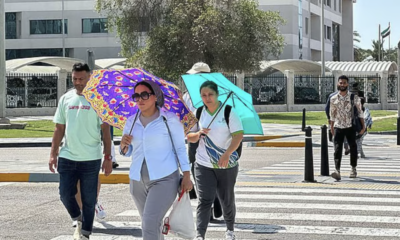




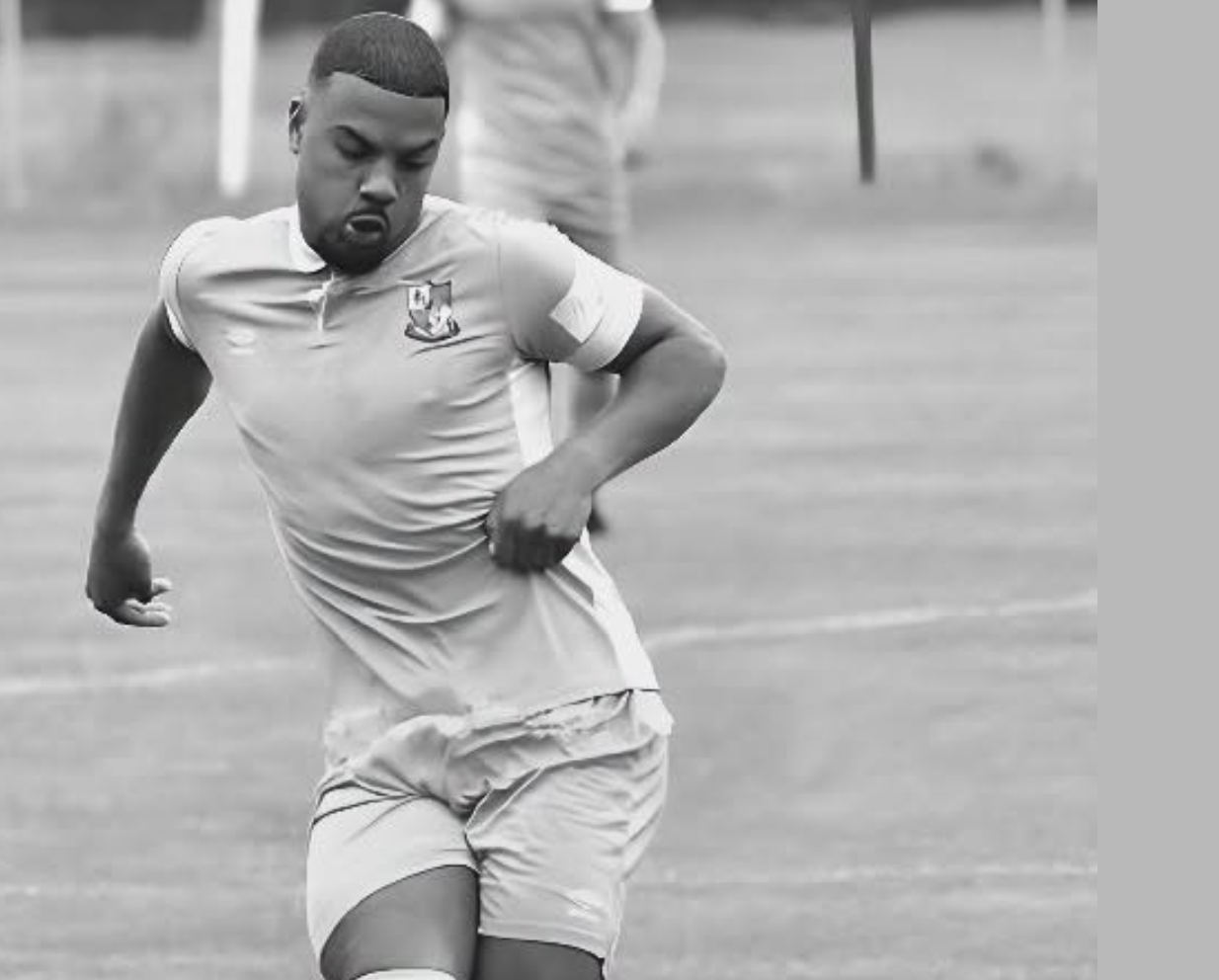
Tributes have poured in after the son of former Chelsea star Eddie Newton was found dead alongside his friend following a hike in the UAE, where temperatures soared to 50C.
Cassius Newton, 34, and his friend Aran Martinson, 33, were found by rescuers on July 18 after setting out on a hike in the mountainous Wadi Naqab region.
The pair, from Dorset and Essex respectively, both lived and worked in the UAE. Their bodies were discovered between 3km and 4km from their vehicle.
According to a report, Chelmsford area coroner Michelle Brown said their provisional causes of death included cardiac and respiratory arrest.
Cassius, a non-league footballer, was the son of former Chelsea midfielder and coach Eddie Newton, who spent more than a decade with the club.
His wife was in the UK when she became concerned after Cassius failed to contact her following the hike and reported him missing.
The two men had been living at a luxury resort in Ras Al Khaimah.
Tributes after desert tragedy


Tributes poured in after the deaths.
Aran’s wife described him as “incredibly driven, hardworking and ambitious”, saying he had recently begun a new chapter in his career and was excited about the future.
Blackfield & Langley Football Club paid tribute to their former player, saying: “It is with heavy hearts that we share the sad news of the passing of former player Cassius Newton; our thoughts and deepest sympathies are with his family and friends during this difficult time.”
National League club Eastleigh, where Cassius had previously played, said it was “deeply saddened” by his death.
Chelsea connection


Cassius’ father Eddie Newton played for Chelsea from 1990 to 2001 and famously scored in the club’s 1997 FA Cup final victory.
The former midfielder also represented Cardiff City, Birmingham City, Oxford United and Barnet.
After retiring as a player, Newton moved into coaching, working as assistant manager at MK Dons and West Brom before returning to Chelsea.
He later served as assistant manager under Roberto Di Matteo and Rafael Benítez.
(With inputs from BBC, The Sun)


Dubai-born HOP Events targets 25 cities in global expansion

New-look Abu Dhabi T10 raises the stakes with star-studded 2026 draft; Naseem, Hales, Amir and Shanaka among top picks


