Connect with us

Announcements

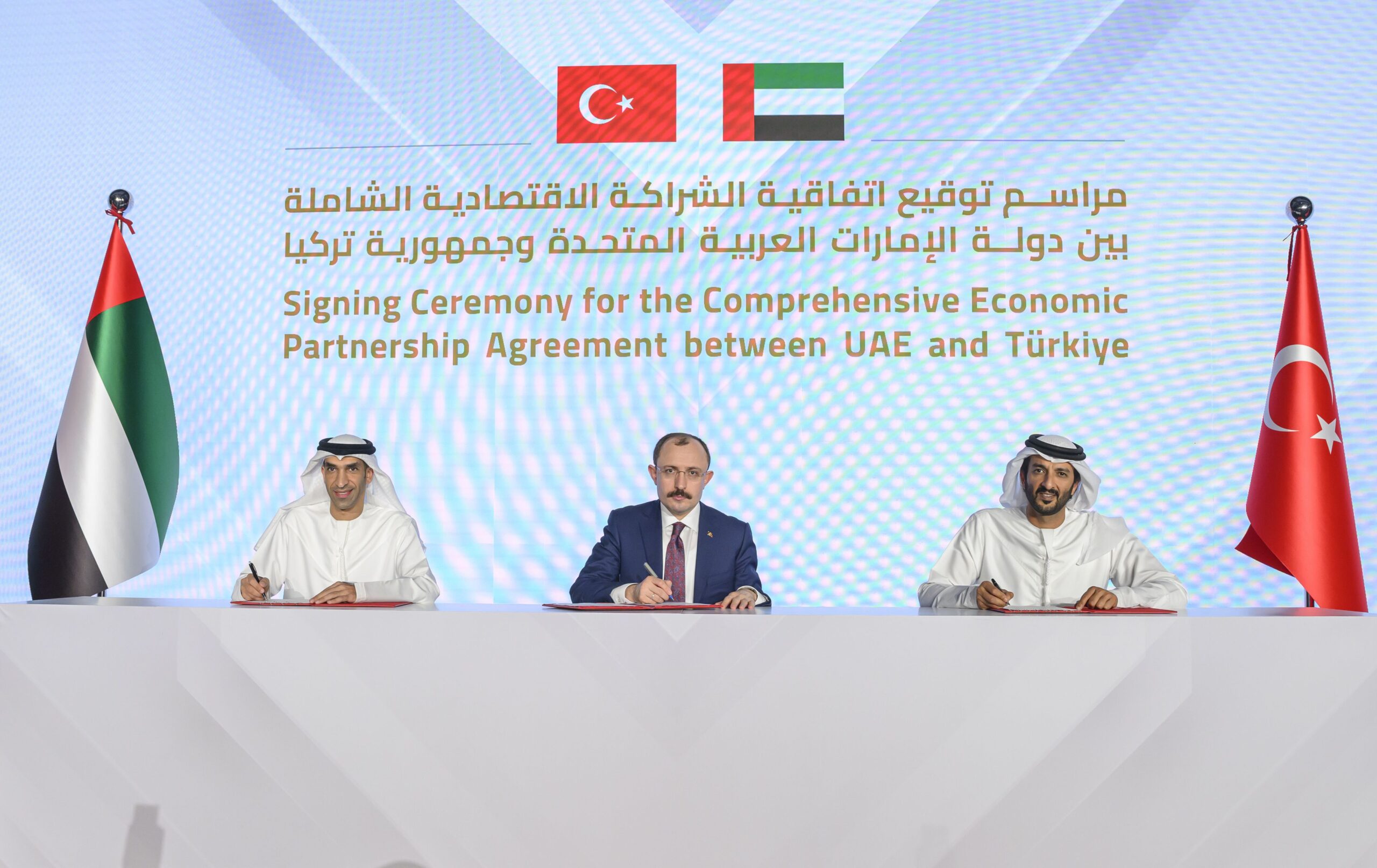
UAE’s economic agreements with Turkey and Indonesia spring into action

Published

on

Spread the love

The United Arab Emirates (UAE) is entering a new era of economic collaboration with two rapidly growing global players as it activates two of its Comprehensive Economic Partnership Agreements (CEPAs). The UAE-Türkiye CEPA and the UAE-Indonesia CEPA have officially come into force, setting the stage for enhanced trade and investment cooperation.

The primary goal of these CEPAs is to foster economic ties by doubling non-oil trade. The UAE-Türkiye CEPA aims to elevate bilateral non-oil trade to an impressive $40 billion within five years, while the UAE’s CEPA with Indonesia seeks to push non-oil trade beyond $10 billion within the same timeframe. These agreements also aim to facilitate investment projects valued at $10 billion in various sectors.

In the words of HE Al-Zeyoudi, “The implementation of our CEPAs with Türkiye and Indonesia marks a significant step forward in our foreign trade program. Both agreements will unlock significant opportunities for our private sector in two of the world’s most dynamic centers of growth.”

These CEPAs are the third and fourth of their kind to come into force for the UAE, following successful agreements with India in May 2022 and Israel in April 2023. They are a testament to the UAE’s foreign trade agenda, strategically forging robust economic connections with nations of global importance. Both CEPAs promise to reduce or remove tariffs on a wide range of goods, eliminate trade barriers, and create pathways for investments in vital sectors like logistics, energy, food production, fintech, e-commerce, and travel and tourism.

The UAE-Indonesia CEPA, inked in Abu Dhabi in July 2022, aims to significantly boost bilateral non-oil trade from $4.08 billion to over $10 billion within five years. Additionally, the agreement targets a combined trade in services worth $630 million by 2030. Notably, over 80 percent of UAE exports to Indonesia will now be exempt from customs duties under this pact. This partnership also has an eye on nurturing the rapidly expanding Islamic economy, projected to reach $3.2 trillion by 2024. It will accelerate investment projects worth $10 billion across sectors like agriculture, energy, infrastructure, and logistics. The UAE-Türkiye CEPA is equally impactful, having eliminated or reduced customs duties on 82 percent of product lines, accounting for more than 93 percent of bilateral non-oil trade. Türkiye was the UAE’s fastest-growing top ten trading partner in 2022, witnessing a 40 percent increase in non-oil trade to $18.9 billion. The newly liberalized trade environment is set to drive this figure to an impressive $40 billion within the next five years.

HE Al Zeyoudi also stressed that the Comprehensive Economic Partnership Agreements play a vital role in attaining the nation’s objectives, in particular the vision laid out in “We The UAE 2031”, which seeks to double the UAE’s non-oil foreign trade to AED4 trillion and elevate national exports to AED800 billion. The recently published statistics from H1, 2023, which show a record non-oil foreign trade value of AED1.239 trillion for the first six months of the year, demonstrate that the UAE is firmly on track – and that the CEPA program will help maintain this upward trajectory.

Announcements

India’s new passport fee rules explained: Who pays more and who gets discounts ?

Published

on

Spread the love

India will increase passport issuance and renewal fees by as much as 75% from 1 July, according to amendments to the Passport Rules notified by the Ministry of External Affairs (MEA).

The revision, announced through a gazette notification issued on 20 June, marks the first major increase in passport fees since 2012. The move comes a day after the Indian government clarified that a passport is primarily a travel document and should not be treated as proof of citizenship.

How much will a new passport cost?

Under the revised rates, a standard 36-page passport will cost Rs2,500 under the normal scheme, up from Rs1,500. Applications under the Tatkaal (expedited) scheme will rise from Rs3,500 to Rs5,000.

A 60-page passport will now cost Rs3,500 under the normal process and Rs6,000 under Tatkaal, compared with the current Rs2,000 and Rs4,000 respectively.

For Non-Resident Indians (NRIs), fees will also increase significantly, with a standard 36-page passport rising from $75 to $125 and a 60-page passport from $100 to $175.

Higher charges for lost or damaged passports

Applicants seeking a replacement for a lost or damaged 36-page passport will have to pay Rs5,000 under the normal scheme and Rs7,500 under Tatkaal, up from Rs3,000 and Rs5,000 respectively.

For a 60-page passport, the fee will rise to Rs6,000 under the normal process and Rs8,500 under Tatkaal.

What about children’s passports?

Passport fees for minors have also been revised upward.

For applicants below 18 years of age, a fresh 36-page passport will now cost Rs1,750 under the normal scheme and Rs4,250 under Tatkaal, compared with the current rates of Rs1,000 and Rs3,000.

The cost of replacing a lost or damaged passport for minors has also increased, with fees now set at Rs4,250 under the normal scheme and Rs6,750 under Tatkaal.

Changes to other passport-related services

The government has also increased charges for services such as Police Clearance Certificates (PCCs), Surrender Certificates, Global Entry Programme verification and other passport-related certificates.

The fee for these services will now be Rs750 under the normal scheme. For NRIs, the charge will be $40.

Any relief for applicants?

The revised framework introduces a 10% discount on fresh passport applications for children up to eight years of age and senior citizens aged above 60.

However, the concession will apply only to new passport applications and not to passport reissues.

Why does it matter?

The increase represents the first passport fee revision in 14 years and will affect millions of applicants in India and abroad. With fees rising across nearly all categories, the cost of obtaining or renewing a passport is set to become significantly higher from July 1.

Continue Reading

Announcements

Paid parking hours in Sharjah extended till midnight from July 1

Published

on

Spread the love

Sharjah City Municipality has announced that paid public parking hours across the emirate will be extended until midnight from July 1, 2026, in a move aimed at addressing rising demand for parking spaces.

The new timings will apply to all paid parking areas in Sharjah, Kalba, Khorfakkan and Al Dhaid, including zones marked with yellow signboards. These will now operate in line with blue-zone areas, which already remain chargeable until 12am.

The municipality said parking will remain free on Fridays and official public holidays, except in designated areas where charges apply throughout the week, including holidays. In total, the revised system covers around 124,000 paid parking spaces across the emirate.

Under the new rules, parking fees will be applicable from 8am to midnight, although operating mechanisms may vary in certain smart parking zones, particularly in tourist-heavy locations.

Hamed Al Qaed, Director of the Public Parking Department at Sharjah City Municipality, said the decision follows a detailed study of parking usage patterns, occupancy levels and demand across different parts of the emirate. He added that the review also included benchmarking against other systems and feedback from residents and visitors.

He said growing commercial, economic and tourism activity had increased pressure on parking availability, particularly in the evening hours, making extended operation necessary to improve turnover and reduce congestion.

According to the municipality, the change is also intended to address difficulties faced by residents, subscription holders and visitors—especially those visiting restaurants and cafes—who often struggle to find parking after 10pm.

Officials said the extended hours are expected to improve space availability, reduce illegal or informal parking, and enhance traffic flow in busy commercial and residential districts. The move is also aimed at supporting Sharjah’s broader appeal as a place to live and visit.

The municipality clarified that there will be no increase in seasonal parking subscription fees. Existing subscribers will effectively receive two additional hours of daily coverage, with the current 14-hour free window increasing to 16 hours.

Motorists have been urged to comply with the updated timings and use official payment channels, including SMS services and the Sharjah Digital app. The municipality also encouraged residents to make use of seasonal parking permits available through its online services.

Continue Reading

Announcements

Dubai rolls out ‘Flexi Rents’ to support tenants with payment relief

Published

on

Spread the love

Dubai has launched a new initiative aimed at making housing more affordable by allowing tenants greater flexibility in how they pay their rent.

The programme, known as Flexi Rents, was announced by the Dubai Land Department (DLD) on Tuesday and will initially be rolled out through 12 participating real estate companies.

https://www.instagram.com/reels/DZ7K90SNEsl

Under the scheme, tenants will be offered a range of payment options, including monthly rent instalments, extended payment plans of up to 12 months, grace periods and revised payment schedules. In some cases, landlords may also waive rental increases.

Khalid Al Shaibani, Director of the Rental Affairs Section at the DLD, said the initiative was intended to improve housing stability and help residents manage rising living costs.

“The Affordable Rental Initiative reflects Dubai’s commitment to promoting housing stability and supporting residents through flexible and accessible rental solutions,” he said.

The programme will be available to both new and existing tenants. Residents currently paying rent through annual or multiple-cheque contracts can request revised payment arrangements from participating landlords and property management companies.

The DLD said some administrative fees associated with delayed cheque payments could also be waived. Tenants will be able to pay using a variety of methods, including credit cards, debit cards and cheques.

Officials said the initiative is expected to expand beyond the initial group of participating companies in the coming phases.

“This is only the beginning,” Mr Al Shaibani said, adding that further measures aimed at enhancing quality of life in Dubai would be announced in the months ahead.

According to DLD figures, nearly 1.2 million tenancy contracts, including new leases and renewals, were recorded in Dubai last year, underlining the scale of the emirate’s rental market.

Continue Reading

Popular

Exit mobile version
https://headline.ae/