Odisha has concluded a high-impact three-day investment outreach in the United Arab Emirates with proposed investments of ₹ 243162 crore and employment potential of 618725, as the State intensified its global pitch for capital, technology, manufacturing partnerships and access to international markets.
Led by Hon’ble Chief Minister Shri Mohan Charan Majhi, the three-day programme across Abu Dhabi and Dubai resulted in 24 Memoranda of Understanding (MoUs) and Investment Intents (IIFs), following 52 On One investor meetings and Round Table engagements. The outreach brought together UAE-based investors, global business leaders, sovereign and institutional stakeholders, Indian diplomatic representatives and members of the Odia diaspora.
Dubai Roadshow: Odisha Pitches Its Next Growth Story
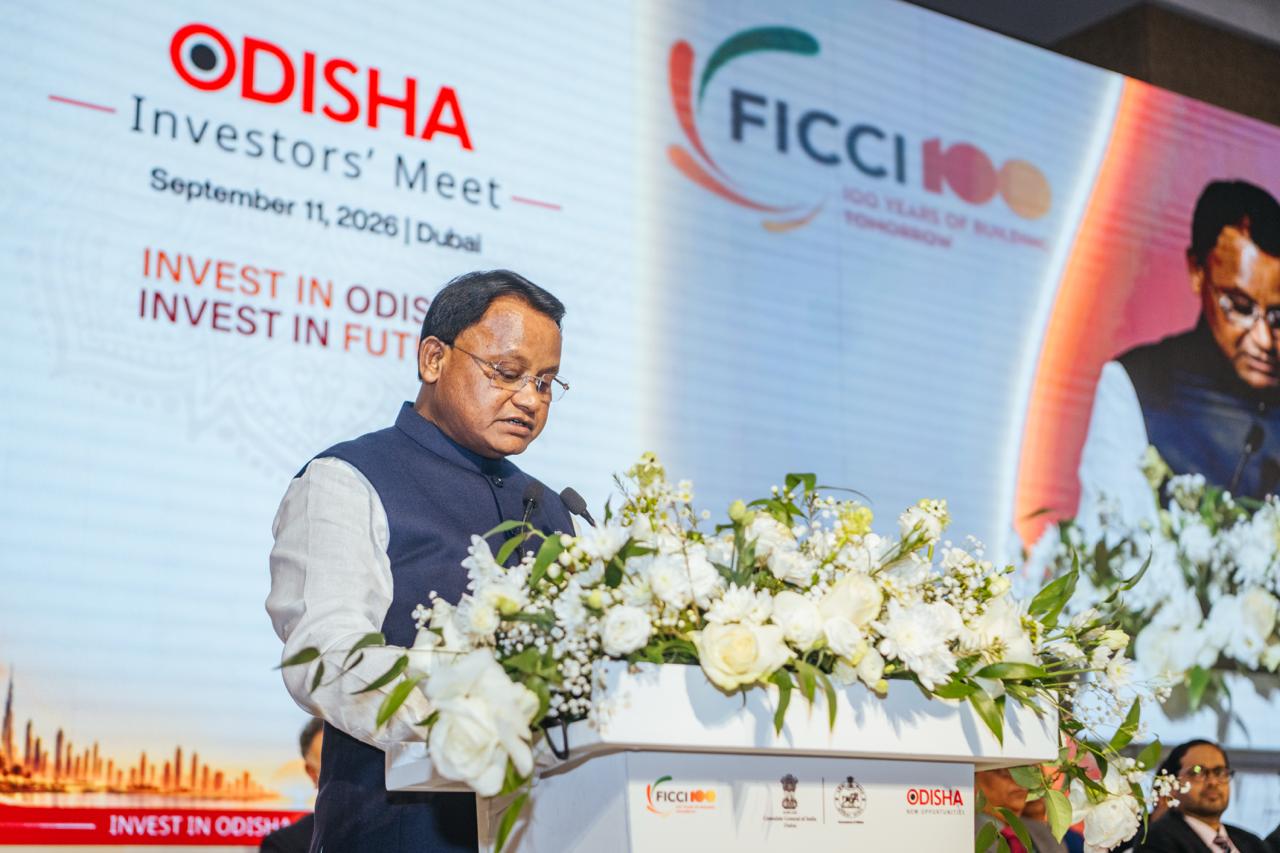
The concluding day centered on the Odisha Investors’ Meet – UAE 2026 in Dubai, attended by around 400 business leaders, investors and members of the UAE business community. The event provided a direct platform for Odisha to present its investment proposition and for global businesses to explore opportunities to establish or expand their presence in the State.
The day’s investment engagements covered Travel and Tourism, Logistics, Financial Investment, LNG storage, green energy, artificial intelligence and data centers, rare earths, ship repair, propellant manufacturing, fertilizers and chemicals, housing, steel and steel downstream industries and other emerging opportunities. Apart from Traditional Mines and mineral sectors, Processed food will be the biggest opportunity ,
CAZBAA Project Ventures FZCO signed an MoU for LNG storage. Rana Holdings Limited signed an MoU covering green energy, AI data centres and rare earths. Sharaf Group entered into an MoU in housing, while PTCL Infrastructure signed an MoU for steel and steel downstream industries.
Investment Intents were received from Dalwin Marine and Turbo Power Engineering for ship repair, Ion Technologies Pvt. Ltd. for a propellant manufacturing plant, and Agrifields FZCO for fertilisers and chemicals.
Alongside the roadshow, the Chief Minister held one-to-one meetings with leading UAE-based business leaders and investors, focusing on project opportunities, manufacturing footprints, value addition, technology partnerships and long-term investment in Odisha.
Following the Investors’ Meet, the Chief Minister also interacted with the Odia diaspora in Dubai, where more than 800 Odias extended a grand welcome to him. The gathering showcased Odisha’s rich cultural heritage through classical Odissi and traditional folk dances. Appreciating the vibrant cultural connect maintained by the Odia community in Dubai, the Chief Minister highlighted the diaspora’s important role in strengthening Odisha’s global identity and preserving its cultural heritage.
Three Days of High-Level Investment Engagement
The UAE outreach began in Abu Dhabi with high-level engagements with government, sovereign, institutional and business stakeholders. A major highlight was the strategic engagement involving International Holding Company (IHC) and Adani Group, covering opportunities across critical minerals and rare earths, metals and metallurgy, chemicals and petrochemicals, renewable energy equipment, healthcare, industrial infrastructure, tourism, skill development and other strategic sectors.
The first day also featured engagement with the Indian Business and Professional Group (IBPG), institutional discussions on investment and infrastructure opportunities, and a focused interaction with Borouge on the potential development of a petrochemical downstream ecosystem in Odisha.
The second day expanded the outreach across IT and ESDM, agro and food processing, steel and downstream manufacturing, logistics, skilling, rare earths, circular economy, chemicals and aluminium. MoUs and Investment Intents from a diverse group of companies broadened the pipeline of potential projects and partnerships.
The Chief Minister also held high-level discussions with UAE leadership and industry representatives and visited Emirates Global Aluminium, providing an opportunity to examine advanced aluminium manufacturing, technology and value-addition practices relevant to Odisha’s downstream industrial ecosystem.
From Investment to Execution
Chief Minister Shri Mohan Charan Majhi said Odisha is ready to move into a new phase of industrial growth built around value addition, technology, global partnerships and efficient project execution. He highlighted the State’s natural resources, competitive energy availability, strategic ports, industrial infrastructure, skilled workforce and established industrial ecosystem as key advantages for investors.
The Chief Minister emphasized that Odisha’s engagement with the UAE is intended to go beyond individual investments and build durable partnerships in manufacturing, trade, technology, exports, innovation, skills and entrepreneurship. He invited UAE businesses to make Odisha a preferred destination for their next phase of growth in India.
Industries Minister Shri Sampad Chandra Swain reiterated the Government’s commitment to ‘Speed, Certainty and Execution’, assuring investors of proactive facilitation and institutional support across the project lifecycle from investment intent and approvals to implementation and expansion.
A Strong Odisha–UAE Business and Community Connect
The three-day outreach brought together senior government officials, Indian diplomatic representatives and prominent business leaders, creating a platform for direct and sustained engagement between Odisha and the UAE business community.
Chief Secretary Smt. Anu Garg, ACS Industries, Home & I&PR Shri Hemant Sharma, Ambassador of India to the UAE Dr. Deepak Mittal, Consul General of India in Dubai Dr. E. Bishnu Vardhan Reddy, senior Government of Odisha officials and IPICOL representatives participated in the engagements.
The Dubai programme also included an interaction between the Chief Minister and the Odia diaspora. The gathering strengthened the cultural, social and economic connect with Odias living in the UAE and encouraged the diaspora to contribute to Odisha’s investment, entrepreneurship, trade and development journey.
Odisha’s One District One Product (ODOP) offerings were also showcased, adding a distinctive cultural and enterprise dimension to the diaspora engagement. Participants experienced the State’s diverse local products and the entrepreneurial potential emerging from its districts