


Vivo X100 Pro two-minute review
Chinese smartphone company Vivo has made its latest attempt to make a name for itself outside China with its new premium phone, which takes on the Samsung Galaxy S24 Ultra and iPhone 15 Pro Max as a top-price top-spec juggernaut.
The Vivo X100 Pro is the brand’s most recent top-end Android phone, following the Vivo X80 Pro from 2022 – the company has a bit of a scattergun approach when it comes to releasing its Chinese phones in the rest of the world.
The X80 Pro was a great phone hindered by a horribly high price tag; while the Vivo X100 Pro is also an eye-wateringly pricey smartphone, it does a much better job at justifying this cost than its predecessor. It’s still unlikely to tempt you from Samsung or Apple’s latest powerhouses, but you won’t feel disappointed by it either.
The most startling upgrade the Vivo X100 Pro has, not just over its predecessor but over the vast majority of other Chinese mobiles on the market, is in the software department. Not only is it a bloatware-free breath of fresh air, but it’s good-looking, with lots of customization and navigation tools that are easy to use and improve your phone experience.
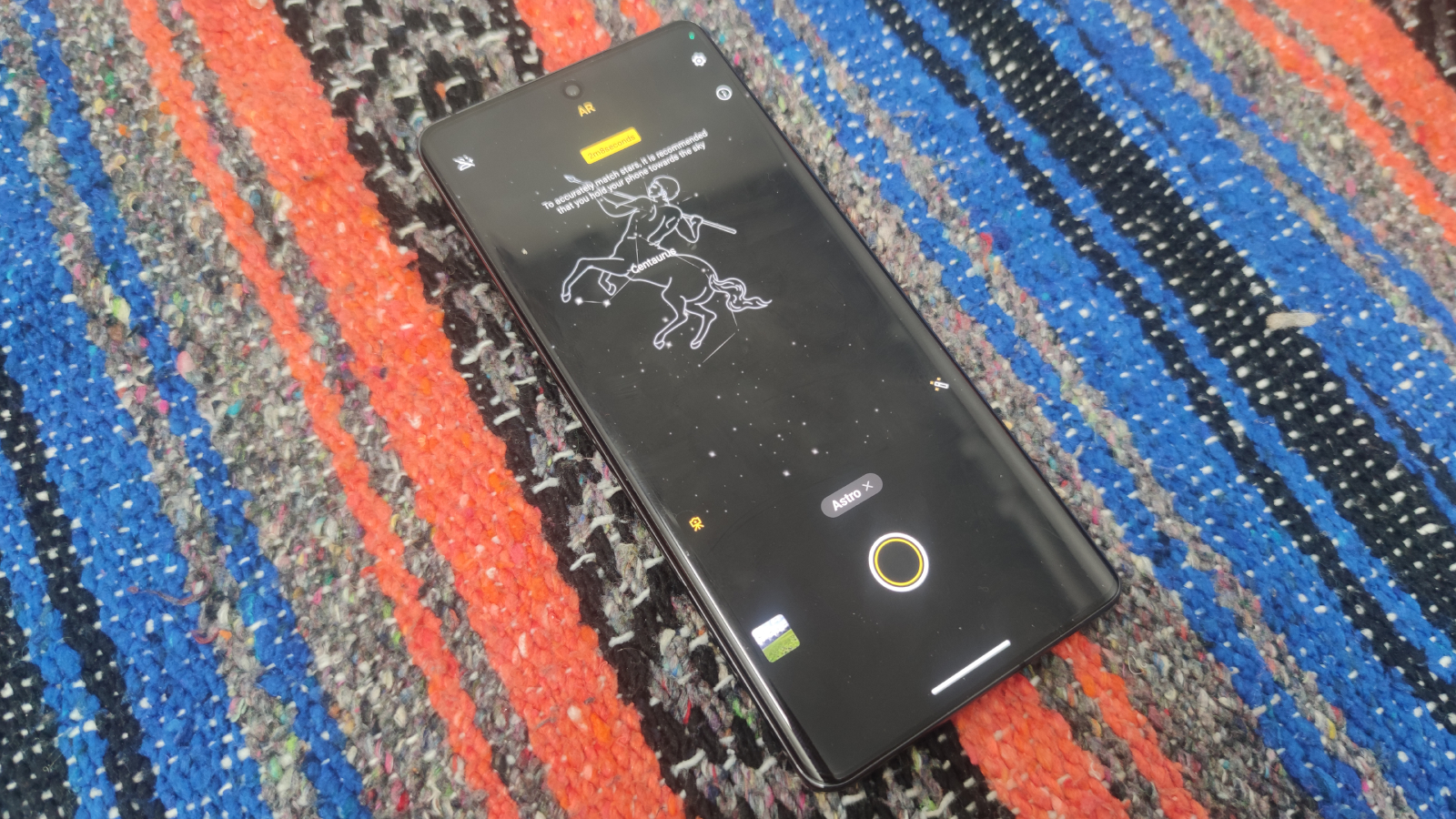

Vivo’s also greatly improved its cameras on the X100 Pro. It boasts three 50MP snappers on the back: a main, ultra-wide and telephoto combo. Pictures are bright and bold, but the camera app also offers an eye-watering number of extra features, tools and functions.
Want to zoom between 0.6x and 100x? Add different color profiles to your photo? Take a picture of the stars and have the phone use augmented reality to work out what constellations you’re actually looking at? The camera app can offer all of those.
This is also as powerful a phone as you’d hope for its price. The chipset is ready to blaze through your choice- game, photo editing app or AR simulation. The screen looks great, with a high resolution and refresh rate. You’re getting oodles of RAM, a huge amount of storage and a really long battery life.
An extra feature lets you use the Vivo as a portable power bank for other gadgets, with reverse wireless charging, which proved very handy when headphones or tablets were running out of power.
The X100 Pro isn’t the perfect phone for everybody: it’s huge, so people with small hands might struggle, with a giant camera bump that means it doesn’t sit flat on surfaces, and sadly no 3.5mm headphone jack. But its biggest issue is still the price, which is hard to swallow no matter how many top-end features you’re getting.
Vivo X100 Pro review: price and availability
- Unveiled in January 2024
- On sale in Europe, Asia; not the UK, US or Australia yet
- Costs €1,199 (around $1,300 / £1,020 / AU$1,990 )
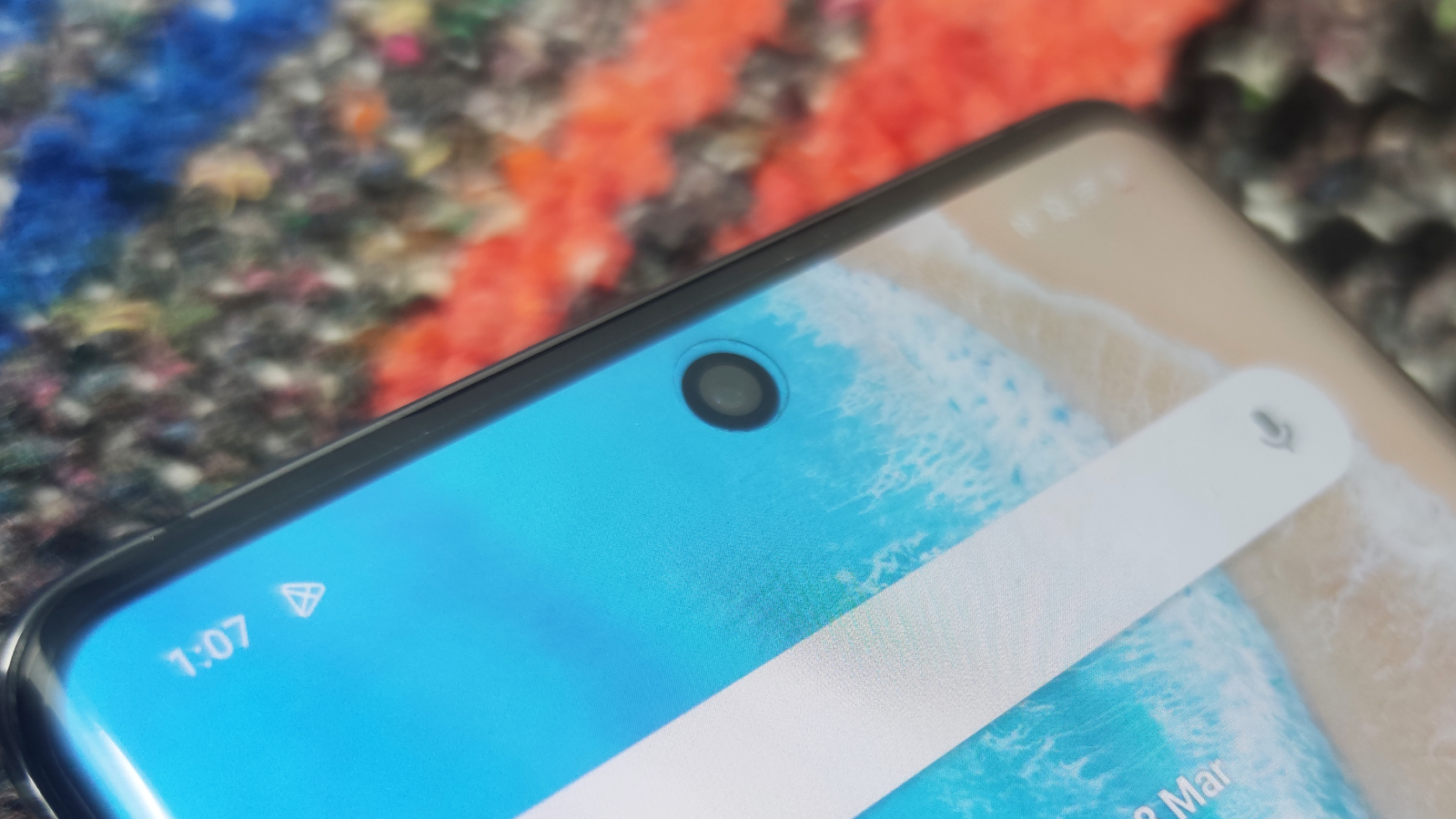
The Vivo X100 Pro was unveiled in late January 2024, and saw a slow roll-out across Europe and India over the following months. Based on precedent, we don’t expect a US release for the phone, as Vivo generally doesn’t sell its tech on that side of the pond.
At the time of writing, no UK price has been confirmed, but in Europe it costs €1,199, which converts to roughly $1,300 / £1,020 / AU$1,990 for the 16GB RAM and 512GB storage model. This is a premium phone for people who want top specs.
Some other variants are on sale in China, but Vivo seems to be pushing the 16GB/512GB model as the primary model in Europe.
Vivo X100 Pro review: specs
The Vivo X100 Pro is a top-end phone, and its specs prove it:
| Header Cell – Column 1 | |
|---|---|
| Dimensions: | 164.1 x 75.3 x 8.9mm |
| Weight: | 221g |
| Screen: | 6.78-inch 20:9 HD (2800×1260) 120Hz AMOLED |
| Chipset: | Mediatek Dimensity 9300 |
| RAM: | 16GB |
| Storage: | 512GB |
| OS: | Android 14 w/ Funtouch 14 |
| Primary camera: | 50MP, f/1.8 |
| Zoom camera: | 50MP f/2.5, 4.3x optical & 100x digital zoom |
| Ultra-wide camera | 50MP f/2.0 119-degree |
| Front camera: | 32MP f/2.0 |
| Audio: | Stereo speakers |
| Battery: | 5,400mAh |
| Charging: | 100W wired, 50W wireless |
| Colors: | Startrail Blue, Asteroid Black, Sunset Orange |
Vivo X100 Pro review: design
- Very large, with a giant camera bump
- USB-C port but no 3.5mm headphone jack
- In-box case is very sturdy
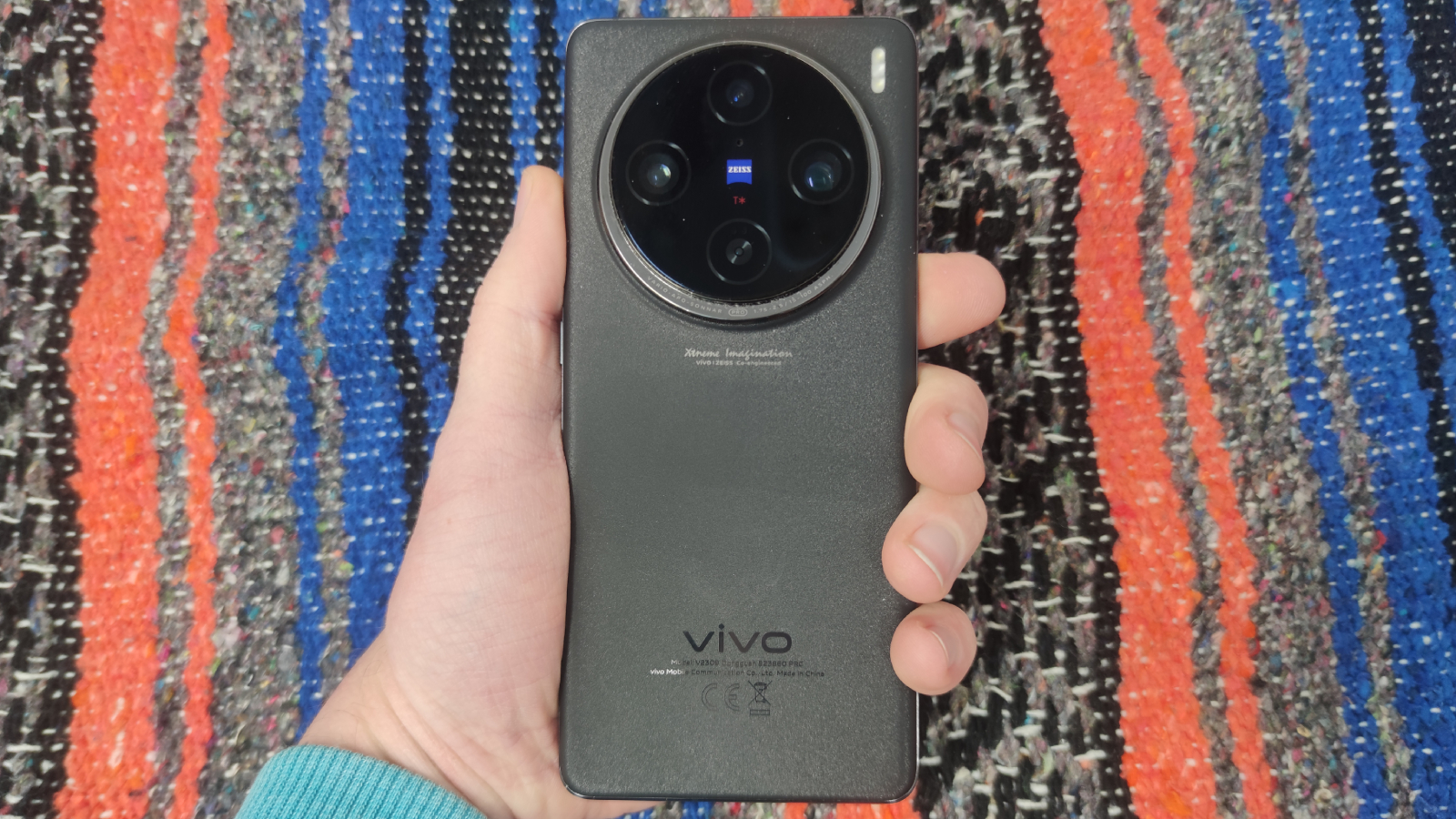
There’s no two ways about it: the Vivo X100 Pro is a big phone, and you’ll feel its heft in your hand. Measuring 164 x 75 x 8.9mm and weighing 221g, this thing will fill up your pocket and require a large mitts to be able to hold it in one hand.
The phone has slightly curved display display edges, which it makes it feel a little more comfortable to hold but doesn’t taper so dramatically that you’re at risk of accidentally pressing it. Not once during testing did I encounter the dreaded accidental-curved-edge-button-press.
Dominating the back of the mobile its its large camera bump; a protruding circle housing the three lenses and the flash module. This sticks out enough that you’ve no hope of putting the phone flag on a table.
Normally, for a phone like the Vivo X100 Pro, I’d recommend a case: not only will it make the large phone a bit grippier, but with a glass front and back, the device isn’t too protected from drops and bumps otherwise. However, the box contains a fairly solid rubber one, that’s more durable (and nicer-looking) than most cheap in-box silicon ones. The phone also has IP68 protection, keeping it safe from accidental drops in bathtubs or fine particles.
On the right edge of the device – a slight stretch up, unless you’ve got big hands – is the power button and volume rocker. I resigned myself to relying on my non-phone-holding hand to change volume.
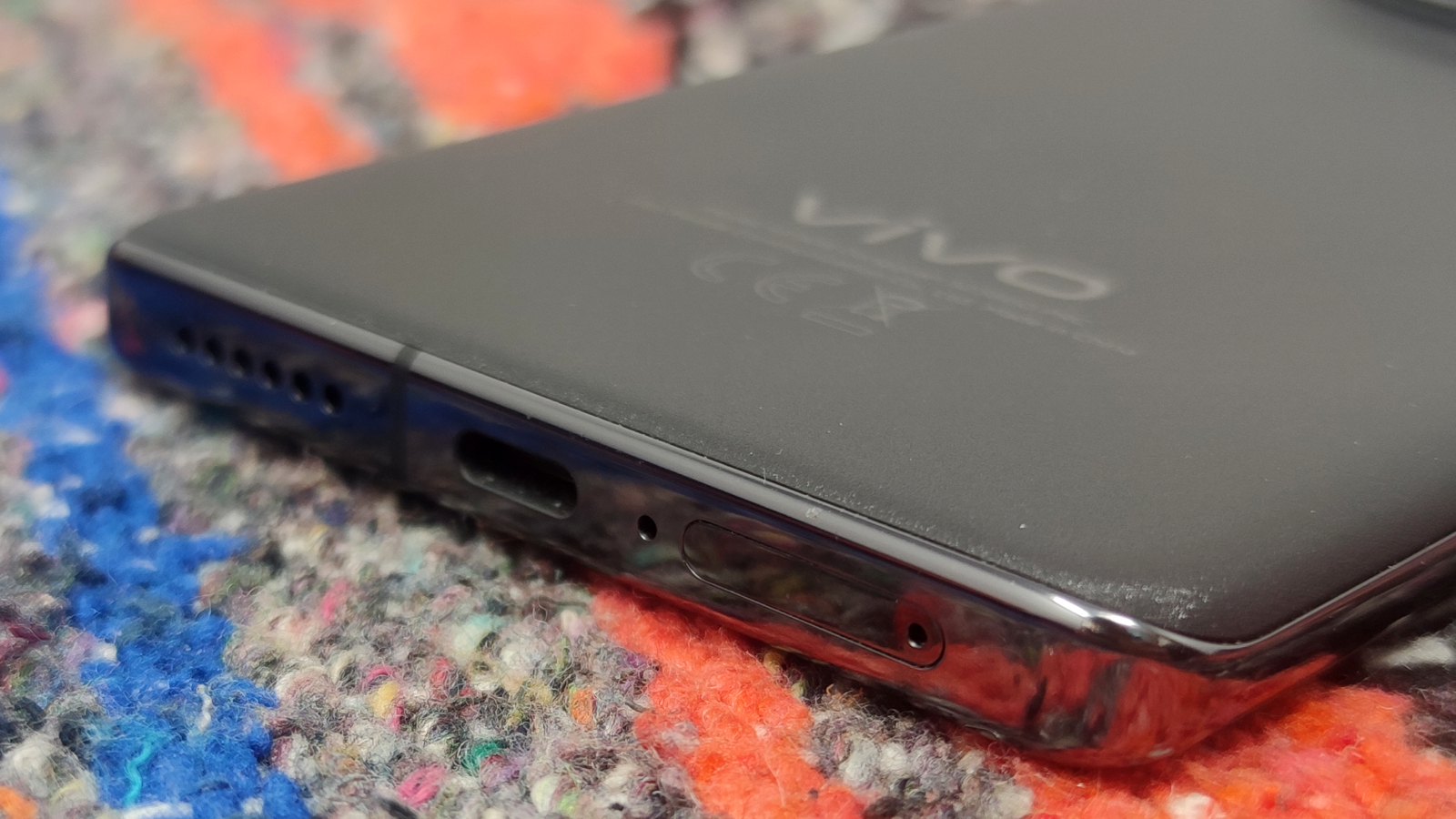
There’s a USB-C port for charging on the bottom edge of the phone but, as is the case in most top-end devices, no 3.5mm headphone jack. You’ll have to rely on Bluetooth or a USB-C adaptor for listening to music.
The Vivo X100 Pro is available in three colors: Startrail Blue, Sunset Orange and Asteroid Black, and as you can tell from the images, we used the latter. The exact availability might depend on your region, though.
Vivo X100 Pro review: display
- Giant 6.78-inch display, which curves at edges
- High-res 1260 x 2800 makes screen look crisp
- Really high max brightness
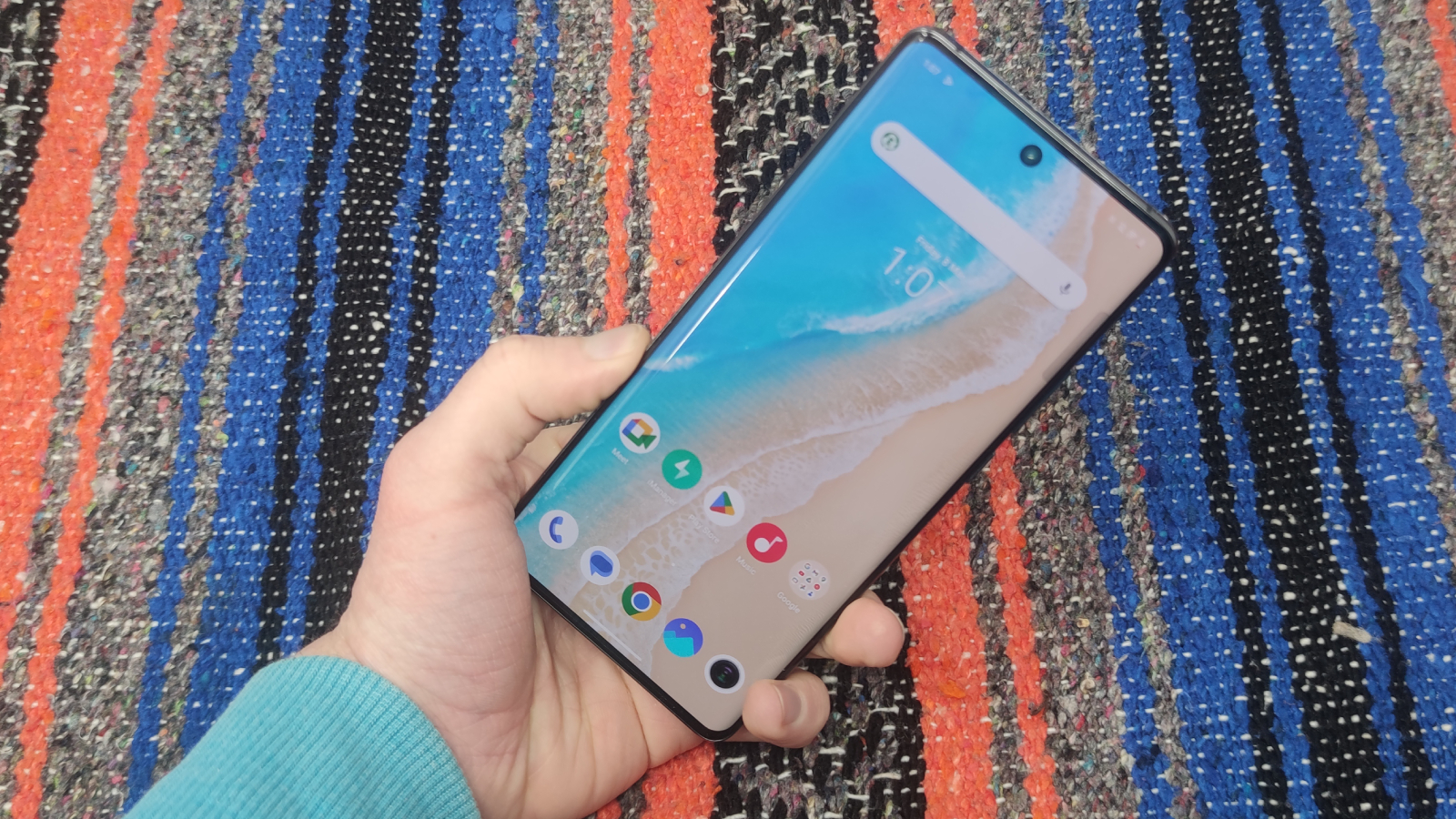
The Vivo X100 Pro’s screen clocks in at a large 6.78 inches diagonally, an oft-used display size that’s commonly seen on big phones. This large size is why the phone is such a strain on the hand!
The resolution of the screen is 1260 x 2800, so you’re getting more pixels than on your standard 1080p phone, which is useful for certain games and streaming services that support higher resolutions. The refresh rate is 120Hz, so motion looks smoother whether you’re in a game or just swiping between menus.
A real stand out of the Vivo’s screen is its brightness – with a maximum output of 3,000 nits, it can get blindingly bright if you need it to. Bear in mind that many mobiles peak at below 1,000 nits, and most don’t go above 2,000 – so this is a lovely and bright display.
Vivo X100 Pro review: software
- Android 14 with Funtouch 14 over the top
- No pre-installed bloatware
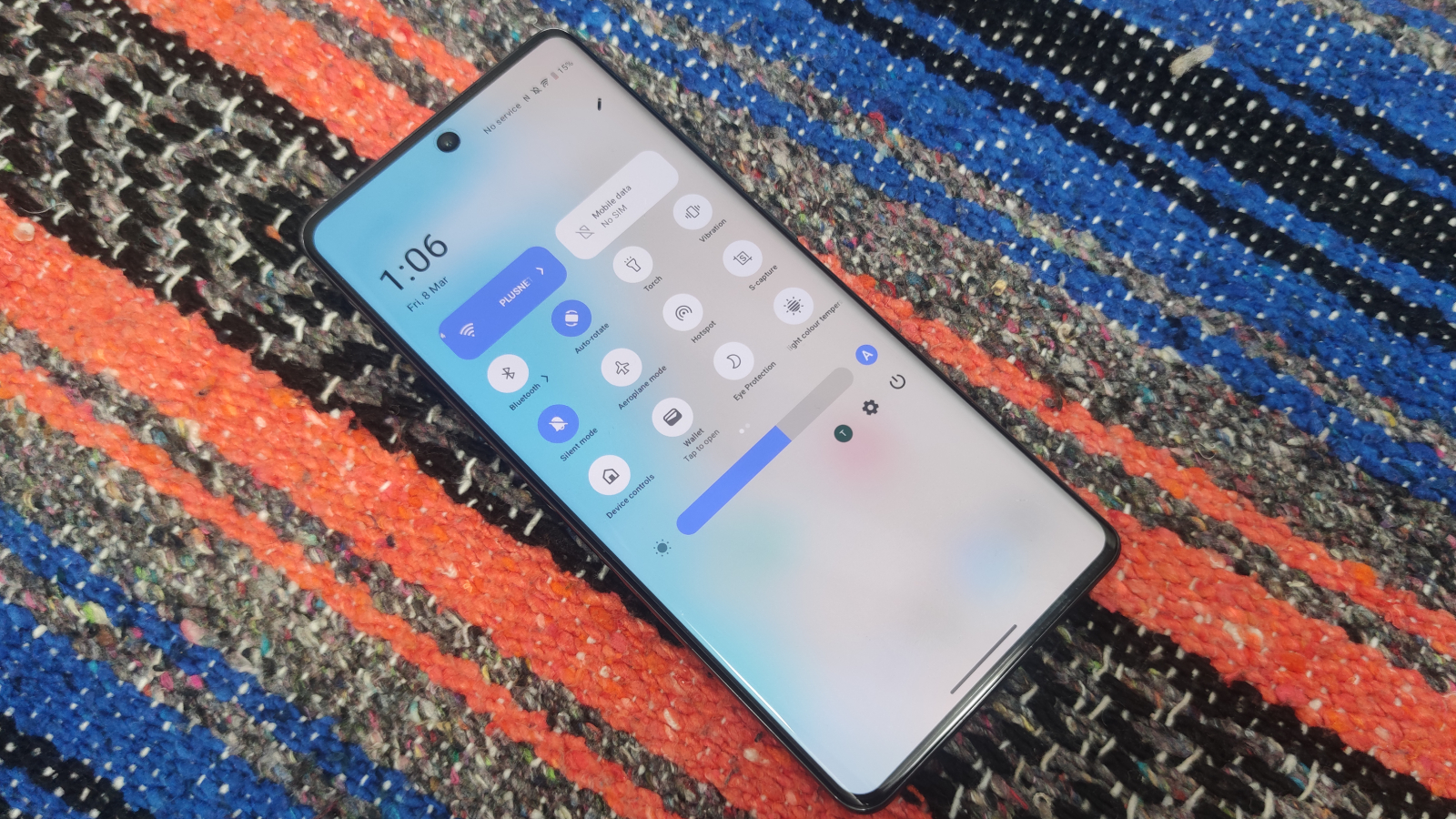
- Plenty of customization and navigation options
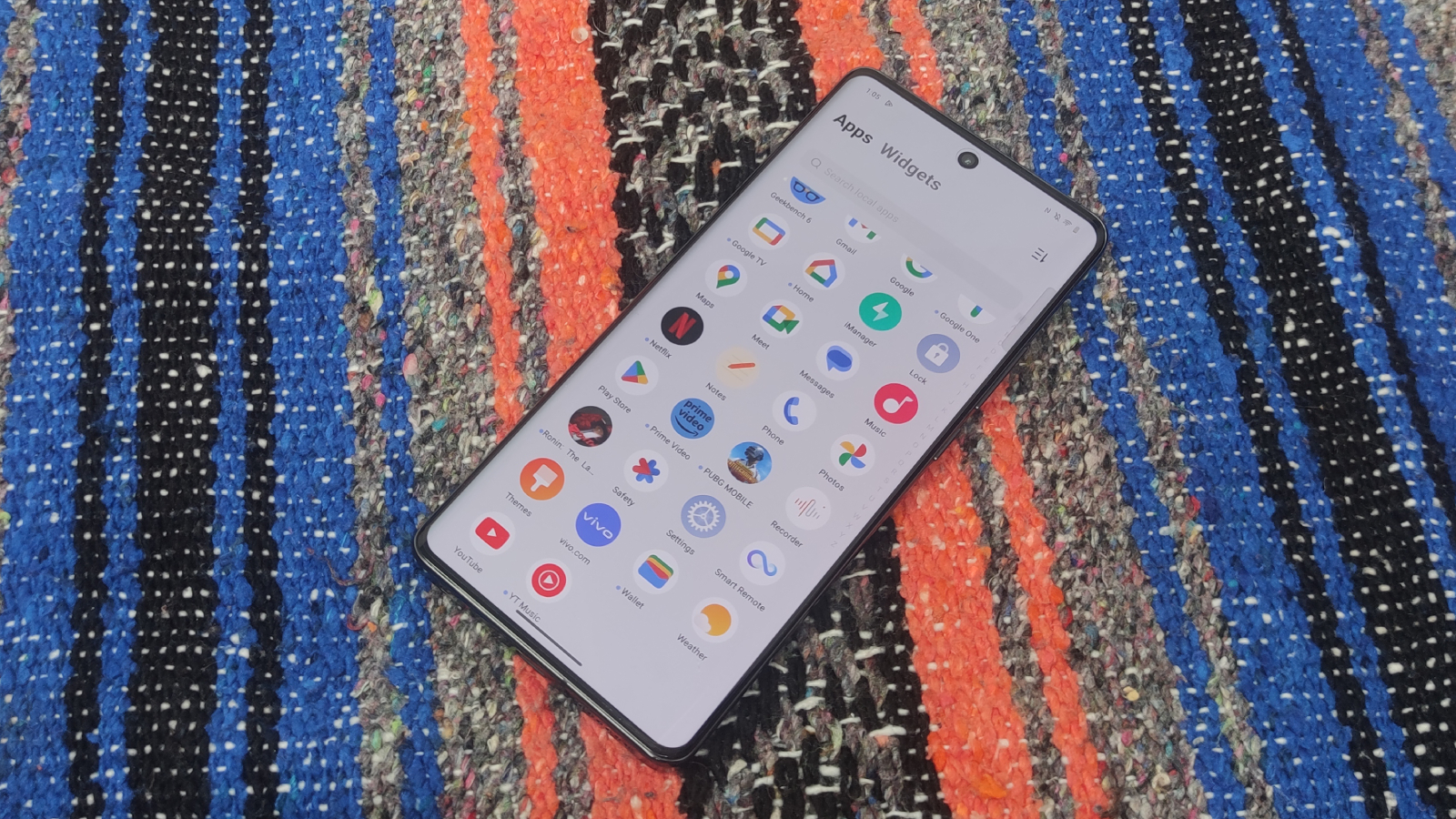
When you boot up the VIvo X100 Pro, it runs Android 14 with Vivo’s Funtouch 14 laid over the top.
Android 14 is, at the time of writing, Google’s most recent build of its mobile operating system, but Vivo has promised that the X100 Pro will see three years of updates. Some people may consider that on the low side, with other Android brands promising five or more years, but for the majority of people who don’t fastidiously follow tech news, three years will be adequate.
More so than most Android forks, Funtouch looks very similar to stock Android. Icons and wallpapers are bright and bold, apps appear on the main home page as small circles, and Google’s own apps form the backbone of the pre-installed list.
Talking of pre-installed apps, purchases of Chinese smartphones will know the problems they usually have with bloatware. Vivo bucks this trend with the X100 Pro – it didn’t have a single bloatware app, and in that regard it beats out even Google’s Pixel phones. Apple and Samsung need to take note with their app-infested software.
Funtouch has some customization: you can modify the always-on display, animations for things like fingerprint recognition, charging and home screen transitions, lighting effects for when the display is off but you’re listening to music, and ways to change app and UI design. There’s a lot of tweaking you can do if you’re so inclined.
Plus, lots of other useful features show up: there’s a smart sidebar for quick navigation, shortcuts that let you summon the camera app or turn off the camera by holding or double-tapping the volume down button, schedulable power on/off and other tasks and lots of digital wellbeing tools too. Funtouch is really feature-flush and I’d recommend you make your way through all the menus when you first boot up the phone.
Vivo X100 Pro review: cameras
- 50MP main, 50MP ultra-wide and 50MP telephoto cameras
- 32MP selfie camera on front
- Loads of modes and options for photos and video
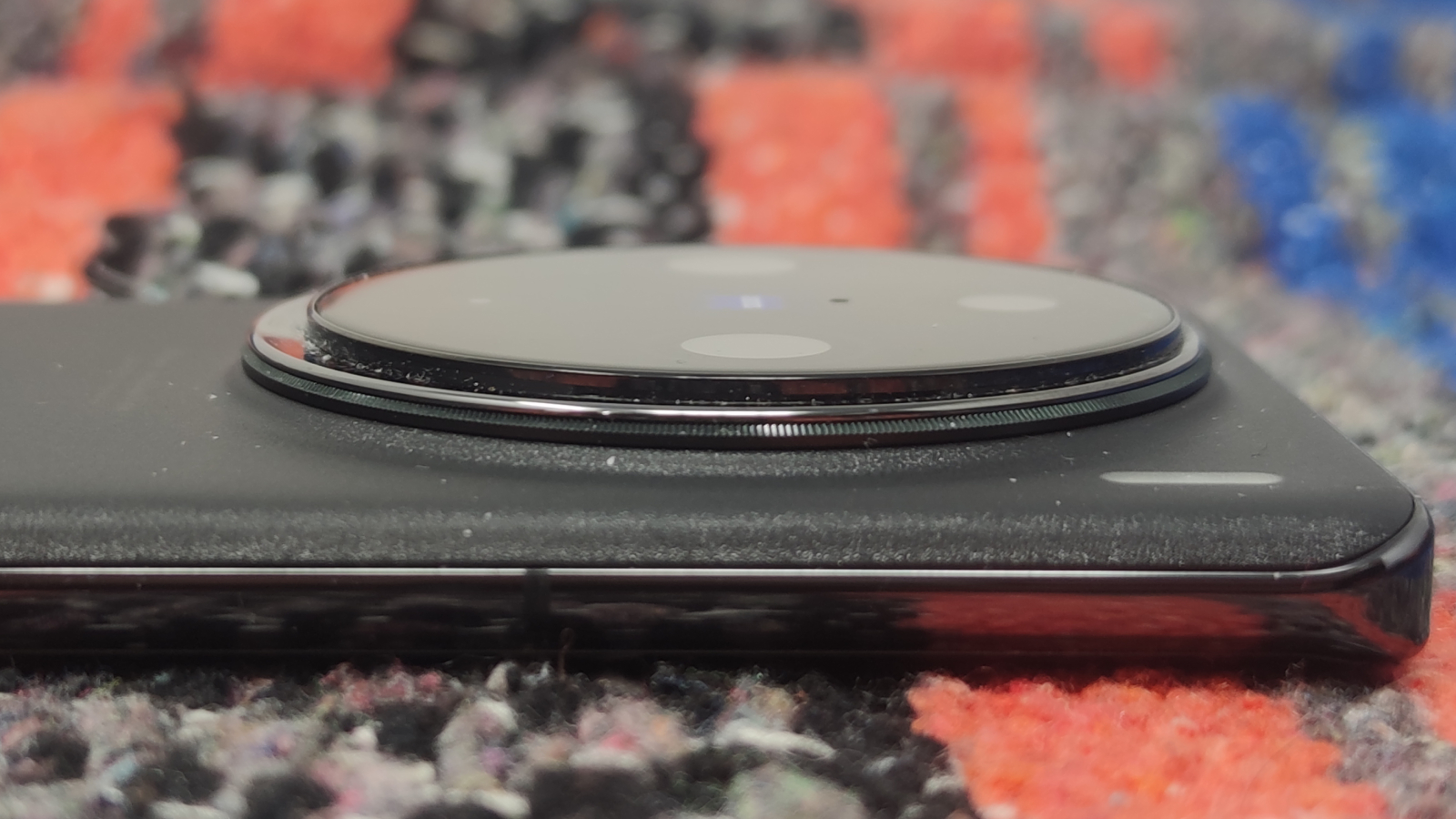
You could call the Vivo X100 Pro a triple threat, as it boasts three 50MP cameras across the rear array for photography. A main camera with optical image stabilization and laser autofocus is joined by a periscope zoom snapper with 4.3x optical zoom, and also an ultra-wide snapper with a 119-degree lens.
While camera performance was one of our problem areas in the X80 Pro, that’s fixed in the X100 Pro. This is a capable smartphone for photography, and while it doesn’t quite compare with the Samsung Galaxy S24 Ultra, it comes close.
Pictures taken on the main camera are sharp, rich in color and pick up details in low-light conditions well. Vivo’s AI clearly does a good job at optimizing scenes based on setting, even when pictures are taken in dingy locations.
Move over to the other cameras, pictures taken on the ultra-wide are noticeably lighter, but also a little more washed-out. This was only an issue when comparing pictures taken of the same scene between cameras, and sometimes it made for better pictures.
The 4.3x zoom camera was a treat to play around with, letting you close the distance with far-away subjects or add some natural depth to nearer objects, animals and plants. If you’re happy to use digital zoom (or cropping) you can get all the way to 100x, which is grainy but fun to try out. Up to 10x digital zoom, pictures were usable, but I’d advise against going any further.
Something that hit me when testing out the camera app, was the sheer number of extra features available. You can change between three color profiles, try different modes like Night, Portrait and Snapshot, add a tilt-shift effect, correct perspectives, turn on not one but two different astrophotography modes, turn on a macro effect, and then go to down in the Gallery app editing it all.
Frankly, it’s a little overwhelming to begin with, but if you take time to go through all the menus you’ll find some really cool features. I particularly like the Astro mode, which uses AR to identify stars in your picture.
Shooting videos, you can record in 8K at 30 frames per second or 4K at 60fps, with slow-mo letting you drop down to 240fps at 1080p.
For selfies, you’re looking at a 32MP snapper. Pictures look a little dim compared to ones taken on the main camera, but Portrait mode uses AI to add some vibrancy as well as a realistic-looking bokeh blur.
Vivo X100 Pro camera samples
Image 1 of 7


Vivo X100 Pro: performance and audio
- Dimensity 9300 is blazing fast
- 512GB storage and 16GB RAM
- Bluetooth 5.4 but no 3.5mm headphone jack
A quick look at the Vivo X100 Pro’s specs list – or a brief gaming stint – tells you that this is a powerful phone.
The handset packs the same Dimensity 9300 chipset, which we’ve also seen in the Oppo Find X7, and it’s a champ for gaming. That’s paired with 16GB RAM and 512GB storage: plenty of space and lots of power. There’s no expandable storage but with how much comes on board, that’s not the end of the world.
In some regions, the VIvo X100 Pro has variants with either 12GB or 16GB RAM and 256GB, 512GB or a 1TB of storage, depending on which model you opt for or is available to you. In Europe, these aren’t on sale.
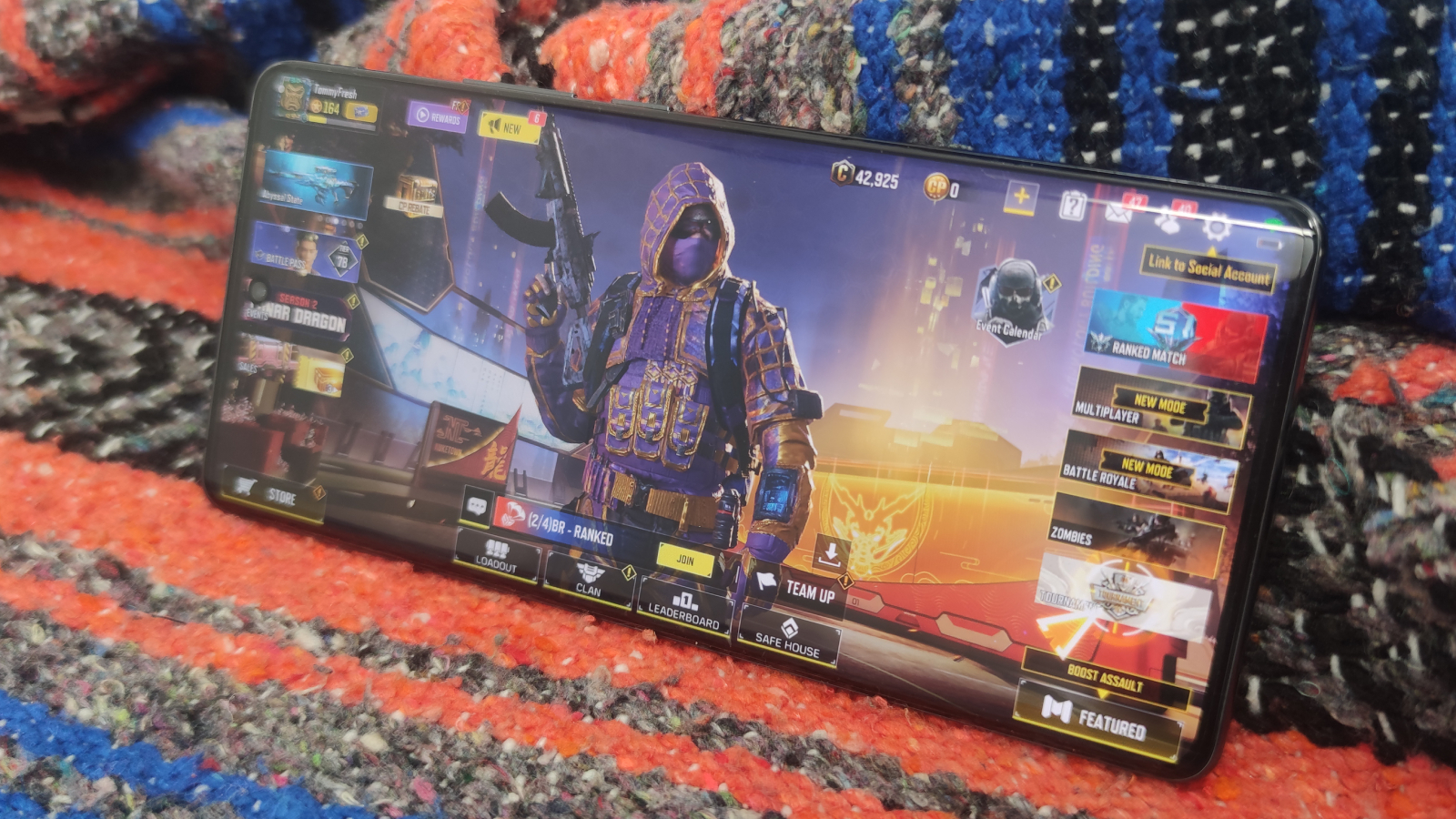
In a Geekbench 6 benchmarking test, the phone hit a multi-core score of 7,292 – that blazes past the Samsung Galaxy S23 Ultra in Geekbench’s official rankings (which is maxed at 5,244, with the Galaxy S24 Ultra not listed at the time of writing). This is all to say, it’s a very powerful phone.
I spent ages playing Call of Duty: Mobile and tested several other games like Northgard, PUBG Mobile and Ronin. Not a single game displayed any cases of lagging, with high frame rates and top graphic options available all around.
For those who don’t game much, this huge amount of power also benefits things like video and photo editing and simply having many apps open at once to jump between.
In terms of audio, there’s no 3.5mm headphone jack as mentioned before. You can use the Bluetooth 5.4 standard to connect, which is nice and reliable, or play music out loud. The dual speakers are fine for playing games or voice messages but if you want great audio for streaming music or movies, I’d recommend buying the best wireless headphones.
Vivo X100 Pro review: battery life
- Giant 5,400mAh battery
- Charges wired at 100W, wireless at 50W
- Reverse wired charging is a useful extra feature
The Vivo X100 Pro has a 5,400mAh battery, which is one of the biggest power packs we’ve seen on a smartphone, with 5,000mAh the biggest generally used.
It’s needed too; between the large 120Hz display, 5G connectivity, and powerful chipset, the Vivo burns through power. Thankfully, because of the large chipset, the handset can comfortably get through a day of use without needing a recharge.
When you do need to power up the phone, it’s a quick affair: wired charging is a steamy 100W, which will see your phone go from empty to full in under half an hour if you have a compatible cable. Wireless charging is 50W, which is again incredibly fast for this mode of transmission.
There’s also reverse wired charging, so you can plug in another device to the Vivo and use it as a power bank – I found this handy for headphones when on the go, as it’s more reliable (and much faster) than reverse wireless charging. You just need to have a cable that’s USB-C to whatever your second gadget requires.
Should you buy the Vivo X100 Pro?
| Attributes | Notes | Rating |
|---|---|---|
| Value | This is a pricey phone, though you get what you pay for. | 3 / 5 |
| Design | The X100 Pro is giant, with some obtrusive design features. | 3.5 / 5 |
| Display | A high resolution, a high refresh rate, and a really high max brightness. | 4 / 5 |
| Software | Vivo’s Funtouch brings loads of great features and no annoying bloatware. | 4 / 5 |
| Camera | A feature-heavy camera app wins points for the Vivo. | 3.5 / 5 |
| Performance | Top-tier specs make this phone blazingly fast, with plenty of storage too. | 4 / 5 |
| Battery | One of the biggest batteries on a smartphone with great charging features too. | 4 / 5 |
Buy it if…
Don’t buy it if…
Vivo X100 Pro review: Also consider
If you’re shopping around at the top end of the smartphone market, you have a few options for rivals to the Vivo X100 Pro:
| Vivo X100 Pro | Samsung Galaxy S24 Ultra | iPhone 15 Pro Max | Google Pixel 8 Pro | |
|---|---|---|---|---|
| Starting price (at launch): | €1,199 (around $1,300 / £1,020 / AU$1,990 ) | $1,299 / £1,249 / AU$2,199 | $1,199 / £1,199 / AU$2,199 | $999 / £999 / AU$1,699 |
| Dimensions: | 164.1 x 75.3 x 8.9mm | 162.3 x 79 x 8.6mm | 159.9 x 76.7 x 8.3mm | 162.6 x 76.5 x 8.8mm |
| Weight: | 221g | 232g | 221g | 213g |
| OS (at launch): | Android 14 | Android 14 | iOS 17 | Android 14 |
| Screen Size: | 6.78-inch | 6.8-inch | 6.7-inch | 6.7-inch |
| Resolution: | 1260×2800 | 1440×3120 | 1290×2796 | 1344 x 2992 |
| CPU: | Dimensity 9300 | Snapdragon 8 Gen 3 | Apple A17 Pro | Google Tensor G3 |
| RAM: | 16GB | 12GB | 8GB | 12GB |
| Storage (from): | 512GB | 256GB / 512GB / 1TB | 256GB / 512GB / 1TB | 128GB / 256GB / 512GB / 1TB |
| Battery: | 5,400mAh | 5,000mAh | 4,441mAh | 5,050mAh |
| Rear Cameras: | 50MP main, 50MP periscope, 50MP ultra-wide | 200MP main, 12MP ultra-wide. 10MP telephoto, 50MP periscope | 48MP main, 12MP ultrawide, 12MP periscope | 50MP main, 48MP ultrawide, 48MP telephoto |
| Front camera: | 32MP | 12MP | 12MP | 10.5MP |
How I tested the Vivo X100 Pro
- Review test period = 3 week
- Testing included = Everyday usage, including web browsing, social media, photography, video calling, gaming, streaming video, music playback
- Tools used = Geekbench 5, Geekbench 6, Geekbench ML, GFXBench, native Android stats
I tested the Vivo X100 Pro with 512GB storage and 16GB RAM, which seems to be the only model in my region. It was the black version of the device.
My test period for the Vivo X100 Pro was over three weeks, and that doesn’t even count testing that was being done during the writing process, which would push the full figure to roughly a month. Testing included videography, using various apps and functions, gaming, streaming movies and music and photography. For the latter, I ended up using the Vivo to take review units for other products I reviewed for TechRadar.
I was a writer and editor for TechRadar’s phone team for several years so I’ve got plenty of experience testing mobiles like this, particularly looking at Chinese mobiles – I’ve used devices from almost every major brand, including Vivo. I still review phones for TechRadar, as well as products in other categories.
First reviewed March 2024