Connect with us

News

Walk Smart: Dubai’s RTA rolls out pedestrian-friendly signals across the city

Published

on

Spread the love

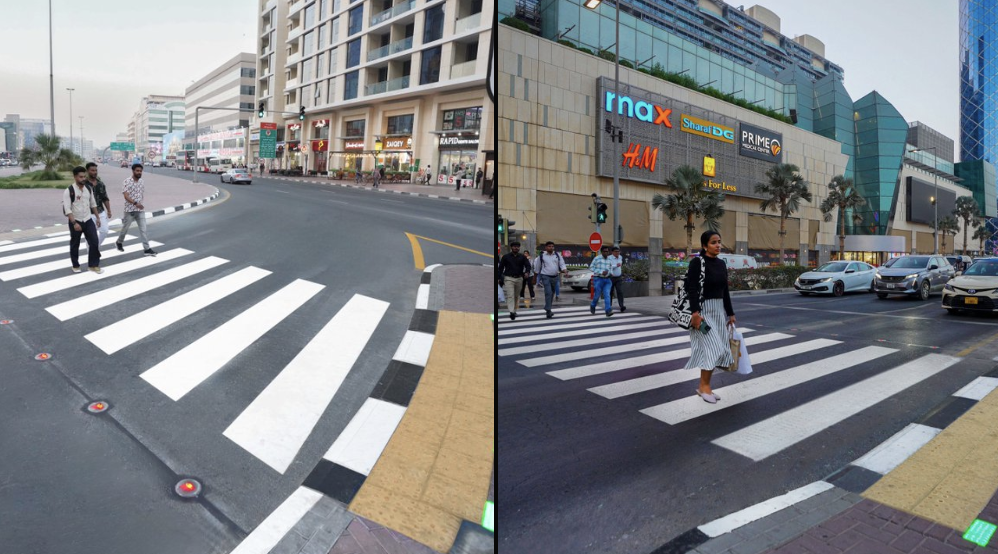
Dubai’s Roads and Transport Authority (RTA) has completed Phase Two of its Smart Pedestrian Signal Expansion Project, installing the cutting-edge system at 10 additional locations across the emirate.

With 17 intersections already covered in Phase One, the initiative now spans 27 key sites, reinforcing the city’s commitment to intelligent infrastructure and pedestrian safety.

New smart pedestrian crossing

The smart crossings in this phase include intersections along Omar Bin Al Khattab Street, Sheikh Khalifa Bin Zayed Street, Al Satwa Street, Salah Al Din Street, Amman Street, Al Qusais Street, and Oud Metha Street.
These signals have produced a positive outcome. “Results have shown improved safety levels at these pedestrian crossings since the signals became operational, demonstrating the system’s effectiveness in mitigating risk and enhancing the overall road experience for all users,” said Mohammed Al Ali, Director of Intelligent Traffic Systems at RTA’s Traffic and Roads Agency.

The smart pedestrian signal technology, developed as part of Dubai’s broader smart mobility vision, uses sensors and AI-powered systems to detect real-time pedestrian movement. This allows for dynamic signal adjustments, ensuring that people crossing the road have ample time while also optimising traffic flow for vehicles. By reducing wait times and improving predictability, the technology benefits both road users and pedestrians, especially in high-traffic and urban zones.

The Smart Pedestrian Signal Expansion Project is also aligned with Dubai’s broader vision to become the world’s smartest and happiest city.

As the city prepares for future growth and increased foot traffic in both residential and commercial districts, intelligent systems like these play a crucial role in building a safe, accessible, and future-ready urban environment.

With over 35 years of experience in journalism, copywriting, and PR, Michael Gomes is a seasoned media professional deeply rooted in the UAE’s print and digital landscape.

Health

How the UAE is preparing for potential Ebola and health emergencies

Published

on

Spread the love

Authorities in the UAE have reaffirmed the country’s readiness to respond to any emerging health developments, including situations linked to Ebola, as officials reviewed national preparedness systems and precautionary measures already in place.

The update came during a high-level meeting chaired by Ahmed Ali Al Sayegh under the supervision of the National Emergency Crisis and Disaster Management Authority alongside the Ministry of Health and Prevention and strategic partners.

Focus on preparedness and monitoring

Officials reviewed:

  • The latest developments related to Ebola
  • The UAE’s national surveillance systems
  • Existing precautionary health measures
  • Coordination between local and international authorities

Authorities stressed that the UAE’s health monitoring and emergency response systems are continuously reviewed and updated in line with international standards and global best practices.

Hospitals and medical teams remain ready

NCEMA and MoHAP said precautionary monitoring measures continue to be implemented across the country as part of the UAE’s proactive public health strategy.

They added that healthcare facilities and medical teams remain fully prepared to respond efficiently to any health developments if required.

The UAE has consistently invested in strengthening:

  • Communicable disease response systems
  • Emergency preparedness plans
  • Integrated healthcare coordination
  • Public health awareness initiatives

Authorities urge residents to rely on official information

Officials also called on the public to avoid sharing unverified information online, stressing the importance of relying only on official sources for updates related to public health matters.

The authorities said community awareness and responsible information sharing remain essential components in protecting public health and preventing unnecessary panic.

While no emergency has been announced, the meeting reflects the UAE’s ongoing approach of preparing early, monitoring developments closely and maintaining readiness for a wide range of public health scenarios.

Continue Reading

News

From 104 minutes to 16: How new Dubai tunnel is set to change your daily commute

Published

on

Spread the love

Drivers in Dubai could soon experience dramatically shorter journeys as the Roads and Transport Authority (RTA) announced that the huge Al Khaleej Street Tunnel Project is now 80 per cent complete.

Part of the wider Al Shindagha Corridor Improvement Project, the development is expected to reduce travel times from 104 minutes to just 16 minutes by 2030.

One of Dubai’s biggest road projects

The giant tunnel project stretches approximately 1,650 metres, extending from the end of the Infinity Bridge ramp in Deira to the intersection of Al Khaleej Street and Al Wuheida Street.

Once completed, the project is expected to serve around one million people across several rapidly growing districts.

The tunnel includes:

  • Three lanes in each direction
  • Capacity for up to 12,000 vehicles per hour, both ways
  • Development of 15 major intersections

Areas set to benefit

The upgraded road network will improve connectivity to several key areas, including:

  • Dubai Islands
  • Waterfront Market
  • Dubai Maritime City
  • Port Rashid

Officials say the project is designed to support population growth and keep pace with rapid urban expansion across the emirate.

Round-the-clock construction

To meet the planned completion schedule in the fourth quarter of this year:

  • 14 teams are working continuously on excavation support
  • Four additional teams are handling tunnel excavation works 24/7

Current excavation output stands at:

  • 5,000 to 6,000 cubic metres daily
  • Expected to increase to 8,500 cubic metres in the next phase

Massive safety milestone reached

The RTA also revealed the project has been completed nearly:

  • Eight million work hours
  • With zero lost-time injuries reported

The workforce currently includes:

  • 1,591 engineers, technicians and workers
  • 221 machines and heavy equipment across sites

Tunnel inspired by Dubai’s skyline

Adding a creative touch to the infrastructure project, the inside of the tunnel will feature a mosaic mural designed by Emirati artist Maryam Hathboor.

The artwork is inspired by banknote-style illustrations showcasing Dubai’s skyline, blending public art with urban engineering.

For commuters frustrated by heavy traffic, this project could eventually become one of the city’s most game-changing transport upgrades yet.

Continue Reading

Health

Healthcare in the UAE is about to change forever under new national plan

Published

on

Spread the love

The UAE is preparing for one of its biggest healthcare transformations yet after President His Highness Sheikh Mohamed bin Zayed Al Nahyan directed the adoption of a comprehensive national healthcare system covering citizens across all emirates.

The new framework includes a fully integrated national health insurance scheme designed to guarantee access to medical care and health services for every citizen.

New era for healthcare

Officials said the move reflects the UAE leadership’s long-term vision of building an advanced healthcare sector focused on:

  • Universal healthcare access
  • Preventive medicine
  • Digital transformation
  • Innovation
  • Sustainable health services

The initiative aims to create a fully integrated healthcare model capable of improving efficiency, strengthening sector readiness and ensuring healthcare sustainability for future generations.

Focus on prevention and innovation

According to authorities, the system is designed around international best practices and modern healthcare standards, with strong emphasis on:

  • Public health
  • Smart digital health platforms
  • Long-term health outcomes
  • Resource efficiency across all emirates

Health is a national priority

Ahmed bin Ali Al Sayegh, Minister of Health and Prevention, described the directive as part of a national vision placing human health and quality of life at the centre of the country’s development journey.

He said the UAE continues advancing healthcare systems built on:

  • Prevention
  • Sustainability
  • Innovation
  • Expanded access to medical services

Integrated healthcare 

Officials also highlighted that the UAE already operates through a strong federal and local healthcare model supported by:

  • Advanced medical infrastructure
  • Connected digital healthcare systems
  • Ongoing investment in healthcare quality and accessibility

The new healthcare system is expected to further strengthen integration between health services while improving resilience and long-term care outcomes for citizens at every stage of life.

Continue Reading

Popular

Exit mobile version
https://headline.ae/