Connect with us

News

Working in the UAE private sector? This Dh6,000 minimum wage rule kicks in this month

Published

on

Spread the love

The UAE has announced a major change to salaries in the private sector, setting a new minimum wage of Dh6,000 for all Emiratis employed by private companies.

The update was published on the Ministry of Human Resources and Emiratisation (MoHRE) smart app and later confirmed in an official statement on X. The new minimum wage came into effect on January 1, 2026, requiring employers across the country to adjust eligible salaries to meet the new threshold.

According to MoHRE, the Dh6,000 minimum wage will apply to all services related to issuing, renewing or amending citizen work permits. Employers will no longer be able to print or submit any citizen work permit application if the registered salary is below the mandated amount.

Companies have been given a grace period to comply. MoHRE said establishments have until June 30, 2026, to adjust salaries, with enforcement measures set to begin from July 1, 2026, for those that fail to comply.

If salaries remain below Dh6,000 after the deadline, several penalties may be imposed. These include excluding the Emirati employee from counting towards Emiratisation targets and placing restrictions on the company that prevent the issuance of new work permits until salaries are corrected.

Previously, the minimum wage for Emiratis in the private sector was set at Dh5,000, making this a Dh1,000 increase aimed at strengthening job security and improving income levels for UAE nationals. MoHRE clarified that the revised wage applies only to citizen work permits with a two-year validity, whether newly issued, renewed or amended.

The ministry said employers will receive automated alerts via the MoHRE smart app and official service channels, reminding them of the updated requirement. The notification sent to companies clearly states that any application involving a salary below Dh6,000 will be blocked after January 1, 2026.

While the UAE has now set a minimum wage for Emiratis in the private sector, there is still no legally defined minimum wage for non-Emirati workers. However, the UAE labour law stipulates that wages must be sufficient to meet employees’ basic needs.

The move is seen as part of wider efforts to strengthen Emiratisation, support nationals in the private sector and encourage long-term workforce stability across key industries.

With over 35 years of experience in journalism, copywriting, and PR, Michael Gomes is a seasoned media professional deeply rooted in the UAE’s print and digital landscape.

News

Italia T10 eyes GCC as new Italian franchise cricket league builds global ambitions

Published

on

Spread the love

Italy is about to get its own city-based franchise cricket league, and organisers are looking to the Middle East to help take it global.

Italia T10 Cricket will make its debut in Rome from November 7 to 15, 2026, with six city-based teams set to compete in the fast-paced 10-over format.

And while the league is being built around Italian cricket, its ambitions stretch well beyond Italy.

With three of the six franchises already secured, organisers are now turning their attention to the Middle East, hoping to build links with the region’s growing cricket community and attract stakeholders from across the GCC.

The league has been officially endorsed by the Italian Cricket Federation, with the organisers describing the competition as Italy’s first city-based franchise T10 league.

Why is Italy turning to the Middle East?

Cricket may not be one of Italy’s traditional mainstream sports, but the game has been steadily expanding across Europe, and the Middle East has become a major hub for international and franchise cricket.

The UAE, Saudi Arabia, Kuwait, Qatar, Oman and Bahrain all have established cricket communities, creating a sizeable pool of players, fans and potential investors.

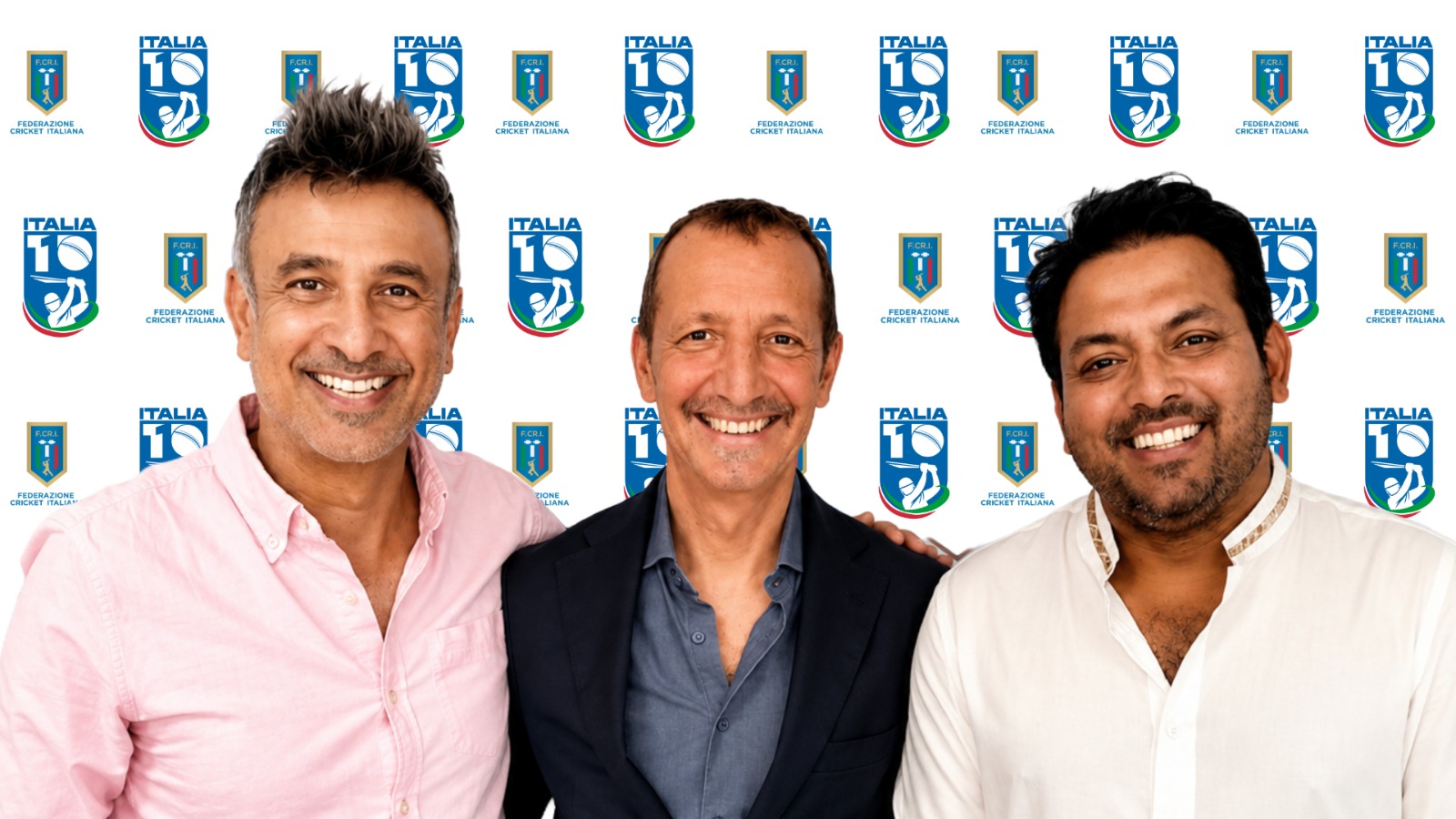
Aamir Akhtar, chairman of Apex T10 Ltd, said the response to the league’s announcement had been “phenomenal” and that the organisers were keen to bring the Middle East into the project.

For Akhtar, the connection is also personal. The former Nepal international played at the ICC Under-19 Cricket World Cup in 2000 before representing Nepal at senior level.

He now wants to use franchise cricket to create more opportunities in emerging cricket markets.

What exactly is Italia T10?

The clue is in the name.

Each match will feature 10 overs per side, with games expected to last around 90 minutes.

That makes T10 one of cricket’s shortest and most explosive formats — designed to pack plenty of action into a compact viewing window.

The inaugural tournament will be played entirely in Rome, with six franchises competing across nine days.

The league also says its matches will be streamed live in more than 30 countries, giving the new competition an international audience from its very first season.

Could the Middle East become part of the league?

That’s one of the bigger questions surrounding the project.

Organisers say they see the Middle East as more than simply a commercial market. They want to build a cricketing bridge between Europe and the GCC, potentially bringing regional stakeholders, players and cricket communities into the Italia T10 ecosystem.

Nadeem Shahid, CEO of Apex T10 Ltd, said the league has an Italian foundation but an international outlook.

The company behind Italia T10 was founded by Shahid and Akhtar with the aim of developing cricket in associate territories through professionally run franchise competitions.

Why now?

The timing could hardly be more interesting for global cricket.

The sport is preparing to return to the Olympic Games at Los Angeles 2028, putting renewed focus on expanding cricket beyond its traditional strongholds.

Italia T10 hopes to play a small part in that expansion by raising the profile of cricket in Italy, creating more opportunities for local players and clubs and connecting Italian cricket with the international game.

With half of its franchises still to be secured and the first season only months away, the next phase will be worth watching.

Italy has the league. Rome has the stage. Now organisers want the Middle East to become part of the story.


Continue Reading

News

Autumn arrives in the UAE: When will temperatures start to drop?

Published

on

Spread the love

UAE residents, there’s light at the end of the summer tunnel. Meteorological autumn officially arrived on September 1, marking the start of the three-month period when temperatures are expected to gradually ease across the country.

But don’t expect winter-like weather just yet. September can still be hot, the difference is that the intense summer heat should slowly begin to lose its grip.

According to Ibrahim Al Jarwan, Chairman of the Board of Directors of the Emirates Astronomical Society and a member of the Arab Union for Astronomy and Space Sciences, meteorological autumn runs from September 1 to November 30 in the Northern Hemisphere.

So, when does autumn actually begin?

Here’s where it gets slightly confusing. September 1 marks the beginning of meteorological autumn, which is based on calendar months and typical temperature patterns used for climate reporting.

Astronomical autumn arrives later. In the UAE, the autumnal equinox will take place on September 23, at around 4.05am (UAE time).

That’s when the Sun crosses the celestial equator from north to south, officially marking the astronomical start of autumn in the Northern Hemisphere.

When will the UAE start feeling cooler?

The good news is that September should bring a noticeable change.

After months when daytime temperatures frequently reached 42°C or higher, most September days are expected to see highs below 39°C, while overnight temperatures should dip below 27°C.

The cooling trend becomes more noticeable in October, when daytime temperatures are expected to fall below 35°C on most days and nighttime lows could drop below 22°C.

By November, things should feel considerably more comfortable, with daytime temperatures generally below 30°C and nights dropping 18°C below on most days.

By the end of meteorological autumn, temperatures could fall to around 26°C or lower during the day and 15°C at night across much of the UAE.

So while residents shouldn’t pack away the air conditioner just yet, the country’s long, scorching summer is gradually giving way to cooler months.

And for anyone counting down to outdoor season, September is the first hint that better weather is on the way.

Continue Reading

News

UAE drivers warned: Failing to stop for school bus carries a Dh1,000 fine and 10 points

Published

on

Spread the love

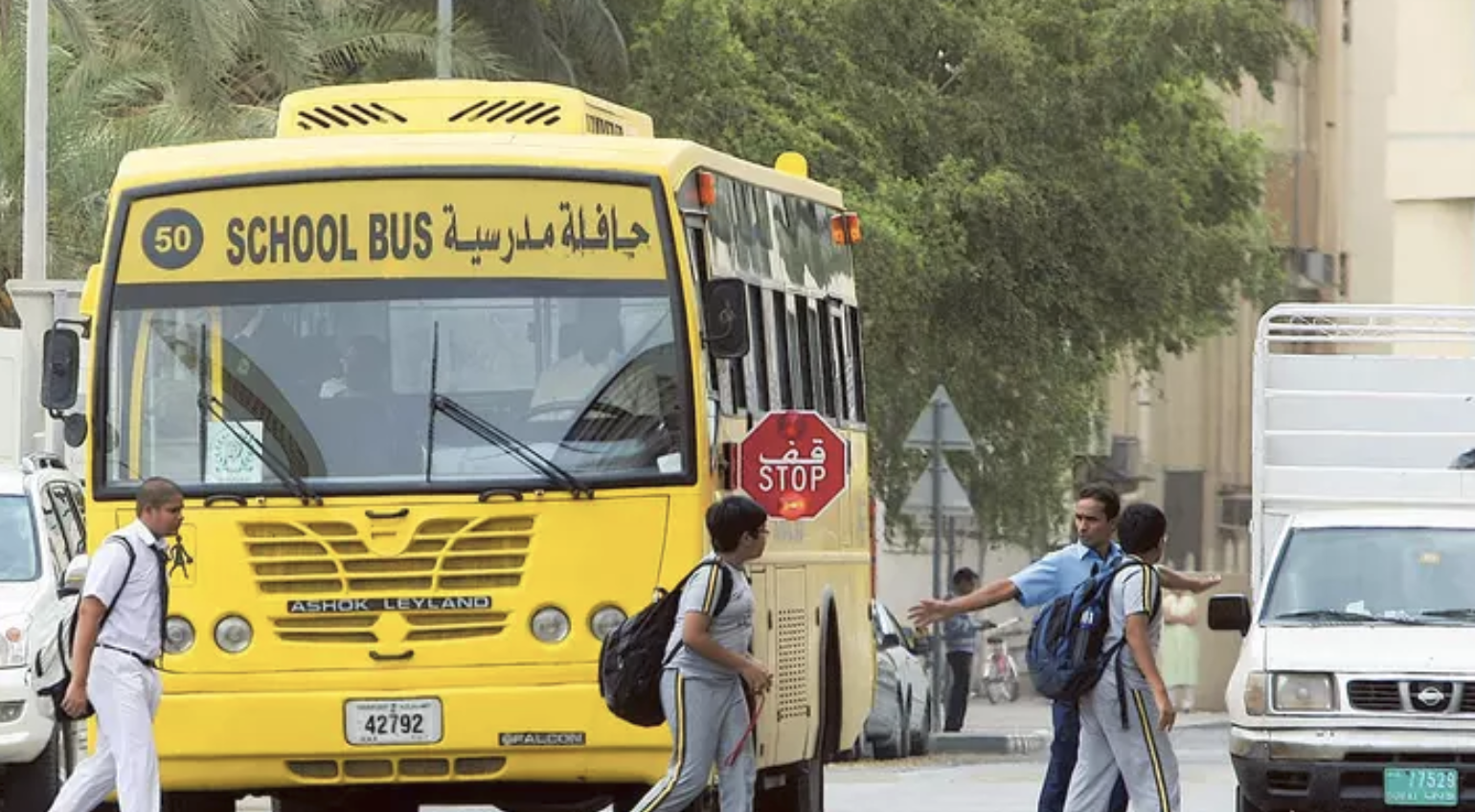
Abu Dhabi Police has reminded motorists to come to a complete stop when a school bus extends its side-mounted ‘Stop’ arm, warning that drivers who ignore the rule face a Dh1,000 fine and 10 traffic balck points.

Motorists must also keep a distance of at least 5 metres from the school bus while children are getting on or off.

Police said drivers must not attempt to overtake or pass a school bus when its stop arm is extended, as children may be crossing the road.

The five-metre safety rule is designed to give pupils enough room to cross safely while ensuring they remain visible to approaching motorists and the school bus driver.

Extra caution needed around schools

The reminder comes as schools reopen and thousands of school buses return to roads across Abu Dhabi, leading to heavier traffic around residential communities, school campuses and pick-up and drop-off points.

Police urged drivers to be particularly careful during the busy morning and afternoon school runs, when traffic around schools and buses increases significantly.

Motorists have been advised to slow down, stay alert and follow all traffic rules when approaching school buses.

Dh1,000 fine and 10 black points

Ignoring a school bus stop sign is a serious traffic violation, Abu Dhabi Police said.

Drivers who fail to stop when the bus extends its stop arm can be fined Dh1,000 and receive 10 traffic points.

Police stressed that keeping children safe on the road is a shared responsibility, calling on motorists to remain patient and avoid risky manoeuvres around school buses.

With thousands of children travelling to and from school every day, even a few seconds of caution can make a crucial difference.

The message from police is simple: when a school bus displays its Stop arm, stop, keep your distance and wait until it is safe to move again.

Continue Reading

Popular

Exit mobile version
https://headline.ae/