Connect with us

Real estate

City Walk Northline: Dubai’s next stylish urban address to elevate everyday living

Published

on

Spread the love

Dubai’s most walkable lifestyle hub is getting a sleek new extension. Meraas, part of Dubai Holding Real Estate, has awarded a Dh440 million contract to GCC Contracting to develop City Walk Northline, a premium residential expansion that’s set to reshape life in one of the city’s most vibrant neighbourhoods.

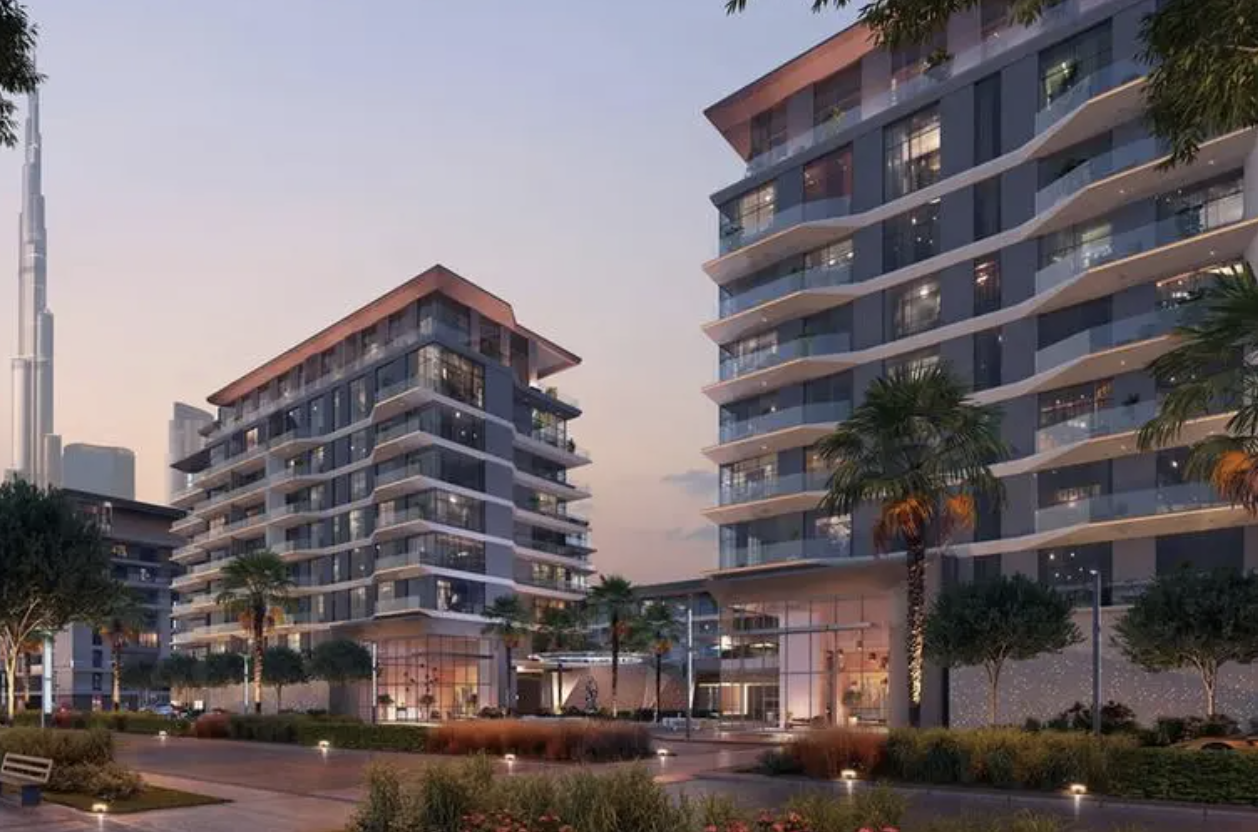
Expected to be completed by 2027, City Walk Northline will feature three modern residential buildings that seamlessly blend with the area’s contemporary energy, offering residents a fresh take on urban living with more space, more light, and more lifestyle experiences right at their doorstep.

A new home in the heart of the action

City Walk Northline 1 will house 114 one- to three-bedroom apartments, while Northline 2 will feature two eight-storey towers with 190 units, all designed with open layouts, elegant finishes, and private terraces that extend the indoors into Dubai’s year-round sunshine.

Set between Jumeirah Street and Sheikh Zayed Road, the new development gives residents instant access to the best of the city, from Coca-Cola Arena and Dubai Mall to Jumeirah Beach, all just minutes away.

Designed for the way Dubai lives

The new residences will introduce a refined, minimalist aesthetic, inspired by City Walk’s architectural rhythm and landmarks such as The Green Planet and Central Park. Interiors will be bathed in natural light, with premium materials, sleek kitchens, and timeless design touches that balance comfort and style.

Residents can look forward to infinity-edge pools, modern gyms, shaded terraces, and stylish communal lounges, all designed to offer a private retreat from the city buzz while staying connected to its energy.

A community built around lifestyle

For residents, the expansion means even more walkable dining, leisure, and green spaces, reinforcing City Walk’s identity as a place where people can live, work, and play without ever needing to leave the neighbourhood.


With over 35 years of experience in journalism, copywriting, and PR, Michael Gomes is a seasoned media professional deeply rooted in the UAE’s print and digital landscape.

News

Dubai issues new law on sharing accommodation, fines up to Dh1 million for violations

Published

on

Spread the love

Sheikh Mohammed bin Rashid Al Maktoum, Vice President and Prime Minister of the UAE and Ruler of Dubai, has issued Law No. (4) of 2026 to regulate the management and occupancy of shared housing in Dubai.

The new law applies across Dubai’s private development zones and free zones and sets clear rules for property owners, authorised operators, and tenants involved in shared housing arrangements.

What the law aims to do

The legislation is designed to organise shared housing in the emirate and address issues such as overcrowding and informal accommodation. The law aims to:

  • Protect the rights of property owners and residents
  • Ensure safe and healthy living conditions
  • Prevent overcrowding and illegal housing practices
  • Address building and land-use violations
  • Promote fair rental practices
  • Support the stability and appearance of Dubai’s real estate market

Permit required for shared housing

Under the law, no individual or entity may allocate a property unit for shared housing without obtaining an official permit.

Permits will be issued and renewed according to rules set by Dubai Municipality, in coordination with Dubai Land Department and other authorities.

Properties must meet specific technical and safety requirements, including:

  • Maximum occupancy limits
  • Minimum space per resident
  • Adequate shared facilities
  • Compliance with building, health, fire, sanitation, security, and electrical standards

Permit validity and renewal

  • Permits are valid for one year and may be renewed for similar periods.
  • At the owner’s request, a two-year permit may be issued.
  • Renewal applications must be submitted at least 30 days before expiry.

Leasing rules

The law states that only the property owner or an authorised establishment can lease a shared housing unit.

Tenants or other parties are not allowed to sublease any part of the unit, ensuring better oversight and compliance with regulations.

Heavy fines for violations

Violating the law can result in fines ranging from Dh500 to Dh500,000.

If the same violation is repeated within one year, the penalty will be doubled, up to a maximum of AED1 million.

Authorities may also impose additional measures, including:

  • Suspension of activity for up to six months
  • Cancellation of the permit
  • Revocation of the commercial licence
  • Disconnection of public utilities
  • Eviction orders for non-compliant units

Oversight and implementation

Dubai Municipality will set detailed conditions for shared housing, including maximum occupancy levels, required space per resident, and necessary facilities. The authority will also determine which areas in Dubai are permitted for shared housing, based on urban planning, population density, infrastructure capacity, and neighbourhood characteristics.

The law applies to companies licensed to manage or lease properties on behalf of owners, including those operating in special development zones and free zones. However, collective labour accommodation is excluded from its scope.

When the law takes effect

The law will come into force 180 days after its publication in the Official Gazette, and any conflicting provisions in other legislation will be annulled.

Continue Reading

Business

Sheikh Mohammed issues new law on building quality and safety in Dubai: All you need to know

Published

on

Spread the love

In his capacity as Ruler of Dubai, His Highness Sheikh Mohammed bin Rashid Al Maktoum, Vice President and Prime Minister of the UAE, has issued Law No. (3) of 2026 regulating the quality and safety of buildings in Dubai.

The law applies to all buildings across the emirate, including those located in private development zones and free zones such as the Dubai International Financial Centre (DIFC), regardless of whether they were constructed before or after the law’s enactment.

Ensuring safer and sustainable buildings

The new legislation aims to enhance the quality, safety, and sustainability of buildings in Dubai by ensuring structural integrity, regular maintenance, and the safe operation of building systems. It also seeks to improve occupant comfort, reduce accidents, protect lives and property, and preserve Dubai’s urban landscape.

Role of Dubai Municipality

Under the law, Dubai Municipality will oversee the implementation of building safety standards. Its responsibilities include developing a digital building management system, maintaining a unified database of buildings, and carrying out periodic assessments to ensure compliance.

The municipality will also set sustainability standards, regulate building materials, promote the use of modern technologies in construction and maintenance, investigate building-related incidents, and implement measures to safeguard lives and property.

Mandatory Quality and Safety Certificate

A key provision of the law is the requirement for buildings to obtain a Quality and Safety Certificate, which will only be issued after a licensed engineering office conducts a comprehensive inspection and technical assessment of the building’s structural and technical condition.

The law also defines the responsibilities of authorities supervising construction activities in Dubai, including Dubai Municipality and regulators overseeing private developments and free zones.

Responsibilities of building owners

Building owners, including unit owners governed by Law No. (6) of 2019 on Joint Property Ownership in Dubai, must obtain the Quality and Safety Certificate after construction is completed and address any defects identified during inspections.

Owners are also required to:

  • Hire a licensed engineering firm to assess the building and prepare a technical report
  • Carry out regular maintenance for buildings under 20 years old
  • Repair defects that may threaten structural safety, residents, or surrounding properties
  • Allow authorities to conduct inspections and perform necessary repairs

Maintenance must continue even after the building obtains its safety certificate.

Certificate validity

The Quality and Safety Certificate will remain valid for 10 years for buildings less than 40 years old from the date of completion, and five years for buildings that are 40 years or older.

Certificates may be renewed for similar periods, according to procedures to be determined by a decision from the Chairman of the Executive Council of Dubai.

Rules for demolition and tenant rights

If a building is approved for demolition, the provisions outlined in Law No. (26) of 2007 regulating landlord–tenant relations in Dubai will apply.

Tenants who vacate the building under such circumstances will have priority to return after reconstruction or major maintenance, at the same rental value stated in their original lease, unless otherwise agreed by both parties.

Penalties for violations

Violations of the law or related decisions may result in fines ranging from Dh100 to Dh1 million. Repeat offences within two years may lead to fines doubling to a maximum of Dh2 million.

Authorities may also impose administrative measures such as suspending building permits, halting government or private transactions related to the building, and stopping lease certification procedures until violations are resolved.

Appeals and enforcement

Anyone subject to a decision or administrative action under the law may submit a written appeal within 30 days to the Director General of Dubai Municipality or the relevant authority. A designated committee will review the appeal and issue a final decision within 30 days.

Authorities may also seek assistance from government entities, including the police, to enforce the law when required.

Implementation timeline

Building owners, contractors, and engineering offices must comply with the law within one year of its effective date, although the Chairman of the Executive Council of Dubai may extend the deadline if necessary.

The law will be published in the Official Gazette and will come into effect 60 days after publication, with any conflicting provisions in other laws annulled.

Continue Reading

Business

BCD Global acquires second Dubai South site, targets Dh300mn revenue in H1 2026

Published

on

Spread the love

International developer BCD Global has acquired a second development plot in Dubai South, accelerating its UAE expansion after its inaugural Dubai project was fully committed within weeks of launch.

The 70-year-old real estate group is targeting approximately Dh300 million ($81.7 million) in UAE revenue during the first half of 2026, marking its first meaningful earnings contribution from the market.

The latest acquisition follows BCD Global’s entry into Dubai last month with a freehold mid-market residential development in Warsan, where construction has already commenced. According to the company, all units were committed shortly after launch amid strong investor demand.

Scalable Platform Strategy

Chairman Dr. Angad Singh Bedi said the rapid absorption of the first project validated the group’s strategy of building a governance-led, scalable development platform rather than pursuing opportunistic transactions.

“The acquisition of a second site in Dubai South reflects our conviction in the long-term fundamentals of this market,” Bedi said. 

“We are building a platform designed for sustained capital deployment and disciplined growth.”

BCD Global has delivered more than 155 million square feet of real estate across over 300 projects spanning residential, mixed-use and large-scale developments in seven countries over seven decades.

Chief Executive Amit Puri described the move as part of a phased expansion strategy focused on structural demand drivers.

“Dubai remains one of the most resilient global property markets, supported by population growth, capital inflows and regulatory stability,” Puri said. 

“Dubai South represents the next phase of urban expansion, with infrastructure growth and demographic momentum supporting long-term housing demand.”

Market Backdrop

Data from the Dubai Land Department show total real estate transactions in Dubai reached Dh917 billion in 2025, up approximately 20% year-on-year. Average residential prices have climbed to around Dh1,597 per square foot, while rental yields in mainstream submarkets range between 6% and 8%, among the highest across major international cities.

Industry analysts project continued residential demand across the UAE, with close to 300,000 units expected to be delivered by 2028 amid sustained population growth and investor migration.

Pipeline and Regional Expansion

The newly secured Dubai South site forms part of BCD Global’s broader UAE pipeline. Another groundbreaking is scheduled next month, with construction on the second project expected to begin in the coming months.

The developer said its strategy centres on mid-market housing targeted at end-users and long-term investors, positioning itself away from short-term speculative segments.

From its Dubai base, BCD Global plans to expand across the Gulf, identifying Saudi Arabia as a priority growth market as it builds a diversified regional portfolio.

Continue Reading

Popular

Exit mobile version
https://headline.ae/