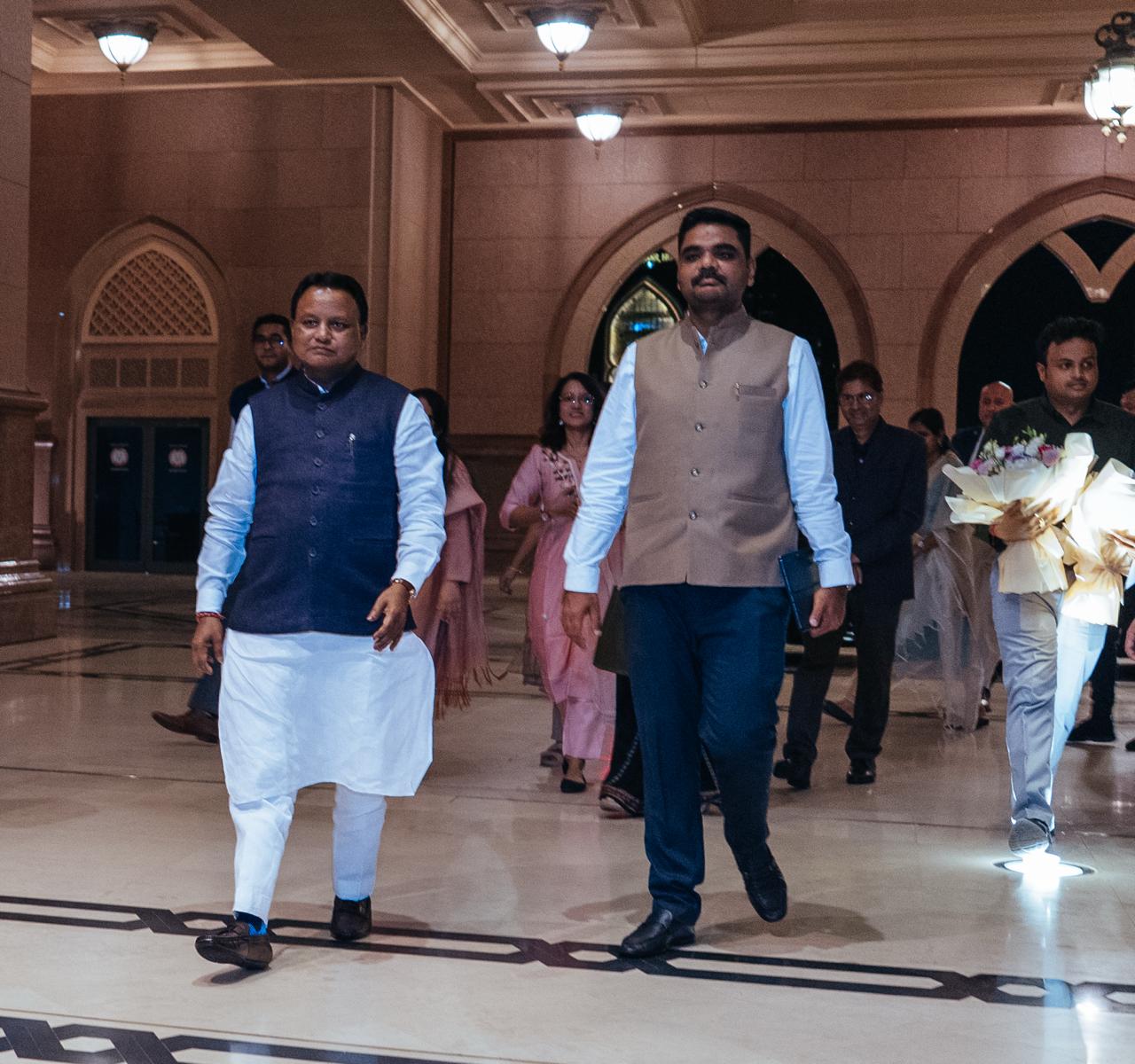
Chief Minister of Odisha Mohan Charan Majhi arrived in Abu Dhabi last night, marking the start of the State’s high-level investment outreach to the United Arab Emirates.The visit, with key business and investor engagements scheduled from September 9 to 11, is aimed at deepening Odisha’s economic engagement with the UAE and building long-term partnerships across investment, manufacturing, infrastructure, energy and emerging industries.
The Chief Minister is leading a high-level delegation comprising Hon’ble Minister for Industries Shri Sampad Chandra Swain, Chief Secretary Smt. Anu Garg, and senior officials from the Industries Department and IPICOL.
The delegation was received in Abu Dhabi by Additional Chief Secretary, Industries, Shri Hemant Sharma, along with UAE-based officials and representatives. Representatives of the Embassy of India in the UAE also welcomed the Chief Minister and the delegation.
Soon after his arrival, Shri Majhi reviewed preparations for the high-level business and investor engagements planned during the Abu Dhabi leg of the visit. He took stock of arrangements for meetings with UAE-based investors, institutions and business leaders, stressing the need for focused discussions that can translate into concrete partnerships and investment opportunities for Odisha.
During the day, the Chief Minister also met the Ambassador of India to the UAE and discussed the strengthening of India-UAE relations and the growing opportunities for deeper economic and people-to-people ties.
The Chief Minister highlighted the important role played by the Odia community living and working in the UAE, describing them as a valuable bridge between Odisha and the region. He emphasised the importance of continued support, facilitation and ease of living for Odias residing in the UAE, while recognising their contribution to strengthening links between the two economies.
The Abu Dhabi programme will bring the Odisha delegation into direct engagement with leading UAE institutions, investors and business groups. The discussions are expected to focus on identifying specific opportunities for investment, industrial partnerships, technology collaboration and long-term business participation in Odisha.
The outreach comes at a significant phase in Odisha’s industrial transformation. During the visit, the Chief Minister will showcase the State’s strengths, including its natural resources, robust industrial base, growing infrastructure, port connectivity, competitive power availability, skilled workforce and strategic access to large domestic and international markets.
Speaking ahead of the upcoming investor engagements, Chief Minister Shri Mohan Charan Majhi said,“Odisha has entered a new phase of industrial growth, and our engagement with the UAE is an important part of this journey. We are coming here not only to invite investment, but to build long-term partnerships based on trust, technology, value creation and employment. The UAE is an important global economic partner, and we look forward to strengthening the Odisha-UAE relationship through concrete investment and industrial opportunities.”
The Chief Minister said the State Government’s focus is on converting investor interest into projects on the ground, creating employment and further strengthening Odisha’s position as a competitive destination for global businesses.
The first full day of Odisha’s UAE investment outreach will begin tomorrow in Abu Dhabi with a series of high-level engagements involving leading UAE institutions, investors and business leaders.
The programme on September 9 will include interactions with International Holding Company (IHC) and its business verticals, the Indian Business and Professional Group (IBPG), the UAE Minister of Investment and other senior investment stakeholders. The day will also include a focused engagement on opportunities in the petrochemicals and chemicals sector.
The meetings will provide a platform to discuss specific investment opportunities, industrial partnerships, technology collaboration and new avenues for strengthening Odisha-UAE economic ties.
Through the outreach, the Government of Odisha is seeking to build a sustained economic partnership with the UAE and the wider MENA region, with a focus on translating investor interest into tangible outcomes for industrial growth, employment generation and long-term economic value for the State.
With a packed schedule of high-level business and institutional engagements beginning September 9, Odisha will look to deepen existing partnerships while exploring fresh opportunities in investment, technology, trade and industrial collaboration with the UAE.