Connect with us

Education

New UAE school calendar begins August 25: Here’s what’s changing

Published

on

Spread the love

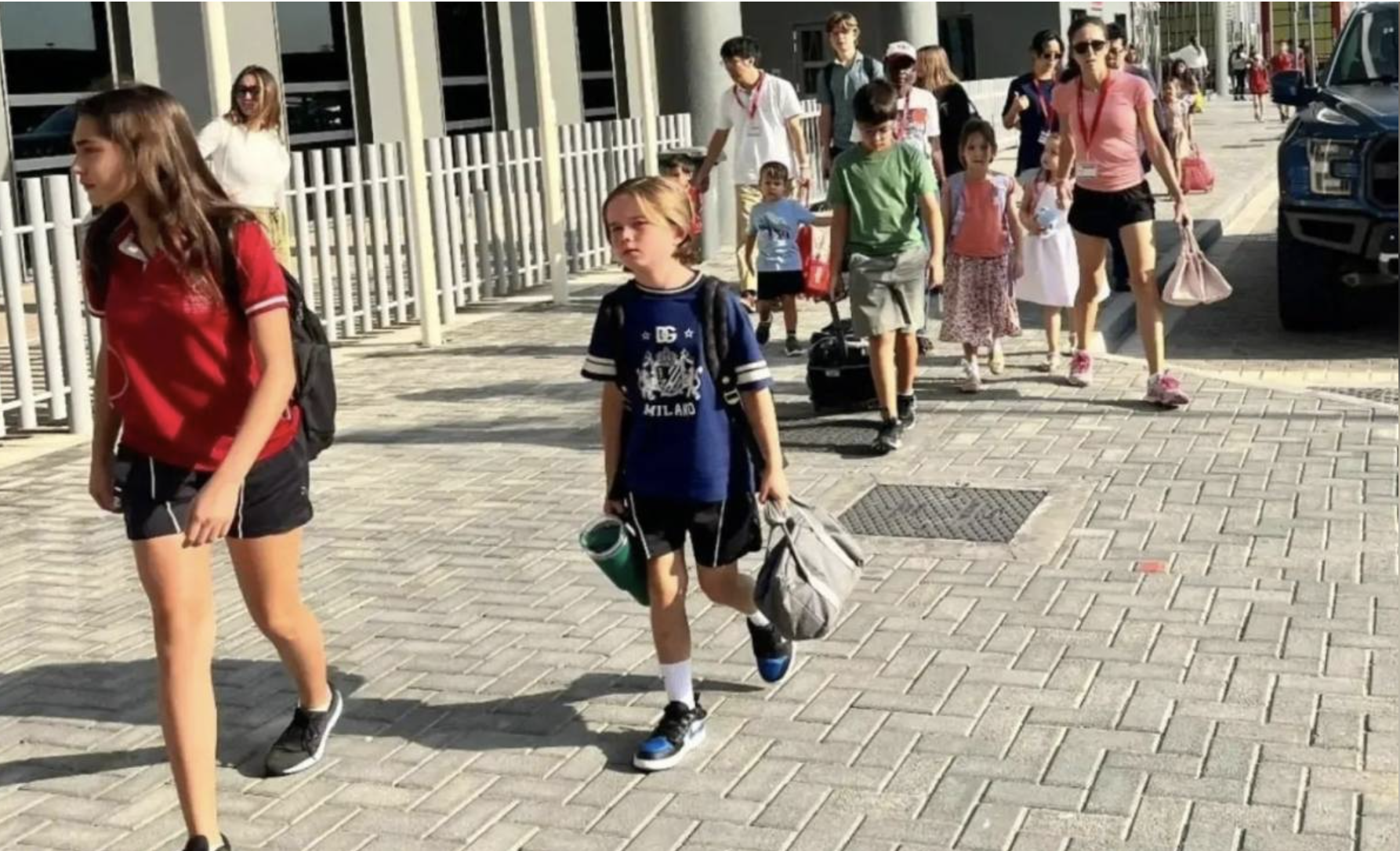
The UAE will officially launch its new unified school calendar on Monday, August 25, marking the start of the 2025–2026 academic year. Introduced by the Ministry of Education (MoE), the updated calendar aligns term dates and holidays for all public and private schools following the MoE curriculum, creating a more consistent schedule nationwide.

Approved by the Education, Human Development and Community Development Council, the calendar applies to all public and private schools in the UAE. This change aims to make planning easier for families, ensure smoother academic transitions, and balance learning time with breaks throughout the year.

Minister of Education Sarah Al Amiri said the updated schedule represents a “qualitative shift” in how the academic year is managed, aligning education with social and cultural activities.

She noted that consistent holiday dates will also help community, cultural, and tourism entities plan events in sync with the school year.

Key dates for 2025-2026:

  • First day of school: August 25
  • First term: Ends December 7, followed by a four-week winter break (December 8– January 4)
  • Second term: January 5– 15 March 15, 2026, with a spring break from March 16–29 (private schools in Sharjah return on March 23)
  • Third term: March 30–July 3, 2026 (ends July 2 for Sharjah)

New mid-term breaks for public and private schools following the government curriculum:

  • October 13–19, 2025
  • February 11–15, 2026
  • May 25–31, 2026 (coinciding with Eid Al Adha)

Private schools not following the government curriculum can set their October and February breaks within those months, but each may not exceed five days.

The MoE stressed that all schools must follow the approved dates and complete curriculum requirements until the final school day of each term, except for grades taking pre-scheduled international exams.

With over 35 years of experience in journalism, copywriting, and PR, Michael Gomes is a seasoned media professional deeply rooted in the UAE’s print and digital landscape.

Education

Dubai’s KHDA launches new councils giving parents and teachers a voice

Published

on

Spread the love

Parents and teachers in Dubai will soon have a direct role in shaping the future of education, following the launch of two new advisory councils by the Knowledge and Human Development Authority (KHDA).

Building on the success of the Dubai Students Council, KHDA has announced the creation of the Dubai Parents Council and Dubai Educators Council, both set to begin work at the start of the 2026-27 academic year.

Giving parents and teachers a voice

Each council will consist of 15 members selected through a transparent process and will serve as a formal platform for dialogue between the education community and regulators.

The initiative attracted strong interest, with KHDA receiving 152 applications for the Parents Council and 160 applications for the Educators Council, including submissions from Emirati parents and teachers across Dubai.

Supporting Dubai’s education vision

The new councils are designed to strengthen community participation in education and support the goals of Dubai’s Education 33 Strategy.

Members will have the opportunity to share ideas, highlight challenges and contribute recommendations on key issues affecting schools and early childhood centres across the emirate.

Focus on student success

The councils are expected to discuss a range of topics, including student wellbeing, inclusion, teaching quality, parental engagement and school-community partnerships.

KHDA said the move reflects its commitment to collaborative decision-making and aims to strengthen trust between families, educators and education authorities.

By formally including parents and teachers in the conversation, Dubai is taking another step towards creating a more inclusive and responsive education system that reflects the needs of its diverse school community.

Continue Reading

Education

Dubai schools to receive surprise KHDA inspections§

Published

on

Spread the love

Dubai’s private schools will face short-notice inspections from the 2026-27 academic year under a revamped quality assurance framework announced by the Knowledge and Human Development Authority (KHDA).

Under the new approach, schools will receive no more than 24 hours’ notice before inspectors arrive, marking a significant shift in how education quality is monitored across the emirate.

KHDA said the updated system will include two types of visits. Full inspections will be carried out by teams of specialist education experts, while shorter monitoring visits will focus on specific areas of school performance and quality assurance.

Return of formal inspection

The move signals the return of formal inspection activity after KHDA paused inspections during the 2025-26 academic year. At the time, the authority said the break would allow for greater collaboration with schools and a review of how educational quality is assessed and supported.

The new model aims to provide a more responsive and differentiated approach to evaluating schools, with visits designed to offer a clearer picture of day-to-day operations and educational standards.

Dubai’s private school sector serves hundreds of thousands of students across a wide range of international curricula, making quality assurance a key part of maintaining educational standards and supporting continuous improvement.

Further details on how the inspection and monitoring framework will operate are expected ahead of the 2026-27 academic year.

Continue Reading

Education

CBSE opens Class 12 re-evaluation portal: Key dates, fees and rules explained for UAE students and parents

Published

on

Spread the love

Students who appeared for the CBSE Class 12 board examinations now have an opportunity to review their results, with the board opening its verification and re-evaluation process following a brief delay.

The online facility allows eligible students to examine scanned copies of their answer scripts, report discrepancies and request a fresh assessment of specific responses if they believe errors may have occurred during evaluation.

The development is particularly relevant for students studying in the UAE, where many candidates faced disruptions during the examination period and completed only a limited number of papers under regular conditions.

Short application window

The Central Board of Secondary Education (CBSE) portal is open between June 2 and June 6, giving students just a few days to submit requests.

Applications can be filed entirely online, with no provision for offline submissions once the deadline passes.

However, only candidates who have already obtained their scanned answer sheets are eligible to proceed with verification or re-evaluation requests.

What students can review

Students are to check whether their answer scripts contain any technical or administrative issues.

These may include missing pages, unreadable scans, omitted supplementary sheets, absent diagrams or maps, incorrect question paper allocation, or other discrepancies that could affect the accuracy of evaluation.

Students can raise concerns across multiple subjects within a single application.

Fresh assessment of answers

Those who believe a particular answer may not have been assessed correctly can apply for re-evaluation.

The process allows candidates to identify specific questions they want reviewed. Applicants must provide the relevant question numbers and supporting details when submitting their request.

CBSE permits students to seek re-evaluation for multiple questions, although only one consolidated application can be submitted by each candidate.

Fees and payment

Students applying for verification will need to pay Rs100 (about Dh3.85) per answer script, while re-evaluation requests are charged at Rs25 (Dh1 approx) per question.

All payments must be completed through the online portal.

Once an application has been finalised and payment has been processed, no edits or modifications can be made. Students are therefore advised to carefully review their selections before confirming submission.

Evaluation transparency

The latest process comes at a time when discussions around digital evaluation methods have gained attention among students and parents.

In recent weeks, some families have raised questions regarding CBSE’s On-Screen Marking system and the role of technology in the assessment process. Education leaders, however, have stressed that multiple safeguards remain in place to maintain fairness and consistency during marking.

School administrators across the UAE have also encouraged students to make use of the official review process rather than rely on speculation or social media discussions.

What happens if marks change?

One of the most important aspects of CBSE’s re-evaluation policy is that any revised score becomes final.

If a review leads to higher marks, the improved score will be awarded. However, if the reassessment results in fewer marks than originally awarded, the lower score will replace the previous result.

Students, therefore, need to consider their applications carefully before proceeding.

Results to be released later

CBSE will now examine all verification and re-evaluation requests before announcing revised outcomes.

For students who have concerns about their marks, the process offers an official route to seek clarification and ensure their answer scripts have been assessed accurately before final results are confirmed.

Continue Reading

Popular

Exit mobile version
https://headline.ae/