Business
Zoftware’s Aayushman Dalmia wins Innovation Excellence award at Ignyte SME Challenge
Published
1 year agoon

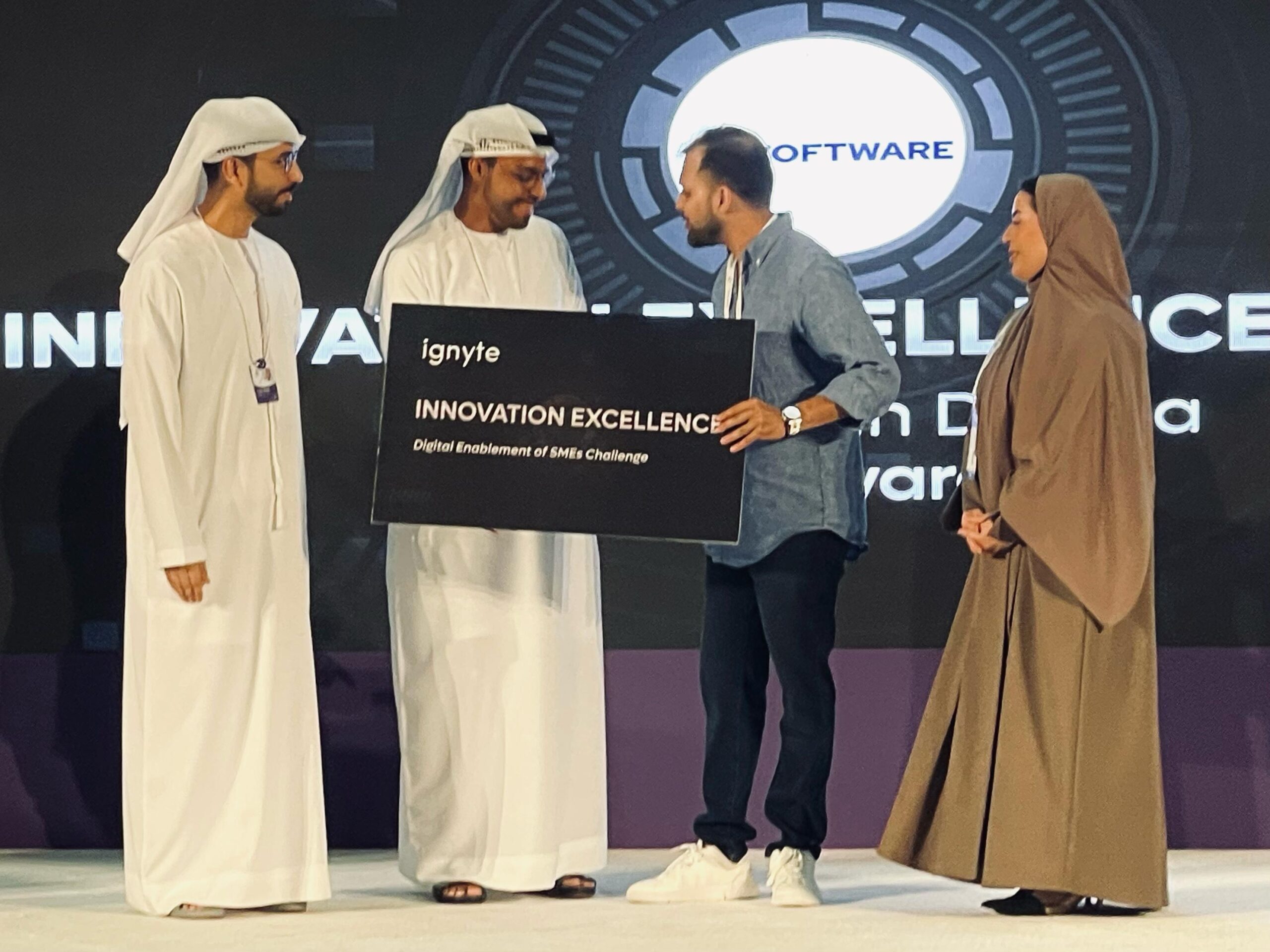
Aayushman Dalmia, founder of Dubai-based startup Zoftware, has won the Innovation Excellence Award at the Digital Enablement of SMEs Challenge. The event, hosted by the Ministry of Artificial Intelligence of UAE and Ignyte, positions Dalmia for further growth as he continues his mission to simplify software discovery for small and medium businesses across the region.
Dalmia’s platform, Zoftware, has been steadily gaining traction in the MENA startup ecosystem for offering a streamlined approach to finding, comparing and selecting enterprise software solutions – a process that remains a hurdle for many growing businesses.
“This award is a testament to the need for simplifying tech access for SMEs,” said Dalmia, who has been named among Forbes Middle East’s 30 Under 30 entrepreneurs in the past. “Our goal has always been to bridge the digital divide by helping businesses make faster, more informed software decisions.”
The challenge is part of a wider push to accelerate SME digitisation across the region — an agenda that aligns closely with both government and private-sector priorities in the UAE.
Aimed at recognising impactful solutions that accelerate SME digital transformation, the challenge, held recently in Dubai, drew hundreds of high-potential founders from across the MENA region. Dalmia impressed the jury with his platform’s clear value proposition and scalable vision—matching SMEs with the right digital tools through a curated marketplace backed by intelligent filters, user reviews, and guided discovery.
“This award validates everything we’ve been building at Zoftware for the past couple of years or so,” said Dalmia, speaking after the ceremony. “Technology shouldn’t be a hurdle—it should be a launchpad. We’re making it easier for SMEs to make smart digital decisions without needing an IT degree.”
With this latest recognition, Zoftware joins a growing list of Dubai-born startups gaining international visibility, reinforcing the city’s position as a launchpad for regional innovation.
A Track Record of Disruptive Innovation-
Zoftware has been making headlines since its launch for its ambitious aim: to become the region’s go-to platform for B2B software discovery. In 2024, the company was recognised by TechRadar MENA as one of the “Top 10 Startups to Watch” in the SaaS enablement space.
Under Dalmia’s leadership, Zoftware has grown rapidly, onboarding hundreds of software vendors and serving SMEs in sectors ranging from logistics and retail to health and education.
Beyond the Prize: A Strategic Boost-
“We’re at a tipping point now,” Dalmia added. “This support will help us go deeper in key markets and integrate more AI-driven features to guide SME software choices. Our roadmap includes multi-language access, fintech tools, and region-specific integrations.”
Digital Enablement: A Regional Imperative-
As the UAE and wider Gulf continue to prioritise SME growth as a cornerstone of economic diversification, platforms like Zoftware are stepping in to close the tech literacy and access gap. According to a recent report by the World Bank, nearly 75% of SMEs in the MENA region still lack structured digital infrastructure – a gap Zoftware aims to close.
“We’re not selling software – we’re selling clarity, confidence, and capacity,” Dalmia said.
“If we get this right, we unlock not just productivity, but resilience and long-term competitiveness for thousands of businesses.”
With the Innovation Excellence Award now under its belt, Zoftware is poised to scale further and cement its role as a key enabler of SME digital transformation in the region.
You may like
-
IT services spend in mena set to reach up to 28% of total it budgets as services-led transformation accelerates
-
Early warning: UAE scientists develop AI model that could protect your phone, TV signal and GPS
-
Putin Highlights Russia’s Role as a Hub for Advanced Technologies, with Sber and National AI Alliance Leading the Way at AI Journey Conference
Announcements
Odisha Targets Export-Led Industrial Growth Through High-Level UAE Investment Outreach
Published
3 days agoon
September 5, 2026The Odisha government will undertake a three-day investment outreach to the United Arab Emirates from September 9 to 11, led by Chief Minister Mohan Charan Majhi, as the state steps up efforts to attract global capital, expand export-oriented industries and strengthen business ties with the UAE.
The outreach will cover Abu Dhabi and Dubai, bringing together UAE-based investors, sovereign and institutional funds, financial institutions, industry leaders, Indian business professionals and business organisations to explore investment, technology collaboration, industrial partnerships, exports and value-chain opportunities in Odisha.
A key focus of the visit will be on export-oriented manufacturing and materials, building on Odisha’s established strengths in metals and metallurgy while seeking investments in higher-value manufacturing and downstream industries.
The state will showcase opportunities across metallurgy and metals downstream industries, food and seafood exports, port-based industrial and logistics parks, shipbuilding, rare earths, slurry pipeline infrastructure, and chemical and petrochemical parks.
With its established industrial base and strategic location along India’s eastern coast, Odisha is positioning its ports and related infrastructure as major drivers of future industrial growth. The government expects port-led development to open up opportunities for integrated manufacturing, logistics, exports and global supply-chain linkages.
The UAE engagement will also seek to accelerate Odisha’s transition from traditional industrial sectors towards technology-driven, higher-value industries, with an emphasis on developing integrated value chains within the state and connecting local production with international markets.
In Abu Dhabi, the Odisha delegation is scheduled to hold discussions with leading investment institutions, fund houses, sovereign investment platforms and UAE-based organisations. The talks will focus on investment opportunities, foreign direct investment, industrial partnerships and long-term capital participation.
The Dubai leg will feature meetings with industry leaders, metals and downstream companies, logistics and infrastructure players and other potential investors. Sector-specific roundtables and one-to-one meetings are expected to provide a platform for the state to pitch specific projects while understanding the requirements of global companies looking to expand their presence in India.
A major component of the programme will be meetings with fund houses and UAE-based organisations, focusing on project financing, strategic partnerships and FDI opportunities in Odisha. The delegation will also engage with the Indian business community in the UAE, including professionals and business leaders who could help deepen India-UAE economic ties and facilitate international business connections for Odisha.
The Odisha Investors Meet – UAE will serve as a broader platform to showcase the state’s investment ecosystem, emerging opportunities and sector-specific projects to investors from the UAE and the wider MENA region. The government expects the programme to generate potential investment commitments and new industrial partnerships.
Chief Minister Mohan Charan Majhi said Odisha was seeking partnerships that could connect the state with global capital, technology and markets while strengthening its industrial ecosystem. “Odisha has a strong industrial foundation and immense potential to become a major hub for export-oriented and value-added manufacturing. Through our UAE outreach, we seek to connect Odisha with global capital, technology, markets and strategic partners. Our focus is on building long-term partnerships that can transform our industrial ecosystem, strengthen value chains and create new opportunities for our people.”
Industries Minister Sampad Chandra Swain said the government was targeting both established and emerging sectors, with a focus on value addition, exports and technology adoption. “From metallurgy, metals and downstream industries to ports, logistics, food and seafood exports, rare earths, shipbuilding, chemicals and petrochemicals, we are presenting a wide range of investment opportunities. We are particularly looking at investments that promote value addition, exports, technology adoption and the transition towards higher-value industries.”
The UAE outreach forms part of Odisha’s broader strategy to attract global investment and technology while strengthening export-oriented production, port-led industrialisation and international value-chain integration.
Announcements
Emirates Unveils Electric Privacy Screens in Premium Economy
Published
5 days agoon
September 3, 2026Emirates is taking its award-winning Premium Economy cabin up another notch, introducing what it says is the world’s first electrically powered Premium Economy seat with a full-height adjustable privacy screen.
The new seats will debut aboard the airline’s newly delivered Airbus A350 aircraft, giving passengers greater control over their personal space while adding a host of comfort and technology upgrades to the cabin.
Configured in a spacious 2-3-2 layout with just 28 seats, Emirates’ latest Premium Economy cabin features seats measuring 20 inches wide, with up to 39 inches of pitch. The seats recline into a cradle position designed to provide a more comfortable sleeping experience without encroaching on the passenger behind.
At the centre of the new design is the electrically operated privacy divider. Passengers can raise or lower the screen at the touch of a button and lock it at their preferred height, creating a more secluded space for working, dining or relaxing.
The new seats are also Emirates’ first fully electrically powered Premium Economy seats. Through an integrated Passenger Control Unit, travellers can adjust their seating position and select dedicated settings including lounge and meal modes.
More comfort, from head to foot
Emirates has also introduced Safran Seats’ U-Dream headrest, a leather design featuring adjustable wings that can be positioned to provide additional support for the head and neck.
A manually deployable leather footrest adds another layer of comfort, particularly on long-haul flights, helping passengers relax and reduce leg fatigue.
For passengers travelling with multiple devices, the cabin introduces wireless charging in Premium Economy for the first time on Emirates. Each seat also comes with USB-C charging and a redesigned tray table featuring an integrated phone holder, allowing travellers to use their smartphone as a second screen while eating or watching content.
A sharper entertainment experience
Passengers on the new A350s will have access to Emirates’ ice inflight entertainment system through a 13.3-inch 4K HDR touchscreen, offering high-resolution images and faster, more responsive navigation.
The aircraft itself will also provide an enhanced view of the journey. New A350 aircraft will feature additional exterior camera perspectives, adding left- and right-facing views to the existing forward and downward cameras.
Premium dining remains part of the experience
The upgraded seat comes alongside the dining service that has helped distinguish Emirates Premium Economy from many competing products.
Passengers are served regionally inspired menus prepared by Emirates chefs, with meals presented on Royal Doulton fine china, accompanied by linen napkins and stainless-steel Robert Welch cutlery.
The beverage programme includes Chandon Vintage Brut 2021, an Australian sparkling wine available exclusively to Emirates Premium Economy customers worldwide.
From September, passengers on selected routes can also expect wines including Chablis Premier Cru Jean-Marc Brocard 2024 from Burgundy and La Parde de Haut-Bailly 2014 from Bordeaux.
October will bring another first, with Wiston Estate Brut NV becoming Emirates’ first English sparkling wine. It will be served exclusively in Premium Economy on UK routes.
Emirates says it has invested more than US$1 billion in its wine portfolio since 2006, underscoring the importance the airline places on its onboard beverage programme.
Sustainable amenity kits add another touch
On long-haul flights, Premium Economy passengers will also receive reusable amenity kits created in partnership with United for Wildlife.
The collectible bags are designed around endangered wildlife and four natural habitats, with bio-based materials used throughout. For the first time in Emirates Premium Economy, the kits will include plant-based skincare products from Aveda, alongside travel essentials such as socks, eyeshades, earplugs and dental kits.
Emirates continues to expand Premium Economy
Emirates launched Premium Economy in 2022 as a product positioned between its Economy and Business Class cabins. Since then, the airline has steadily expanded the cabin across its fleet, with the product now available across markets served by its Airbus A350 aircraft.
The latest generation is clearly designed to push Premium Economy closer to the Business Class experience, combining wider seats, generous legroom, greater privacy, upgraded dining and high-end entertainment.
The product has already collected several industry accolades, including Best Premium Economy Class at the Business Traveller Middle East Awards in 2024 and 2025, as well as Airline with the Best Premium Economy Class at the 2025 ULTRAs Awards.
With the introduction of its electrically powered seat and full-height privacy screen, Emirates is once again betting that the future of Premium Economy will be defined not simply by extra legroom, but by greater personal space, technology and control.
For passengers, that could mean a Premium Economy seat that feels less like an upgraded economy chair — and increasingly like a private space of its own.
News
Crackdown on Illegal paying guests: Dubai’s new shared housing law takes effect with fines up to Dh1m
Published
2 weeks agoon
August 27, 2026Dubai’s new legislation governing shared accommodation officially came into effect on August 26. Applying across the entire emirate, including free zones and special development zones, the comprehensive framework is designed to eliminate dangerous, overcrowded, and unauthorised partition rentals while establishing formal licensing standards for communal living.
What qualifies as shared housing?
Under the law, shared housing is defined as any residential property where individuals or families occupy private designated living spaces while sharing common facilities like kitchens, bathrooms, and dining areas.
Who is permitted to rent out shared units?
The new framework strictly bans unauthorised subletting by tenants. A primary tenant can no longer rent out individual bedrooms, partitioned spaces, or bed spaces directly to roommates or third parties.
Only the following entities can legally offer shared housing:
- Registered Property Owners: Leasing spaces directly to occupants under formal contracts.
- Licensed Management Companies: Authorised operators contracted by the owner to run and lease the property.
- Licensed Operators Subletting Master Leases: Approved commercial entities leasing an entire property from the owner to sublet authorised units to tenants.
Penalties for violations
Authorities have introduced strict financial and operational consequences for non-compliance:
- Initial Fines: Dh500 up to Dh500,000, depending on the severity of the violation.
- Repeat Violations: Fines double for repeat offences committed within one year, capped at Dh1,000,000.
- Operational Sanctions: Authorities may suspend operations for up to 6 months, revoke commercial licenses, cancel permits, disconnect utilities, seize equipment, or order the direct evacuation of non-compliant properties.
Grace period & tenant protection
- Compliance deadline: Existing shared housing operators and property owners have until August 26, 2027, to obtain permits and bring their properties into full compliance.
- Protection from sudden eviction: If an operator’s permit is suspended or cancelled, authorities can grant occupants an interim stay period to secure alternative accommodation rather than facing immediate eviction.
Approved property/resident categories
The regulation permits shared accommodation across six distinct property types:
- Residential apartments
- Detached/standalone houses
- Residential complexes
- Mixed-use buildings
- Attached / adjoining houses
- Multi-storey buildings
Permitted occupant groups include families, single men, single women, university students, government personnel, and private sector corporate employees. Corporate and student housing provided directly by employers or educational institutions does not require individual tenancy contracts.