Connect with us

Companies

Can Tesla join $1 trillion club with 5 major issues?

Published

on

Spread the love

Tesla’s performance in stock market remained fluctuated since CEO Elon Musk’s decision to buy $1.5 billion Bitcoin and rising concerns about safety and quality of Tesla vehicles from Chinese customers.

However, the company gained 30 percent at the S&P 500 after it registered record profit in second quarter.

Analysts predict another feat for the company when it will be publishing its positive results backed by strong shipments in the past three months despite hike in its prices due to a chip shortage and supply issues. With the potential positive financial results, the $870 billion carmaker could join the club of corporate titans like Amazon, Microsoft and Apple, which have over $1 trillion value.

Earlier this month, Musk claimed that his company can keep at least 50 percent annual growth rate in sales. He only considered the issue of shipment from China, playing down the chip shortage. But this problem would be wiped out with the opening of a new factory in Europe that would reduce burden of imports from China.

However, there are still 5 major issues that can create a hurdle for Tesla to join $1 trillion club.

Gigafactory Berlin-Brandenburg

Tesla’s upcoming project in Germany is facing a challenge from the local advocacy groups who are voicing concern over the plant’s effects on the region. A German television channel also run a documentary over the potential threats to the region’s water supply and the carmaker’s so-called anti-union policies. The company is depending on the plant for massive production for Europe and Musk wants to deliver the first Model Y vehicles from the factory before year-end. But Musk may have to demolish the plant if the site does not get final approval.

Cybertruck

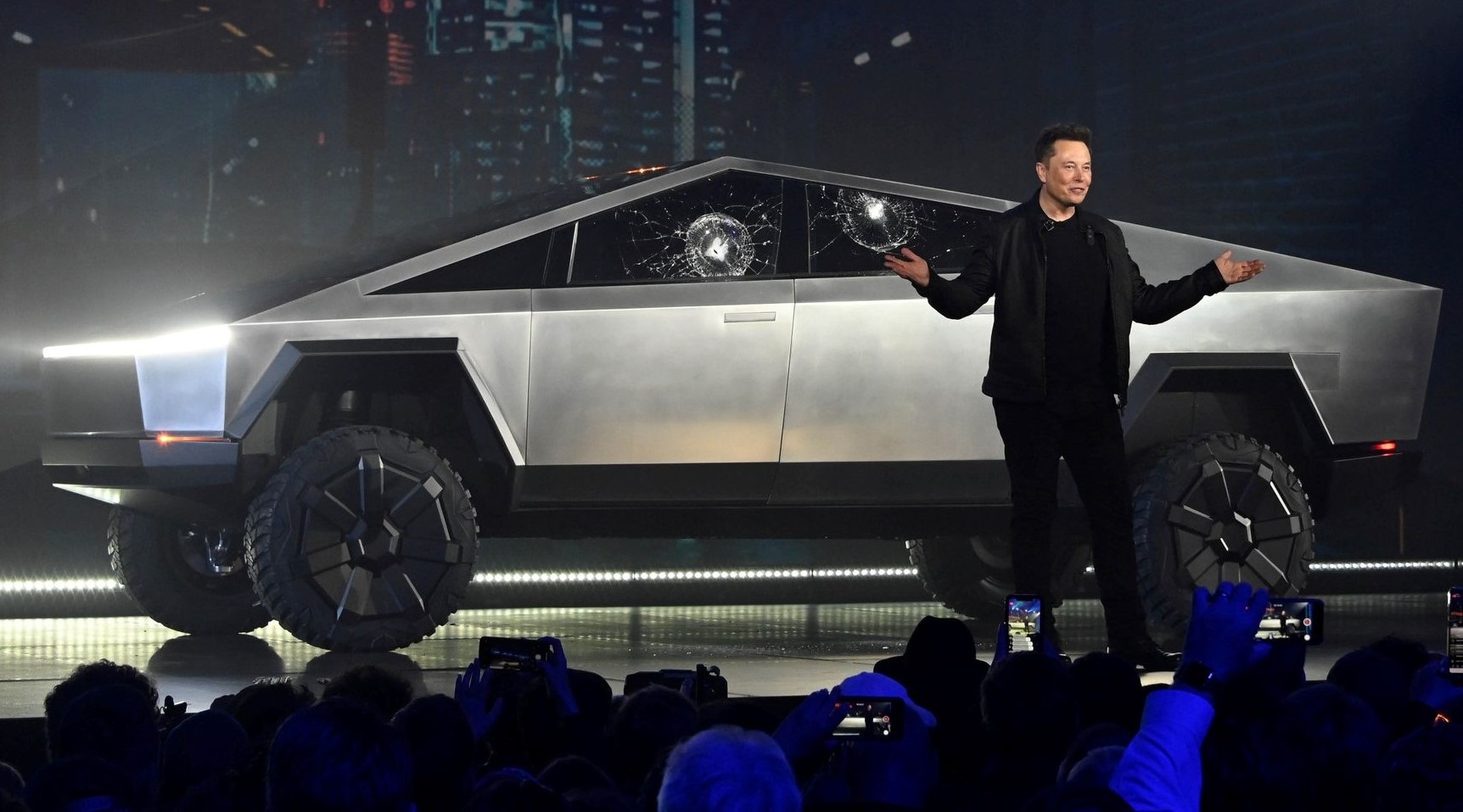
Tesla has suddenly withdrawn its upcoming Cybertruck from its online ordering site without giving any explanation. The move shocked over one million customers who had already placed their orders. There are some speculations that Tesla pulled the vehicle due to rising cost or it was just like Musk’s previous decision when he cancelled the Model S Plaid+ this summer. This move may be risky for Tesla at the time when its rival Rivian is launching R1T.

Megapack

Tesla is working on storing renewable energy after soaring prices of various fossil fuels. The company has already installed its household Powerwall and industrial-size Megapack systems in Lathrop, California. Houston city is also set to install Tesla’s 100 MW battery farm. But the overall project is slowing down with the chips required for these products being supplied to the company’s cars.

Full Self-Driving beta

This month, Tesla gave early access of Full Self Driving beta program to its American customers. The move has created some risks as well. Analysts are raising questions that how the experimental technology can be given to customers. They are also of the view that the program’s name is misleading as it shows the system has the capability of self-driving which it does not have. Musk has also proposed that the program should not be handed over to the customers having poor driving records. Despite Musk’s suggestion, Tesla granted Ross Gerber, CEO of Gerber Kawasaki Wealth and Investment Management, access to the program, ignoring his terrible official safety score.

Tesla Bot

Tesla announced its Project Optimus in August to develop a humanoid robot prototype. Musk had claimed that the bot would be able to perform dangerous tasks. However, he also warned of threats of artificial intelligence. The project was launched jut weeks after Tesla’s South Korean rival Hyundai purchased Boston Dynamics to produce robots. Analysts are raising concern over Tesla’s project despite AI threats.

Continue Reading
Advertisement

Announcements

UAE VAT rules are changing in 2026: Here’s what businesses need to know

Published

on

Spread the love

The UAE’s Ministry of Finance has announced a new set of amendments to the country’s VAT law, with the revised rules taking effect on January 1, 2026. The changes are designed to make the tax system easier to use and more aligned with international best practices.

In a statement, the Ministry said the move supports the UAE’s ongoing efforts to streamline its tax framework and improve administrative efficiency. The updates are also designed to provide businesses with greater clarity and reduce unnecessary paperwork.

Simpler filing, fewer steps

One of the biggest changes removes the requirement for businesses to issue self-invoices when using the reverse charge mechanism. Instead, companies will simply need to keep the usual documents that support their transactions, such as invoices, contracts and records, which the Federal Tax Authority (FTA) can review when checking compliance.

According to the Ministry, this adjustment “enhances administrative efficiency” and provides clear audit evidence without placing extra paperwork burdens on businesses.

Five-year window for VAT refunds

The updated law also introduces a five-year limit for claiming back refundable VAT after accounts have been reconciled. Once this period ends, businesses lose the right to submit a claim. Officials say this helps prevent long-delayed refund requests and gives taxpayers more certainty about their financial position.

Tighter rules on tax evasion

To protect the system from misuse, the FTA will now have the authority to deny input tax deductions if a transaction is found to be linked to a tax-evasion arrangement. This means businesses must ensure the supplies they receive are legitimate before claiming input VAT.

Taxpayers are expected to verify the “legitimacy and integrity” of supplies as part of these strengthened safeguards.

Supporting a competitive economy

The Ministry said the amendments will boost transparency, ensure fairness across the tax system and support better management of public revenue. The updated rules also aim to maintain the UAE’s competitive edge while supporting long-term economic sustainability.


Continue Reading

Business

Dubai launches new permit to help free zone firms do business on the mainland

Published

on

Spread the love

Businesses in Dubai’s free zones can now trade more easily on the mainland, thanks to a new Free Zone Mainland Operating Permit announced on Wednesday by Dubai’s Department of Economy and Tourism (DET).

The move is designed to simplify and make it more cost-effective for companies to operate across jurisdictions, providing them with access to domestic trading opportunities and government contracts, previously available only to mainland-licensed firms.

“This initiative cements Dubai’s position as a benchmark for regulatory innovation,” said Ahmad Khalifa AlQaizi AlFalasi, CEO of Dubai Business Registration and Licensing Corporation. “We’re enhancing ease of doing business and opening new avenues for growth, from domestic trading to government tenders.”

What the Permit Offers

  • Cross-border flexibility: Free zone companies can now engage in mainland activities without setting up a separate mainland entity.
  • Low-cost entry: The permit costs Dh5,000 for six months and is renewable for the same fee.
  • Talent mobility: Firms can use their existing staff for mainland operations without hiring additional employees.
  • Tax compliance: Revenue earned from mainland activities will be subject to the 9% corporate tax, with companies required to maintain separate financial records as per Federal Tax Authority (FTA) rules.

Who Can Apply

The first phase of the permit covers non-regulated sectors, such as:

  • Technology and IT services
  • Consultancy and design
  • Professional services
  • Trading

Plans are in place to extend the permit to regulated sectors in the future.

Eligible businesses must have a Dubai Unified Licence (DUL). They can apply online via the Invest in Dubai (IID) platform, ensuring a quick and hassle-free process for SMEs, startups, and larger enterprises.

Big Boost for Businesses

DET expects the initiative to increase cross-jurisdiction activity by 15–20% in its first year, benefiting over 10,000 active free zone firms.

By enabling free zone companies to integrate more closely with domestic supply chains, the permit opens doors to billions of dirhams worth of government tenders and contracts, creating new opportunities for growth, innovation, and job creation.

Continue Reading

Business

Sheikh Hamdan launches Dubai Founders HQ: One-stop hub for startups

Published

on

Spread the love

Sheikh Hamdan bin Mohammed bin Rashid Al Maktoum, Crown Prince of Dubai, on Monday launched Dubai Founders HQ, a groundbreaking initiative that consolidates the emirate’s entire startup and SME ecosystem under one roof.

The first-of-its-kind “phygital” platform combines a state-of-the-art physical campus at One Central, Dubai World Trade Centre, with a comprehensive digital ecosystem connecting founders, investors, corporates, and enablers.

The mission: 30 unicorns by 2033

Dubai Founders HQ directly supports the ambitious Dubai Economic Agenda D33, which aims to:

  • Scale 30 unicorns (startups valued at $1 billion+) from Dubai
  • Enable 400 SMEs to grow by 2033
  • Position Dubai as a global innovation powerhouse

“In Dubai, entrepreneurship is considered a key engine of comprehensive and sustainable development,” Sheikh Hamdan said during his visit to the new campus. “Supporting entrepreneurs is an investment in human potential and in our society’s capacity to innovate and move confidently towards a more prosperous future.”

More than 25 powerhouse partners already on board

More than 25 leading organisations spanning venture capital, financial services, government entities, telecommunications, and innovation hubs have joined the platform, including globally renowned ecosystem builders Endeavor and Plug and Play.

This isn’t just another co-working space, it’s a fully integrated support system designed to take startups from ideation to market leadership.

What founders actually get

Physical campus perks:

  • State-of-the-art co-working spaces
  • Event facilities and meeting rooms
  • Open collaboration areas
  • Curated networking events and workshops
  • Local art showcasing Dubai’s creative spirit

Digital platform access:

  • Curated learning library
  • Consolidated repository of Dubai’s startup ecosystem
  • Data-driven insights and connections

End-to-end services:

  • Sector-specific acceleration programmes
  • Expert mentorship and advisory
  • Direct investor access
  • Business setup and licensing support
  • Global ecosystem connections
  • Tailored venture building partnerships

Hub-and-spoke model

Dubai Founders HQ acts as the “gravitational centre” of Dubai’s innovation landscape, seamlessly connecting with free zones, accelerators, and incubators across the emirate.

Think of it as the central nervous system coordinating Dubai’s entire entrepreneurial ecosystem – eliminating fragmentation and creating a streamlined entry point for founders at every growth stage.

Strategic vision

Omar Sultan Al Olama, Minister of State for Artificial Intelligence, Digital Economy and Remote Work Applications, called the launch “a significant milestone in our journey to position Dubai as a global hub for digital entrepreneurship.”

Helal Saeed Almarri, Director General of Dubai Department of Economy and Tourism, emphasised the collaborative approach: “In bringing together government entities, corporates, and investors, we are creating a self-sustaining engine for innovation.”

Why it matters

For startups: Unparalleled access to expertise, funding, and support in one location

For investors: Direct pipeline to Dubai’s most disruptive businesses and talent

For corporates: Innovation partnerships and access to cutting-edge solutions

For Dubai: Accelerated path to becoming a global startup capital

Global gateway

Dubai Founders HQ also serves as an entry point for international startups and SMEs looking to access Middle Eastern markets, offering comprehensive guidance on business setup and ecosystem navigation.

Navigating bureaucracy

Dubai has consolidated years of entrepreneurial infrastructure development into one powerful platform. For founders, this means less time navigating bureaucracy and more time building world-class companies.

“Many startups have begun their journey in Dubai and grown to reach global markets,” Sheikh Hamdan noted. 

“Our aim is to make the city a platform where bold ideas can flourish and scale up.”

With 30 unicorns in its sights and an ecosystem now operating in unison, Dubai Founders HQ isn’t just supporting startups, it’s engineering them at scale.

Location: 25Hours Hotel, One Central, Dubai World Trade Centre
Partners: More than 25 venture capital firms, financial institutions, government entities, telcos, innovation hubs
Model: Physical campus + digital platform = “phygital” ecosystem

Continue Reading

Popular

Exit mobile version
https://headline.ae/