Connect with us

Entertainment

Chinese Sci-Fi Steps Into Spotlight

Published

on

Spread the love

[ad_1]

Chengdu, China – Once effectively banned, Chinese science fiction has exploded into the mainstream, embraced by the government and public alike – inviting scrutiny of a genre that has become known for its expanding diversity and relative freedom.

Its new status was epitomized by this week’s Worldcon, the world’s oldest and most influential sci-fi gathering, which closed Sunday after taking place in China for the first time.

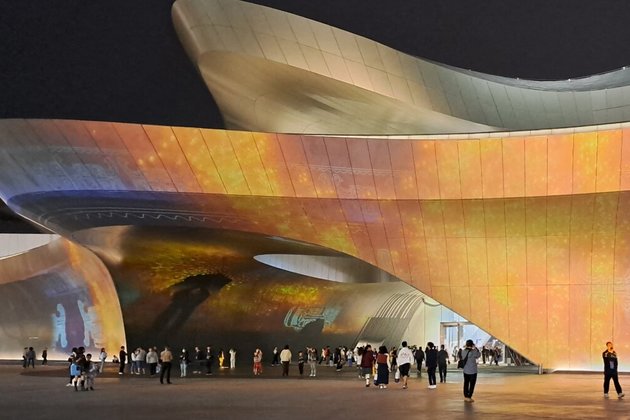
Held in the gleaming new Chengdu Science Fiction Museum, the event’s star was Liu Cixin, author of the international phenomenon ‘Three-Body’ series and inspiration for the domestic blockbuster ‘Wandering Earth.’

But the wider science fiction fandom has become a rare space where diverse voices have flourished and a vast array of issues – social, environmental, even sometimes political – can be explored.

‘In its nature, part of sci-fi is talking about the present,’ award-winning author Chen Qiufan told AFP.

‘It takes advantage of talking about outer space, or being set in different times, but reflects the human condition right now.’

Chen’s own novel ‘The Waste Tide’ is set in a dystopian future China, where migrant e-waste workers toil in hazardous conditions, exploited by corrupt conglomerates.

He grew up near Guiyu, once one of the largest e-waste dumps in the world.

Ecological destruction, urbanization, social inequality, gender, corruption, to name just a few – ‘these issues are intersectional and intertwined with each other,” said Xi’an Jiaotong-Liverpool University’s Liu Xi.

Together, they ‘allow everyone to understand Chinese writers’ exploration of Chinese society,’ she said.

That can be rare to find in today’s China, where the space for political and artistic expression has shrunk drastically over the last decade under President Xi Jinping.

Spiritual pollution

Historically, science fiction has had a turbulent relationship with Chinese authorities – it effectively disappeared during the Cultural Revolution and then was banned as ‘spiritual pollution’ in the 1980s.

Though it returned, it remained relatively obscure.

Writer Regina Kanyu Wang said it was only at university that she met other fans – together they formed one of the smaller clubs on campus.

Sci-fi was not taken seriously, and seen as something for children and young adults, Chen said.

That had its advantages.

‘There was a lot of freedom… because nobody was reading science fiction, (authors) could just do whatever they wanted,’ the University of Zurich’s Jessica Imbach told AFP.

The global success of the ‘Three-Body’ series changed everything, catapulting its epic themes of technological prowess and the fate of humanity into the public consciousness.

‘Whether you like science fiction or not, the social reality we are facing is becoming more and more like science fiction,’ said Yu Xuying from Hong Kong Metropolitan University.

‘We live in a high-tech era. And then your daily life is completely technological,’ she said.

The pace of digital change in China, already fast, was accelerated by the COVID-19 pandemic.

Cash has all but disappeared, and stringent health regulations further enhanced the state’s significant surveillance capacity.

The international interest spike in Chinese sci-fi is also related to real-world concerns, Chen believes.

‘I think there are different layers of reasons for the phenomenon,’ he said.

‘But a major one is the rising economic and technological power of China on the world stage.’

A good vehicle

China’s government has been happy to capitalize on all this.

‘At a national level, science fiction is a good vehicle for conveying the country’s discourse on its science and technology strength,’ said Yu.

It can also help ‘highlight the relationship between the Chinese dream (a Xi-era aspirational slogan) and science,’ she said.

Authorities have put their money where their mouth is.

The nebula-shaped Chengdu Science Fiction Museum, designed by the renowned Zaha Hadid Architects, was built at light speed in just a year to coincide with Worldcon.

The event, historically fan-led and funded, this year was a ‘capitalistic initiative, coming top-down from the Chinese government,’ said Chen.

‘They want sci-fi to be the name card of the city, showing China’s openness and inclusiveness to the world,’ he said.

Government attention comes with potential risk.

‘The Three-Body Problem’ has a different structure in English, with the narrative beginning with a violent Cultural Revolution scene.

In the original Chinese, it was buried halfway through the book to make it less conspicuous, the translator Ken Liu was told.

Liu told the New York Times in 2019 that increasingly, ‘it’s gotten much harder for me to talk about the work of Chinese authors without… causing them trouble.’

Some works he has translated into English, deemed too sensitive, have never been published in Chinese at all.

‘If you’re very marginal, if you have low print numbers in China, then it’s OK, you have more leeway. If you’re doing a mega big-budget movie… it’s much more complicated,’ said Imbach.

‘That’s what’s now also happening with science fiction,’ she said.

‘As it’s becoming more mainstream, there is increased scrutiny.’

[ad_2]

Announcements

DP World ILT20 Crowns ‘Habibi & Habibti’ as mascot winners

Published

on

Spread the love

The DP World International League T20 concluded its first-of-its-kind Mascot Design Competition this week. The competition was held from 4 July to 21 September. 

The competition captured the imagination of students across the UAE. With an overwhelming number of entries, the activation demonstrated the extraordinary creativity, enthusiasm, and energy that cricket inspires among young minds, making it a truly nationwide celebration of sport, culture, and community. 

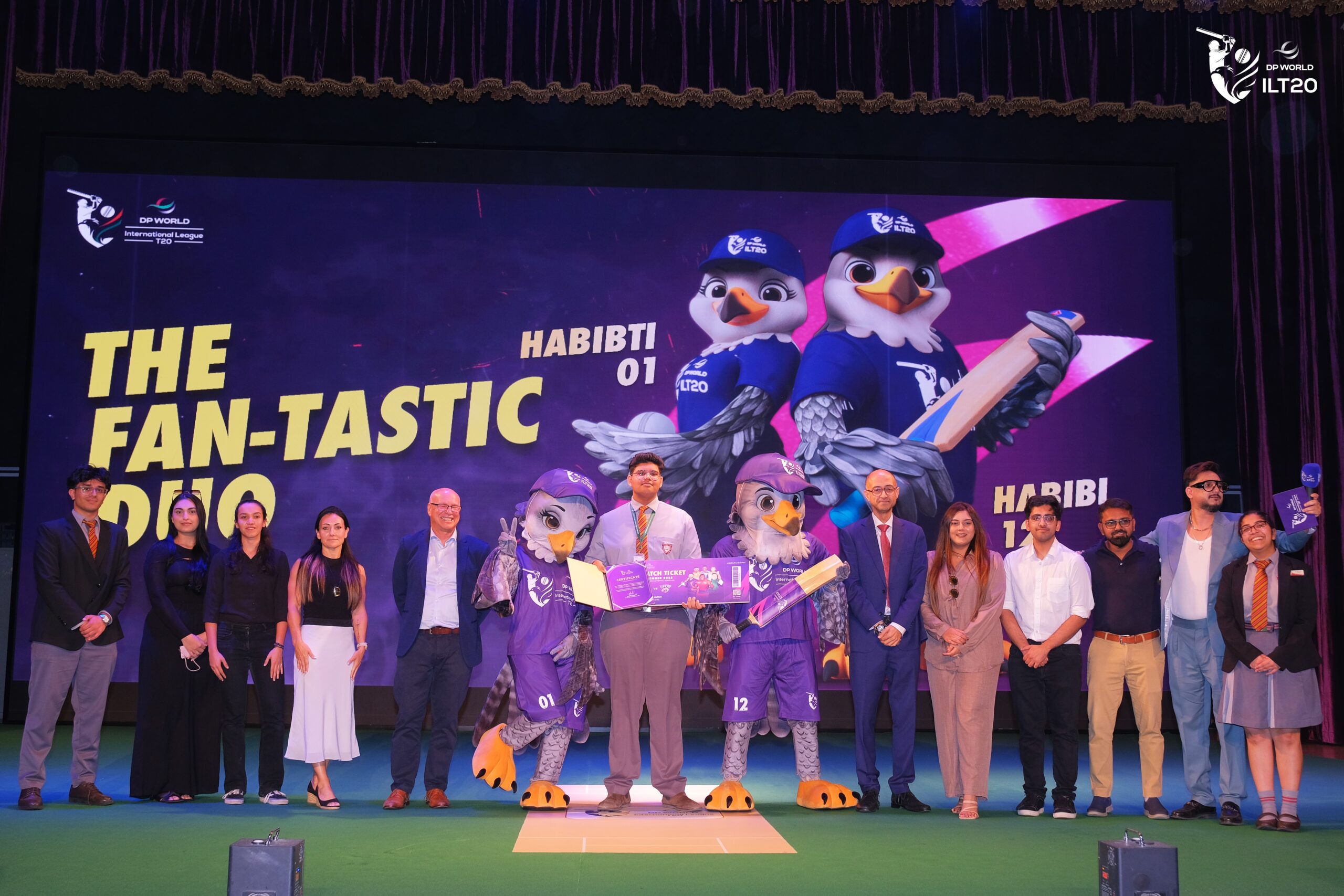
The grand mascot unveiling was held at the Sheikh Rashid Auditorium, Indian High School, Oud Metha. The winning student, Levin Veeroy Fernandes, was officially announced, and his imaginative design (Habibi and Habibti) was transformed into the official mascot of the DP World ILT20, now set to become the face of the league for seasons to come. 

The event featured an exciting reveal ceremony, with the student’s design brought to life and presented in front of a vibrant audience, celebrating not only Levin’s creativity but also the remarkable participation of schools and students across the UAE. 

The DP World ILT20 extends its heartfelt thanks to all participants whose contributions made this initiative a resounding success. Each entry brought unique ideas and perspectives, reinforcing the league’s commitment to inspiring young minds and celebrating the spirit of cricket. 

DP World ILT20 CEO David White: “On behalf of team DP World International League T20, I want to thank all the participants for their efforts. For us, all of you are winners, we are delighted with the interest that the competition created across the UAE. 

“The DP World ILT20 is all about UAE and the development of the sport amongst present and future generations of cricketers. Sport and cricket in particular has helped bring together a number of communities and nationalities across the UAE. Cricket has a four-decade long legacy in the country and with the continued growth of the league, the future of cricket not only in the UAE but across the Gulf region is bright and exciting.”  

Indian High Schools Group CEO Shri Punit MK Vasu: “Our partnership with DP World ILT20 presents a remarkable platform for our learners to witness world-class cricket in Dubai while embracing the deeper lessons the sport imparts.  

“At The Indian High Group of Schools, we uphold the belief that cricket’s enduring spirit fosters respect, discipline, leadership, resilience, teamwork, and composure under pressure, values that cultivate not only accomplished athletes, but also well-rounded, future-ready individuals prepared to lead with integrity, ethics and purpose in a global arena.” 

The DP World International League T20 Season 4 will begin on Tuesday, 2 December – UAE National Day (Eid-Al-Etihad) with a blockbuster opening, the six-team, 34-match tournament will conclude with the final on Sunday, 4 January 2026. 

Continue Reading

Entertainment

Canada Super 60 set to dazzle with star-studded concert line-up at Vancouver’s BC Place

Published

on

Spread the love

The Canada Super 60 isn’t just changing the game; it’s creating North America’s newest entertainment spectacle. From October 8 to 13, Vancouver’s iconic BC Place will transform into a full-fledged cultural carnival, blending high-octane cricket with back-to-back music concerts.

Get ready for six nights of non-stop entertainment, headlined by some of the biggest names in Punjabi, Desi, and global fusion music. From the infectious beats of Harrdy Sandhu and Jassie Gill to the international flair of Mickey Singh, each night promises a festival atmosphere both on and off the pitch.

Concert Line-Up Highlights

  • Oct 8 – Harrdy Sandhu (9pm)
  • Oct 9 – Jassie Gill (9pm)
  • Oct 10 – Mickey Singh (9pm)
  • Oct 11 – Parmish Verma (9pm)
  • Oct 12 – Raf-Saperra (9pm)
  • Oct 13 – GirlsLikeYou x Indo Warehouse (6:15pm)

The entertainment bonanza runs alongside thrilling cricket matches featuring international stars and fan favourites. With Yuvraj Singh backing the league and legends like Shikhar Dhawan and Suresh Raina on the field, Canada Super 60 is shaping up to be the ultimate blend of glamour, game, and groove.

“This is not just cricket; this is a lifestyle experience,” said a spokesperson for Canada Super 60. “Our entertainment line-up reflects the league’s ambition to unite cultures through music, sport, and community.”

Fans can expect full-scale stadium productions, food and cultural showcases, and plenty of Instagram-worthy moments, turning BC Place into Canada’s most happening venue this October.

About Canada Super 60

Canada Super 60 is the newest format in global cricket, a 60-ball showdown that delivers fast-paced action and festival-style entertainment. Backed by international icons and powered by music, sport, and cultural unity, it’s redefining how fans experience cricket in North America.

Continue Reading

Entertainment

UAE students risk repeating a year if absences exceed 15 days, new rules state

Published

on

Spread the love

Public school students in the UAE could be required to repeat an academic year if their unexcused absences exceed 15 days, under new rules announced by the Ministry of Education.

The updated guidelines exclude absences related to illness, medical travel, official event participation, emergencies, or family bereavements. Students will now be allowed up to five unexcused absences per term, capped at 15 across the year. Any excess will trigger a review, with the student’s file referred to the relevant authorities and child protection services.

The ministry also clarified that absences on Fridays, or on days immediately before or after official holidays, will count as two days. A warning system has been introduced to notify parents on the first day of absence.

Special exemptions will apply to students of determination and those with chronic illnesses. Parents may also appeal within five working days of being notified, ensuring fairness in implementation.

The initiative is aimed at tackling absenteeism, which the ministry said has a direct impact on academic performance. Citing studies, it noted that missing 10 per cent of school days equates to a loss of half an academic year, while absences beyond 20 per cent amount to a full year’s loss in achievement.

Schools have been instructed to create individual support plans for students at risk of frequent absences, including counselling sessions, parent engagement, and incentive programmes.

The ministry added that it will be up to educational boards to decide whether these rules will also extend to private schools.

Continue Reading

Popular

Exit mobile version
https://headline.ae/