Connect with us

Business

Panel on corporate tax hears of opportunities and red flags

Published

on

Spread the love

Leading auditing and taxation firm Corporate Group sought to allay concerns over the looming regime of corporate tax in the UAE while highlighting the fact that a significant number of companies face the risk of fines in the absence of timely action.

A packed hall of entrepreneurs, CFOs and accounting heads from big companies attended a panel discussion organised by Corporate Group at the Radisson Blu Waterfront hotel in Business Bay on Tuesday. The audience heard from experts in the VAT, legal and Federal Tax Authority (FTA) domains on how time is running out for businesses to comply with the registration before the June 1 deadline.

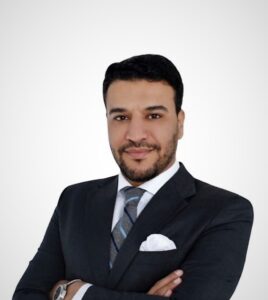
Mohamed Osman

“It is understandable that people have all sorts of questions especially when the framework of the law is still being fine-tuned by the government,” said Mohamed Osman, chairman at Corporate Group, who also specialise in audit and VAT services. “While it is true that not all are eligible or bound to pay the corporate tax rate of 9 percent, everyone has to register if they meet certain criteria.”

The UAE’s impending implementation of a 9% corporate tax is a drastic step in the traditionally tax-free country and hence vexing for many. However, some have welcomed the move even from a neutral, larger perspective.

David McCormack, Managing Director of Asset Capital Solutions who has managed more than $200 million of real estate investment for two private equity groups, said: “Countries like the UK or Australia, where I hail from, have high rates of corporate tax while it used to be zero here. However, any dealings that we did, irrespective of the merit, attracted misconceptions by many countries that we were trying to cheat on tax money. Now, that is getting out of the equation.”
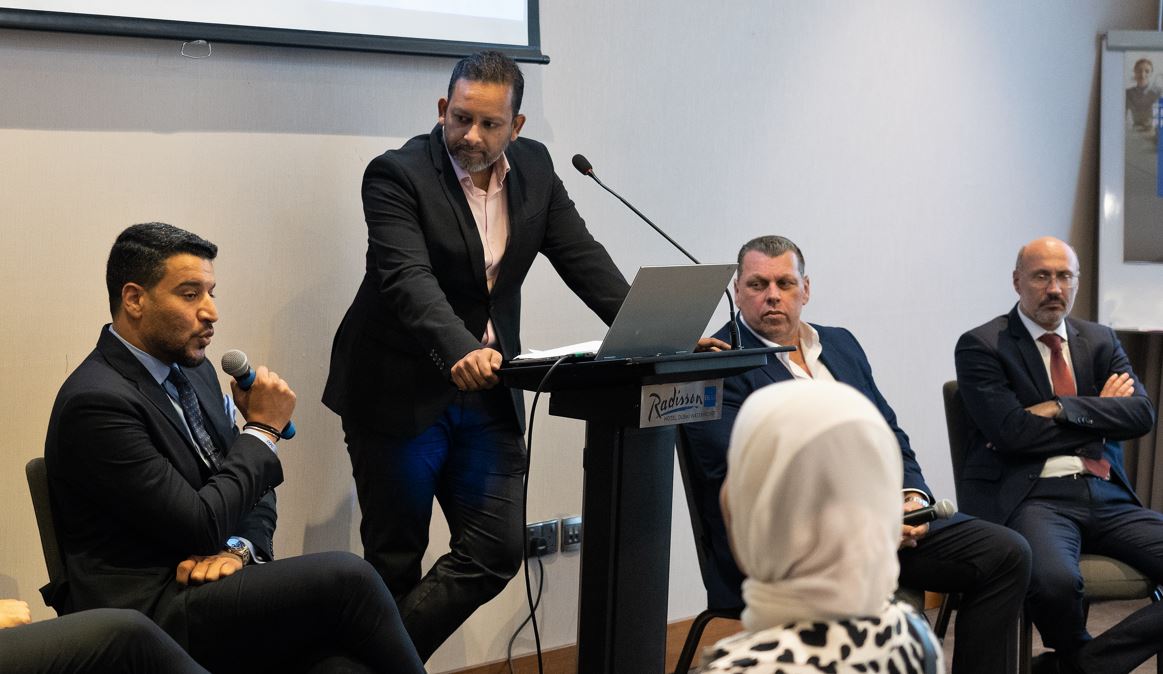
Mohamed Osman addresses the panel at a Dubai hotel on Wednesday. Supplied

Abdul Salim Seyudu, technical manager at an insurance company, said: “It was an informative session on a very relevant topic. With startups and the likes from all parts of the world coming to Dubai, everyone is looking at it with their own lens and needs. I remember VAT has now been here for five years and people are still searching for answers. Similarly for corporate tax, every piece of information is helpful at events like this.”

Questions arose from the packed hall with attendees seeking clarity on how the pending changes impacts their respective organisations or businesses. Many stayed behind much after the session to address more queries to the experts. There was also demand to have more such conferences in the near future.

“Education by way of seminars and such discussions is needed,” said Luca Angiolilli, the CG Tax Director with more than 20 years of experience in various countries. “Before starting the meet, seeing the enthusiastic response, we decided internally to have more such events.”

The presence of 45 free zones and their unique position from a taxation point of view in the economic framework of the UAE has made the introduction of CT more challenging. “The UAE has 45 free zones with some more coming up and in areas criss-crossing each other,” McCormack said.

“Many of the companies have registered where they shouldn’t have. Some free zone companies have slipped into the guise of another activity, which may have gone off the radar until now. And many don’t even have the option to open bank accounts and that is a fundamentally big problem in the current development of implementing corporate tax.”

All panelists agreed unequivocally that the initiative by Corporate Group has set the conversation going in the right direction. Yet, the lack of awareness and lackadaisical approach among business houses, SME and individuals must end soon with barely a couple of months left.

Business

UAE warns public as two unlicensed investment firms flagged by regulator

Published

on

Spread the love

The UAE’s Securities and Commodities Authority (SCA) has issued a fresh investor alert, warning the public about two companies operating without the required licences.

In a statement on Friday, December 12, the authority identified XC Market Limited and XCE Commercial Brokers LLC as unlicensed entities, noting that both firms are conducting financial activities without SCA approval.

The regulator stressed that the companies are not authorised to carry out regulated investment services or offer any related financial products in the UAE. It also clarified that it bears no responsibility for any transactions conducted with the firms.

The warning follows a series of recent alerts as part of the SCA’s ongoing push to combat fraudulent operators. Earlier this month, the authority cautioned investors about Global Capital Securities Trading, which was posing as a licensed trading firm. On December 3, it also flagged an entity calling itself the Gulf Higher Authority for Financial Conduct, which was found using a misleading website and falsely claiming regulatory status.

The SCA reiterated that investors should verify the licensing status of any company before engaging in financial dealings, as the regulator continues monitoring for unlicensed operators and cloned platforms targeting the UAE market.


Continue Reading

Announcements

UAE to crack down on businesses not complying with electronic invoicing rules

Published

on

Spread the love

The UAE Ministry of Finance has introduced a Cabinet Resolution imposing administrative fines on businesses that fail to comply with the country’s Electronic Invoicing System (EIS), reinforcing the nation’s drive for digital transformation and stronger tax compliance.

The rules apply to all entities required to adopt EIS under Ministerial Decision No. (243) of 2025. Companies using the system voluntarily are exempt from penalties until compliance becomes mandatory.

Fines include:

  • Dh5,000 per month for failing to implement EIS or appoint an approved service provider on time.
  • Dh100 per electronic invoice not issued or sent on time, capped at Dh5,000 per month.
  • Dh100 per electronic credit note not issued or sent on time, capped at Dh5,000 per month.
  • Dh1,000 per day for not notifying the Federal Tax Authority of system malfunctions.
  • Dh1,000 per day for delays in updating approved service providers on registered data changes.

Officials stressed that the resolution underlines the UAE government’s commitment to international best practices and the development of a fully integrated digital economy.

Continue Reading

Announcements

UAE VAT rules are changing in 2026: Here’s what businesses need to know

Published

on

Spread the love

The UAE’s Ministry of Finance has announced a new set of amendments to the country’s VAT law, with the revised rules taking effect on January 1, 2026. The changes are designed to make the tax system easier to use and more aligned with international best practices.

In a statement, the Ministry said the move supports the UAE’s ongoing efforts to streamline its tax framework and improve administrative efficiency. The updates are also designed to provide businesses with greater clarity and reduce unnecessary paperwork.

Simpler filing, fewer steps

One of the biggest changes removes the requirement for businesses to issue self-invoices when using the reverse charge mechanism. Instead, companies will simply need to keep the usual documents that support their transactions, such as invoices, contracts and records, which the Federal Tax Authority (FTA) can review when checking compliance.

According to the Ministry, this adjustment “enhances administrative efficiency” and provides clear audit evidence without placing extra paperwork burdens on businesses.

Five-year window for VAT refunds

The updated law also introduces a five-year limit for claiming back refundable VAT after accounts have been reconciled. Once this period ends, businesses lose the right to submit a claim. Officials say this helps prevent long-delayed refund requests and gives taxpayers more certainty about their financial position.

Tighter rules on tax evasion

To protect the system from misuse, the FTA will now have the authority to deny input tax deductions if a transaction is found to be linked to a tax-evasion arrangement. This means businesses must ensure the supplies they receive are legitimate before claiming input VAT.

Taxpayers are expected to verify the “legitimacy and integrity” of supplies as part of these strengthened safeguards.

Supporting a competitive economy

The Ministry said the amendments will boost transparency, ensure fairness across the tax system and support better management of public revenue. The updated rules also aim to maintain the UAE’s competitive edge while supporting long-term economic sustainability.


Continue Reading

Popular

Exit mobile version
https://headline.ae/