Leading auditing and taxation firm Corporate Group sought to allay concerns over the looming regime of corporate tax in the UAE while highlighting the fact that a significant number of companies face the risk of fines in the absence of timely action.
A packed hall of entrepreneurs, CFOs and accounting heads from big companies attended a panel discussion organised by Corporate Group at the Radisson Blu Waterfront hotel in Business Bay on Tuesday. The audience heard from experts in the VAT, legal and Federal Tax Authority (FTA) domains on how time is running out for businesses to comply with the registration before the June 1 deadline.
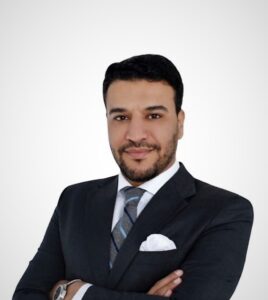
Mohamed Osman
“It is understandable that people have all sorts of questions especially when the framework of the law is still being fine-tuned by the government,” said Mohamed Osman, chairman at Corporate Group, who also specialise in audit and VAT services. “While it is true that not all are eligible or bound to pay the corporate tax rate of 9 percent, everyone has to register if they meet certain criteria.”
The UAE’s impending implementation of a 9% corporate tax is a drastic step in the traditionally tax-free country and hence vexing for many. However, some have welcomed the move even from a neutral, larger perspective.
David McCormack, Managing Director of Asset Capital Solutions who has managed more than $200 million of real estate investment for two private equity groups, said: “Countries like the UK or Australia, where I hail from, have high rates of corporate tax while it used to be zero here. However, any dealings that we did, irrespective of the merit, attracted misconceptions by many countries that we were trying to cheat on tax money. Now, that is getting out of the equation.”
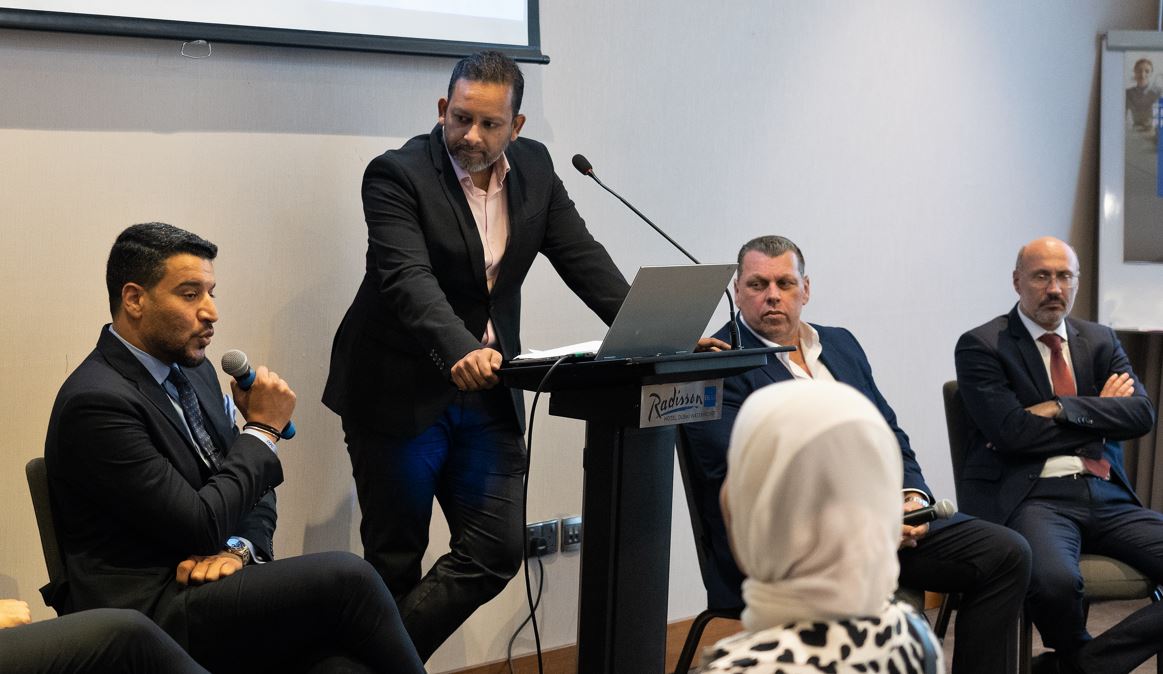
Mohamed Osman addresses the panel at a Dubai hotel on Wednesday. Supplied
Abdul Salim Seyudu, technical manager at an insurance company, said: “It was an informative session on a very relevant topic. With startups and the likes from all parts of the world coming to Dubai, everyone is looking at it with their own lens and needs. I remember VAT has now been here for five years and people are still searching for answers. Similarly for corporate tax, every piece of information is helpful at events like this.”
Questions arose from the packed hall with attendees seeking clarity on how the pending changes impacts their respective organisations or businesses. Many stayed behind much after the session to address more queries to the experts. There was also demand to have more such conferences in the near future.
“Education by way of seminars and such discussions is needed,” said Luca Angiolilli, the CG Tax Director with more than 20 years of experience in various countries. “Before starting the meet, seeing the enthusiastic response, we decided internally to have more such events.”
The presence of 45 free zones and their unique position from a taxation point of view in the economic framework of the UAE has made the introduction of CT more challenging. “The UAE has 45 free zones with some more coming up and in areas criss-crossing each other,” McCormack said.
“Many of the companies have registered where they shouldn’t have. Some free zone companies have slipped into the guise of another activity, which may have gone off the radar until now. And many don’t even have the option to open bank accounts and that is a fundamentally big problem in the current development of implementing corporate tax.”
All panelists agreed unequivocally that the initiative by Corporate Group has set the conversation going in the right direction. Yet, the lack of awareness and lackadaisical approach among business houses, SME and individuals must end soon with barely a couple of months left.
In his capacity as Ruler of Dubai, His Highness Sheikh Mohammed bin Rashid Al Maktoum, Vice President and Prime Minister of the UAE, has issued a decree appointing Abdulla bin Damithan as Chairman of the Ports, Customs and Free Zone Corporation.
The appointment places one of the UAE’s most experienced trade and logistics leaders at the helm of one of Dubai’s most strategically important economic entities.
A Veteran in Ports and Global Trade
Abdulla bin Damithan brings more than two decades of experience in ports, logistics and international trade. He currently oversees DP World’s operations across the Gulf Cooperation Council (GCC) region, managing ports, economic zones, marine services and trade solutions.
He previously served as CEO and Managing Director of DP World UAE, where he led strategic growth across key regional markets. He oversees Jebel Ali Port and Jebel Ali Free Zone (Jafza).
Bin Damithan joined DP World in 2001 and has since held several senior leadership roles, contributing to the company’s transformation into a global provider of smart trade and logistics solutions.
New Leadership Appointments at DP World
Separately, DP World confirmed the appointment of Essa Kazim as Chairman of its Board of Directors, alongside the appointment of Yuvraj Narayan as Group CEO.
Kazim currently serves as Governor of the Dubai International Financial Centre (DIFC) and Chairman of Borse Dubai. He brings extensive expertise in financial and economic affairs, having held senior leadership positions across several national institutions.
Narayan, who joined DP World in 2004, has played a key role in leading strategic and transformational initiatives that strengthened the company’s global footprint.
Serving as Group Chief Financial Officer since 2005, Narayan has been instrumental in enhancing DP World’s financial resilience, operational efficiency and supply chain capabilities worldwide.
Dubai is getting a brand-new desert destination, and it’s massive.
His Highness Sheikh Mohammed bin Rashid Al Maktoum, Vice President and Prime Minister of the UAE, and Ruler of Dubai, has approved Al Layan Oasis, a 10 million square foot eco-tourism and leisure project set to transform part of the emirate’s desert into a lake-centred retreat packed with walking trails, camping areas and family attractions.
Located about 50 minutes from Dubai city centre, the oasis is expected to attract 330,000 visitors a year.
A 2.5 Million Sq Ft Lake in the Desert
At the heart of Al Layan Oasis will be a 2.5 million sq ft lake, surrounded by:
14km of walking and cycling tracks
Elevated pathways five metres above ground
1,000 parking spaces
Sports and recreation facilities
Camping and caravan zones
The elevated 4km track will offer panoramic desert views and connect to existing routes in Al Marmoom.
Four Zones for Families and Visitors
The destination will feature four themed areas:
Camping Oasis: 100 caravan spots and a visitor centre
Gathering Oasis: Open-air cinema, amphitheatre and food trucks
Family Oasis: 28 shaded rest areas and children’s play zones
Recreation Oasis: Retail, activities and leisure facilities
Officials say the project balances eco-tourism with environmental protection, expanding native planting and shaded areas to enhance comfort.
Part of Dubai’s Sustainability Plan
Al Layan Oasis forms part of Dubai Municipality’s Blue and Green Roadmap 2030, under a Dh4 billion package aimed at investing in nature to improve the quality of life.
The project also supports the Dubai 2040 Urban Master Plan and the emirate’s long-term sustainability and wellbeing goals.
Once completed, Al Layan Oasis is expected to become one of Dubai’s key desert lifestyle and eco-tourism destinations, offering residents and tourists a new way to experience nature without leaving the emirate.
Dubai is taking a new step in how people can invest in property, and it doesn’t require buying an entire apartment or villa.
The Dubai Land Department (DLD) has launched Phase II of its Real Estate Tokenisation Project, which allows property tokens to be resold in a controlled secondary market starting February 20. In simple terms, this means Dubai is testing how digital ownership shares in real estate can be bought and sold under official regulation.
What is “real estate tokenisation”?
Think of a property as a pizza. Instead of one person buying the whole pizza, tokenisation allows it to be cut into many digital slices. Each slice, called a token, represents a small ownership share in that property.
These tokens are recorded digitally and linked to official property records. Owners of tokens may benefit from price changes or rental income, depending on how the product is structured.
What’s new in Phase II?
Earlier this year, Dubai ran a pilot phase to test whether property tokenisation could work legally and technically.
Phase II is different because:
Tokens can now be resold in a secondary market
Real trading activity is being tested
Regulators are watching closely to ensure fairness and safety
About 7.8 million tokens will be available in this phase, but only through approved platforms and under strict rules.
Why is Dubai doing this?
The goal is to:
Make property investment more accessible
Attract new types of investors
Improve transparency and efficiency
Test innovation without risking the wider market
Dubai wants to modernise real estate — but in a careful, regulated way.
Is this crypto or risky trading?
Not in the usual sense.
While tokens are digital, this project:
Is overseen by the Dubai Land Department
Is regulated with support from the Virtual Assets Regulatory Authority (VARA)
Operates within existing property laws
This is not an open crypto marketplace. It’s a controlled government-backed test.
Can anyone invest right now?
Not everyone, and that’s intentional.
This phase is limited and focused on testing. Authorities are collecting data on:
Pricing
Demand
Liquidity
Investor behaviour
Future expansion will depend on how well this phase performs.
What should first-time investors keep in mind?
If you’re curious but new to property investing:
This is not a get-rich-quick scheme
It’s a long-term experiment
Rules may evolve as regulators learn from real use
Dubai has been clear: expansion will be based on data, not hype.
Why this matters long-term
If successful, tokenisation could:
Lower entry barriers to property investment
Allow people to invest smaller amounts
Increase market transparency
Strengthen Dubai’s position as a global real estate hub
For now, it’s best seen as a carefully supervised trial, not a finished product.