Business
New rules for UAE real estate industry for property bought with cryptocurrency
Published
4 years agoon

The Ministry of Economy (MoE) and the Ministry of Justice (MoJ), in partnership with the UAE Financial Intelligence Unit (FIU), have announced the introduction of new reporting requirements aimed at certain real estate transactions.
The UAE is one of the first countries to implement such a mechanism for real estate transactions involving virtual assets, marking the latest example of the UAE’s global fight against money laundering and terrorist financing.
All real estate agents, brokers, and law firms are obliged to file reports to the FIU for purchase and sale transactions of freehold real estate properties in the UAE that include any of the below three methods of payment, whether for a portion or the entirety of the property value:
- Single or multiple cash payment(s) equal to or above AED 55,000
- Payments that include the use of a virtual assets
- Payments where the fund(s) used in the transaction were derived from a virtual asset.
The reporting mechanism requires real estate agents, brokers, and law firms to obtain and record the identification documents of the parties to the applicable transaction, among other relevant documents related to the transaction.
The rules apply to both individuals and corporate entities that are parties to the above real estate transactions.
The relevant private sector entities have been informed about the specific requirements in regulatory circulators issued by the MoE and MoJ.
Additionally, to ensure preparedness, UAE authorities have collaborated to host three separate workshops with real estate agents and brokers, as well as law firms, helping to guide them through the new reporting requirements and enhance their familiarisation with the FIU’s anti-money laundering system. The MoE and MoJ apply a proactive, risk-based supervisory approach in line with UAE legislation and the international standards set by the Financial Action Task Force (FATF).
Cryptocurrency terms in the UAE
According to real estate agency OPR, though you can buy real estate with cryptocurrency, it is impossible to pay with it directly. According to the requirements of the UAE Central Bank, all transactions outside the territory of the state must be carried out using the national currency – the dirham (AED).
In this case, it is necessary to transfer the digital currency to the account of the trading company and then get a cheque for the agreed amount of money. Only then can you pay for the purchase.
How to buy and from whom to buy with your virtual assets
FAM Properties has tied up with Singapore exchange company Huobi to facilitate such transactions while Binance and other cryptoexchanges have set up bases in the UAE.
The most well-known Dubai developers are ready to offer real estate to cryptocurrency holders. Among them are Emaar Properties, DAMAC Properties, Select Group, Dubai Properties, Meraas, Fam Properties and MAG Lifestyle Development. But an important condition is the co-operation with only licensed real estate agencies, brokers and trading companies with an impeccable reputation.
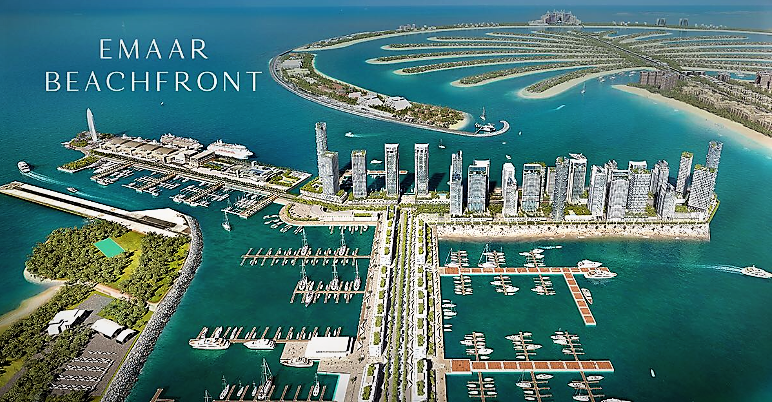
Emaar Beachfront is one of the properties you can buy with cryptocurrency.
The following projects have been listed as of December 2021 that can be bought with cryptocurrency, although the list has widened much more since:
- Emaar Beachfront by Emaar Properties, located between the Palm Jumeirah and Mina Seyahi
- Bulgari Residencies, located on Jumeirah Bay Island, is a complex by Meraas
- Port De La Mer, also by Meraas, in Jumeirah 1 area
- Cavalli Tower, a project by Damac Properties, on Dubai Marina
News
Dubai’s iconic Toyota Building to be demolished in 2027
Published
16 hours agoon
August 20, 2026One of Dubai’s most recognisable landmarks on Sheikh Zayed Road is set to disappear, with the Toyota Building scheduled for demolition in 2027.
The confirmation comes from the real estate division managing the property, following recent social media videos showing residents moving out and sharing memories of their time in the building.
Tenants with existing rental contracts are understood to be able to remain in the property until December 2026. However, a specified timeline for the demolition has yet to be set according to reports.
A Sheikh Zayed Road landmark since the 1970s
Officially known as the Nasser Rashid Lootah Building, the 15-storey residential building was completed in 1974, at a time when Sheikh Zayed Road looked dramatically different from the densely developed skyline seen today.
Standing at around 65 metres tall, the building was among the first three structures to rise in the area around what was then known as the First Roundabout.
Over the decades, it became an unmistakable part of Dubai’s cityscape.
Why was it called the Toyota Building?
The building earned its famous nickname thanks to the large Toyota sign that once illuminated its rooftop.
The bright red Toyota logo was installed in 1981 and remained a familiar sight above Sheikh Zayed Road for almost four decades.
The sign was eventually removed in 2018 after the advertising agreement ended, briefly changing the appearance of the landmark.
But Dubai residents got a nostalgic surprise in June 2022, when Toyota UAE brought the iconic logo back, restoring one of the building’s most recognisable features after nearly four years.
A piece of old Dubai
The building has housed generations of residents in its one-, two- and three-bedroom apartments and has watched Dubai transform from a relatively low-rise city into the global metropolis it is today.
For many people who have lived in or travelled along Sheikh Zayed Road over the years, the Toyota Building has been more than just a residential property — its rooftop sign became part of the visual identity of the road.
With residents preparing to leave by the end of 2026 and demolition planned for 2027, another piece of old Dubai is set to make way for the city’s next chapter.
The demolition will mark the end of more than five decades for a building that became an unlikely icon of Dubai’s rapidly changing skyline.
Announcements
How to rent a car at Etihad Rail stations from Dh80 with no deposit
Published
20 hours agoon
August 20, 2026Etihad Rail passengers now have another option for getting around after they step off the train, with a new car rental service offering vehicles from Dh80 to Dh200 per day.
The Rail to Road service, launched through Thrifty Car Rental’s Flexy offering, is currently available at Etihad Rail’s Abu Dhabi and Fujairah passenger stations. The service is designed to solve the first- and last-mile transport challenge for travellers continuing their journey by road.
One of the biggest advantages is that no security deposit is required. Rentals also come with 60km of included driving and prepaid fuel, meaning passengers do not need to worry about refuelling before returning the vehicle.
Three car categories to choose from
Travellers can select from three vehicle categories depending on their needs and budget.
Essential is aimed at passengers looking for a practical and affordable option, with cars such as the Toyota Yaris, Suzuki Baleno and Hyundai Accent.
Comfort steps up to larger cars and compact SUVs, including models such as the Mazda CX-3, Hyundai Creta and Mazda 6.
For those wanting something larger or more premium, Stretch includes vehicles such as the Audi A3, Mazda CX-90, Jeep Cherokee, Nissan Patrol and Jeep Wrangler.
Prices range from around Dh80 to Dh200 per 24-hour rental, depending on the vehicle category.
You can rent a car when you arrive
Passengers do not have to book weeks in advance. The service allows travellers to reserve a vehicle before their train journey, book after reaching the station or simply walk in and rent a car, subject to availability.
The rental period is based on a 24-hour cycle rather than being linked to the customer’s train arrival or departure time. This gives passengers more flexibility if their travel plans change.
Additional kilometres beyond the included 60km can also be purchased for an extra fee.
Cars can be returned to other Thrifty locations
The service is primarily designed for passengers to collect and return their vehicles at the same Etihad Rail station.
However, customers can arrange to return the car at another Thrifty location for a nominal one-way fee. This gives travellers more flexibility when their onward journey does not bring them back to the original station.
Car rental can be added to your train booking
The rental option has been integrated into the Etihad Rail booking journey, allowing passengers to add a car when arranging their train travel.
The system is expected to be further developed to make the car rental option more visible and easier to use.
The Rail to Road initiative forms part of a five-year partnership between Etihad Rail and Thrifty, focused on improving connections between passenger stations and final destinations.
Thrifty plans to invest more than Dh10 million over five years in expanding its fleet, digital systems and customer services. An initial fleet of around 500 vehicles is planned, with the potential to grow as demand increases and Etihad Rail expands its passenger network.
The wider rollout is also expected to include digital kiosks and customer assistance desks across Etihad Rail’s 11 passenger stations.
With train travel connecting more parts of the UAE, the new service could make the journey considerably easier for passengers whose final destination is beyond the rail station.
EtihadRail RailToRoad UAE AbuDhabi Fujairah UAETransport DubaiTransport PublicTransport CarRental Thrifty UAETravel AbuDhabiTravel FujairahTravel TravelUAE UAETravelNews FirstMile LastMile SmartMobility UAENews TravelUpdate
Etihad Rail passengers can now rent cars from Dh80 a day with no deposit
Etihad Rail passengers now have another option for getting around after they step off the train, with a new car rental service offering vehicles from Dh80 to Dh200 per day.
The Rail to Road service, launched through Thrifty Car Rental’s Flexy offering, is currently available at Etihad Rail’s Abu Dhabi and Fujairah passenger stations. The service is designed to solve the first- and last-mile transport challenge for travellers continuing their journey by road.
One of the biggest advantages is that no security deposit is required. Rentals also come with 60km of included driving and prepaid fuel, meaning passengers do not need to worry about refuelling before returning the vehicle.
Three car categories to choose from
Travellers can select from three vehicle categories depending on their needs and budget.
Essential is aimed at passengers looking for a practical and affordable option, with cars such as the Toyota Yaris, Suzuki Baleno and Hyundai Accent.
Comfort steps up to larger cars and compact SUVs, including models such as the Mazda CX-3, Hyundai Creta and Mazda 6.
For those wanting something larger or more premium, Stretch includes vehicles such as the Audi A3, Mazda CX-90, Jeep Cherokee, Nissan Patrol and Jeep Wrangler.
Prices range from around Dh80 to Dh200 per 24-hour rental, depending on the vehicle category.
You can rent a car when you arrive
Passengers do not have to book weeks in advance. The service allows travellers to reserve a vehicle before their train journey, book after reaching the station or simply walk in and rent a car, subject to availability.
The rental period is based on a 24-hour cycle rather than being linked to the customer’s train arrival or departure time. This gives passengers more flexibility if their travel plans change.
Additional kilometres beyond the included 60km can also be purchased for an extra fee.
Cars can be returned to other Thrifty locations
The service is primarily designed for passengers to collect and return their vehicles at the same Etihad Rail station.
However, customers can arrange to return the car at another Thrifty location for a nominal one-way fee. This gives travellers more flexibility when their onward journey does not bring them back to the original station.
Car rental can be added to your train booking
The rental option has been integrated into the Etihad Rail booking journey, allowing passengers to add a car when arranging their train travel.
The system is expected to be further developed to make the car rental option more visible and easier to use.
The Rail to Road initiative forms part of a five-year partnership between Etihad Rail and Thrifty, focused on improving connections between passenger stations and final destinations.
Thrifty plans to invest more than Dh10 million over five years in expanding its fleet, digital systems and customer services. An initial fleet of around 500 vehicles is planned, with the potential to grow as demand increases and Etihad Rail expands its passenger network.
The wider rollout is also expected to include digital kiosks and customer assistance desks across Etihad Rail’s 11 passenger stations.
With train travel connecting more parts of the UAE, the new service could make the journey considerably easier for passengers whose final destination is beyond the rail station.
Business
UAE cracks down on fake and unsafe goods: Suppliers given 24-hour deadline to clear items
Published
7 days agoon
August 14, 2026Businesses caught dealing in counterfeit, adulterated, or spoiled goods in the UAE now have just 24 hours to clear them off the shelves or face swift state intervention, under tough new commercial fraud regulations that have officially taken effect.
The new rules, outlined in Cabinet Resolution No. 107 of 2026 (the Executive Regulations of Federal Decree-Law No. 42 of 2023), significantly ramp up consumer protections. They grant authorities sweeping powers to raid premises, seize stock at the violator’s expense, issue public alerts, and order rapid product destruction.
The 24-hour countdown
Once the Ministry of Economy and Tourism or local authorities flag a non-compliant item, the clock starts ticking immediately. Suppliers must halt sales on the spot and execute four mandatory steps within 24 hours:
- Clear shelves and warehouses: Remove every affected batch from inventory.
- Alert supply chains: Notify downstream retailers and distributors to pull the products within the same 24-hour window.
- Recall active stock: Initiate steps to recover items already in circulation.
- Provide proof: Submit verified evidence to authorities confirming total withdrawal.
Miss the deadline? Expect the bill
Suppliers dragging their feet won’t stall enforcement.
Under Article 8, if a business fails to clear offending stock within 24 hours, government authorities will step in and clear markets and warehouses themselves within the following 48 hours, billing the non-compliant supplier for the entire operation.
Seizures, storage fees, and public name and shame
Authorities now hold expanded legal teeth to intervene early:
- Impounding stock: Suspected goods can be seized, locked in designated storage facilities, and held during lab testing, with all warehousing fees charged directly to the offender.
- Public consumer alerts: Regulators can publicly broadcast warnings naming the product type, description, and trademark to warn shoppers against dangerous goods.
Heavy penalties for violators
Ignorance is no longer an easy defence. Administrative penalties will hit anyone caught knowingly trading fraudulent goods, or anyone who should have reasonably known based on their industry expertise that the product posed a health and safety risk.
Regulators are paying particularly close attention to:
- High-risk goods: Medicines, organic foods, and agricultural supplies.
- Recycled hazards: Goods previously declared unfit for use that were reintroduced into the market.
- Profiteering & tampering: Counterfeit items bought for alteration, repackaging, or unlawful resale.
- Deceptive advertising: Products promoted with false claims regarding origin, ingredients, or quality standards.
Fast-track destruction: 15-day limit
Once a competent court or the Supreme Committee issues a formal ruling, authorities won’t let fake items linger in storage. Under Article 18, confiscated counterfeit and spoiled products must be destroyed within 15 working days, closing the door on unlawful resale.
For consumers, the revamped framework delivers stronger market surveillance and faster removal of hazardous goods. For traders, retailers, and distributors across the UAE, it sends a clear signal: compliance is non-negotiable, and slow reaction times will come with steep financial and legal costs.