As many as 37.3 million people used Roads and Transport Authority (RTA) services during Expo 2020 Dubai, recent statistics indicate.
This is a whopping 67 per cent of the total usage of transport services at Expo. A total of 26.3 million people travelled by public transport — Dubai Metro, public buses, taxis and e-hail rides.
RTA’s transit modes served 37 per cent of Expo visitors and about 11 million motorists used RTA’s parking slots during Expo, said Mattar Al Tayer, director-general, chairman of the board of executive directors of RTA.
“The integrated infrastructure of road and transportation networks, as well as the master mobility plan developed by RTA in cooperation with strategic partners, was instrumental in facilitating the movement of residents and visitors from Dubai and other emirates to Expo 2020,” Al Tayer pointed out.
Dubai Metro carried 8.2 million riders and covered more than 5.7 million km during the Expo from October 1, 2021 till March 31, 2022.
Public buses transported 15.5 million people, covering over 7.3 million km.
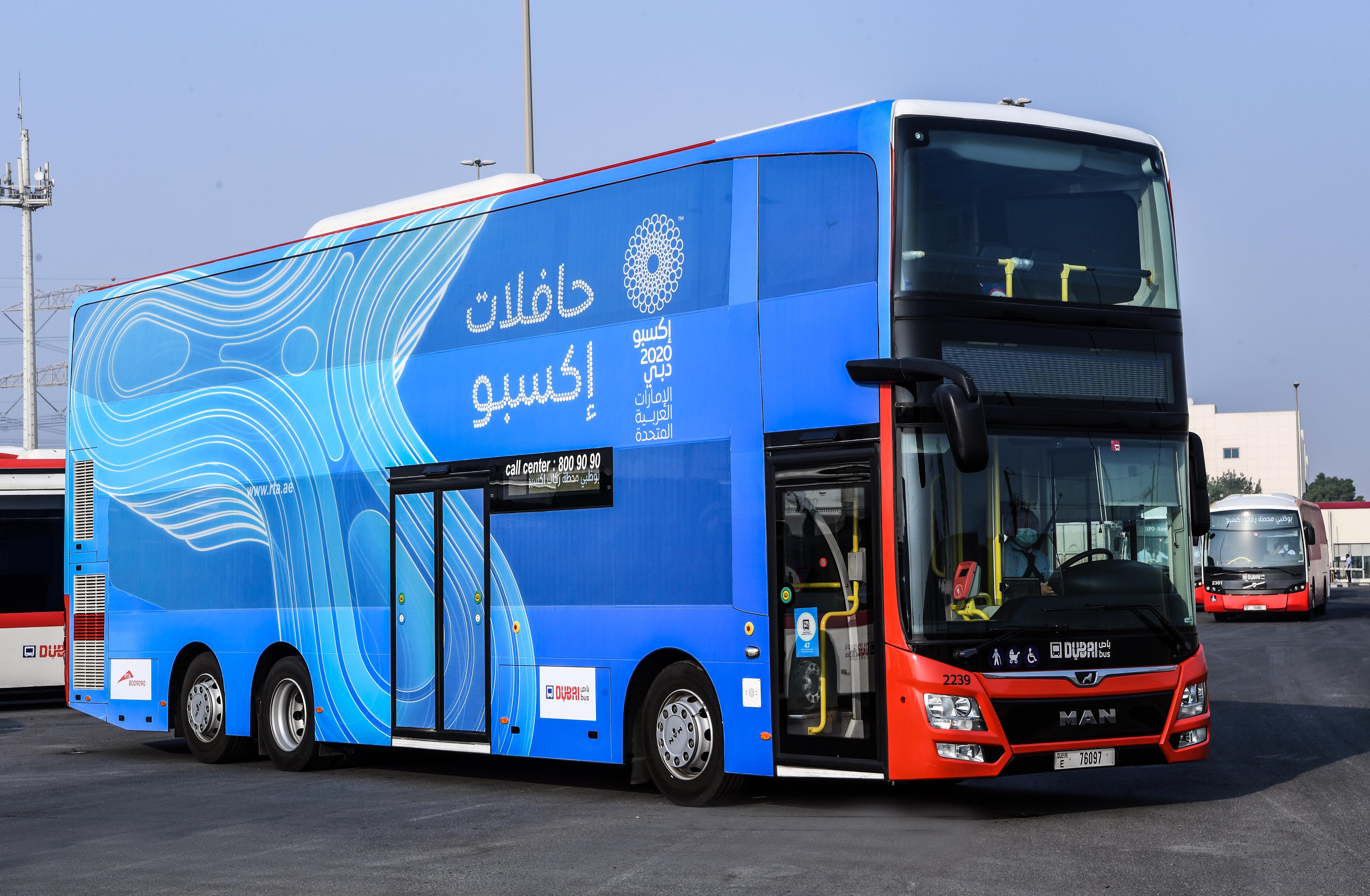
There were four types of bus services, including the Expo Rider Intercity had 1 million riders; Expo Rider Dubai had 1.4 million riders. Parking Shuttles to the three Expo 2020 Dubai gates clocked 10.2 million riders; and People Mover buses between gates had 2.8 million riders.
Taxi and e-hail ride services, like Careem and Uber, carried 2.5 million riders, said Al Tayer.
“RTA managed more than 29,000 parking slots at the site of Expo at several zones,” he added. “A total of 11 million people used RTA’s parking services.”
HE Mattar Al Tayer, Director-General, Chairman of the Board of Executive Directors of #RTA revealed that the number of usages of RTA services during the period of Expo 2020 Dubai amounted to 37.3 million,https://t.co/6pqh6VIL3fpic.twitter.com/7T3kzP88uS
RTA used sophisticated technology to manage parking to ensure a safe and smooth flow of vehicles to and from the parking lots. It included the use of smart messaging signs and the management of parking through a smart system connected to the traffic movement control centre to identify the vacant parking slots at the site. The Call Centre received more than 30,000 calls, and customers’ satisfaction rating exceeded 92 per cent.
RTA has constructed integrated infrastructure to serve Expo 2020 Dubai, costing over Dh15 billion. High on the list is Route 2020, a 15-km extension of the Dubai Metro, connecting seven stations served by newly procured 50 trains.
RTA constructed a wide roads network comprising 138 lane-kilometre and nine flyovers, in addition to deploying more than 200 public buses featuring the highest international specifications. It provided 18 stations and bus stops in Dubai and key cities across the UAE, besides providing more than 15,000 taxis and limousines.
RTA managed more than 29,000 parking spaces at the site of Expo, and employed smart technologies, applications and artificial intelligence to facilitate the movement of Expo visitors via metro, buses and taxis.
Etihad Rail has finally revealed the first routes on its much-anticipated passenger network, and Dubai is right at the heart of it. The opening phase, set to launch in 2026, will connect Abu Dhabi, Dubai and Fujairah, creating a major rail corridor linking the UAE’s key commercial hubs with the east coast.
The initial rollout will focus on high-demand routes, starting with frequent services between Abu Dhabi and Dubai, followed by a direct connection to Fujairah. More routes and stations are expected to come online later in 2026 and beyond as demand grows.
For Dubai commuters, it’s all about saving on travel time. Journeys between Dubai and Abu Dhabi are expected to take around one hour, while trips from Abu Dhabi to Fujairah will take about 90 minutes. Trains will run at speeds of up to 200 km/h and carry up to 400 passengers, offering a fast alternative to increasingly congested highways.
The Abu Dhabi–Dubai route is expected to see the most frequent services. The Fujairah connection, meanwhile, is designed to boost tourism and improve access to the UAE’s east coast.
Station locations were chosen based on population density and connectivity.
The first passenger stations will be located in Mohamed bin Zayed City (Abu Dhabi), Jumeirah Golf Estates (Dubai), and Sakamkam near Al Hilal City (Fujairah), marking a major step toward a nationwide rail network that could reshape how people move across the UAE.
If you’re planning to drive around University City in the coming weeks, take note: the Sharjah Roads and Transport Authority (SRTA) has announced a partial road closure leading to University City Hall as part of preparations for the upcoming Sharjah Lights Festival.
The closure, which began on Tuesday, January 20, will remain in place until Sunday, March 1, coinciding with the festival period. Authorities say the move is aimed at improving traffic management and ensuring the safety of all road users during the busy event season.
Only a portion of the road leading directly to University City Hall will be affected, with traffic continuing to flow through temporary diversions and alternative routes that have already been approved and put in place.
SRTA said the closure forms part of a wider traffic plan developed in coordination with Sharjah Police and other relevant departments, anticipating increased traffic volumes during the festival. The goal is to maintain smooth access for visitors and participants while minimising congestion within University City and the surrounding areas.
To support drivers, authorities have set up clear directional signage, temporary road markings, and alternative routes around the closure zone, ensuring travel times and service quality remain largely unaffected.
Motorists are advised to follow posted detours, comply with instructions from authorities on the ground, and pay close attention to traffic signs to help keep everyone safe and traffic moving smoothly throughout the closure period.
If you’re planning to host Iftar or Suhoor gatherings this Ramadan, Abu Dhabi’s Department of Municipalities and Transport has laid out clear guidelines for setting up Ramadan tents, and the good news is, the permit process is free and simple.
Companies and eligible applicants can obtain official approval to install temporary Ramadan tents by logging in with a digital ID, submitting an application, and receiving authorisation, with no additional documents required.
However, there are strict rules to follow.
Key conditions for setting up a Ramadan tent
Only one tent is allowed outside the plot’s boundary
The tent must not exceed 60 square metres in area
Maximum height allowed is 5 metres
The tent must be installed only in front of the plot owner’s residence, between the plot boundary and the sidewalk
Approved materials include traditional tent fabrics such as wool, Bedouin textiles, tarpaulins, and similar materials
What’s not allowed
Blocking streets, sidewalks, or public services
Excavation work of any kind
Installing tents over service structures or annexes
Using cooking equipment or charcoal
Any activities involving selling, buying, renting, or promoting
Important responsibilities to note
Permit holders are fully responsible for any damage caused to public or private property during the installation or removal of the tent. Installing a tent in an unauthorised location is considered a violation and may lead to legal action.
Authorities also reserve the right to demand the immediate removal of a tent in cases of emergencies, complaints, or violations of permit conditions.
Additionally, permit holders must exempt the Municipality from any claims or liabilities raised by other entities related to the use of the permit.
While setting up a Ramadan tent in Abu Dhabi is easy and free, following the rules is essential to avoid fines or removal.