Connect with us

News

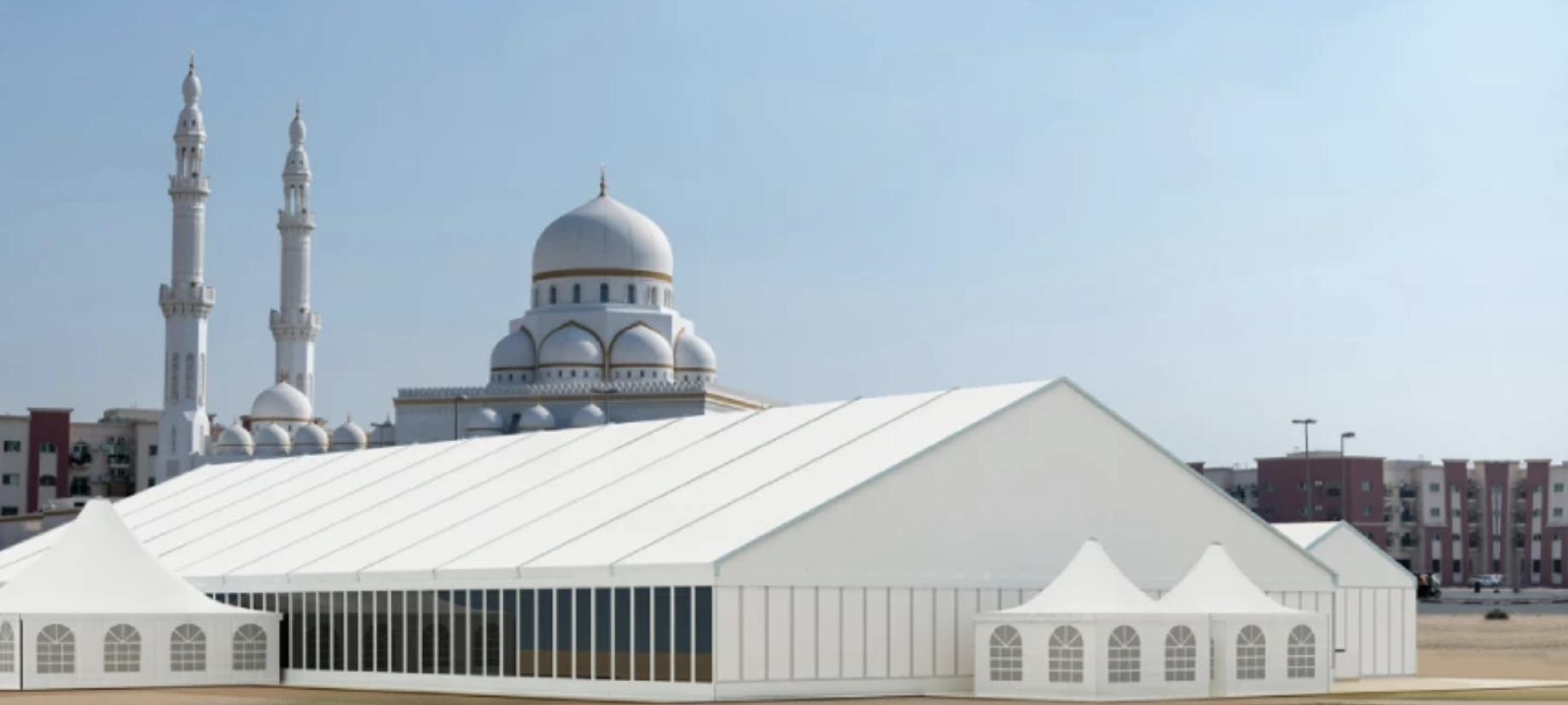
Planning a Ramadan tent in Abu Dhabi? Here’s what you need to know before setting one up

Published

on

Spread the love

If you’re planning to host Iftar or Suhoor gatherings this Ramadan, Abu Dhabi’s Department of Municipalities and Transport has laid out clear guidelines for setting up Ramadan tents, and the good news is, the permit process is free and simple.

Companies and eligible applicants can obtain official approval to install temporary Ramadan tents by logging in with a digital ID, submitting an application, and receiving authorisation, with no additional documents required.

However, there are strict rules to follow.

Key conditions for setting up a Ramadan tent

  • Only one tent is allowed outside the plot’s boundary
  • The tent must not exceed 60 square metres in area
  • Maximum height allowed is 5 metres
  • The tent must be installed only in front of the plot owner’s residence, between the plot boundary and the sidewalk
  • Approved materials include traditional tent fabrics such as wool, Bedouin textiles, tarpaulins, and similar materials

What’s not allowed

  • Blocking streets, sidewalks, or public services
  • Excavation work of any kind
  • Installing tents over service structures or annexes
  • Using cooking equipment or charcoal
  • Any activities involving selling, buying, renting, or promoting

Important responsibilities to note

Permit holders are fully responsible for any damage caused to public or private property during the installation or removal of the tent. Installing a tent in an unauthorised location is considered a violation and may lead to legal action.

Authorities also reserve the right to demand the immediate removal of a tent in cases of emergencies, complaints, or violations of permit conditions.

Additionally, permit holders must exempt the Municipality from any claims or liabilities raised by other entities related to the use of the permit.

While setting up a Ramadan tent in Abu Dhabi is easy and free, following the rules is essential to avoid fines or removal.

With over 35 years of experience in journalism, copywriting, and PR, Michael Gomes is a seasoned media professional deeply rooted in the UAE’s print and digital landscape.

Continue Reading
Advertisement
Click to comment

Leave a Reply

Your email address will not be published. Required fields are marked *

News

Headed to University City? Here’s what to know as Sharjah announces road closure for Lights Festival

Published

on

Spread the love

If you’re planning to drive around University City in the coming weeks, take note: the Sharjah Roads and Transport Authority (SRTA) has announced a partial road closure leading to University City Hall as part of preparations for the upcoming Sharjah Lights Festival.

The closure, which began on Tuesday, January 20, will remain in place until Sunday, March 1, coinciding with the festival period. Authorities say the move is aimed at improving traffic management and ensuring the safety of all road users during the busy event season.

Only a portion of the road leading directly to University City Hall will be affected, with traffic continuing to flow through temporary diversions and alternative routes that have already been approved and put in place.

SRTA said the closure forms part of a wider traffic plan developed in coordination with Sharjah Police and other relevant departments, anticipating increased traffic volumes during the festival. The goal is to maintain smooth access for visitors and participants while minimising congestion within University City and the surrounding areas.

To support drivers, authorities have set up clear directional signage, temporary road markings, and alternative routes around the closure zone, ensuring travel times and service quality remain largely unaffected.

Motorists are advised to follow posted detours, comply with instructions from authorities on the ground, and pay close attention to traffic signs to help keep everyone safe and traffic moving smoothly throughout the closure period.

Continue Reading

News

Newly added countries whose driving licences can now be exchanged for a UAE one

Published

on

Spread the love

As part of Dubai’s ongoing efforts to simplify mobility for residents and visitors, the Roads and Transport Authority (RTA) has expanded its list of countries whose driving licences are eligible for direct exchange with a UAE driving licence. In 2025 alone, more than 58,000 foreign licences were replaced, reflecting growing demand for the service.

Here are the most recently added countries and regions:

1. Kyrgyzstan

Drivers holding valid licences from Kyrgyzstan can now exchange them directly for a UAE licence, marking a step forward in expanding recognition for Central Asian countries.

2. Kosovo

Kosovo has been added to the approved list following updated international agreements, allowing its citizens to complete a straightforward licence replacement process in Dubai.

3. North Macedonia

Licence holders from North Macedonia are now eligible for exchange, strengthening cooperation with European nations and supporting Dubai’s diverse expatriate population.

4. Croatia

Croatia’s inclusion brings another EU country into the programme, reflecting Dubai’s expanding network of recognised European driving licences.

5. State of Texas (US)

In a notable move, Dubai now recognises driving licences issued by the State of Texas, adding to the growing list of US jurisdictions eligible for exchange under bilateral arrangements.

How the programme fits into the bigger picture

According to RTA, driving licences can now be exchanged from 57 recognised countries, including:

  • 5 GCC countries
  • 38 European countries
  • 13 Asian and Latin American countries
  • 1 African country

The expansion supports Dubai’s goal of improving the quality of life, reducing bureaucracy, and making it easier for international residents to settle and drive legally in the emirate.

How the licence exchange works

Applicants can complete the process:

  • Online via the RTA website, or
  • In person at Customer Happiness Centres across Dubai

Requirements include:

  • A valid original driving licence
  • An eye test at an approved vision centre
  • In-person attendance
  • Payment of applicable fees

RTA says the move aligns with the UAE’s broader vision of delivering flexible, efficient services and reinforcing Dubai’s position as a global hub for living, working, and seamless mobility.

The full list of countries whose driving licences are recognised for replacement with a UAE driving licence can be viewed through the service link below: https://www.rta.ae/wps/portal/rta/ae/home/rta-services?lang=en

Continue Reading

Health

UAE looks to rein in medicine prices as review begins, could patients finally see relief?

Published

on

Spread the love

Paying high prices for essential medicines could soon become a thing of the past. The UAE is reviewing how drug prices are set, with lawmakers and health officials pushing for tighter controls, more transparency, and stronger support for locally made medicines — all with patients in mind.

During a recent Federal National Council (FNC) session focused on pharmaceutical security, officials acknowledged what many residents already feel: Medicine prices in the UAE remain higher than in many regional and global markets.

A multi-ministry committee is now studying the pricing system, how the market is regulated, and where gaps still exist.

The Emirates Drug Establishment confirmed it is reassessing pricing rules and rolling out new initiatives to boost local production of essential medicines, particularly those used to treat chronic conditions. The goal? Better availability, more stable pricing, and less reliance on imports.

Lawmakers also highlighted a noticeable gap between government procurement prices and what patients pay at private pharmacies, despite a federal system designed to buy medicines directly from manufacturers.

FNC member Naama Al Sharhan said revisiting medicine pricing, even if limited to essential drugs, would have a direct and positive impact on patients, especially those managing long-term illnesses such as diabetes and high blood pressure. She described the health minister’s response as flexible and encouraging, stressing that proper follow-up would be key to turning recommendations into real change.

She also pointed to weak monitoring as a major reason prices still vary between pharmacies, despite existing regulations. “Prices are said to be unified, but in reality, they’re not,” she noted.

Transparency and local manufacturing emerged as major themes during the session. Al Sharhan said expanding domestic pharmaceutical production would strengthen national drug security and help shift public perception about locally made medicines. 

“Medicines produced in the UAE meet global standards and are competitive in quality,” she said.

Echoing those concerns, FNC member Mohammed Al Kashf called for price differences between the UAE and other markets to be “almost non-existent,” warning against excessive pricing and market dominance by major companies. While official price lists already exist, he noted that some medicines still see inflated prices during periods of high demand, something he said stronger regulation must address.

Both lawmakers agreed that expanding local manufacturing should be a top priority, alongside securing raw materials and encouraging global drugmakers to produce in the UAE. If successful, officials say patients, especially those dependent on long-term medication, will feel the difference at pharmacy counters.

Continue Reading

Popular

Exit mobile version
https://headline.ae/