


Review Information
Time Played: 18 hours
Platform: PC
Saints Row is an identity crisis distilled into a piece of software. Though the playful charm of Volition’s third-person mayhem simulators is still alive and well in places, the 2022 iteration of the fan-favorite series struggles to get to grips with what exactly it’s supposed to be. However, if you believe you can perform the necessary mental gymnastics, you may well be able to get a great deal out of a visit to Vegas. Sorry – Santo Ileso.
For those who just got here, Saints Row is a third-person shooter and open-world GTA-alike where you play the role of an aspiring gang boss, tired of being unappreciated in their nine-to-five role as a rent-a-cop. The game attempts to marry madcap, over-the-top criminal antics with a grounded story about struggling Zellennials.
It’s been seven years since the last entry in the series and a lot has changed since then. The gig economy has become more rampant, we’re in the midst of a pandemic, and politics has become somehow even more caustic and vicious. Saints Row has a go at dragging the whimsical and chaotic formula of its predecessors into this new decade.
And this attempt to have its cake and eat it too really reveals the limitations of Saints Row. Sometimes, the more earnest moments of the narrative add a nice layer of seasoning to the adventure, rooting the antics of the Saints in a relatable world. But this contrast often creates as much dissonance as it does intrigue.
Saints Row price and release date
- What is it? An open-world third-person shooter where you take on the role of an up-and-coming gang boss
- Release date: August 23, 2022
- Price: $59.99 / £54.99 / AU$99.95
- What can I play it on? PS4, PS5, Xbox One, Xbox Series X, Xbox Series S, and PC, via the Epic Games Store.
Angel with a shotgun
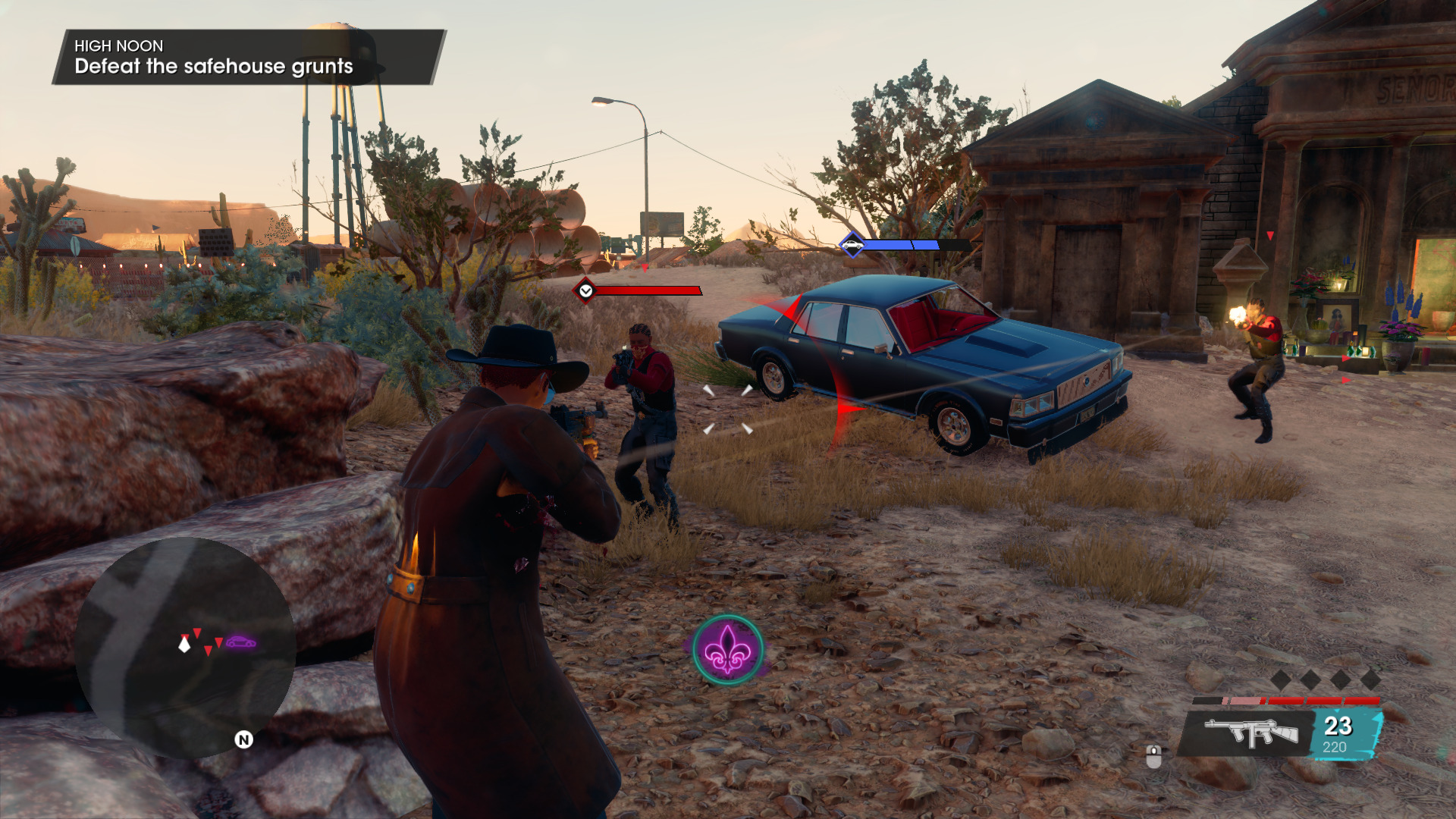

You spend most of your time in Saints Row shooting at somebody. You turn up, do some crime, then shoot some people out of necessity. This is the core gameplay loop. At its best, it’s glorious. At its worst, it’s tedious and overwrought. What you get out of Saints Row will be largely contingent on how much you enjoy this process.
The basic assault rifle feels like a firehose crossed with your kid brother’s fully automatic, electric-powered Nerf gun
Do not come to Saints Row expecting a precise, artisanal shooting experience. This is not Battlefield 2042 or Arma. Fortunately, Saints Row doesn’t care that it’s not Battlefield. It revels in this fact. The basic assault rifle feels like a firehose crossed with your kid brother’s fully automatic, electric-powered Nerf gun. It is like aiming a harpoon while trapped inside a giant vat of treacle. This is a feature that makes the game better.
This is because combat in Saints Row is not a carefully curated military contest. Rather, it is an exercise in showboating. Despite the title’s more grounded pretensions, your every action in combat amounts to gloating. Fight long enough, and your takedown meter fills. Approach an unfortunate enemy fighter, press the correct button, and your Boss will deftly execute a no-holds-barred takedown worthy of only the juiciest action movies or most bombastic WWE cage fights. They are luxurious.
Adding icing to the Layer Cake, we have the new Flow system, a welcome addition to the Saints Row combat experience. As you progress through the game, you’ll unlock skills that you can use during combat to destructive effect. These range from mundane fare, like grenades and smoke bombs, to anime fire punches and vampiric, health-stealing buffs. These extra tools in your arsenal can be activated by spending Flow points, which you acquire as you inflict damage or take lives. Though they don’t make for a radical shift from the third-person shooter status quo, they do add another avenue through which Saints Row’s more over-the-top elements might manifest themselves.
The trifecta of abilities, takedowns, and overblown gunplay make you feel at least a little bit superhuman. It rarely feels like a fair fight. In fact, mowing down hordes of enemies in Saints Row often feels gratuitous. It is, at its core, a ludicrous power fantasy. I love it.
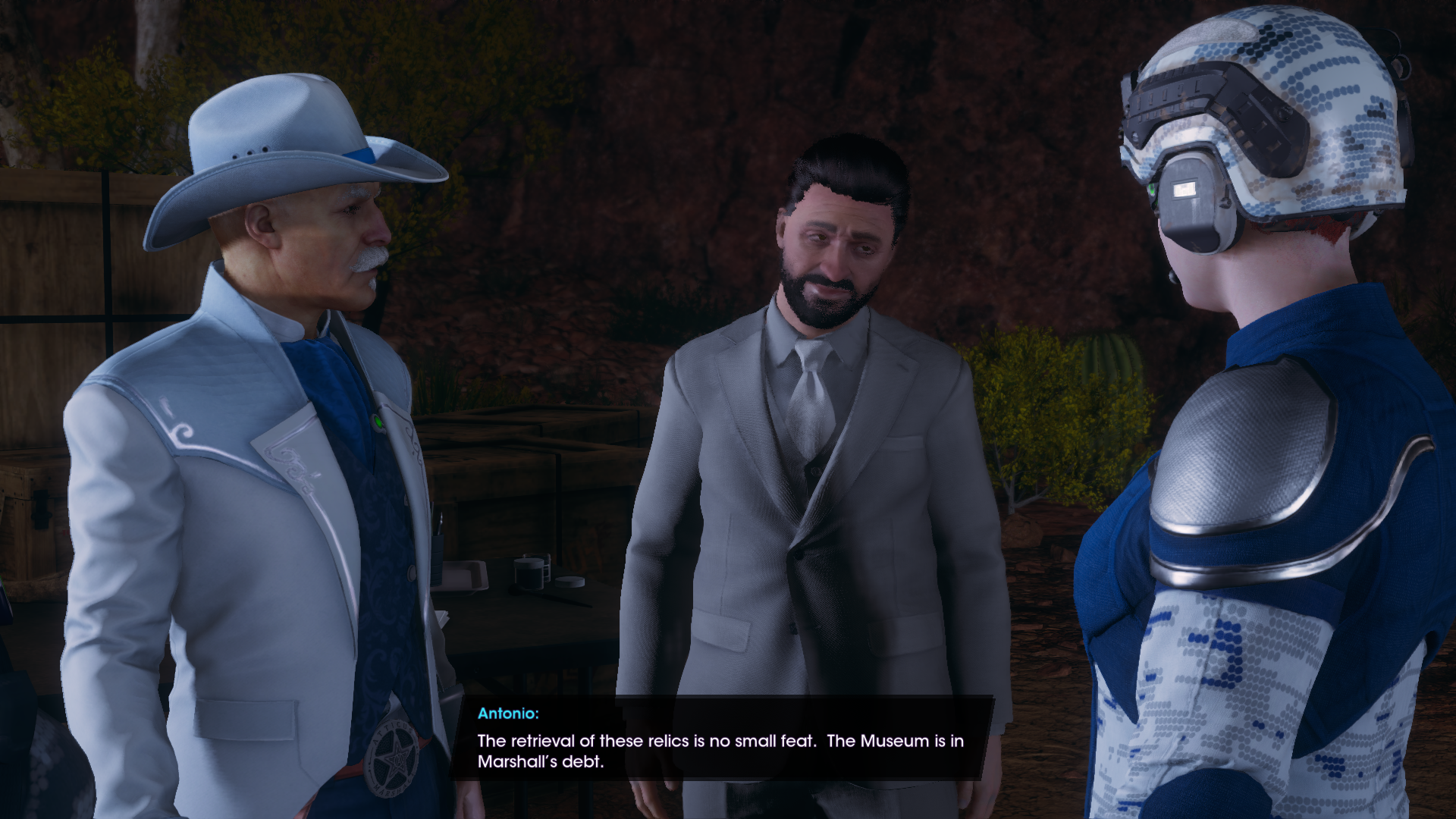
Unfortunately, Volition’s latest doesn’t always remember this crucial aspect of Saints Row’s appeal. No more clearly is this neglect demonstrated than in the opening mission.
Here, our hero endures their first day at Marshall, an extremely morally dubious private military group. Contrary to the far more joyful atmosphere that pervades most of the rest of the title, the opening scene comes across as a near-parodic rendering of the very worst aspects of forgettable, gung-ho FPS games of the late ’00s. Unfortunately, the action is played straight and doesn’t veer into the parody that it seems to be craving for. It is bizarre that Volition refrains from putting a foot on the gas during this first segment.
This starkly contrasts with later missions, the majority of which are simple yet enjoyable romps through the city of Santo Ileso. One mission in particular, an homage to Fortnite and Elden Ring, maroons the player on a spooky island and forces them to collect weapons that drop from the sky. Victory is secured only when you’re the last person standing. It is hard to believe that the tutorial mission and this melodramatic battle royale pastiche can be found in the same game. It is in this duality that we see the fundamental struggle threaded through almost every aspect of Saints Row.
Saints and sinners
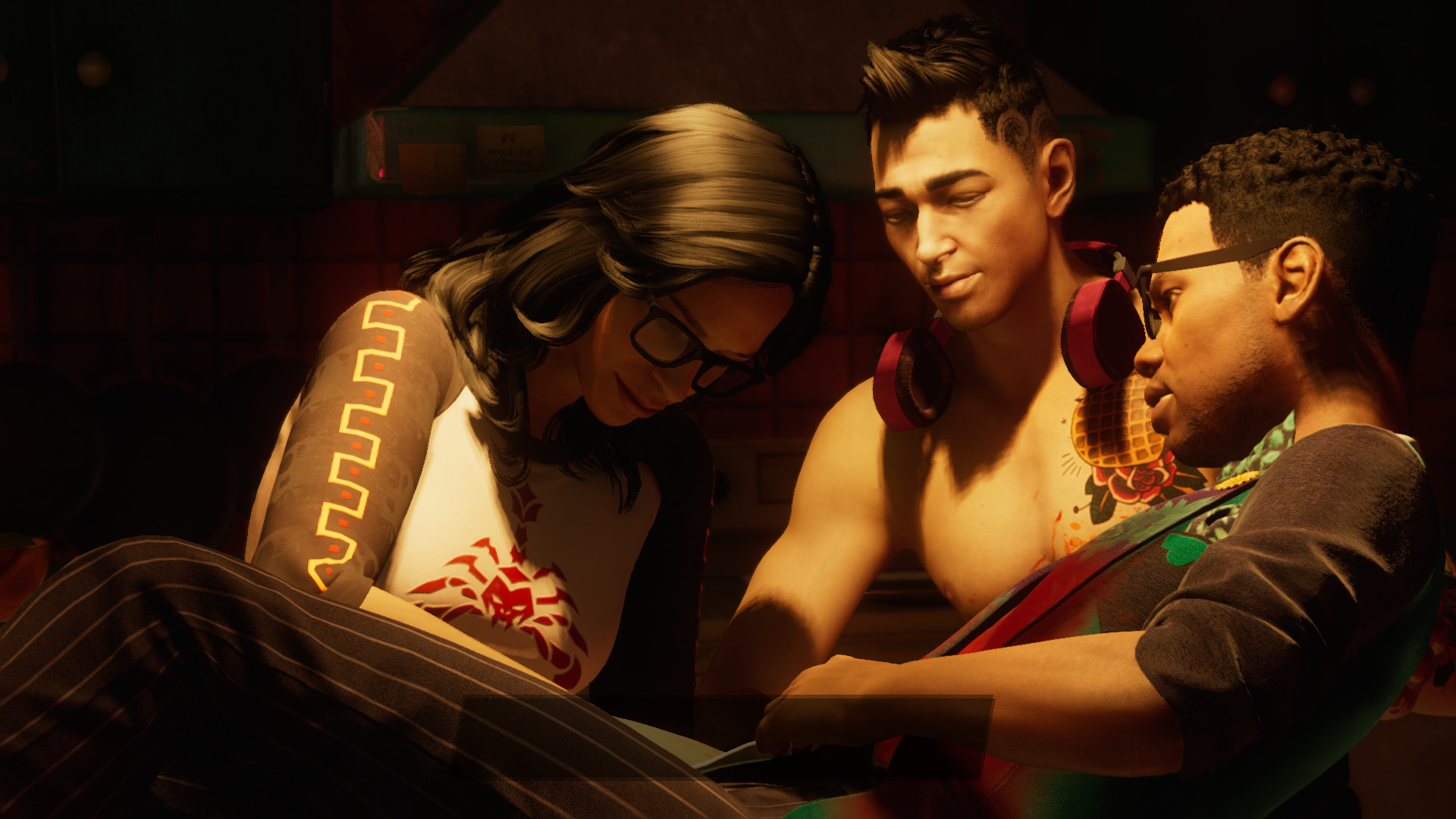
Still, there is an impudent charm at the core of Saints Row that no amount of indecision can entirely quash. In its stronger moments, the dialogue sparkles.
During the early stages of the game, you and your cohort of downtrodden Zellenial friends, Eli, Neenah and Kevin, attempt to break out of economic deadlock with the judicious application of wanton criminality. The majority of the time, these characters are great fun to spend time with. They offer snappy and well-polished chatter. Unfortunately, they’re not free from the uneasy tonal ambiguity that besets the game. In more personal missions with each character, whiplash abounds.
Tragically, Saints Row often seems ashamed of itself
Tragically, Saints Row often seems ashamed of itself. Though the game flirts with a refreshingly skeptical line on the excesses of capitalism, it rarely commits to a political statement for long. The main characters, all of them hard-pressed gig economy laborers, will often offer exactly the kinds of acerbic and critical one-liners befitting their situation. However, in the next moment, they’ll mock the idealism of others who share their skepticism. The lack of consistency is sometimes baffling. Why should a cast of characters who can steal cars and rob pawn shops on a whim feel tied to such mundane concerns as “rent” and “job security”?
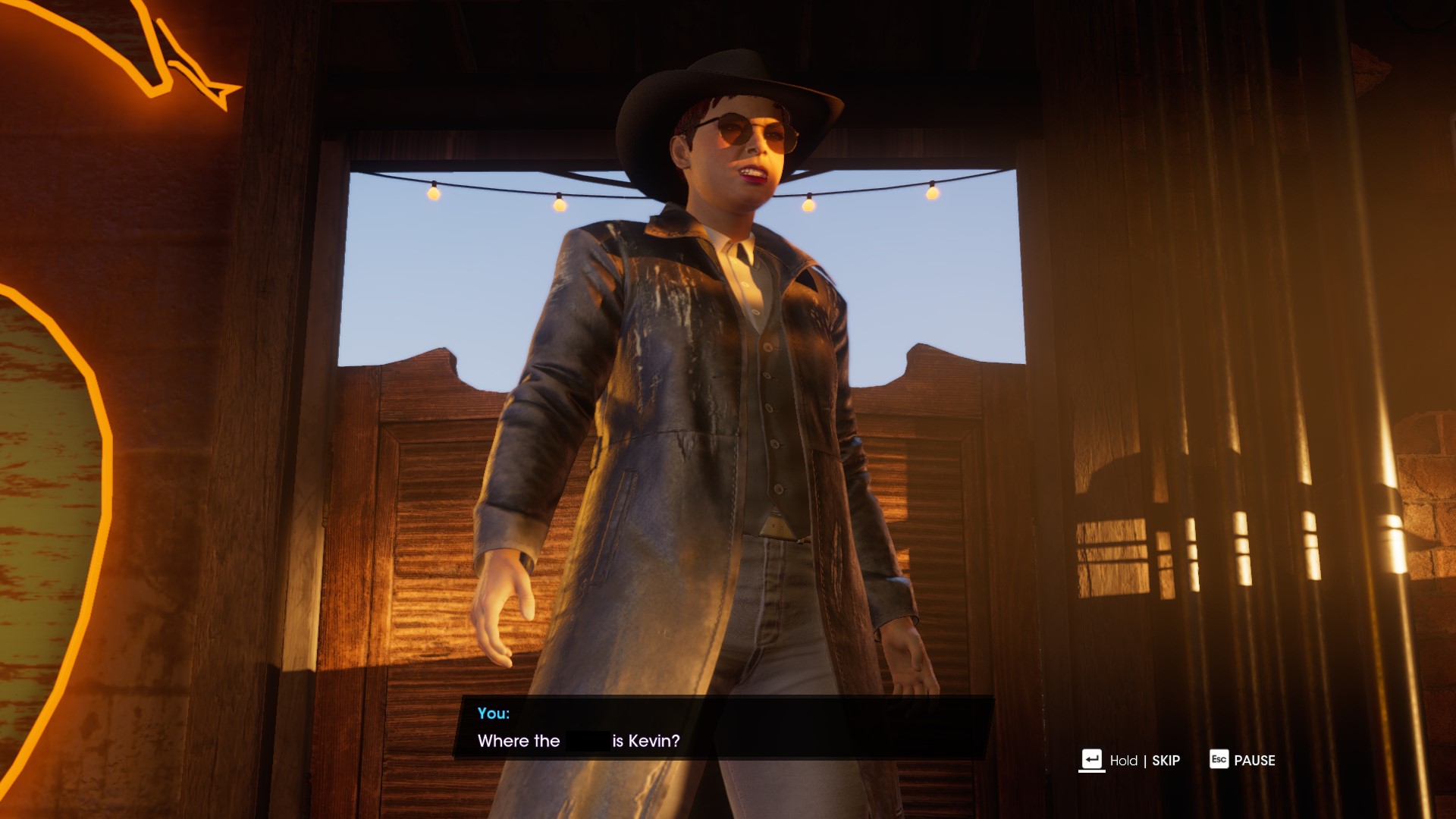
In one mission, you help a character take revenge for the destruction of their car, a gift from their beloved, terminally-ill mother. Your heart-to-heart about a delicate and painful family situation is instantly followed up by a helicopter battle. Alone, both of these things are compelling, albeit in profoundly different ways. Together, they make for a strange cocktail.
In its more serious moments, Saints Row asks for you to pretend that you are not a superhuman killing machine in a world full of hapless NPCs. Though this attempt at sleight of hand is occasionally successful, the game never quite escapes the strain that this places upon the main story.
Be your own boss
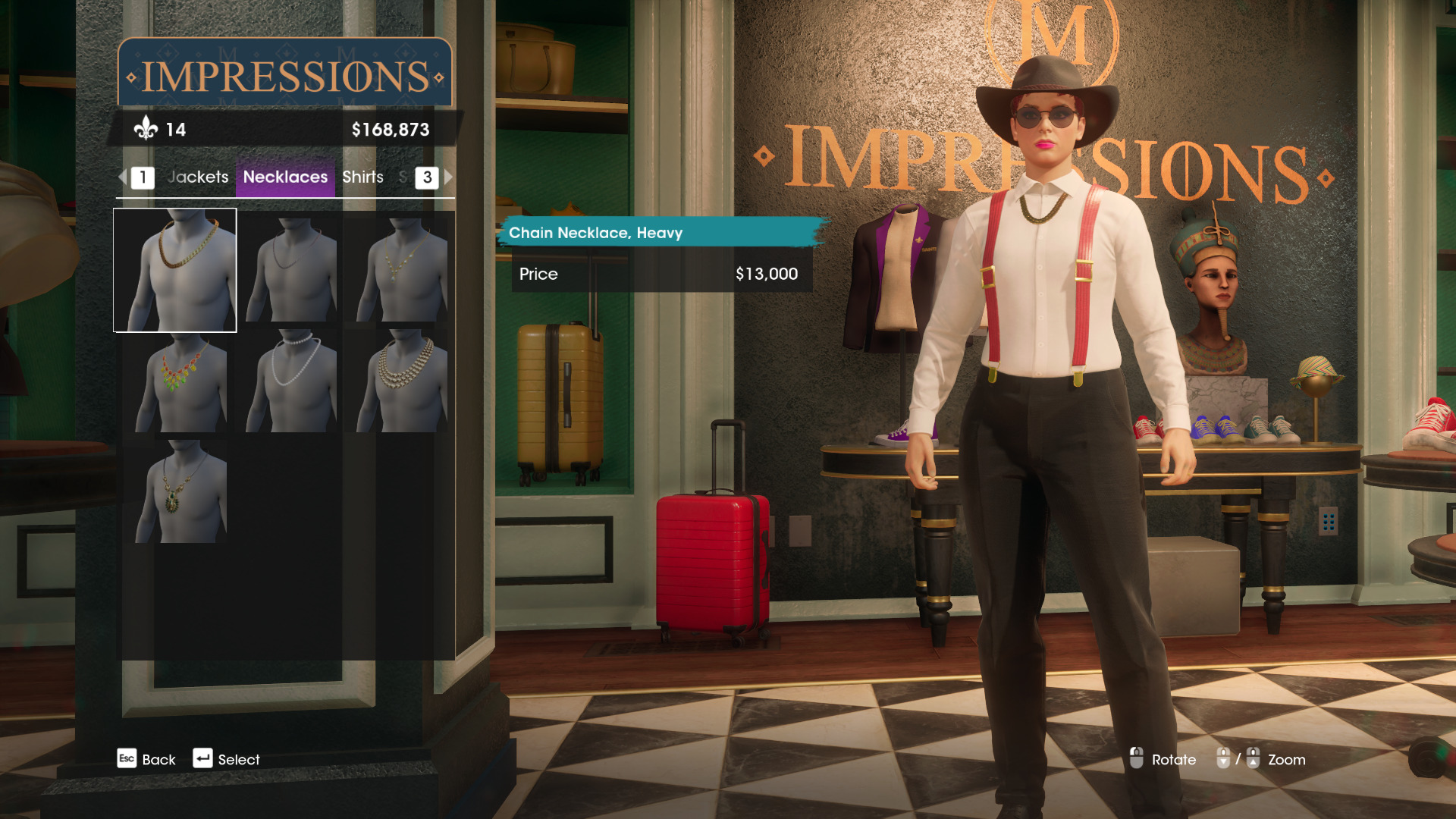
Saints Row is keen to remind you that you are the figurehead of an up-and-coming street gang.
As well as taking a significant role in the lives of your friends, you will also find yourself helming the gang’s financial prospects through the Venture system. This system allows you to construct shady businesses and revenue sources across town. Each Venture then offers a series of side missions that improve the financial output of the business, and the passive income of the Saints as a whole. These Vice City-style side hustles do not disappoint. Ranging from insurance scams to a literal LARP fortress, each Criminal Enterprise is endearingly characterful.
When it comes to the Boss themselves, Saints Row doesn’t skimp on further opportunities to build character, quite literally. The character creator is lavish in its offering, bordering on the gratuitous. Dispensing with the Gender Slider from previous titles, the Boss Factory allows you to customize every facet of your physical appearance and gender presentation individually, allowing for a more complete spectrum of human beings to be represented. The game also offers a degree of representation for disabled people. For instance, you are able to create a Boss with prosthetic limbs. It’s refreshing to see, and emblematic of Saints Row’s pervasive generosity.
The majority of vehicles are also completely customizable, allowing you to mix and match with paint jobs, extra fittings and even hood ornaments should it strike your fancy. There are a wide range of distinct rides on offer as you make your way through Saints Row’s busy open world. Muscle cars, convertibles, and even jet bikes are readily available to those who go in search of them. Fans of the series will be pleased to know that the radio is back, too, allowing you to cruise down the highway accompanied by anything from Bach to KRS-One. Fans of bespoke open-world experiences are unlikely to be disappointed.
No rest for the wicked
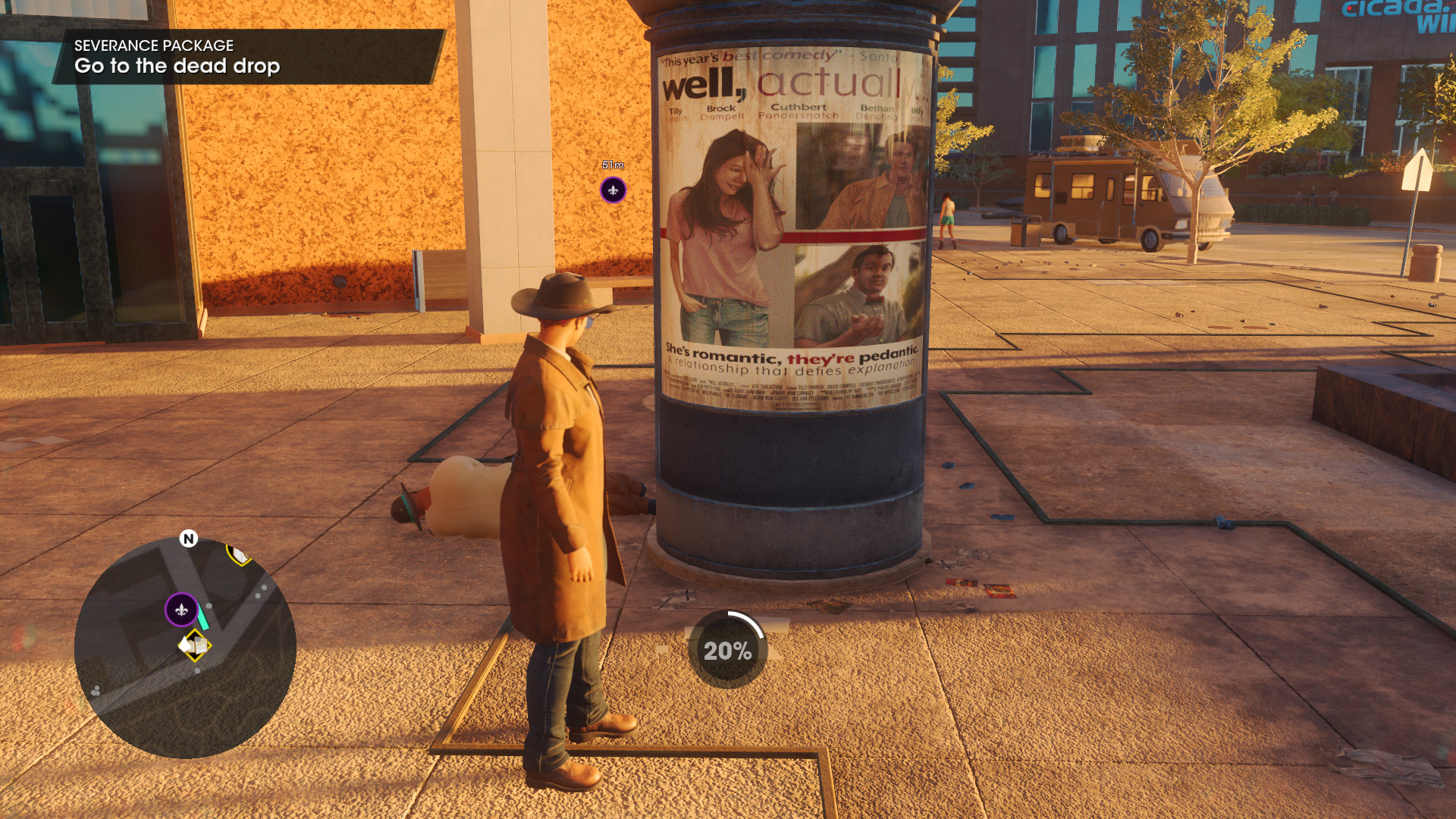
Saints Row is, ultimately, an ambitious but flawed title. The game dips its feet in two contrasting tones, sometimes to its credit but often to its detriment. However, when it decides to tap into the shameless melodrama of its predecessors at the expense of a grittier, GTA 5-adjacent experience, it shines.
Some aspects of Saints Row will need to face the test of time before they can be assessed. Bugs are infrequent but present, and though none have been game-breaking as of yet, some have required the occasional mission restart. Though it seems likely that Volition will address these in time, I would be lying if I said they didn’t affect the play experience. On the other hand, the co-op campaign system, though promising, will require stress testing before anyone can possibly speak to its robustness or enjoyability.
If you play Saints Row, I guarantee that something about it will make you laugh. It might be a quip from one of the central cast that gets you. Or perhaps you will revel in the childlike joy that only comes from flipping a car full of police officers over with a dumper truck. Despite sometimes seeming ashamed of its own excesses, Volition packs in enough of them to amuse even the most stoic among us. You’ll have to decide for yourself whether that’s worth wearing a neck brace after all the tonal whiplash.