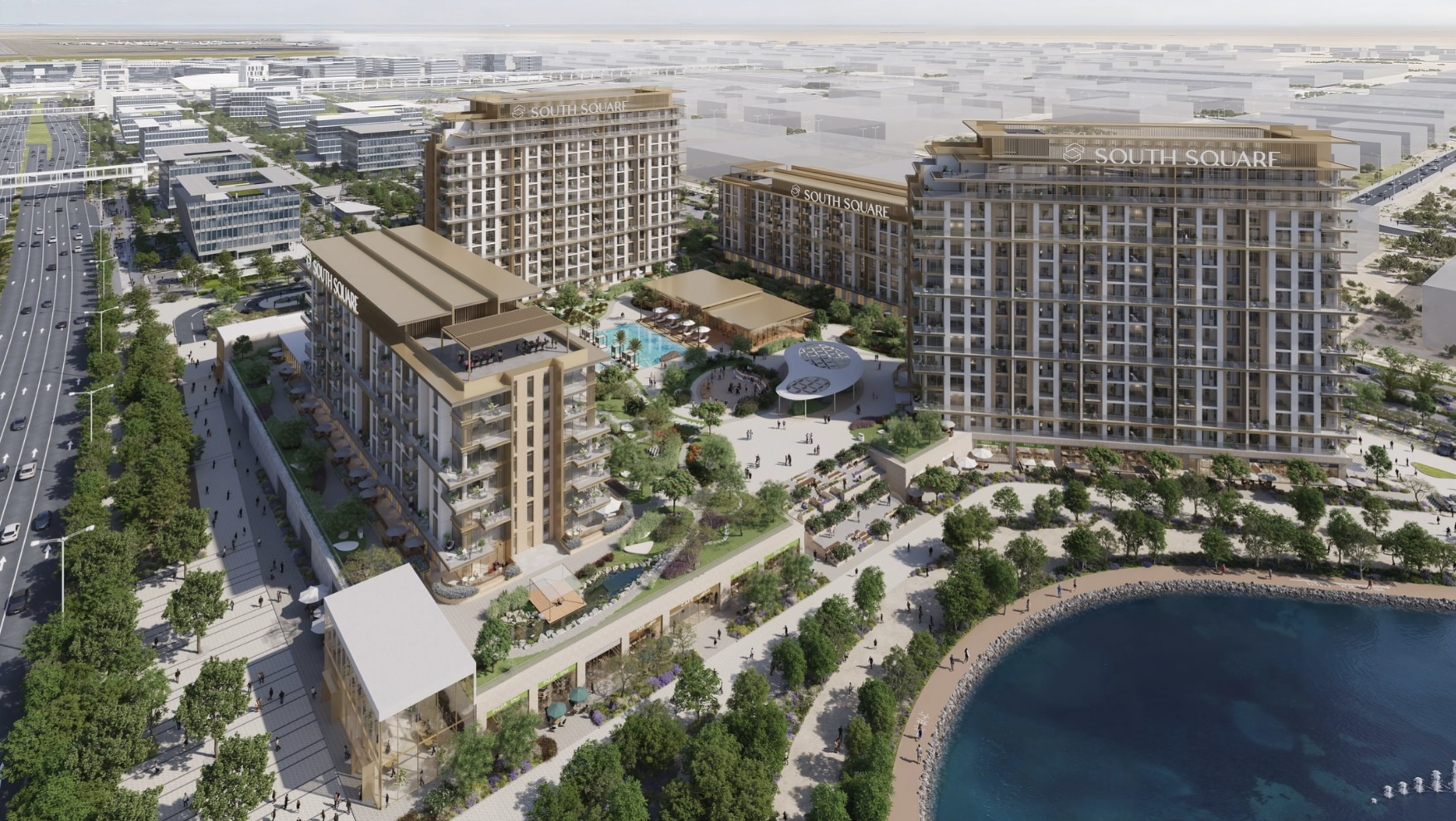
Dubai South Properties has launched South Square, a new luxury residential development strategically located along Sheikh Mohamed bin Zayed Road, just minutes away from the future new terminal of Al Maktoum International Airport.
The project’s first tower, S4 Tower, witnessed overwhelming demand, with all units sold out within just three hours of launch.
South Square will feature 550 apartments and is slated for completion in the fourth quarter of 2028. The launch comes amid soaring interest in Dubai South as one of the city’s fastest-growing real estate destinations.
“In the past few years, we have witnessed a sharp increase in demand for residential options in Dubai South, driven by its strategic location, modern infrastructure, and exceptional connectivity,” said Nabil Al Kindi, CEO of Dubai South Properties. “South Square is our response to this momentum, offering spacious homes, wellness-focused amenities, and proximity to the upcoming Al Maktoum International Airport terminal and key highways.”
Dubai South’s popularity has surged in 2024, with total residential property sales crossing 19 billion. Its master plan includes a mix of residential, commercial, and logistics zones, making it a preferred hub for investors, professionals, and families seeking long-term living options with future-focused urban infrastructure.
The new development is also expected to attract buyers looking for properties close to the upcoming airport expansion, which is set to make Al Maktoum International one of the largest aviation hubs in the world.
The success of South Square adds to Dubai’s ongoing real estate boom, driven by population growth, infrastructure investments, and investor confidence in the UAE’s long-term vision.
With over 35 years of experience in journalism, copywriting, and PR, Michael Gomes is a seasoned media professional deeply rooted in the UAE’s print and digital landscape.
‘Shop Local’, a new initiative aimed at helping consumers across the UAE discover and support homegrown businesses, while giving small and medium enterprises (SMEs) greater visibility, has been launched by a local platform Quiqup.
It will bring together UAE-based brands in one place, allowing users to easily browse, discover and purchase from local businesses that often face challenges standing out in crowded digital spaces.
Open to small and local businesses nationwide, ‘Shop Local’ is designed to address one of the most common hurdles SMEs encounter, reaching the right audience. By offering a dedicated channel, the initiative aims to help businesses build awareness, drive sales and support long-term growth.
The launch coincides with the announcement of the establishment of the Dh1 billion National Industrial Resilience Fund to boost localisation within key industries by HisHighness Sheikh Mohammed bin Rashid Al Maktoum, Vice President and Prime Minister of the UAE and Ruler of Dubai.
Strengthening local businesses
Fatima Yousif Alnaqbi, Acting Assistant Under-Secretary for the Support Services Sector at the Ministry of Finance and representative at the Mohammed Bin Rashid Innovation Fund, highlighted the importance of enabling high-potential businesses to scale.
She noted that supporting companies at the right stage allows them to contribute more effectively to the economy, particularly in the UAE, where innovation and entrepreneurship play a key role in driving growth and creating new opportunities.
Bassel El Koussa, CEO of Quiqup, said the initiative reflects the company’s belief in strengthening connections between businesses and communities.
He added that ‘Shop Local’ is intended to create opportunities for local brands to grow, deepen customer engagement and build a stronger market presence, while encouraging consumers to play a more active role in supporting the local economy.
The platform has already received 190 brand submissions, with Quiqup aiming to onboard at least 250 businesses in the coming weeks.
Dubai continues to attract professionals, families, and digital nomads seeking long-term apartment rentals, thanks to its strong economy, modern lifestyle, and world-class infrastructure.
However, for newcomers, finding the right apartment that fits both budget and lifestyle can feel overwhelming.
Here are some of the top areas in Dubai for long-term rentals, based on tenant preferences, amenities, and rental trends:
Think luxury
Dubai Marina Still one of the most in-demand expat hubs, prices vary a lot by tower, view, and furnishing. Typical rents: Studio: Dh55,000 – 110,000 1BR: Dh75,000 – 135,000 2BR: Dh110,000 – 200,000 3BR: Dh200,000 – 350,000
Market note: Median rent sits around Dh130,000 across unit types Waterfront views and newer towers push prices to the top end.
Palm Jumeirah (Palm Islands) This is a completely different tier—think luxury, beachfront, and limited supply. Typical annual rents: 1BR (apartments): Dh 140,000 – 200,000 2BR: Dh 250,000 – 350,000 3BR apartments: Dh 500,000 – 700,000
Best for families with quality living
Dubai Hills Estate: Green, peaceful, and family-focused. Popular for expat families, with top schools and long-term tenant stability.
Typical rents:
1BR: Dh80,000–120,000
2BR: Dh130,000–190,000
Jumeirah Village Circle (JVC): Affordable, community-driven living with parks and strong rental yields. Ideal for families seeking quiet suburban life.
Typical rents:
Studio: Dh45,000–65,000
1BR: Dh65,000–95,000
Best for professionals and city life
Business Bay: A central business hub with high demand, perfect for young professionals and entrepreneurs.
Typical rents:
Studio: Dh60,000–85,000
1BR: Dh85,000–130,000
Downtown Dubai: Premium urban lifestyle near offices, dining, and entertainment.
1BR: Dh110,000–180,000
2BR: Dh180,000–280,000
Dubai Marina: Vibrant waterfront living with high-rise apartments and strong rental appeal.
Studio: Dh70,000–95,000
1BR: Dh95,000–140,000
Best for affordable rentals and value
A practical choice for professionals working in tech or nearby zones. Known for quieter living and relatively lower rents.
International City Remains one of Dubai’s most budget-friendly areas, popular for first-time expats or singles. Typical rents:
Studio: Dh30,000–45,000
1BR: Dh45,000–65,000
Al Barsha Well-connected (especially via metro) and still offers decent value compared to newer developments. Typical rents:
1BR: Dh70,000–100,000
2BR: Dh100,000–150,000
Discovery Gardens
This is firmly in the ‘affordable but spacious’ category. This neighbourhood is popular with expats who want bigger apartments without Marina-level prices.
Typical annual rents:
Studio: Dh 30,000 – 55,000
1BR: Dh45,000 – 72,000
2BR: Dh65,000 – 110,000
3BR: Dh90,000 – 120,000
Market reality:
Average rents sit around Dh 54,000 – 68,000/year, depending on unit type
Studios start at Dh 47,000, while 2BR units can go up to Dh 110,000
Still one of the best ‘space-for-money’ areas in Dubai, with larger layouts than newer buildings
How it compares
Discovery Gardens: Budget-friendly + bigger units + metro access
Cheaper than JVC and much cheaper than Dubai Marina
Trade-off: Older buildings + less ‘premium’ feel
For expats prioritising affordability, older central neighbourhoods such as Al Karama, Bur Dubai, and Deira continue to offer relatively lower rents compared to newer communities.
On the fringe
Further savings can be found in areas like Al Qusais, Muhaisnah, and outer residential zones, where rents are more accessible, but often at the cost of longer commute times and fewer modern amenities.
Typical budget range (older areas):
Studio: Dh28,000–50,000
1BR: Dh45,000–75,000
Why Dubai is still ideal for long-term rentals
Flexible payment options (1–4 cheques or annual upfront)
High-quality amenities (gyms, pools, parking in most buildings)
Strong, expat-driven rental market
Wide mix of luxury, mid-range, and budget communities
How to choose if you’re new to the city
With rising rents, the decision often comes down to trade-offs:
Want energy and convenience? – Business Bay, Downtown, Marina
Want space and community living? – Dubai Hills, JVC
Want affordability? – Silicon Oasis, International City, Deira
In 2026, several residents are compromising on location to gain space or save 15–25% on rent, especially with hybrid work becoming common.
The world’s most famous ‘seven-star’ hotel is officially getting some work done. For the first time since its doors swung open in 1999, the Burj Al Arab is undergoing a massive restoration. Don’t worry, though, the sail-shaped structure isn’t going anywhere. Jumeirah Group is just making sure this Dubai luxury property stays looking fresh for the next generation.
What’s the plan
This isn’t just a quick coat of paint. We’re talking about an 18-month phased restoration led by the renowned designer, Tristan Auer. If the name sounds familiar, it’s because he’s the mastermind behind the stunning Hotel de Crillon in Paris and a protege of the legendary Philippe Starck.
The hotel will, however, be running during the renovation process, which also includes modernising the interiors.
Why is Burj famous
The Burj Al Arab is more than just a place to sleep, rest and enjoy the luxury comforts, it’s basically the face of Dubai. Here’s a quick refresher on why this building is iconic:
The height: It towers at 321 meters on its own private island.
The bling: The interiors are packed with marble, gold leaf, and Swarovski crystals.
The icon status: From helipad tennis matches with Roger Federer to its massive 450kg crystal chandelier, it put Dubai on the luxury map 27 years ago.
Preserving the icon
As Dubai grows, the city is shifting its focus toward preserving its modern icons. By giving the Burj Al Arab a thoughtful facelift now, they’re ensuring that the ‘Sail of Dubai’ remains the ultimate symbol of global luxury without losing the original character that made it famous in the first place.
According to the Jumeirah Group, the renovation is aimed at preserving one of the emirate’s most famous symbols for future generations.