Connect with us

Business

Emiratisation in CX is natural call for this Dubai BPO

Spread the love

Data Direct Group urges UAE private sector to hire more local talent

Published

on

Spread the love

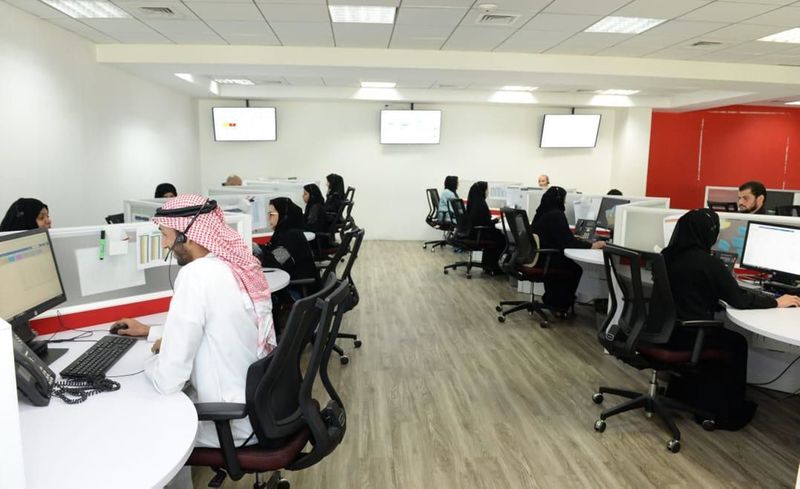
Dubai-based leading BPO organisation Data Direct Group has urged the UAE’s private sector to follow the recent guidelines established by country’s Ministry of Human Resources and Emiratisation (MoHRE) and hire more local talent to boost Emirati employment rates.

The Ministry earlier this month announced that around 79,000 UAE nationals were working in the private sector. In September 2022, UAE’s authorities set out quotas for hiring Emiratis for the first time and gave private companies deadlines to reach them.

Private sector companies with at least 50 employees needed to ensure 3 per cent of their workforce was made up of Emiratis by July 7. Four days later on July 11, MoHRE announced a new update to the rules, whereby private companies with 20 to 49 employees are now included in the government’s Emiratisation drive with the new rules now applicable to companies across 14 economic sectors including property, education, construction and health care.

“This is the time to infuse the current market with a great new talent pool that is homegrown and localised. Emirati employment rate is projected to increase to 10 per cent in 2026 with a steady growth every year and it is the time for private businesses of the country to step up by reaching targets laid down by the MoHRE,” said Rajiv Dalmia, the chairman and founder of Data Direct Group that today employs close to 1,500 professionals from over 25 nationalities working in four countries.

“We achieved outstanding results in going beyond to fulfill the government’s targets for hiring Emirati talent. A major part of that success is due to the fact that Emiratisation has always been a part of our role to keep local clients happy while enhancing the customer experience.”


Rajiv Dalmia

As part of the company’s commitment to support the nation’s vision and foster local talent, Data Direct been implementing strategic initiatives since the company’s inception in 2002, and much before the UAE government started ‘customer happiness centres’ across the country to serve the local population. An internal audit by DDG after the first half of 2023 has shown staff representation among Emiratis at nearly 5-7 times the minimum required, especially in certain departments.

“We do not see Emiratisation as a minimum quota to achieve just for the sake of representation,” added Dalmia. “The more the merrier, and there is a constant endeavour to seek out local talent first before we look at other options.”

Elaborating on the MoHRE data, recruitment consultancy Qureos has said sectors such as business services (14% growth year on year), construction (13%), and commerce and repair services (10%) are among the new frontrunners in Emirati hiring, coming neck-to-neck with the traditional BFSI (banking, financial services and insurance) sector. Data Direct serves many clients in the services and banking sector.

Qureos data also suggests a massive 75% increase in college enrolment for banking studies. The graduates are due to be incorporated in the near future where the HR departments of companies such as Data Direct stand to benefit. “Employees within our team setup and familiar with the work culture at Data Direct Group provide good referrals to future employees. References are our best sources for talent,” said Nona Sharma, HR head at DDG.

“The accomplishment in surpassing Emiratisation targets is a testament to our commitment to the UAE’s socio-economic growth and vision for a prosperous future. By empowering local talent, we also strengthen our own organisational capabilities.”

DDG has been working with many government entities to enhance the customer experience during interactions. Meanwhile, the rise of Gulf countries’ economies has also seen a surge in hiring local talent. “A collaboration with Talabat in Bahrain, for instance, has happened due to our track record on this and their requirements to keep 100% staff local. In Oman, it is 80% of our strength while the highly cosmopolitan nature of UAE means we have about 35-40 locals who cater to clients, including key government agencies. Having talented local colleagues is not tokenism for us. They are, in fact, the guiding light for us in many cases,” Dalmia added.


Announcements

Ajman to launch new Rental Dispute Resolution Centre under 2026 law

Published

on

Spread the love

Ajman has announced the establishment of a new Rental Dispute Resolution Centre, aimed at streamlining landlord-tenant disputes and strengthening stability in the emirate’s real estate sector.

His Highness Sheikh Humaid bin Rashid Al Nuaimi, Supreme Council Member and Ruler of Ajman, has issued Law No. (1) of 2026, formally creating the centre and replacing the existing rental disputes committee.

Clearer, Faster Rental Dispute Resolution

The new law introduces transparent and clearly defined mechanisms for reviewing and adjudicating rental disputes, with the objective of:

  • Protecting the rights of landlords and tenants
  • Enhancing confidence in Ajman’s property market
  • Supporting a stable and attractive investment environment

Jurisdiction and Scope

The specialised centre will have authority over all rental-related disputes between landlords and tenants, including:

  • Residential and commercial properties
  • Properties located within free zones

Cases will be handled using procedures aligned with recognised legal and judicial standards, ensuring fairness and consistency.

Boosting Market Stability

Officials said the new centre is designed to:

  • Speed up dispute resolution
  • Reduce litigation timelines
  • Ensure swift and effective justice

The move is expected to contribute to social and economic stability in Ajman’s leasing and real estate sector, while reinforcing investor confidence.


Continue Reading

Business

Your face or palm could soon pay for purchases in the UAE

Published

on

Spread the love

Paying for everyday services in the UAE could soon be as simple as showing your face or palm.

The Central Bank of the UAE (CBUAE) has introduced the region’s first biometric payment solution, allowing users to make payments using facial recognition or palm biometrics, without cards, cash, or mobile phones.

The new system is currently being tested in a pilot phase at the Dubai Land Department, where customers authenticate payments through biometric scans in a controlled environment.

How Biometric Payments Work

The pilot enables:

  • Payments using face or palm recognition
  • No need for physical cards or smartphones
  • Faster, more secure transactions

The initiative is part of the CBUAE Sandbox Programme and Innovation Hub at the Emirates Institute of Finance, developed in collaboration with Network International and powered by PopID.

Focus on Security and User Experience

The Central Bank said the pilot is designed to assess security, efficiency, and operational readiness before any wider rollout. No timeline has yet been announced for expanding the system beyond the testing phase.

CBUAE officials say biometric payments could significantly enhance transaction security while improving customer convenience. Industry leaders also expect biometric technology to play a growing role in digital commerce and cashless payments globally.

A Step Towards Cashless Payments

The pilot reflects the UAE’s broader push towards financial innovation, smart services, and cashless payment systems, positioning the country at the forefront of next-generation payment technology in the region.


Continue Reading

Announcements

Dubai launches global challenge to build the world’s first fully robotic villa

Published

on

Spread the love

Dubai Municipality has launched a global challenge to construct the world’s first residential villa built entirely using robotic construction systems, reinforcing Dubai’s position as a global testbed for advanced building technologies.

The project will be delivered by a consortium of more than 25 local and international technology companies and academic institutions, led by Dubai Municipality. Officials say the initiative aims to develop scalable, next-generation construction models that boost productivity, sustainability, and quality.

The announcement was made during the launch of 04 ConTech Valley, Dubai’s new Construction Innovation and Research Centre, developed in partnership with Expo City Dubai.

Global ConTech Momentum

At the event, Dubai Municipality also unveiled the Global ConTech Report, which projects that global construction technology investment will exceed $30 billion by 2033, growing at 17.5% annually.

Key findings highlight:

  • Labour shortages are a major global challenge
  • Rising investment in robotics and additive manufacturing
  • Rapid adoption of AI, robotics, prefabrication, and infrastructure technologies

Building a Stronger Innovation Ecosystem

Dubai Municipality also launched the ConTech Working Group, in collaboration with Dubai Chambers, bringing together government, developers, contractors, investors, researchers, and tech firms to accelerate innovation across the sector.

70–70 Strategy for 2030

Dubai also launched the 70–70 Strategy, aiming to shift 70% of construction to off-site manufacturing and achieve 70% factory automation by 2030, driving higher efficiency and sustainability.

Continue Reading

Popular

Exit mobile version
https://headline.ae/