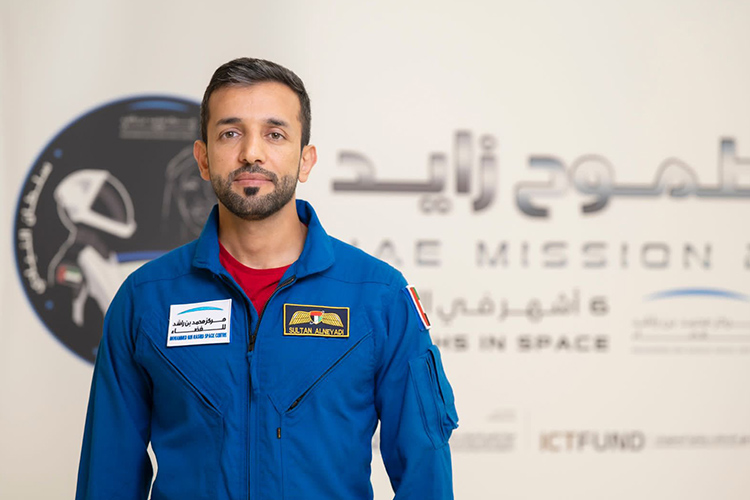
UAE astronaut Sultan Al Neyadi and his fellow Crew-6 members have successfully returned to Earth, concluding their historic space mission. The crew members safely disembarked from the Dragon Endeavour spacecraft with assistance from SpaceX recovery personnel. Al Neyadi, the last to exit the spacecraft, completed the process exactly one hour after the splashdown.
After six months of science and discovery aboard the @Space_Station, our Crew-6 team splashed down at 12:17am ET (0417 UTC) and will be picked up shortly by recovery teams. pic.twitter.com/zf635dfUKF
Crew-6’s remarkable space mission spanned an impressive 186 days, setting a new record as the longest mission in Arab history. The Dragon capsule made a secure touchdown off the Florida coast at 8:17 am on a Monday, with Al Neyadi emerging from the Dragon spacecraft just an hour later. During this mission, Al Neyadi achieved significant milestones, elevating the UAE’s status in the global space arena. He completed the longest-ever space mission by an Arab, spending six months aboard the International Space Station (ISS) and conducting groundbreaking scientific experiments for the betterment of humanity and scientific advancement.
As Sultan Al Neyadi, the UAE’s second astronaut, emerged from the Dragon spacecraft, he greeted onlookers with a smile and a wave. It’s worth noting that astronauts returning from extended periods in space often experience an adjustment period as they readapt to Earth’s gravity. The recovery process for the crew may take up to two hours to ensure their well-being after this remarkable mission.
ANAROCK Group has announced a major leadership reshuffle as it looks to expand its footprint across the Middle East and Europe, with a strong focus on Dubai’s growing real estate market.
The independent real estate consultancy said the appointments come as the region enters a new phase of growth, driven by rising investor confidence, infrastructure expansion and increasing demand across residential and institutional real estate sectors.
New leadership appointments
Anuj Kejriwal has been appointed CEO, EMEA, while continuing his current role as Founding Partner and Head of Retail Advisory.
In his expanded position, Kejriwal will oversee the rollout of ANAROCK’s institutional advisory services across the Middle East, including capital markets, land services, consulting and valuation.
The company said Dubai will act as the launchpad for its wider regional expansion strategy before moving into broader European markets.
Meanwhile, Aayush Puri has been named CEO – Residential, Middle East and CEO of ANAROCK Channel Partner (ACP).
He will lead the firm’s residential business across the region while continuing to oversee the international operations of ANACITY, the group’s proptech and property management platform.
Focus on Dubai’s growth
According to ANAROCK, Dubai’s real estate market remains one of the key long-term growth drivers for the company, supported by strong economic fundamentals and sustained investor demand.
The firm also plans to hire senior local talent across consulting, residential and capital markets divisions as part of its expansion push.
Anuj Puri, Chairman of ANAROCK Group, said the leadership changes reflect the company’s commitment to strengthening its regional presence and capturing new cross-border opportunities in one of the world’s most dynamic real estate markets.
A new women-focused platform has officially launched in the UAE with ambitions to become one of the GCC’s leading ecosystems for female empowerment, entrepreneurship and community support.
FEMPOWERMENT was founded by Kirsten Jenna Michaels and Alexander Sailer and aims to support women through business opportunities, coaching, education and networking initiatives.
Launched in Dubai, the platform combines community events, business launch support, workshops, coaching programmes and large-scale experiences designed to help women grow personally and professionally.
At the centre of the initiative is the Women’s Business Launchpad, a programme created to help women set up and scale businesses in the UAE through partnerships with banking, licensing and business service providers.
Founder and CEO Kirsten Jenna Michaels said the platform was designed to move beyond traditional empowerment messaging and focus on creating real opportunities for women.
The platform also features tiered membership programmes offering access to networking events, certifications, workshops and coaching experiences, alongside promotional opportunities for female-led businesses.
Co-Founder Alexander Sailer said the long-term vision is to build a scalable ecosystem that helps women access funding, launch ventures and create sustainable growth opportunities across the region.
Alongside its business and networking focus, FEMPOWERMENT has also pledged to support social impact initiatives, including plans to provide meals for 1,000 labour camp workers in the UAE and contribute to healthcare and education-related causes.
The organisation plans to expand across the GCC and international markets as part of its broader growth strategy.
The Ministry of Human Resources and Emiratisation (MoHRE) has confirmed that June 30, 2026, is the final deadline for private sector companies with 50 or more employees to meet Emiratisation targets for the first half of the year.
Under current rules, companies must achieve a 1% increase in Emiratisation for skilled jobs by the end of June, with another 1% increase required in the second half of 2026.
Starting July 1, firms that fail to meet the required targets will face financial penalties.
The ministry urged companies not to wait until the last minute and encouraged employers to use the Nafis platform to connect with Emirati jobseekers across multiple sectors and specialisations.
Officials said more than 50 days remain before the deadline, giving companies time to speed up hiring plans and improve compliance.
Fake Emiratisation practices
The ministry also warned against fake Emiratisation practices, saying advanced monitoring systems powered by artificial intelligence are being used to detect violations and attempts to manipulate targets.
Companies found violating Emiratisation regulations could face penalties, downgrading of their classification status and legal action.
Compliant companies may benefit from incentives under the Nafis programme, including discounts on ministry service fees and priority within government procurement systems.