
News
7th Knowledge Summit to focus on global challenges

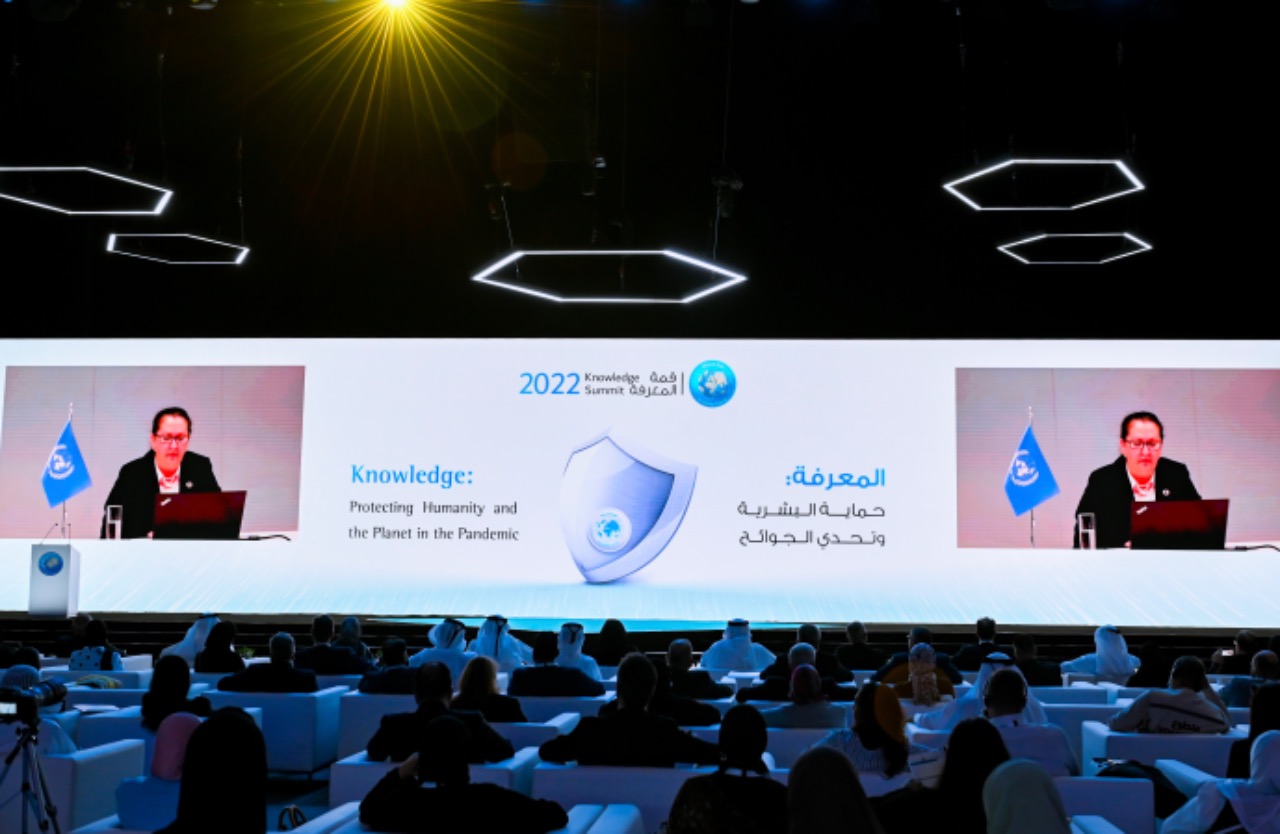
The seventh edition of the Knowledge Summit organised by the Mohammed bin Rashid Al Maktoum Knowledge Foundation (MBRF) in collaboration with the United Nations Development Programme (UNDP) opened on Monday.
Held under the theme ‘Knowledge: Protecting People and the Planet in the Pandemic’, the event kicked off at Expo 2020 Dubai in the presence of experts, leaders, and government officials from around the world.
Jamal Bin Huwaireb, CEO of MBRF, highlighted in his opening speech the unique example set by the UAE in combating the pandemic and mitigating its repercussions. He pointed to the exceptional success of Expo 2020 Dubai as an example of how the country offers a model for the world in ensuring the highest standards of health and protection for the community and global visitors. His Excellency said the event sends a strong message of hope to the world about the role of cooperation in enhancing growth, development, and prosperity.
“The seventh edition of the Knowledge Summit, which was first held in 2014, aims to revitalise the role of knowledge worldwide by promoting new methodologies and mechanisms for producing and disseminating knowledge. It also aims to create an avenue for constructive debate about the role of knowledge in protecting people from pandemics and other global challenges,” he further said.
“This year’s summit highlights various global challenges such as climate change, food security, and poverty. It also reviews the general legal landscape to explore new legal practices in the post-pandemic world and innovative economic and environmental systems to shape a better future,” Bin Huwaireb added.
Under the patronage of @HHShkMohd and in presence of @AhmedMohammed & @LatifaMRM; the seventh edition of the Knowledge Summit organised by @MBRF_News in collaboration with @UNDP opens today. pic.twitter.com/GF5FfxrMMC
— Dubai Media Office (@DXBMediaOffice) March 14, 2022
Dr Khalida Bouzar, assistant secretary general, assistant administrator and regional director, regional bureau for Arab States, UNDP, also commended on the success of Expo 2020 Dubai and the pivotal role played by MBRF at the regional and global levels in building knowledge-based societies.
She stated: “The Covid-19 pandemic has caused major global disruption that has directly affected countries’ progress towards the achievement of the 2030 Sustainable Development Goals, putting its gains at risk.”

Sheikh Ahmed bin Mohammed bin Rashid Al Maktoum (centre) and Sheikha Latifa bint Mohammed bin Rashid Al Maktoum (left) at the summit
“At the United Nations Development Programme and the Mohammed bin Rashid Al Maktoum Knowledge Foundation, we are committed to pursuing our knowledge initiatives, believing that knowledge is the only way for humanity to confront threats. We have released the results of the Global Knowledge Index for 2020 and 2021, and here we are today at this global knowledge event, the Knowledge Summit in its seventh edition, launching the Future of Knowledge Foresight Report in its third edition. The report focuses on the transformative capacities that enable countries to continue to grow in the face of shocks and to sustain development gains,” she added.
The summit’s events are scheduled to continue until March 15, followed by the virtual conferences and their broadcast on the website on March 16, 17 and 18.





Tributes have poured in after the son of former Chelsea star Eddie Newton was found dead alongside his friend following a hike in the UAE, where temperatures soared to 50C.
Cassius Newton, 34, and his friend Aran Martinson, 33, were found by rescuers on July 18 after setting out on a hike in the mountainous Wadi Naqab region.
The pair, from Dorset and Essex respectively, both lived and worked in the UAE. Their bodies were discovered between 3km and 4km from their vehicle.
According to a report, Chelmsford area coroner Michelle Brown said their provisional causes of death included cardiac and respiratory arrest.
Cassius, a non-league footballer, was the son of former Chelsea midfielder and coach Eddie Newton, who spent more than a decade with the club.
His wife was in the UK when she became concerned after Cassius failed to contact her following the hike and reported him missing.
The two men had been living at a luxury resort in Ras Al Khaimah.
Tributes after desert tragedy

Tributes poured in after the deaths.
Aran’s wife described him as “incredibly driven, hardworking and ambitious”, saying he had recently begun a new chapter in his career and was excited about the future.
Blackfield & Langley Football Club paid tribute to their former player, saying: “It is with heavy hearts that we share the sad news of the passing of former player Cassius Newton; our thoughts and deepest sympathies are with his family and friends during this difficult time.”
National League club Eastleigh, where Cassius had previously played, said it was “deeply saddened” by his death.
Chelsea connection

Cassius’ father Eddie Newton played for Chelsea from 1990 to 2001 and famously scored in the club’s 1997 FA Cup final victory.
The former midfielder also represented Cardiff City, Birmingham City, Oxford United and Barnet.
After retiring as a player, Newton moved into coaching, working as assistant manager at MK Dons and West Brom before returning to Chelsea.
He later served as assistant manager under Roberto Di Matteo and Rafael Benítez.
(With inputs from BBC, The Sun)


Dubai-born HOP Events targets 25 cities in global expansion

New-look Abu Dhabi T10 raises the stakes with star-studded 2026 draft; Naseem, Hales, Amir and Shanaka among top picks


