Connect with us

Business

UAE, Israel sign comprehensive economic partnership agreement

Published

on

Spread the love

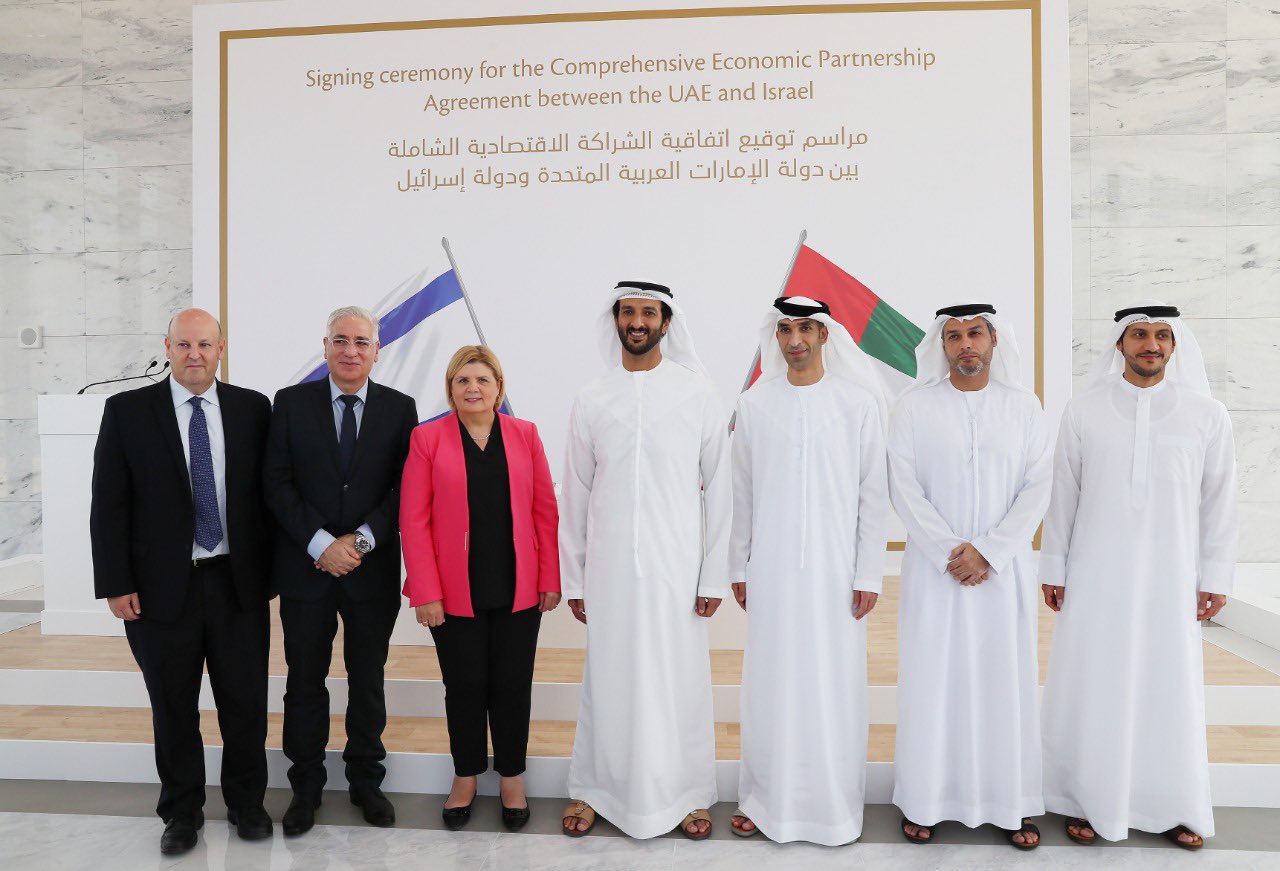
The UAE and Israel signed a Comprehensive Economic Partnership Agreement . Dr Thani bin Ahmed Al Zeyoudi, UAE Minister of State for Foreign Trade, tweeted on Tuesday that the agreement will push the value of non-oil bilateral trade beyond $10 billion within five years.

The agreement “builds on the strong foundations laid by the Abraham Accords”, the minister tweeted. “With the #UAEIsraelCEPA signed, sealed and delivered, we have written a new chapter in the history of the Middle East,” he said. “Our agreement will accelerate growth, create jobs and lead to a new era of peace, stability and prosperity across the region.”

The agreement comes after the UAE and Israel normalised relations in September 2020, which led to dozens of initial pacts in sectors ranging from aviation to technology.

Israel and the UAE began negotiations for a trade and economic co-operation deal in November 2021, a couple of months after the Emirates launched similar discussions with India, with talks concluding in April.

The expectation, based on one of the surveys conducted by the Israeli-UAE Business Council, is that more than 1,000 Israeli companies are going to be based in the UAE this year, Dr Al Zeyoudi said.

With 20 years of experience across print, TV, and digital journalism, Sudhashree is a seasoned media professional with a keen eye for news. A true news bug, she thrives on curating stories that capture the pulse of fashion, film, and all things trending. Deeply immersed in the fast-evolving media landscape, she swears by the power of social media to shape narratives and spark conversations.

Continue Reading
Advertisement

Announcements

Emirates Unveils Electric Privacy Screens in Premium Economy

Published

on

Spread the love

Emirates is taking its award-winning Premium Economy cabin up another notch, introducing what it says is the world’s first electrically powered Premium Economy seat with a full-height adjustable privacy screen.

The new seats will debut aboard the airline’s newly delivered Airbus A350 aircraft, giving passengers greater control over their personal space while adding a host of comfort and technology upgrades to the cabin.

Configured in a spacious 2-3-2 layout with just 28 seats, Emirates’ latest Premium Economy cabin features seats measuring 20 inches wide, with up to 39 inches of pitch. The seats recline into a cradle position designed to provide a more comfortable sleeping experience without encroaching on the passenger behind.

At the centre of the new design is the electrically operated privacy divider. Passengers can raise or lower the screen at the touch of a button and lock it at their preferred height, creating a more secluded space for working, dining or relaxing.

The new seats are also Emirates’ first fully electrically powered Premium Economy seats. Through an integrated Passenger Control Unit, travellers can adjust their seating position and select dedicated settings including lounge and meal modes.

More comfort, from head to foot

Emirates has also introduced Safran Seats’ U-Dream headrest, a leather design featuring adjustable wings that can be positioned to provide additional support for the head and neck.

A manually deployable leather footrest adds another layer of comfort, particularly on long-haul flights, helping passengers relax and reduce leg fatigue.

For passengers travelling with multiple devices, the cabin introduces wireless charging in Premium Economy for the first time on Emirates. Each seat also comes with USB-C charging and a redesigned tray table featuring an integrated phone holder, allowing travellers to use their smartphone as a second screen while eating or watching content.

A sharper entertainment experience

Passengers on the new A350s will have access to Emirates’ ice inflight entertainment system through a 13.3-inch 4K HDR touchscreen, offering high-resolution images and faster, more responsive navigation.

The aircraft itself will also provide an enhanced view of the journey. New A350 aircraft will feature additional exterior camera perspectives, adding left- and right-facing views to the existing forward and downward cameras.

Premium dining remains part of the experience

The upgraded seat comes alongside the dining service that has helped distinguish Emirates Premium Economy from many competing products.

Passengers are served regionally inspired menus prepared by Emirates chefs, with meals presented on Royal Doulton fine china, accompanied by linen napkins and stainless-steel Robert Welch cutlery.

The beverage programme includes Chandon Vintage Brut 2021, an Australian sparkling wine available exclusively to Emirates Premium Economy customers worldwide.

From September, passengers on selected routes can also expect wines including Chablis Premier Cru Jean-Marc Brocard 2024 from Burgundy and La Parde de Haut-Bailly 2014 from Bordeaux.

October will bring another first, with Wiston Estate Brut NV becoming Emirates’ first English sparkling wine. It will be served exclusively in Premium Economy on UK routes.

Emirates says it has invested more than US$1 billion in its wine portfolio since 2006, underscoring the importance the airline places on its onboard beverage programme.

Sustainable amenity kits add another touch

On long-haul flights, Premium Economy passengers will also receive reusable amenity kits created in partnership with United for Wildlife.

The collectible bags are designed around endangered wildlife and four natural habitats, with bio-based materials used throughout. For the first time in Emirates Premium Economy, the kits will include plant-based skincare products from Aveda, alongside travel essentials such as socks, eyeshades, earplugs and dental kits.

Emirates continues to expand Premium Economy

Emirates launched Premium Economy in 2022 as a product positioned between its Economy and Business Class cabins. Since then, the airline has steadily expanded the cabin across its fleet, with the product now available across markets served by its Airbus A350 aircraft.

The latest generation is clearly designed to push Premium Economy closer to the Business Class experience, combining wider seats, generous legroom, greater privacy, upgraded dining and high-end entertainment.

The product has already collected several industry accolades, including Best Premium Economy Class at the Business Traveller Middle East Awards in 2024 and 2025, as well as Airline with the Best Premium Economy Class at the 2025 ULTRAs Awards.

With the introduction of its electrically powered seat and full-height privacy screen, Emirates is once again betting that the future of Premium Economy will be defined not simply by extra legroom, but by greater personal space, technology and control.

For passengers, that could mean a Premium Economy seat that feels less like an upgraded economy chair — and increasingly like a private space of its own.

Continue Reading

News

Crackdown on Illegal paying guests: Dubai’s new shared housing law takes effect with fines up to Dh1m

Published

on

Spread the love

Dubai’s new legislation governing shared accommodation officially came into effect on August 26. Applying across the entire emirate, including free zones and special development zones, the comprehensive framework is designed to eliminate dangerous, overcrowded, and unauthorised partition rentals while establishing formal licensing standards for communal living.

What qualifies as shared housing?

Under the law, shared housing is defined as any residential property where individuals or families occupy private designated living spaces while sharing common facilities like kitchens, bathrooms, and dining areas.

Who is permitted to rent out shared units?

The new framework strictly bans unauthorised subletting by tenants. A primary tenant can no longer rent out individual bedrooms, partitioned spaces, or bed spaces directly to roommates or third parties.

Only the following entities can legally offer shared housing:

  • Registered Property Owners: Leasing spaces directly to occupants under formal contracts. 
  • Licensed Management Companies: Authorised operators contracted by the owner to run and lease the property. 
  • Licensed Operators Subletting Master Leases: Approved commercial entities leasing an entire property from the owner to sublet authorised units to tenants. 

Penalties for violations

Authorities have introduced strict financial and operational consequences for non-compliance:

  • Initial Fines: Dh500 up to Dh500,000, depending on the severity of the violation.
  • Repeat Violations: Fines double for repeat offences committed within one year, capped at Dh1,000,000.
  • Operational Sanctions: Authorities may suspend operations for up to 6 months, revoke commercial licenses, cancel permits, disconnect utilities, seize equipment, or order the direct evacuation of non-compliant properties.

Grace period & tenant protection

  • Compliance deadline: Existing shared housing operators and property owners have until August 26, 2027, to obtain permits and bring their properties into full compliance. 
  • Protection from sudden eviction: If an operator’s permit is suspended or cancelled, authorities can grant occupants an interim stay period to secure alternative accommodation rather than facing immediate eviction. 

Approved property/resident categories

The regulation permits shared accommodation across six distinct property types:

  • Residential apartments
  • Detached/standalone houses
  • Residential complexes
  • Mixed-use buildings
  • Attached / adjoining houses
  • Multi-storey buildings

Permitted occupant groups include families, single men, single women, university students, government personnel, and private sector corporate employees. Corporate and student housing provided directly by employers or educational institutions does not require individual tenancy contracts.

Continue Reading

Business

Bank fraud in UAE: New measures in place to protect residents from money scams

Published

on

Spread the love

From convincing phone calls by fake bank officials to bogus shopping websites designed to steal credit card details, financial scams are growing increasingly sophisticated across the UAE.

In response, federal authorities, the Central Bank, and police forces are rolling out a multi-layered defence strategy designed to intercept fraud before it reaches consumers.

The approach focuses on three core pillars: making scams harder to execute, speeding up real-time detection, and providing direct avenues for victims to report crimes and recover losses.

Central Bank mandates

The Central Bank of the UAE (CBUAE) has significantly increased compliance requirements for all licensed financial institutions, shifting the burden of fraud detection directly onto banks.

  • Phasing Out SMS OTPs: The CBUAE is pushing institutions away from single-factor, SMS-based one-time passwords, favouring biometric verification and dynamic app-based authentications to combat SIM-swap and phishing attacks.
  • Anti-Fraud Hub: The regulator established the Central Bank Anti-Fraud Operations Centre (CAFOC) to enable real-time threat monitoring, rapid incident response, and instant data sharing across UAE financial entities.
  • Strict monitoring: Banks are legally required to maintain continuous monitoring systems to flag suspicious transactions, combat social engineering, and immediately report unauthorised activities.

Safety for online shoppers

With cybercriminals increasingly targeting online shoppers, the UAE’s consumer protection framework now treats digital storefronts with the same legal scrutiny as physical retail.

  • E-Commerce Regulations: Federal Decree-Law No. 14 of 2023 sets clear technical standards, legal liabilities, and data protection rules for digital trading platforms operating in the country.
  • Tougher Anti-Counterfeit Penalties: Federal Decree-Law No. 42 of 2023 on Combating Commercial Fraud equips authorities to crack down on fraudulent sellers, corrupt goods, and misleading online commercial practices.
  • Statutory Rights: Federal Law No. 15 of 2020 guarantees data privacy, fair dispute settlement, and monetary compensation for consumers facing fraudulent domestic transactions.

Where residents can report scams 

Authorities urge residents never to absorb financial losses quietly. Several official channels provide dispute resolution and criminal reporting:

  • Ministry of Economy and Tourism: Handles formal consumer disputes, misleading sales complaints, and requests for product recalls, facilitating amicable settlements or judicial referrals.
  • Dubai Police e-Crime Platform: Provides a dedicated portal for reporting cybercrime, identity theft, and electronic banking fraud.
  • Local Consumer Protection Departments: Each emirate maintains direct channels to investigate deceptive trade practices and unauthorised merchant activity.

Scam warning: Dubai Police recently warned against fraudulent Consumer Protection websites that lure users into downloading remote-access apps, allowing criminals to hijack devices and drain linked bank accounts.

Do’s and Don’ts to keep your accounts safe

While state-level defences continue to tighten, personal vigilance remains essential:

  1. Don’t share details: No bank or government entity will ever ask for your password, PIN, or multi-factor authentication code via phone, email, or WhatsApp.
  2. Don’t give remote access: Never download third-party software (such as AnyDesk or TeamViewer) at the request of an unsolicited caller.
  3. Do URL check: Check domain spellings carefully and ensure e-commerce platforms use verified, secure payment gateways before entering card numbers.
  4. Don’t wait, act immediately: If you suspect compromised details or notice an unauthorised charge, freeze your card via your banking app and notify your bank’s fraud unit without delay.

Continue Reading

Popular

© Copyright 2025 HEADLINE. All rights reserved

https://headline.ae/