
Entertainment
5 most important Moscow monasteries


[ad_1]
Even in the very center of a huge metropolis, there are working monasteries. Most of them are historical and architectural monuments, so they have to put up with the crowds of tourists who besiege them every day.
Before the 1917 Bolshevik Revolution, there were about 30 active monasteries on the territory of modern Moscow (five independent monasteries were only inside the Kremlin itself!). Soviet authorities closed and even demolished many of them, but many managed to survive and, today, about 15 of them are still in operation – monks and nuns live in them and conduct regular worship services.
Many of Moscow’s monasteries trace their history back to Medieval times – some as far back as the 14th century. Many of them have the status of ‘stavropegic’, that is, they are directly subordinate to the Patriarch.
Below, we’ve highlighted just a few of the most beautiful of Moscow’s monasteries.
1. Novodevichy Convent
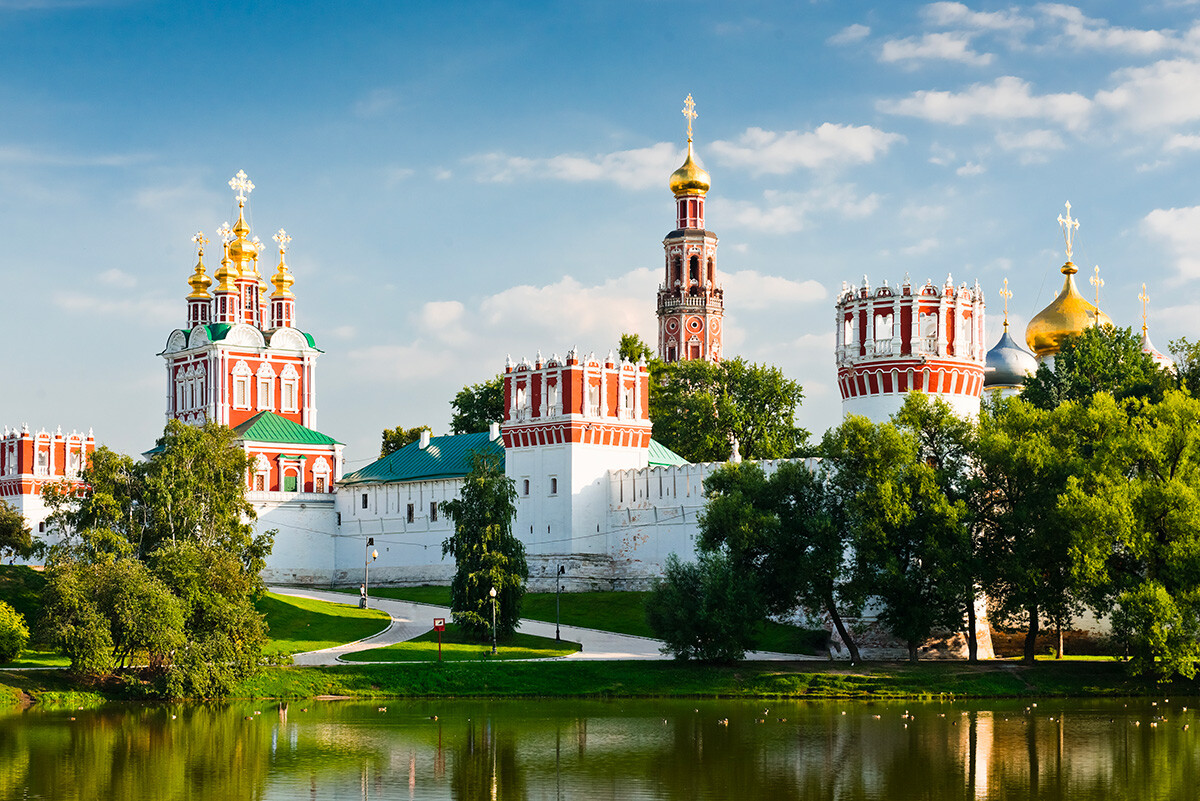
Valeriya/Getty Images
This is the most famous and, perhaps, the most beautiful cloister in Moscow. In tsarist times, it was, one might say, elite. Widows and female relatives of many tsars were exiled to it as nuns and huge sums of money were donated to the convent.
Back in the late 19th century, this nunnery stood alone in the middle of the so-called ‘Devichye Pole’ (‘Maiden Field’) on the western outskirts of Moscow and, now, it is almost the center of the city. The convent was founded in May 1524 by Grand Duke Vasily III (father of Ivan the Terrible) in honor of the fact that the Russian army had recaptured the city of Smolensk from the Lithuanian principality. The convent is dedicated to the Smolensk icon of the Mother of God. Most likely it was built by the Italian architects who were also in charge of constructing the Moscow Kremlin. Usually, nunneries were not surrounded by large fortress walls like their male counterparts, but the Novodevichy Convent had to fortify itself to resist the raids of enemies.
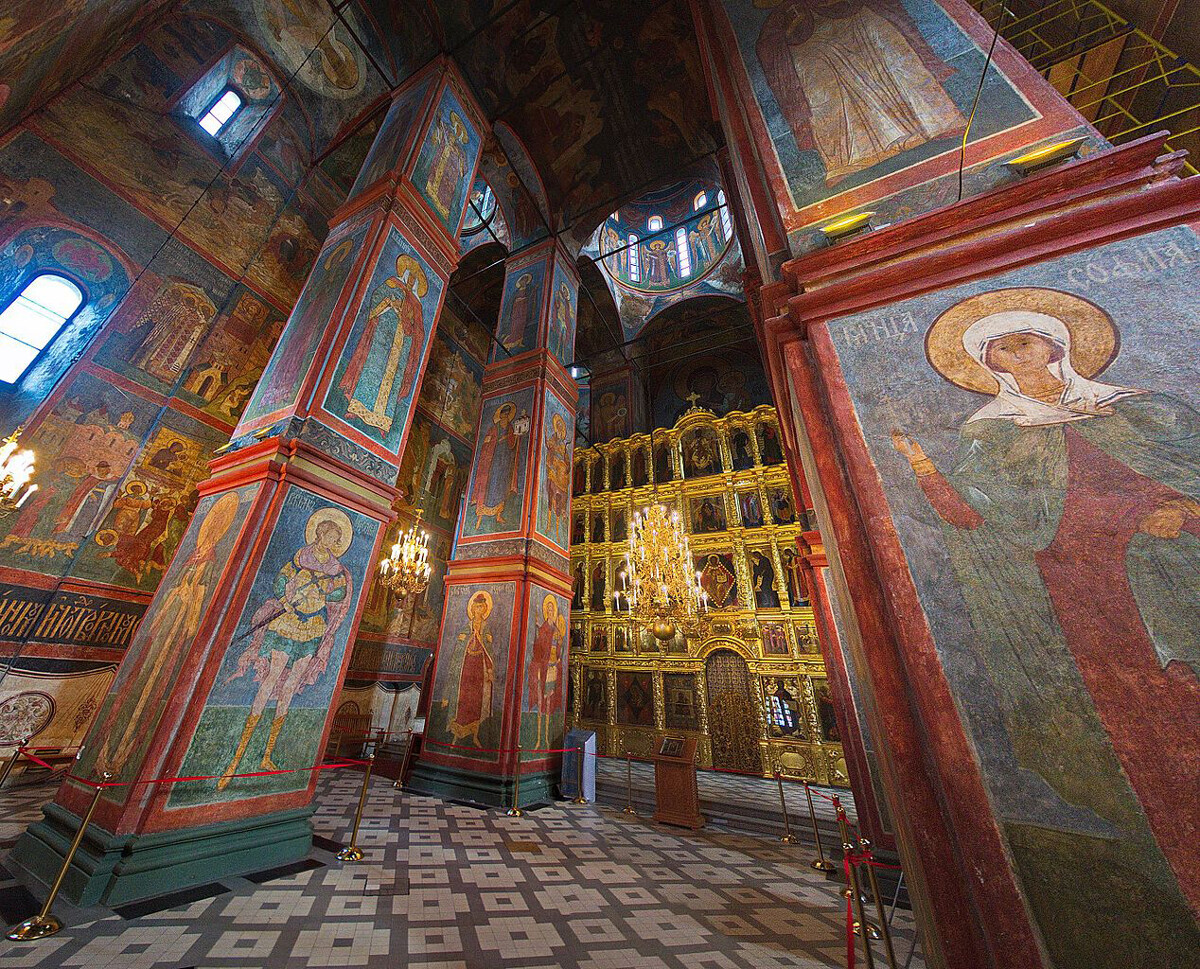
Inside the Smolensky Cathedral
Uwe Brodrecht (CC BY-SA 2.0)
It has several churches from different centuries, including fine examples of the Baroque style. In addition, the main Smolensk Cathedral even has preserved frescoes from the 16th century!
Read more about the convent and see more photos in our article.
2. Donskoy Monastery
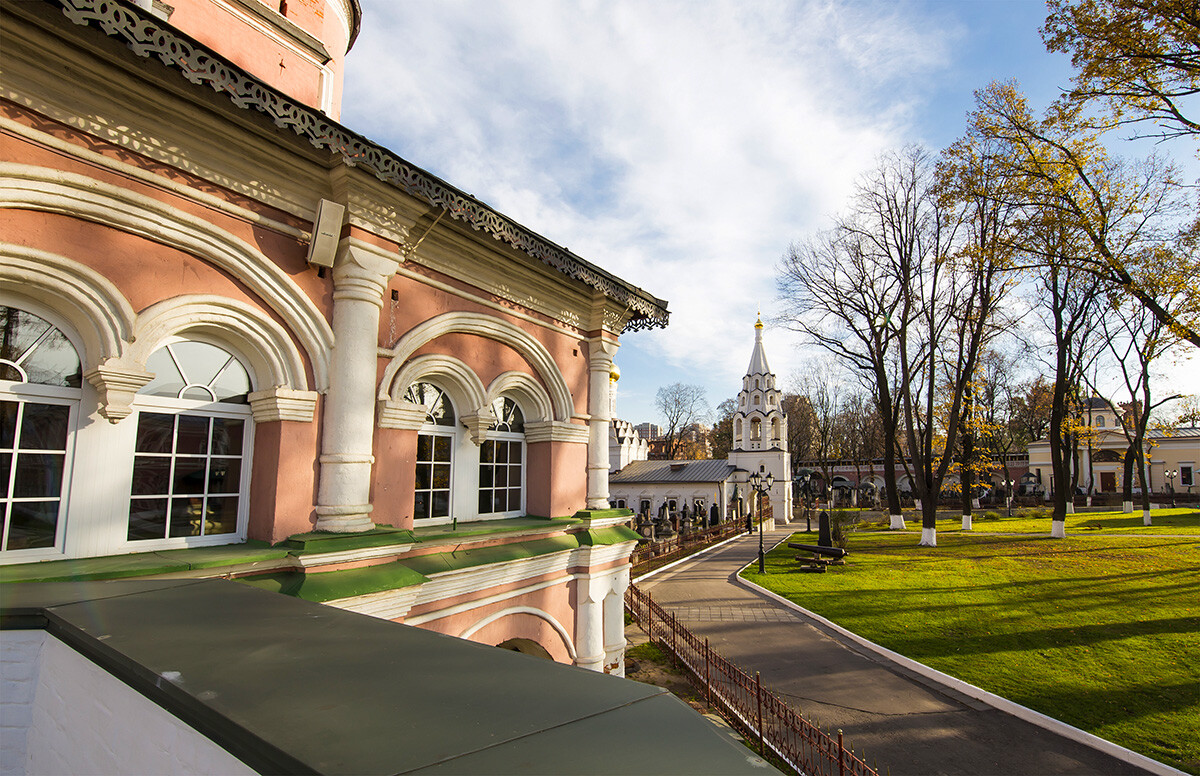
Donskoy Monastery
vladj55/Getty Images
The monastery was founded in the late 16th century in honor of repelling the attacks of the Crimean Tatars. There used to be a tsarist military camp on this place on the southern outskirts of Moscow (now, again, it is almost in the very center), while the monastery itself, with its powerful walls, was conceived as another defensive structure. The monastery was dedicated to the ‘Our Lady of the Don’ icon. According to legend, St. Sergius of Radonezh blessed Prince Dmitry Donskoy with this sacred image before the Battle of Kulikovo against the Tatar-Mongols.
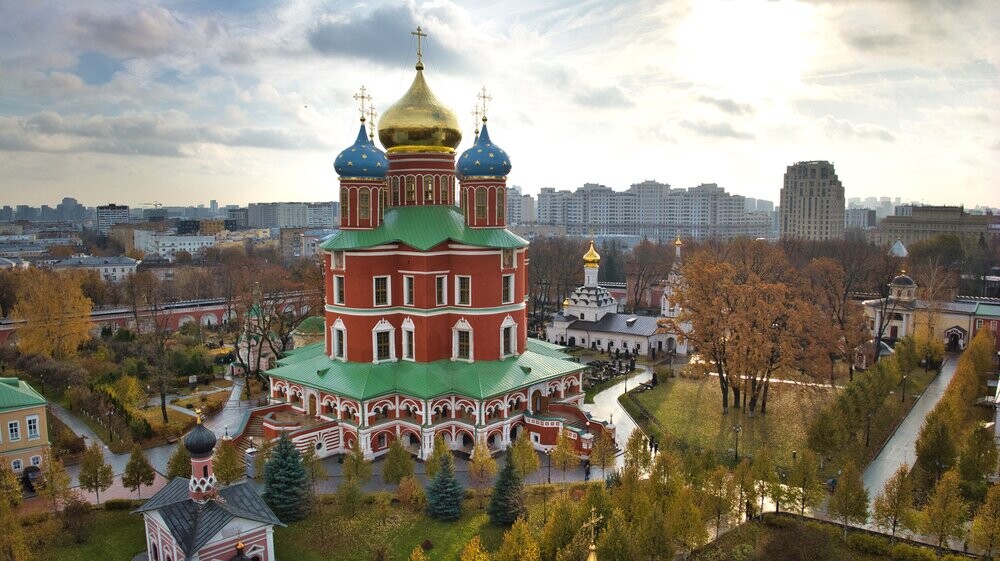
The Big and the Small cathedrals
mos.ru
There are as many as two temples dedicated to this icon in the monastery. It is the ‘Small Cathedral’ of the late 16th century, with rows of kokoshnik-shaped decorations and a ‘shatior’ (tent-shaped) bell tower, and the ‘Big Cathedral’ of the late 17th century – now the architectural center of the monastery. One of the main features of the latter is an eight-stage carved iconostasis created by the best icon painters and wood carvers.
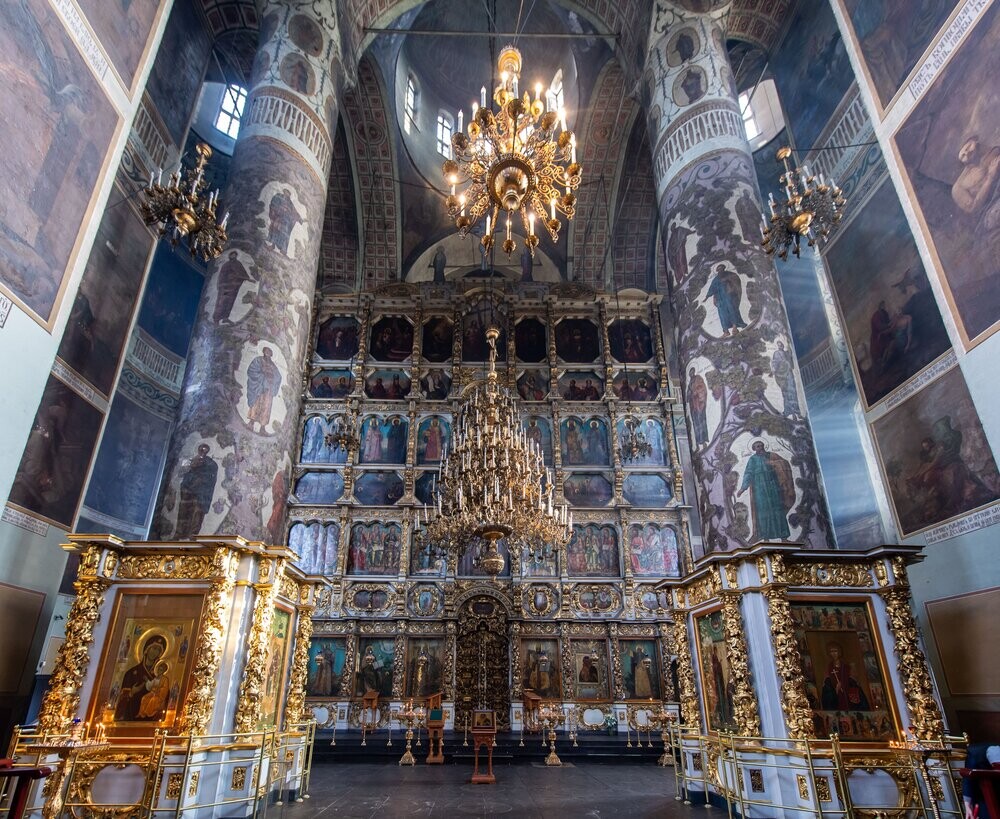
Iconostasis of the ‘Big Cathedral’
mos.ru
The monastery was plundered and destroyed several times during the ‘Time of Troubles’ at the turn of the 16th-17th centuries, as well as in 1812, when Napoleon invaded Moscow. In Soviet times, the monastery was “lucky”, as it was transferred under the management of the Museum of Architecture. So, sculptural fragments of many temples and monasteries, which the Soviet authorities demolished, for example, from the Cathedral of Christ the Savior, were transferred there.
3. Intercession (Pokrovsky) Monastery
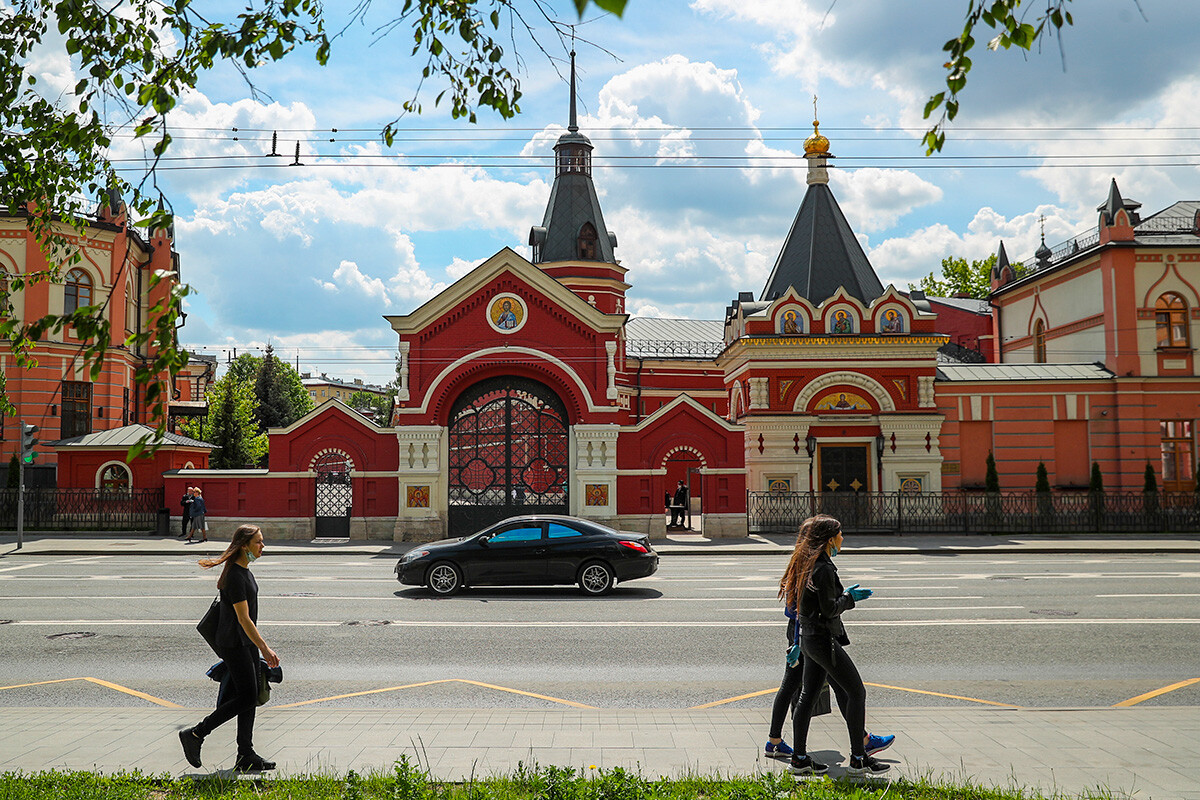
View from Taganskaya street
Mikhail Tereshchenko/TASS
The waiting line to this monastery never seems to end. And all because believers come to worship the relics of St. Matrona of Moscow. In front of her, they pray for health and ask for help in difficult life circumstances. This revered saint died in 1952 and helped the suffering during World War II. In 1997, she was canonized. There are so many people wishing to touch the relics that a hotel has even appeared at the monastery.

A waiting line inside the Porkovsky Monastery
Sergei Karpukhin/TASS
The monastery was originally built as a male cloister. Tsar Mikhail, the first of the Romanov dynasty, founded it in 1635 in memory of his father Patriarch Filaret, who died on the ‘Feast of the Intercession of the Virgin Mary’. Part of the monastery, which was closed during the Soviet era, was allocated to the Tagansky Park and the wall was partially demolished. The monastery returned to the church in the 1990s, but as a female convent.
4. Marfo-Mariinsky Convent
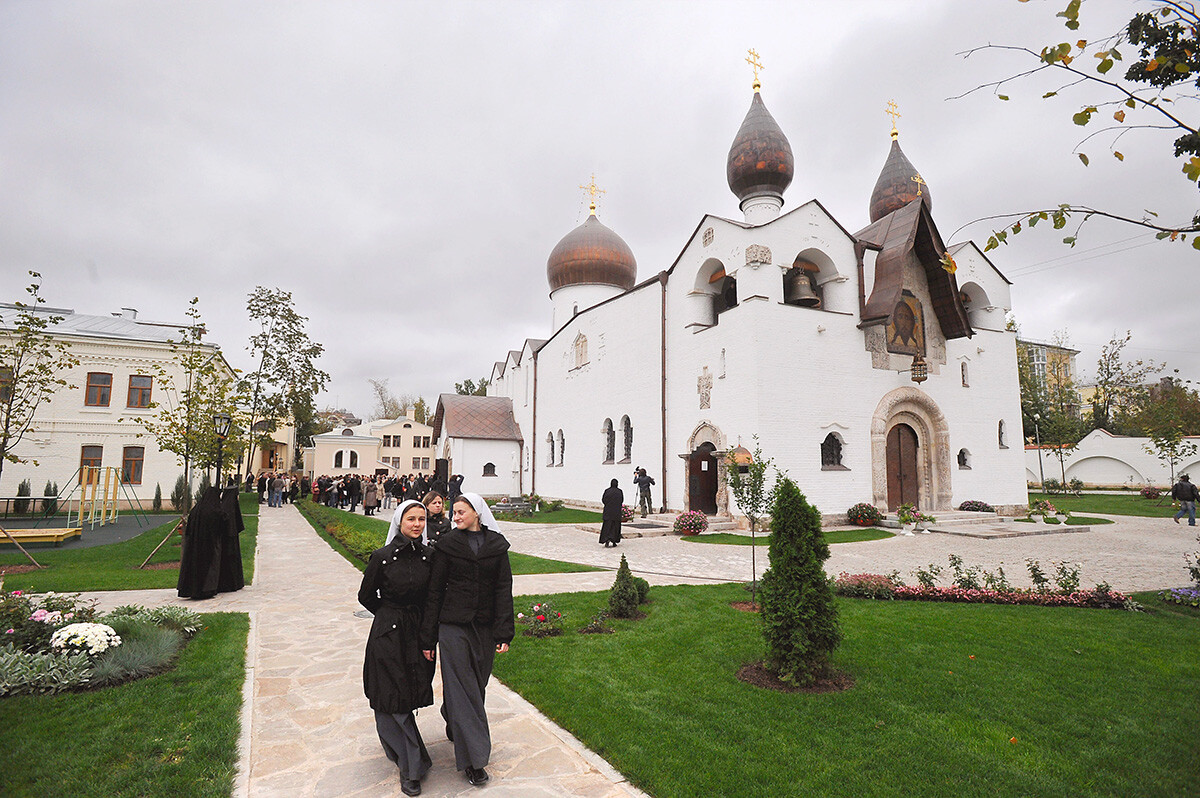
The main cathedral of the Marfo-Mariinsky Covent
Grigory Sysoyev/TASS
The convent dedicated to Saints Martha and Mary is one of the youngest in Moscow. It was founded in 1909 by Grand Duchess Elizabeth Feodorovna, sister of the last Empress Alexandra. Elizabeth turned to monastic life and the establishment of the monastery after the death of her husband, Moscow Governor General and Grand Duke Sergei Alexandrovich, who was murdered by terrorists (Read more about Elizabeth Feodorovna and how a statue of her appeared in Westminster Abbey here).
The main convent’s cathedral was built by famous and fashionable architect Alexey Shchusev in Art Nouveau style. And it was painted by renowned artist Mikhail Nesterov.
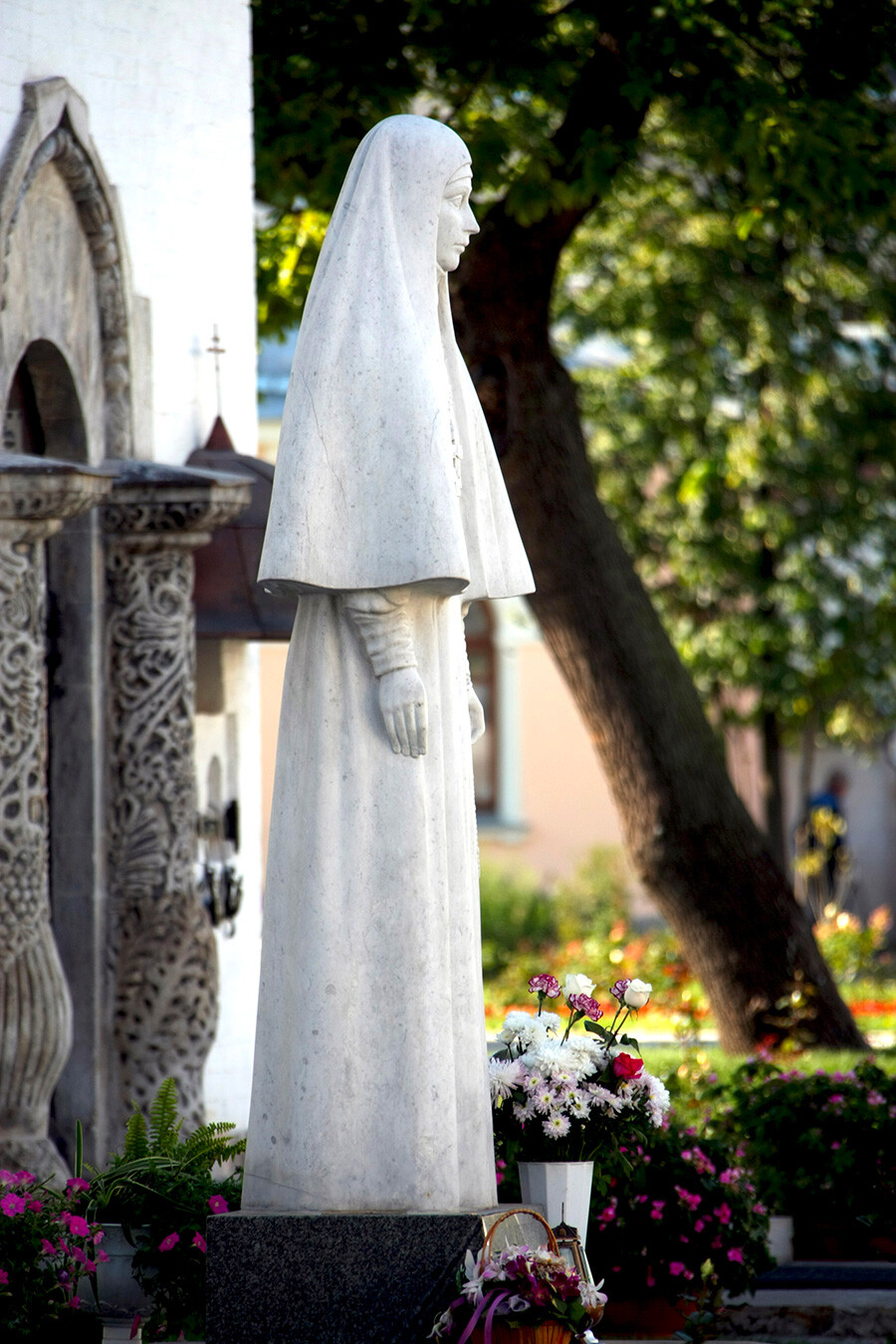
A monument to Elizabeth
Ilya Pitalev/Sputnik
Elizabeth was actively engaged in charity; the nuns from her convent took care of homeless children, taught in religious schools and as nurses in hospitals. During World War I, a hospital for the wounded was organized right in the monastery.
In Soviet times, the abbess of royal blood was exiled with other Romanovs and then killed by being thrown into a mine and left to rot, while many of her nuns were persecuted. The convent was closed and, for a long time, it worked as an outpatient clinic, then as a movie theater and house of culture.
Today, the convent is back in operation and, following the old tradition, houses an orphanage for girls and participates in a variety of charitable initiatives.
5. Andronikov Monastery
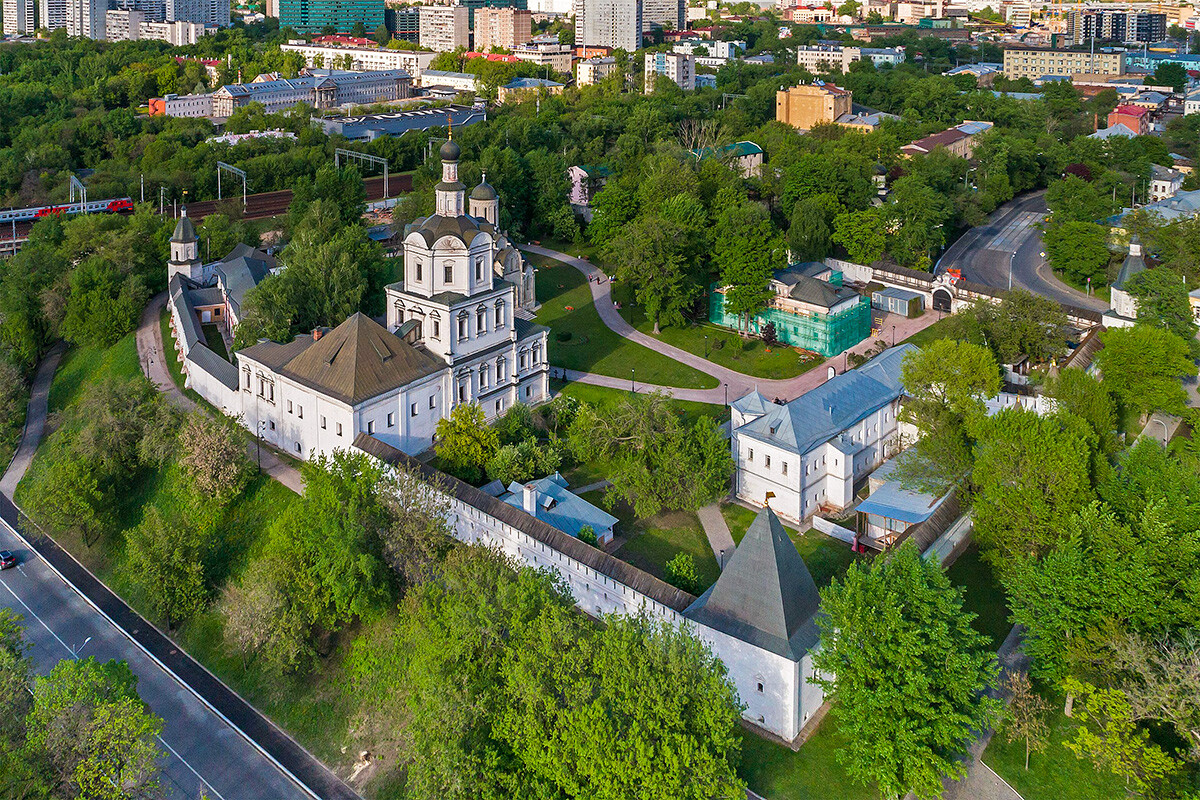
Andronikov Monastery as seen from above
A.Savin, Wikipedia
The only inactive monastery on our list. In Soviet times, it was closed and turned into a museum. But, we simply cannot not mention it, because it is there that the oldest surviving Moscow temple, the Cathedral of the Savior (constructed in the 1420s), is located. In this temple, fragments of paintings of the great icon-painter Andrei Rublev survived. Rublev himself was a monk there and his grave was also situated in it, but now lost. The first abbot of the monastery, Andronicus (whose name the monastery now bears), was a close follower of Sergius of Radonezh.
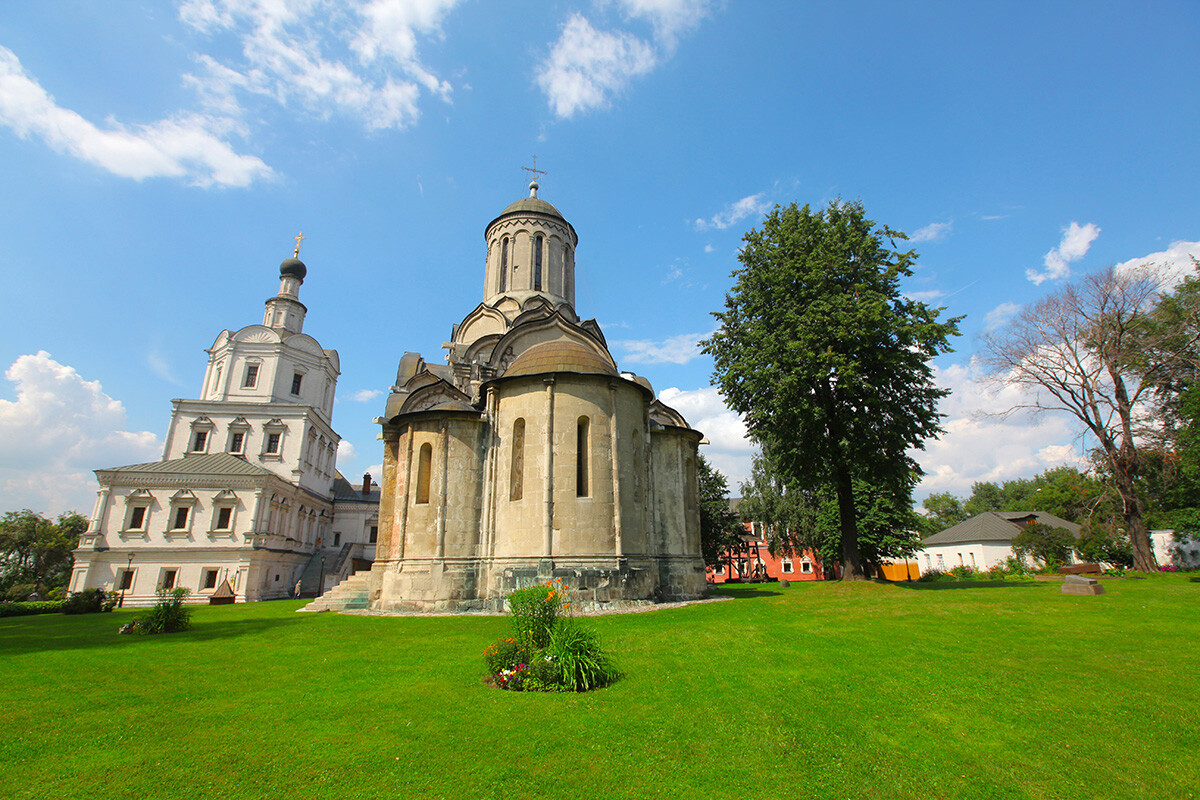
Spassky cathedral (Cathedral of the Savior) in the center
Ilya Pitalev/Sputnik
In Soviet times, the monastery was closed and its territory was occupied by communal apartments of workers of the nearby ‘Serp and Molot’ factory. However, the name of Rublev was so significant for history that, in 1961, on the 600th anniversary of the icon painter, the Andronikov Monastery was restored.
A monument to the icon painter was erected and the Andrei Rublev Museum of Old Russian Culture and Art was opened, where unique ancient icons and other religious art objects from closed churches from all over the USSR were brought. Read more here.
Dear readers,
Our website and social media accounts are under threat of being restricted or banned, due to the current circumstances. So, to keep up with our latest content, simply do the following:
- Subscribe to our Telegram channel
- Subscribe to our weekly email newsletter
- Enable push notifications on our website
- Install a VPN service on your computer and/or phone to have access to our website, even if it is blocked in your country
[ad_2]


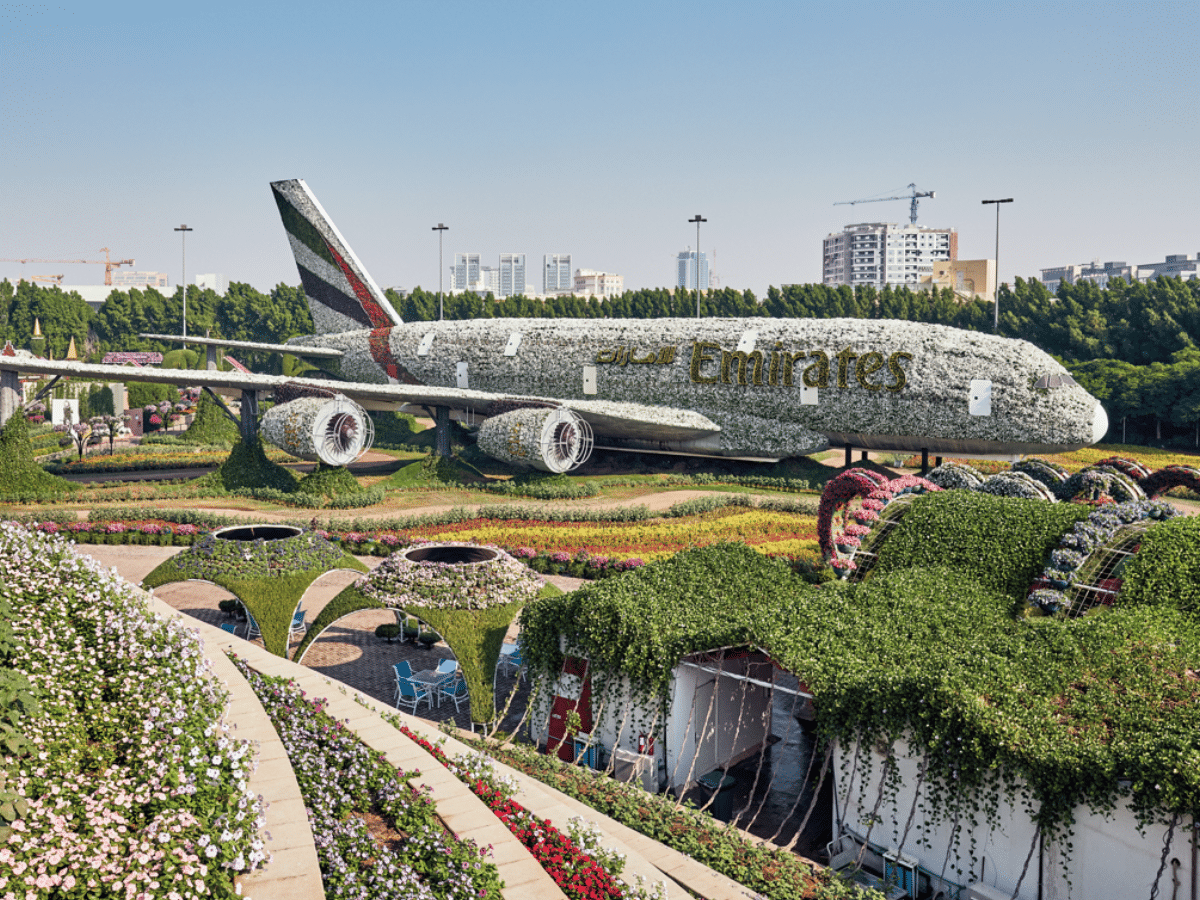

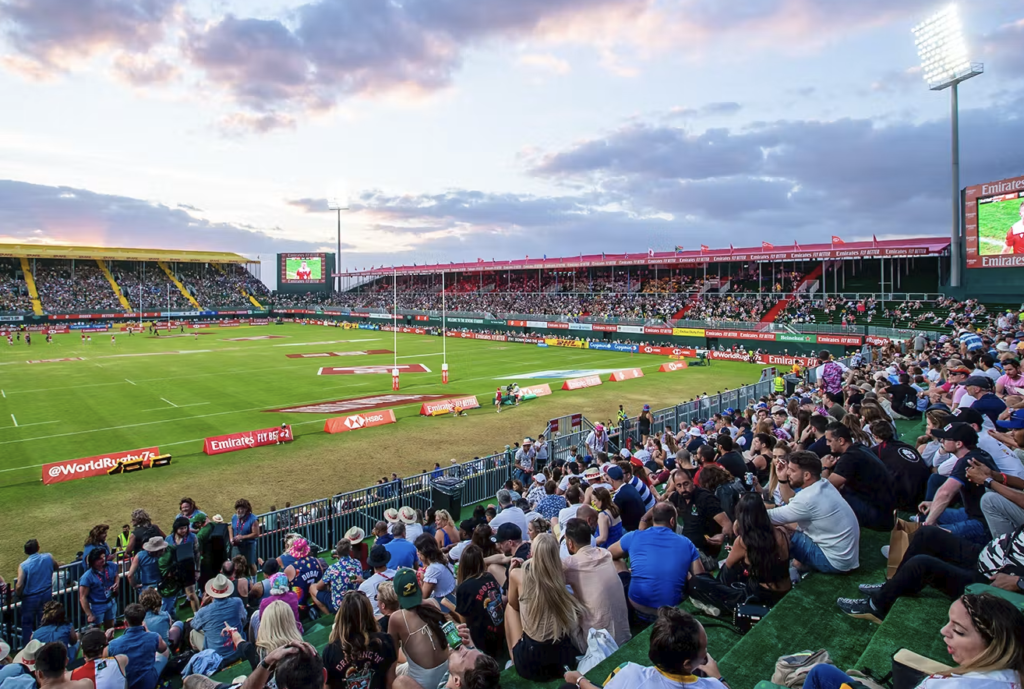
Emirates Dubai 7s is returning to The Sevens Stadium from November 27 to 29, with tickets now on sale for the three-day sports and entertainment festival.
The 2026 edition will bring together international rugby, amateur sports, live music and family entertainment, with organisers promising a bigger programme than previous years.
The festival attracted more than 88,000 visitors in 2025 and will again take place during the final weekend of the Dubai Fitness Challenge.
Ticket prices
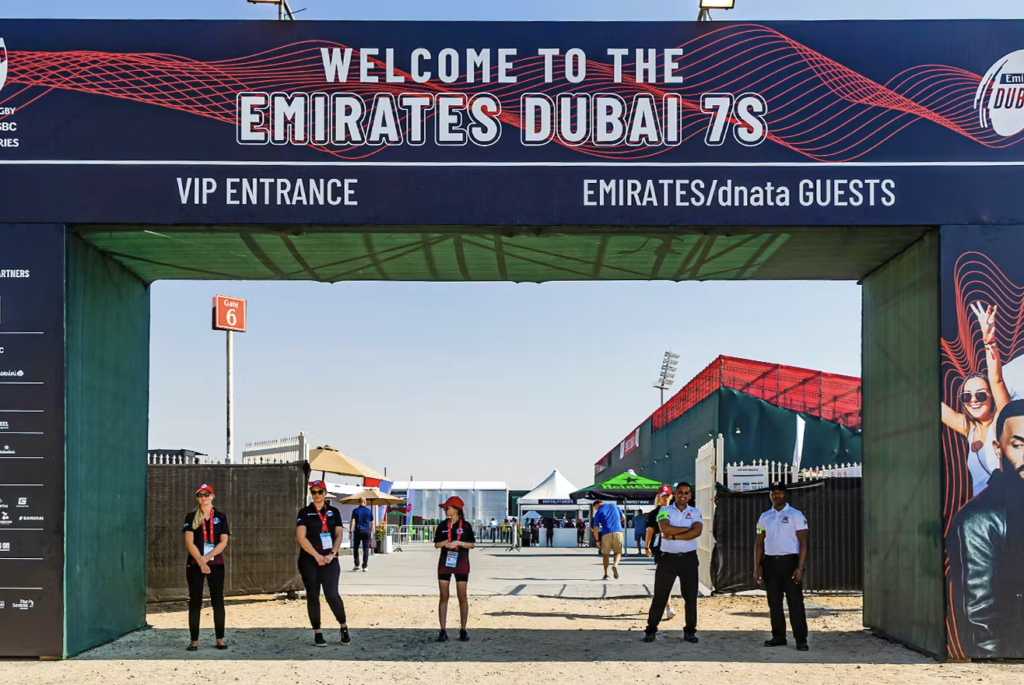
Ticket prices for General Admission and Hospitality have stayed the same for a third consecutive year.
Three-day General Admission tickets cost Dh595 per person, while the three-day Family Pass is Dh1,136 for two adults and two children.
Other ticket options
- Group pass: Dh446 per person for four or more adults
- Saturday or Sunday: Dh455
- Friday: Dh75
- Under 15s: Free
- People of Determination + carer: Dh375
Tickets can be purchased through the Emirates Dubai 7s website and app.
Bigger family attractions

Family entertainment will get a major boost this year as the UAE celebrates the Year of the Family.
The festival will feature its biggest-ever Kids’ Zone, including the UAE’s largest inflatable kids’ zone, along with a Ferris wheel and zipline. More attractions are expected to be announced ahead of the event.
Six sports and top rugby action
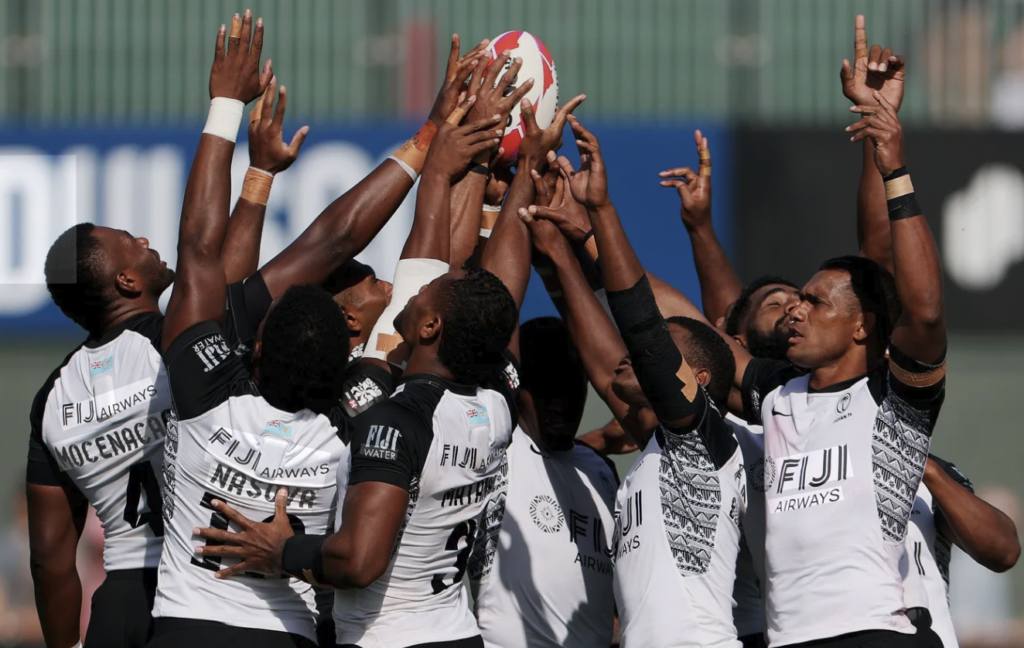
Alongside elite rugby, visitors can watch or take part in competitions across six sports — rugby, netball, cricket, WODON3 fitness, Rebound padel and Gaelic Football.
Gaelic Football will join the festival for the first time in 2026.
The Sevens Stadium will also host the opening round of the HSBC SVNS Series 2027, bringing the world’s leading rugby sevens players to Dubai.
The WODON3 Elite final will take place on Pitch 1 between HSBC SVNS matches, with competitors potentially performing in front of crowds of up to 20,000.
Music all weekend
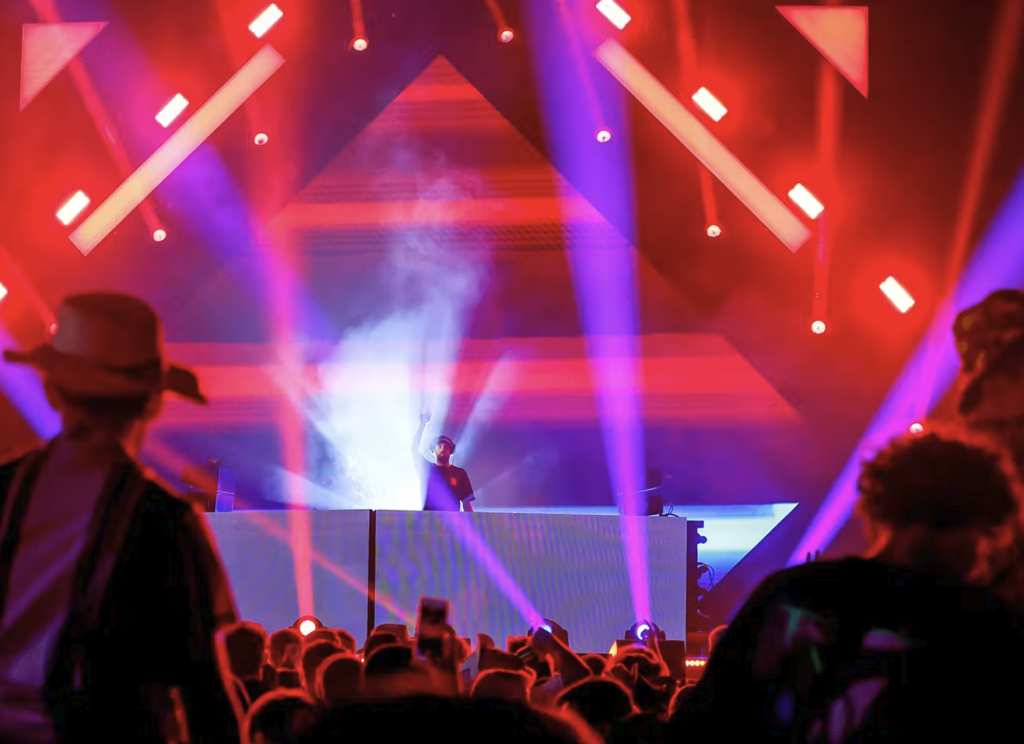
Live entertainment will run throughout the festival, with local and international artists performing across three days.
Last year’s line-up included Tinie Tempah, Sean Paul and Fisher, while the 2026 headline acts will be announced later.
For a premium experience, The Sunroom returns with all-inclusive food and drinks, shaded seating, prime sporting views and dedicated access. Packages start from Dh1,925 per person.
With sport, music and family attractions packed into one weekend, Emirates Dubai 7s is gearing up for another big Dubai event.
Entertainment
Dubai launches ‘Dubai+’ family streaming platform to boost digital media and creative economy



Dubai Miracle Garden returns as UAE’s cooler season begins

Sultan Al Qasimi Attends Opening of 12th Sharjah Calligraphy Biennial


