
Entertainment
A brief history of in-flight entertainment


[ad_1]
As the winter holidays draw near, many of us are already booking flights to see friends and family or vacation in warmer climates. Nowadays, air travel is synonymous with some form of in-flight entertainment, encompassing everything from the reception offered by the aircrew to the food choices and digital content.
These services all add value to flying for customers. Passengers are now so familiar with in-flight entertainment that to travel without it is unthinkable.
The in-flight entertainment and connectivity market grew to US$5.9 billion as of 2019, a testament to its economic impact on both the airlines and the GDP of countries with airline carriers.
In-flight entertainment is so ubiquitous that, even if all other airline services were offered, the airline ensures a refund is made to the passenger affected if television content cannot be accessed.
A brief history
In-flight entertainment has evolved significantly over the years. Before in-flight entertainment media was introduced, passengers entertained themselves by reading books or with food and drink services.
The original aim of bringing in-flight entertainment into cabins was to attract more customers, drawing inspiration from a variety of sources, including the theatrical and domestic media environments. It was not initially for the comfort and ease of travelling, as it is today.
Inflight entertainment began as an experiment in 1921, when 11 Aeromarine Airways passengers were shown the film Howdy Chicago! on a screen hung in the cabin during the flight. Four years later, another experiment was carried out in 1925 when 12 passengers on board an Imperial Airlines flight from London were shown the film The Lost World.
It wasn’t until the 1960s that in-flight movies became mainstream for airlines. Trans World Airlines became the first carrier to regularly offer feature films during flights, using a unique film system developed by David Flexer, then-president of Inflight Motion Pictures.
Starting in 1964, in-flight entertainment evolved to include various media types like 16-mm film, closed-circuit television, live television broadcasts and magnetic tape. In the 1970s, for example, airplanes might feature a large screen with a 16-mm projector in one part of the plane, while small screens hung overhead in another section.
Seatback screens were introduced in 1988 when Airvision installed 6.9-centimetre screens on the backs of airline seats for Northwest Airlines. They have since morphed into the larger screens we are familiar with today, which are found on nearly every airline.
In-flight entertainment today
Most airlines nowadays have personal televisions for every passenger on long-haul flights. On-demand streaming and internet access are also now the norm. Despite initial concerns about speed and cost, in-flight services are becoming faster and more affordable.
In-flight entertainment now includes movies, music, radio talk shows, TV talk shows, documentaries, magazines, stand-up comedy, culinary shows, sports shows and kids’ shows.
Read more: Inflight Wi-Fi highlights challenges of satellite broadband delivery on land and in the sky
However, the rise of personal devices, like tablets and smartphones, could spell the end for seatback screens. A number of U.S. airlines, including American Airlines, United Airlines and Alaska Air, have removed seatback screens from their domestic planes.
This decline is par for the course. To arrive at the complex system used by aircraft today, in-flight entertainment went through a number of different stages, as identified by aviation scholar D.A. Reed.
It started with an idea phase, which saw the conception of the idea, followed by an arms race phase where most airlines adopted some form of it. Currently, airlines are facing challenges in the final – and current – phase of evolution, and are dealing with failures linked to business concept flaws or low revenue.
Now that most air travellers carry electronic devices, fewer airlines are installing seatback screens. From an economic standpoint, this makes sense for airlines: removing seatback screens improves fuel costs and allows airlines to install slimmer seats, allowing for more passengers.
More than entertainment
At some point in the evolution of in-flight entertainment, it started to serve as more than just a form of entertainment or comfort. Now, it’s also a competitive tool for airline advertisements, and a form of cultural production.
In-flight entertainment has become an economic platform for investors, business people, manufacturers and entertainment providers, especially Hollywood. It also plays a key role in promoting the national culture of destination countries.
However, the evolution of in-flight entertainment hasn’t been without its challenges. As a form of cultural production, it often reflects the interests of advertisers, governments and business entities. It also follows that certain ideas, products and cultures are sold to passengers via in-flight entertainment.
The lucrative practice of capturing and selling passengers’ attention to advertisers was not limited to screens, either. In-flight magazines have always been packed with advertisements, and by the late 1980s, these advertisements had spread to napkins and the audio channels.
Despite its shortcomings and precarious future, in-flight entertainment still offers passengers a sense of comfort, alleviating concerns about being suspended over 30,000 feet above sea level. If you end up flying during the holidays, remember your comfort is partly thanks to this innovation.
Author: Olusola Adewumi John – Visiting Researcher, Centre for Socially Engaged Theatre, University of Regina 
[ad_2]


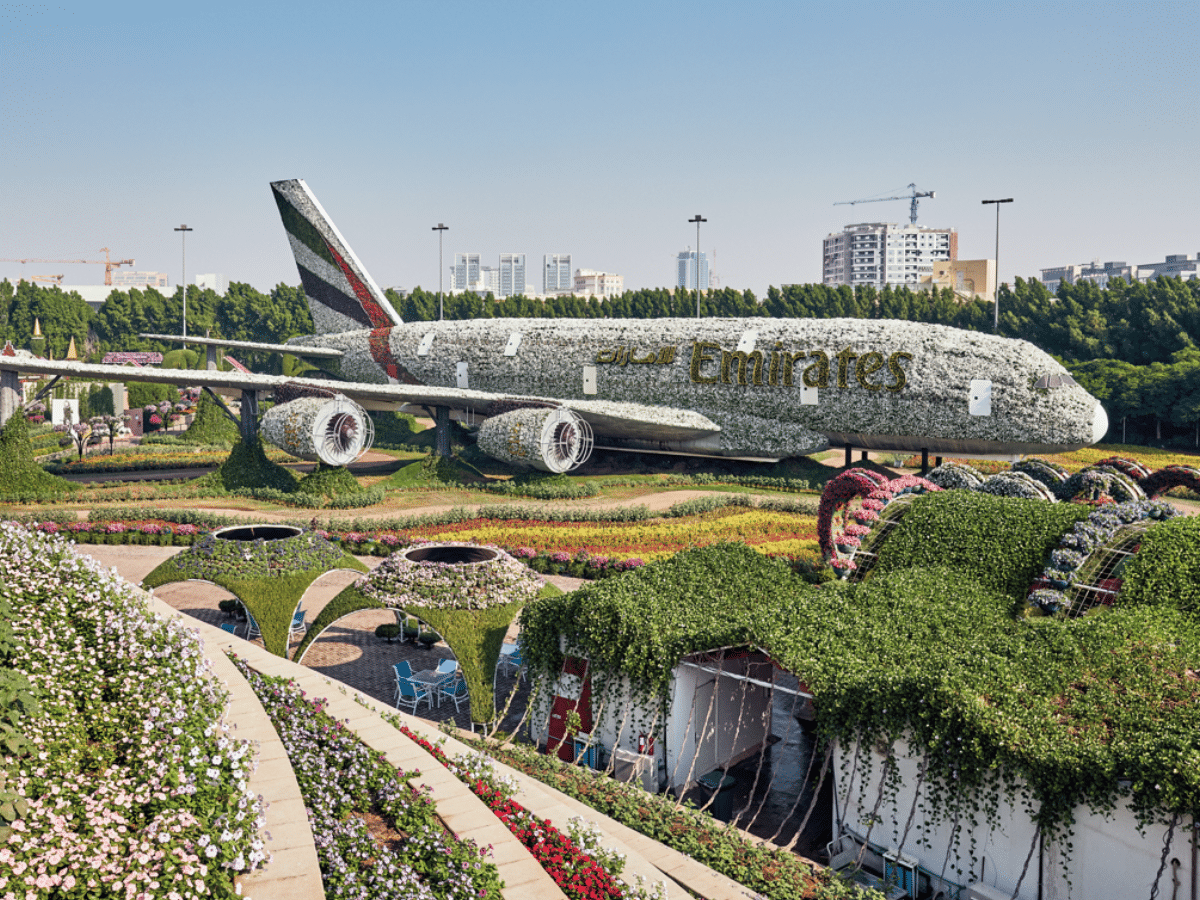

Emirates Dubai 7s is returning to The Sevens Stadium from November 27 to 29, with tickets now on sale for the three-day sports and entertainment festival.
The 2026 edition will bring together international rugby, amateur sports, live music and family entertainment, with organisers promising a bigger programme than previous years.
The festival attracted more than 88,000 visitors in 2025 and will again take place during the final weekend of the Dubai Fitness Challenge.
Ticket prices
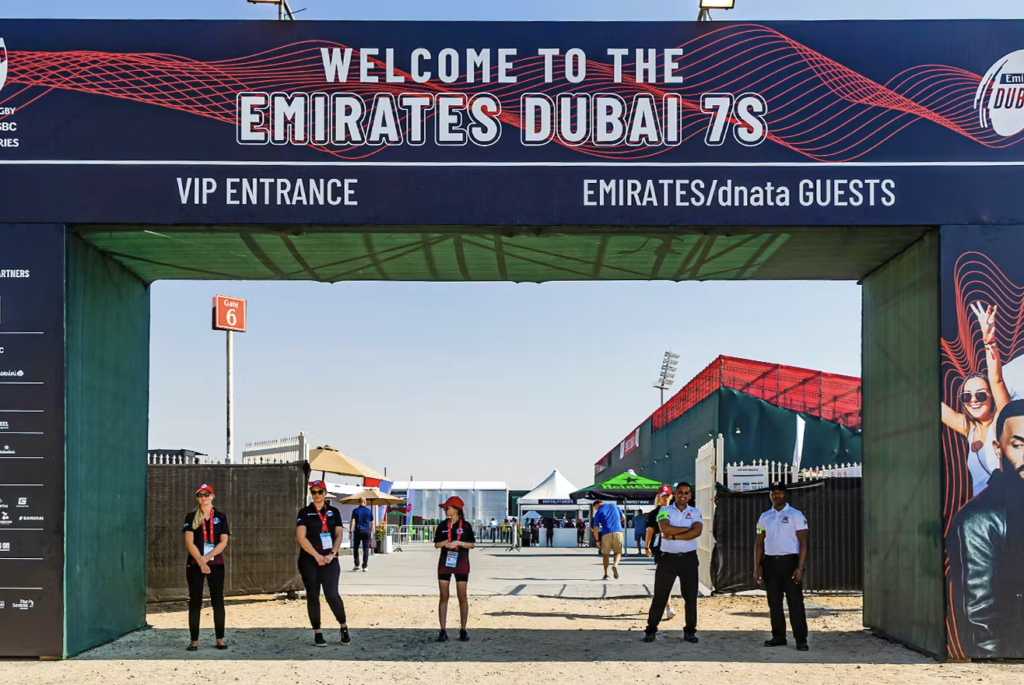
Ticket prices for General Admission and Hospitality have stayed the same for a third consecutive year.
Three-day General Admission tickets cost Dh595 per person, while the three-day Family Pass is Dh1,136 for two adults and two children.
Other ticket options
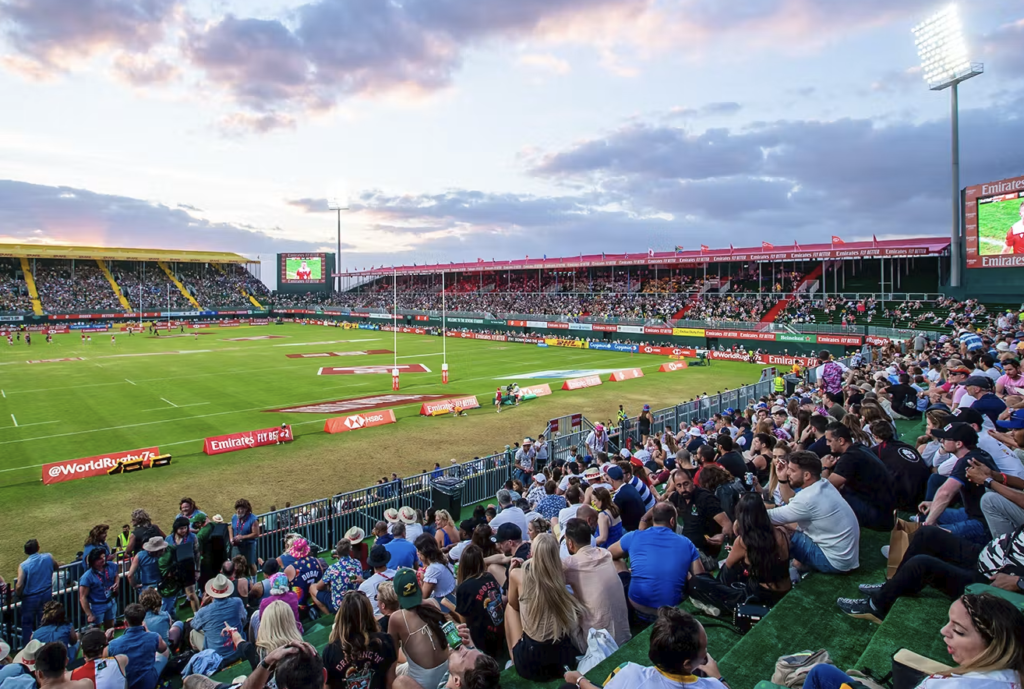
- Group pass: Dh446 per person for four or more adults
- Saturday or Sunday: Dh455
- Friday: Dh75
- Under 15s: Free
- People of Determination + carer: Dh375
Tickets can be purchased through the Emirates Dubai 7s website and app.
Bigger family attractions

Family entertainment will get a major boost this year as the UAE celebrates the Year of the Family.
The festival will feature its biggest-ever Kids’ Zone, including the UAE’s largest inflatable kids’ zone, along with a Ferris wheel and zipline. More attractions are expected to be announced ahead of the event.
Six sports and top rugby action

Alongside elite rugby, visitors can watch or take part in competitions across six sports — rugby, netball, cricket, WODON3 fitness, Rebound padel and Gaelic Football.
Gaelic Football will join the festival for the first time in 2026.
The Sevens Stadium will also host the opening round of the HSBC SVNS Series 2027, bringing the world’s leading rugby sevens players to Dubai.
The WODON3 Elite final will take place on Pitch 1 between HSBC SVNS matches, with competitors potentially performing in front of crowds of up to 20,000.
Music all weekend

Live entertainment will run throughout the festival, with local and international artists performing across three days.
Last year’s line-up included Tinie Tempah, Sean Paul and Fisher, while the 2026 headline acts will be announced later.
For a premium experience, The Sunroom returns with all-inclusive food and drinks, shaded seating, prime sporting views and dedicated access. Packages start from Dh1,925 per person.
With sport, music and family attractions packed into one weekend, Emirates Dubai 7s is gearing up for another big Dubai event.
Entertainment
Dubai launches ‘Dubai+’ family streaming platform to boost digital media and creative economy



Dubai Miracle Garden returns as UAE’s cooler season begins

Sultan Al Qasimi Attends Opening of 12th Sharjah Calligraphy Biennial


