
Entertainment
a golden year for film that rewrote the rules of cinema

[ad_1]
Martin Scorsese’s Mean Streets burst on to cinema screens 50 years ago, a cacophony of soundtrack, film styles, religion and violence which firmly established the young filmmaker as cut from a different kind of cloth.
Like every screen pioneer before him – from early film illusionist Georges Meliès to the 1950s’ French New Wave filmmakers – Scorsese was testing out a range of cinematic possibilities.
In the opening minutes, a studio set with blue lighting (denoting night time) perfectly creates the atmosphere for the modest apartment of small-time gangster Charlie (Harvey Keitel).
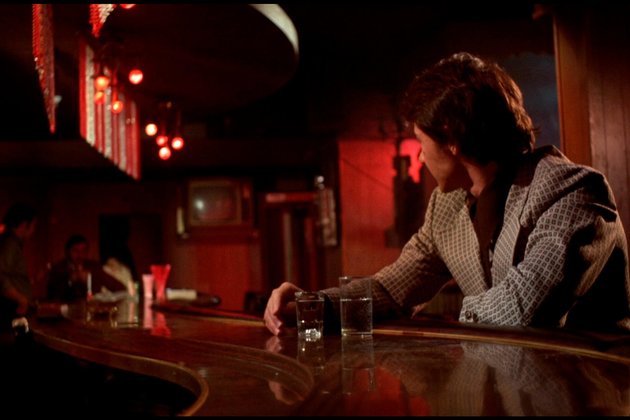
There’s intimate Super8 old home movie footage, but also scenes of the real San Gennaro festival in New York’s Little Italy. Is this a documentary? A seedy bar bathed in red (which would become Scorsese’s signature colour) tells a different story.
We’re certainly not in Kansas any more: gone are the stable camera, smooth editing and well-defined characters of classical “old” Hollywood. We’re offered an arm as we join Dorothy on the yellow brick road in The Wizard of Oz (1939), but there’s no map or trusty chaperone in Charlie’s ‘hood.
New Hollywood
Mean Streets perfectly captures the audaciousness of New Hollywood, a collective of (mostly) young, (mostly) male, (mostly) bearded filmmakers on a mission to rewrite cinema’s rulebook from the late 1960s.
Scorsese and contemporaries (including Robert Altman, George Lucas and Steven Spielberg) were as much in love with classical Hollywood as they were reacting against it. They’d grown up with it, after all, and were fans of the old westerns of John Ford and comedies of Howard Hawks and Frank Capra.
But this new generation were film school graduates. Like the cinema-literate French New Wave before them, they saw themselves as film artists, with something new and personal to say.
Scorsese’s own vision, then, immortalised in this noisy 1973 film, was of America’s “mean streets” and the conflicted anti-heroes trying to navigate them. The Vietnam War was weighing on society’s conscience, and male psychological turmoil darkened cinema screens.
Fellow New Hollywood filmmaker Altman’s career was defined by anti-heroes, and, more broadly, defying Hollywood conventions. His 1971 McCabe and Mrs Miller had reconfigured the classical western. Now 1973’s The Long Goodbye took the conventions of the noir film and turned them, and the genre’s wisecracking hero (epitomised in Bogart’s famous private eye), on its head.
Philip Marlowe (Elliot Gould) is a rubbish private eye: he’s duped by the femme fatale, and there’s a sense that something’s always beyond his grasp (this we get from Altman’s trademark drifting camerawork). A strong sense of moral code was part of the classical Hollywood noirs. No spoilers, but there’s little sense in this 1973 re-envisioning that Marlowe is morally justified in the actions he carries out.
With these criminal settings and alienated anti-heroes, it’s easy to sum up 1973 as a year of hard-hitting, often violent, box office fare. Highest-grossing film The Exorcist, directed by another New Hollywood alumnus, William Friedkin, spun onto screens and sparked controversy – both for positioning a priest as a child abuser, and for (supposedly) inducing “fainting, vomiting and heart attacks in cinemas“.
It’s not the urban mean streets but the wild open Badlands of South Dakota where Terrence Malick’s impulsive killing spree plays out in his celebrated film. And then there’s the shocking aftermath of a gang rape in Sydney Lumet’s Serpico, another neo-noir/generic twist of a film centring on the tale of a good cop (Al Pacino) resisting the bad cops.
With Vietnam lingering, the filmmakers of 1973 weren’t just reflecting more violence; they were interested in how cinema, as a very distinctive art form, could explore violence. A new film ratings system had given them greater freedom (more explicit content could be now shown, albeit to a particular age group). And a growing youth audience were hungry for these new – sometimes graphic, but often subversive – cinematic stories.
That’s entertainment
But 1973 was also the year of Woody Allen’s sci-fi romp, Sleeper, Peter Bogdanovich’s Oscar-winning father and daughter grifter comedy Paper Moon, Oscar-winning gambling caper The Sting and the latest in the Bond franchise, Live and Let Die with Roger Moore. New Hollywood filmmakers, and the industry more broadly, have always made works of “entertainment”. But audiences want choice: Barbenheimer, anyone?
The third highest-grossing film of 1973 was George Lucas’s American Graffiti. It’s a semi-autobiographical homage to the director’s own teenage years, and its wallpaper of rock’n’roll hits reminds us just how important music is in our lives growing up. But the burger joint date nights and high school dances aren’t forever: a blunt epilogue tells us one of the kids is killed in Vietnam.
Like Mean Streets, Lucas’s film is a bold cinematic experiment: musical lyrics are quirkily placed, and even the same songs can sound radically different: crisp and clear, like on a home stereo; hollow, in a vast school hall; muffled and scratchy, on the radio. (Critics have called this “worldising“). Altman was also experimenting freely in The Long Goodbye: listen to how the same title song replays in a variety of different genres and styles.
Fast-forward five decades, and contemporary filmmakers like David Fincher, Greta Gerwig and Christopher Nolan continue to rewrite cinema’s rulebook. Who says films need to be linear? Do characters really need to be good or bad? Why do camera and sound have to be tied into the action?
Beards might be optional 50 years on, but that mission to test the boundaries of the big screen is not.
Looking for something good? Cut through the noise with a carefully curated selection of the latest releases, live events and exhibitions, straight to your inbox every fortnight, on Fridays. Sign up here.
Author: Lesley Harbidge – Head of Film & TV, University of South Wales 
[ad_2]


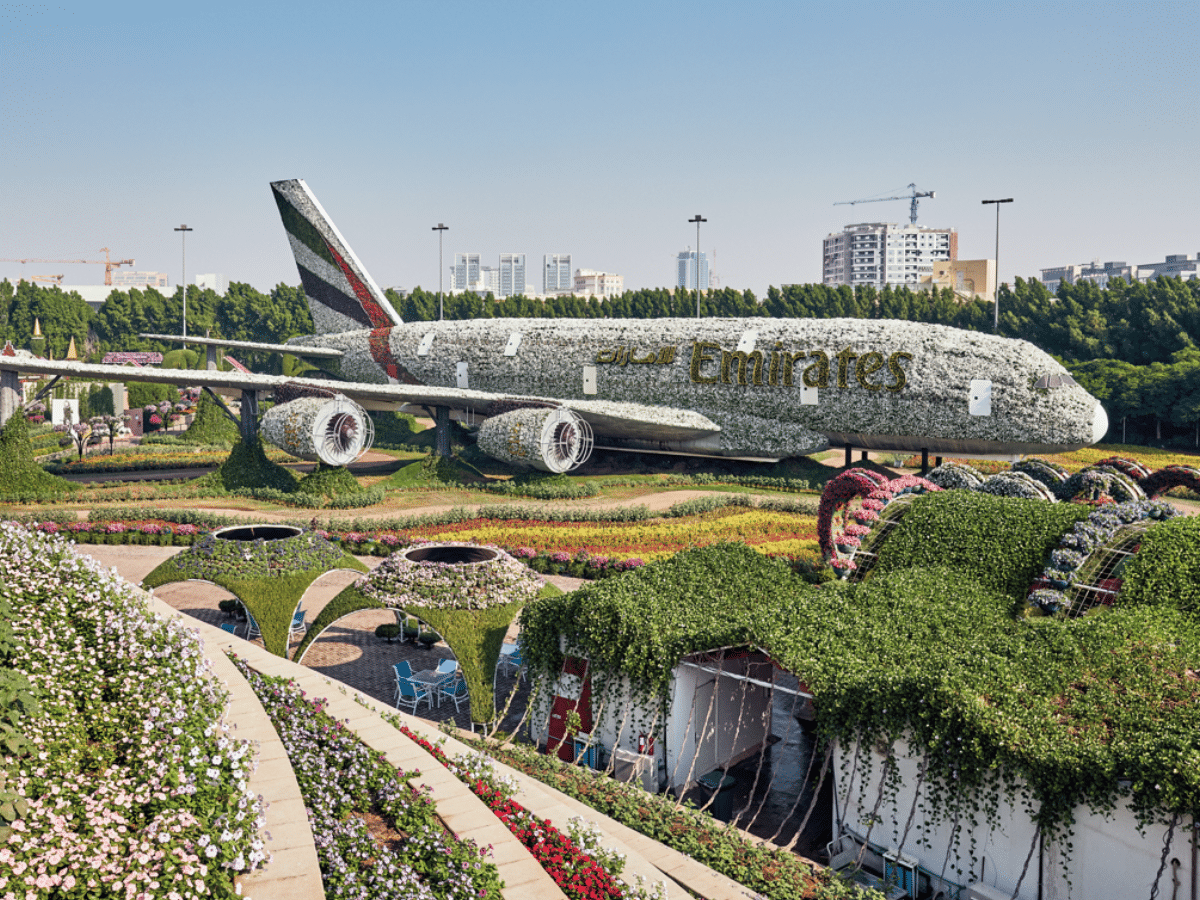

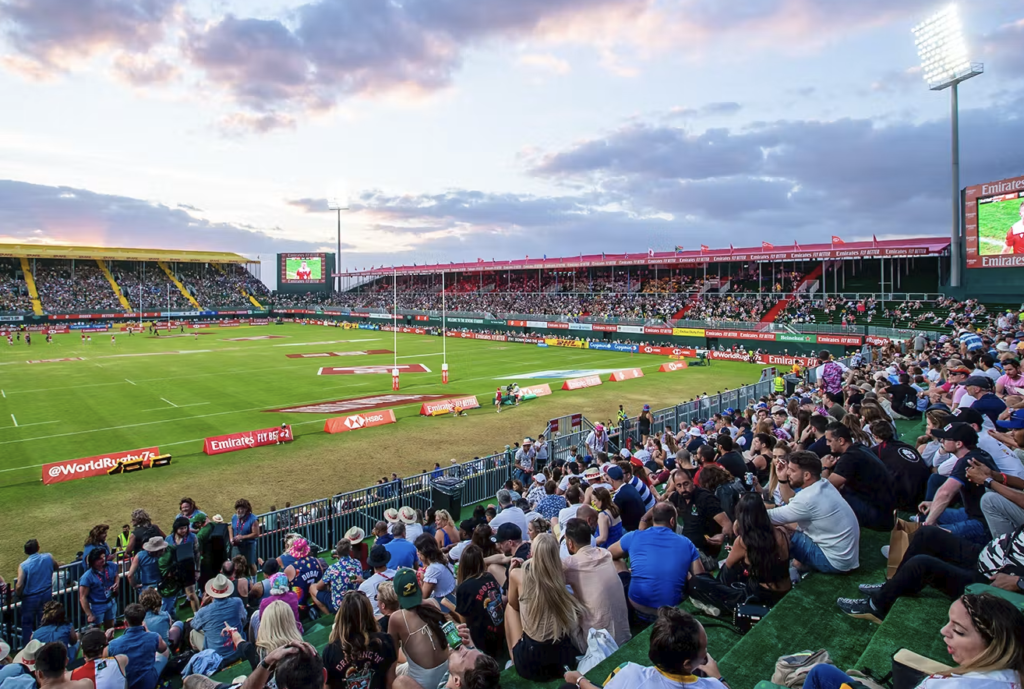
Emirates Dubai 7s is returning to The Sevens Stadium from November 27 to 29, with tickets now on sale for the three-day sports and entertainment festival.
The 2026 edition will bring together international rugby, amateur sports, live music and family entertainment, with organisers promising a bigger programme than previous years.
The festival attracted more than 88,000 visitors in 2025 and will again take place during the final weekend of the Dubai Fitness Challenge.
Ticket prices
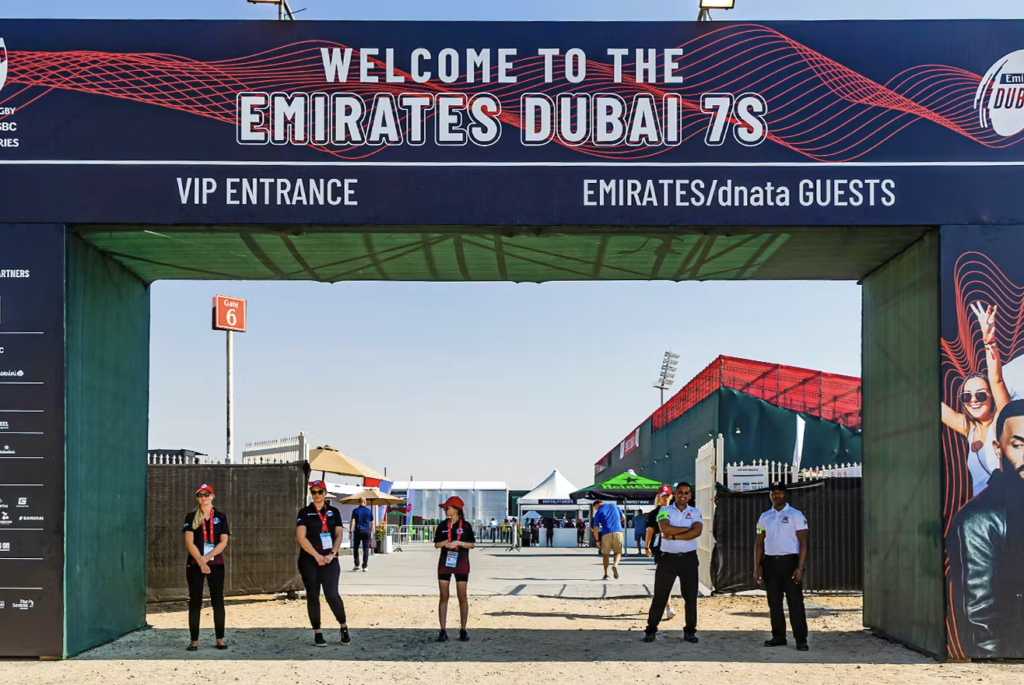
Ticket prices for General Admission and Hospitality have stayed the same for a third consecutive year.
Three-day General Admission tickets cost Dh595 per person, while the three-day Family Pass is Dh1,136 for two adults and two children.
Other ticket options
- Group pass: Dh446 per person for four or more adults
- Saturday or Sunday: Dh455
- Friday: Dh75
- Under 15s: Free
- People of Determination + carer: Dh375
Tickets can be purchased through the Emirates Dubai 7s website and app.
Bigger family attractions

Family entertainment will get a major boost this year as the UAE celebrates the Year of the Family.
The festival will feature its biggest-ever Kids’ Zone, including the UAE’s largest inflatable kids’ zone, along with a Ferris wheel and zipline. More attractions are expected to be announced ahead of the event.
Six sports and top rugby action

Alongside elite rugby, visitors can watch or take part in competitions across six sports — rugby, netball, cricket, WODON3 fitness, Rebound padel and Gaelic Football.
Gaelic Football will join the festival for the first time in 2026.
The Sevens Stadium will also host the opening round of the HSBC SVNS Series 2027, bringing the world’s leading rugby sevens players to Dubai.
The WODON3 Elite final will take place on Pitch 1 between HSBC SVNS matches, with competitors potentially performing in front of crowds of up to 20,000.
Music all weekend

Live entertainment will run throughout the festival, with local and international artists performing across three days.
Last year’s line-up included Tinie Tempah, Sean Paul and Fisher, while the 2026 headline acts will be announced later.
For a premium experience, The Sunroom returns with all-inclusive food and drinks, shaded seating, prime sporting views and dedicated access. Packages start from Dh1,925 per person.
With sport, music and family attractions packed into one weekend, Emirates Dubai 7s is gearing up for another big Dubai event.
Entertainment
Dubai launches ‘Dubai+’ family streaming platform to boost digital media and creative economy



Dubai Miracle Garden returns as UAE’s cooler season begins

Sultan Al Qasimi Attends Opening of 12th Sharjah Calligraphy Biennial


