
Entertainment
‘American Fiction’ asks who gets to decide Blackness


[ad_1]
The much-anticipated American Fiction comes to theatres this month. As a long-time scholar of Percival Everett, the author whose 2001 novel, Erasure, was adapted for this critically praised film I am curious how the main themes of the book will be explored.
Directed by Cord Jefferson and starring Jeffrey Wright, the film presents an opportunity to talk about race, power and white supremacy within intellectual and cultural spaces, including higher education. Specifically, what version of Blackness is acceptable or saleable within American culture?
Thelonious “Monk” Ellison, the protagonist of American Fiction, is a novelist and an English professor. He struggles with the power that determines which versions of Blackness “count” and who makes these determinations.
In Erasure, Monk is constantly told that his work is not “Black enough.” But the determination of his Blackness is most often decided by people who are not themselves racialized within American society.
He finally gets so fed-up by the lack of sales for his literary novels, that he decides to write a satirical novel as a joke.
To his complete surprise, his ghetto novel, My Pafology, becomes a bestselling, award-winning novel. The film rights eventually sell for millions. But Monk’s ambivalence is unavoidable, since his work’s “success” is based entirely on terms set by other people.
And now, a novel satirizing how stereotypical versions of Blackness are often preferred by and sold to American culture has been made into American Fiction, a major motion picture, with wide cinematic release. It’s difficult not to feel ambivalent.
As a scholar who has written two books and given numerous interviews and talks on Black identity and race in Canada and as a longtime university English professor and now a university administrator, I am not Monk. But I get Monk. Like him, I have been frustrated and confused by the disjunctions between theory and practice so characteristic of life in the academy, especially in those moments when race – and particularly Blackness – is being discussed.
Read more: ‘American Fiction’ is a scathing satire that challenges pop-culture stereotypes of Blackness
Questions of power
In my own setting, as a Black man born in Canada, working and teaching at an American college, I too am asking which versions of diversity matter and who decides how and when it matters.
Everett’s novel highlights racist mechanisms within society, many of which appear so natural that we no longer think of them as mechanisms at all.
In her 2019 book, The Age of Surveillance Capitalism, American philosopher and scholar Shoshana Zuboff analyzes power through the role that giant tech companies play in our lives, often without our noticing them. Her book asks a question crucial to the understanding of how power works: “Who knows? Who decides? Who decides who decides?”
I find Zuboff’s questions useful in thinking about how power in relation to race works in colleges and universities, especially as institutions emphasize their commitment to “diversity,” on the one hand, while maintaining a glacial pace of change, on the other.
Diversity needs a wholesale renovation
Recently, someone at the Council of Colleges of Arts and Sciences (CCAS) conference said the most effective way to diversify university faculties is through hiring. But the idea of hiring for diversity has led to a backlash in some quarters.
Recent attacks against “diversity, equity and inclusion” policies and misunderstandings of critical race theory have pitted historical holders of power against those usually only spoken about. Controversies like these do not promise speedy progress where race is concerned.
I’m often equally perplexed by those who purport to be on my side.
Like Monk, the sources of much misunderstanding among my academic peers are people who say they want to help members of underrepresented groups on their campuses.
The expression “underrepresented groups” is another of these natural-looking expressions, now quite prominent in diversity policies. It actually obscures the important questions about the mechanisms and decisions that have resulted in these particular groups becoming underrepresented in universities in the first place.
The way that progress within a culture looks depends on who is doing the looking. At the CCAS conference, sociologist Nicole Stokes, interim vice-chancellor of student affairs at Pennsylvania State University (Abington), put all of this very well. She said a lot of the diversity work she sees looks a lot like surface remodelling, like putting new doors on old kitchen cabinets for example. But diversity work needs to be a wholesale renovation: when you take your kitchen down to the studs and start again.
In a way similar to who decides what is a saleable artifact from a minority culture, those deciding whether to remodel or to renovate are usually not those most directly affected by the history that has brought the need for such policies into being.
I’ve been a college professor for 28 years, and I’m currently an associate dean. If I feel this way, then how do you suppose junior colleagues of colour, or, more importantly, students of colour might feel?
For diversity policies to be taken seriously, we need to come clean on who has always decided their direction and value, and then work from there.
In the end, power dynamics don’t change in American Fiction, but at least Monk gets a bestseller and a movie deal.
Author: Anthony Stewart – Associate Dean (Arts and Humanities), Bucknell University 
[ad_2]


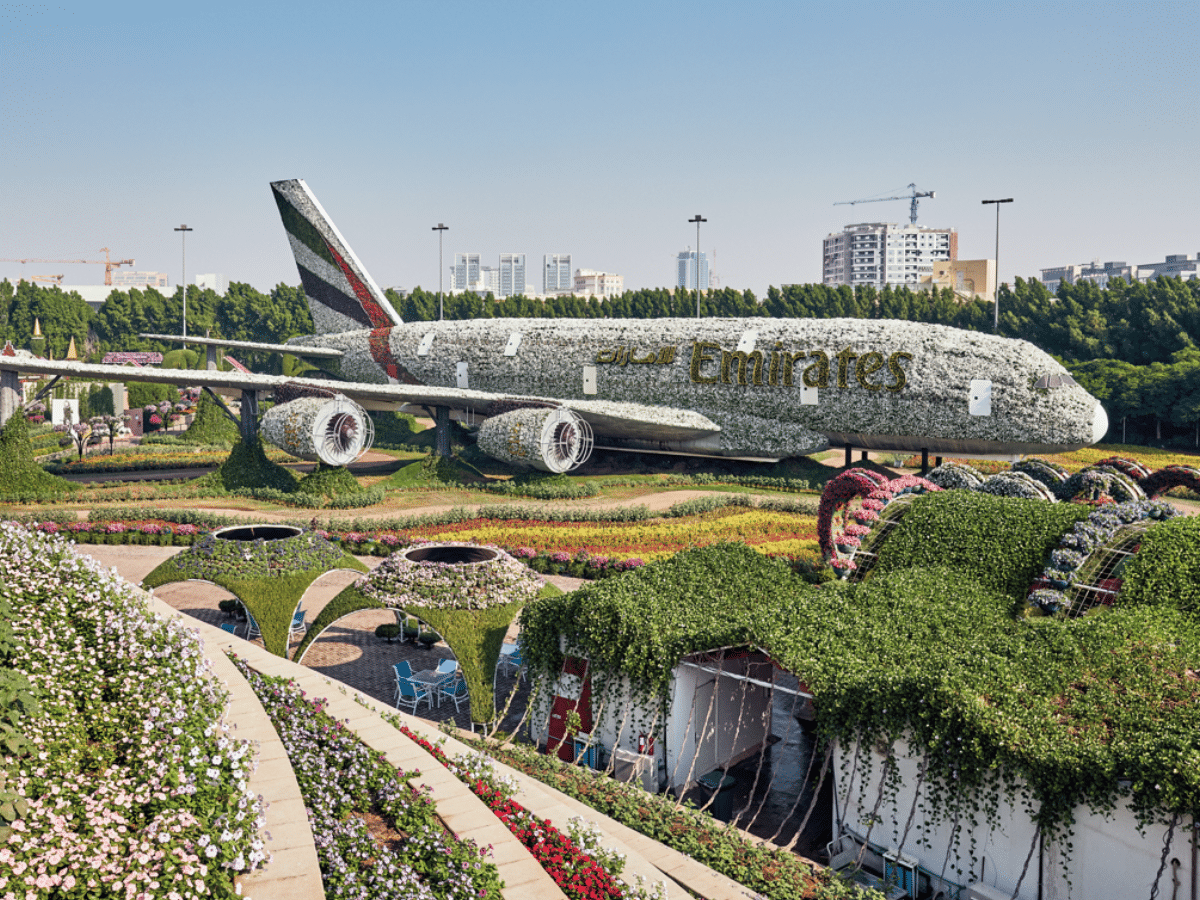

Emirates Dubai 7s is returning to The Sevens Stadium from November 27 to 29, with tickets now on sale for the three-day sports and entertainment festival.
The 2026 edition will bring together international rugby, amateur sports, live music and family entertainment, with organisers promising a bigger programme than previous years.
The festival attracted more than 88,000 visitors in 2025 and will again take place during the final weekend of the Dubai Fitness Challenge.
Ticket prices

Ticket prices for General Admission and Hospitality have stayed the same for a third consecutive year.
Three-day General Admission tickets cost Dh595 per person, while the three-day Family Pass is Dh1,136 for two adults and two children.
Other ticket options

- Group pass: Dh446 per person for four or more adults
- Saturday or Sunday: Dh455
- Friday: Dh75
- Under 15s: Free
- People of Determination + carer: Dh375
Tickets can be purchased through the Emirates Dubai 7s website and app.
Bigger family attractions

Family entertainment will get a major boost this year as the UAE celebrates the Year of the Family.
The festival will feature its biggest-ever Kids’ Zone, including the UAE’s largest inflatable kids’ zone, along with a Ferris wheel and zipline. More attractions are expected to be announced ahead of the event.
Six sports and top rugby action

Alongside elite rugby, visitors can watch or take part in competitions across six sports — rugby, netball, cricket, WODON3 fitness, Rebound padel and Gaelic Football.
Gaelic Football will join the festival for the first time in 2026.
The Sevens Stadium will also host the opening round of the HSBC SVNS Series 2027, bringing the world’s leading rugby sevens players to Dubai.
The WODON3 Elite final will take place on Pitch 1 between HSBC SVNS matches, with competitors potentially performing in front of crowds of up to 20,000.
Music all weekend

Live entertainment will run throughout the festival, with local and international artists performing across three days.
Last year’s line-up included Tinie Tempah, Sean Paul and Fisher, while the 2026 headline acts will be announced later.
For a premium experience, The Sunroom returns with all-inclusive food and drinks, shaded seating, prime sporting views and dedicated access. Packages start from Dh1,925 per person.
With sport, music and family attractions packed into one weekend, Emirates Dubai 7s is gearing up for another big Dubai event.
Entertainment
Dubai launches ‘Dubai+’ family streaming platform to boost digital media and creative economy



Dubai Miracle Garden returns as UAE’s cooler season begins

Sultan Al Qasimi Attends Opening of 12th Sharjah Calligraphy Biennial


