
Entertainment
China, U.S. share responsibility to cooperate on AI

[ad_1]

It is clear that the current U.S. policy on China, especially in science and technology, deserves a serious review.
by Xin Ping
Only 22 years after Steven Spielberg’s blockbuster movie “AI” (artificial intelligence) came to the big screen, the imaginary scenes in the movie are becoming real:
AI is permeating our everyday life. According to the Artificial Intelligence Index Report 2023, global AI private investment reached 91.9 billion U.S. dollars in 2022, and the number of bills on “artificial intelligence” passed into law globally grew from 1 in 2016 to 37 in 2022. AI has obtained new and impressive technological capabilities, making its way into people’s daily lives.
Compared with previous technological revolutions, the latest revolution led by AI technologies is sure to bring more convenience to our lives. As every sword has two edges, AI, though highly advanced with potentially enormous benefits, could also bring challenges and threats. Since it will profoundly change the way human society develops as a whole, like nuclear technology or climate change, no single country could deal with it well alone. Once misused or abused, AI may pose serious ethical problems or even existential threats to human civilizations. Global response and international cooperation are needed to address the evolution of AI.
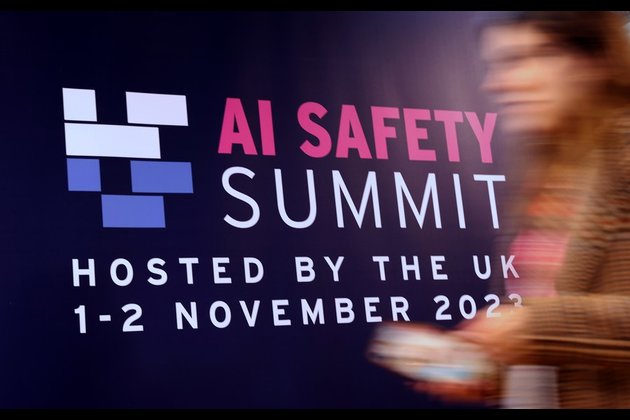
The AI Safety Summit recently convened in Britain sent a positive signal in this sense, where all the major players in AI research and development (R&D), including the United States, China and European countries, agreed to tackle the risks from AI through international cooperation. “If the United States, the UK and China are aligned on safety, then that’s going to be a good thing, because that’s where the leadership generally is,” Tesla and SpaceX CEO Elon Musk commented during the summit.
International cooperation on AI meets the expectations of many, and only in this way can we ensure that AI would enhance rather than undermine the common welfare of humankind. It is self-evident that in AI development and application, decoupling or disruption offers no future. Building small yards with high fences for AI will backfire, not only for those who put up the fences but also for the world at large. A fragmented AI sector will eventually spell disaster for humanity.
Among all the global players, China and the United States, the two biggest economies and leaders of technological advancement, shoulder the responsibility to work together on AI enhancement. Both are leaders in AI R&D and have large AI markets. With their resources combined, they could jointly accelerate the overall AI development and innovation, thus reinvigorating the global economy as AI boosts productivity and innovative solutions.
The two countries also share obligations to build consensus on AI governance, such as data security, privacy protection, and ethical issues. The pioneers in AI should take the lead in jointly formulating AI rules and standards, paving the way for a globally accepted AI governance framework. Complementarity among parties is encouraged so that the most sensitive issue of AI-related national security could be handled and harnessed properly.
It is clear that the current U.S. policy on China, especially in science and technology, deserves a serious review. Amid U.S. “strategic competition” against China, sanctions keep mounting and China’s access to AI or other high-end technologies remains restricted, if not denied altogether.
Under the Chips and Science Act, the scope of cooperation has been severely squeezed. If the United States does not change its course based on a confrontational mind, the world could see different AI blocs led by the United States or other entities. The terrible scenes in many sci-fi stories might come true when AI is controlled by different groups battling each other.
The good news is, that when Chinese President Xi Jinping met with U.S. President Joe Biden in San Francisco, they affirmed the need to jointly address the risks of advanced AI systems and improve AI safety. This commitment from leaders of China and the United States is a key milestone for AI governance, which will guide global AI for the better. This is something the two countries must cooperate on and succeed in, for the sake of mankind.
Editor’s note: The author is a commentator on international affairs, writing regularly for Xinhua News Agency, CGTN, Global Times, China Daily, etc. He can be reached at xinping604@gmail.com.
The views expressed in this article are those of the author and do not necessarily reflect the positions of Xinhua News Agency.
[ad_2]



Emirates Dubai 7s is returning to The Sevens Stadium from November 27 to 29, with tickets now on sale for the three-day sports and entertainment festival.
The 2026 edition will bring together international rugby, amateur sports, live music and family entertainment, with organisers promising a bigger programme than previous years.
The festival attracted more than 88,000 visitors in 2025 and will again take place during the final weekend of the Dubai Fitness Challenge.
Ticket prices
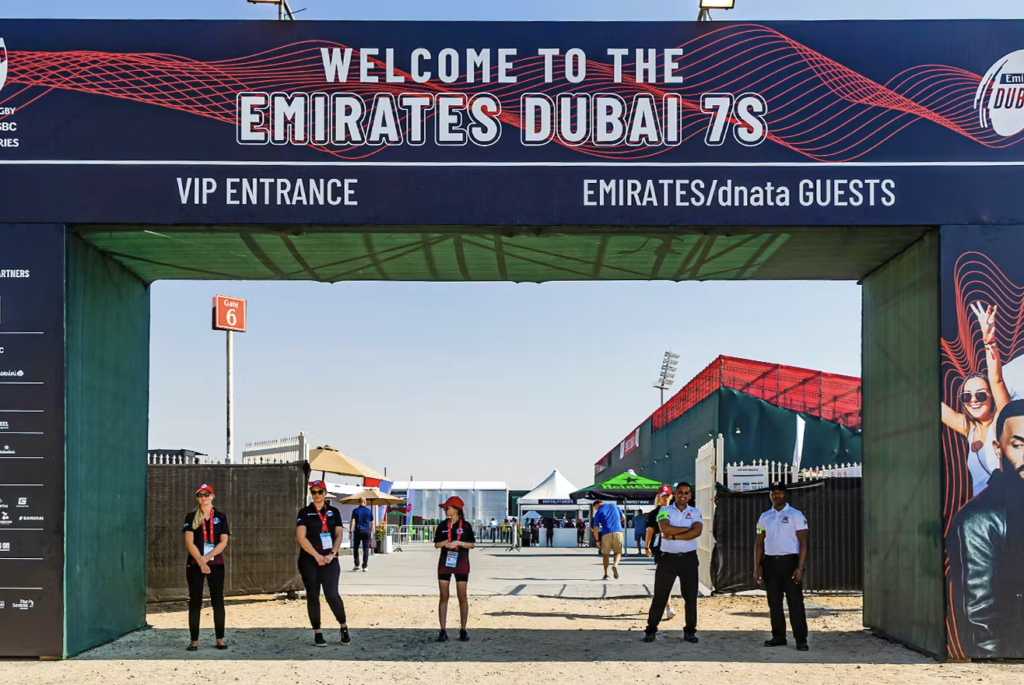
Ticket prices for General Admission and Hospitality have stayed the same for a third consecutive year.
Three-day General Admission tickets cost Dh595 per person, while the three-day Family Pass is Dh1,136 for two adults and two children.
Other ticket options

- Group pass: Dh446 per person for four or more adults
- Saturday or Sunday: Dh455
- Friday: Dh75
- Under 15s: Free
- People of Determination + carer: Dh375
Tickets can be purchased through the Emirates Dubai 7s website and app.
Bigger family attractions

Family entertainment will get a major boost this year as the UAE celebrates the Year of the Family.
The festival will feature its biggest-ever Kids’ Zone, including the UAE’s largest inflatable kids’ zone, along with a Ferris wheel and zipline. More attractions are expected to be announced ahead of the event.
Six sports and top rugby action

Alongside elite rugby, visitors can watch or take part in competitions across six sports — rugby, netball, cricket, WODON3 fitness, Rebound padel and Gaelic Football.
Gaelic Football will join the festival for the first time in 2026.
The Sevens Stadium will also host the opening round of the HSBC SVNS Series 2027, bringing the world’s leading rugby sevens players to Dubai.
The WODON3 Elite final will take place on Pitch 1 between HSBC SVNS matches, with competitors potentially performing in front of crowds of up to 20,000.
Music all weekend

Live entertainment will run throughout the festival, with local and international artists performing across three days.
Last year’s line-up included Tinie Tempah, Sean Paul and Fisher, while the 2026 headline acts will be announced later.
For a premium experience, The Sunroom returns with all-inclusive food and drinks, shaded seating, prime sporting views and dedicated access. Packages start from Dh1,925 per person.
With sport, music and family attractions packed into one weekend, Emirates Dubai 7s is gearing up for another big Dubai event.
Entertainment
Dubai launches ‘Dubai+’ family streaming platform to boost digital media and creative economy



Dubai Miracle Garden returns as UAE’s cooler season begins

Sultan Al Qasimi Attends Opening of 12th Sharjah Calligraphy Biennial


