
Sports
DP World ILT20 is opening doors for local cricket talent, says UAE Fast Bowler Muhammad Rohid



Sports
‘Fielding is an attitude’: Robin Singh on Royal Desert Champions struggles, Pooran’s run-out and T10’s bat-ball balance
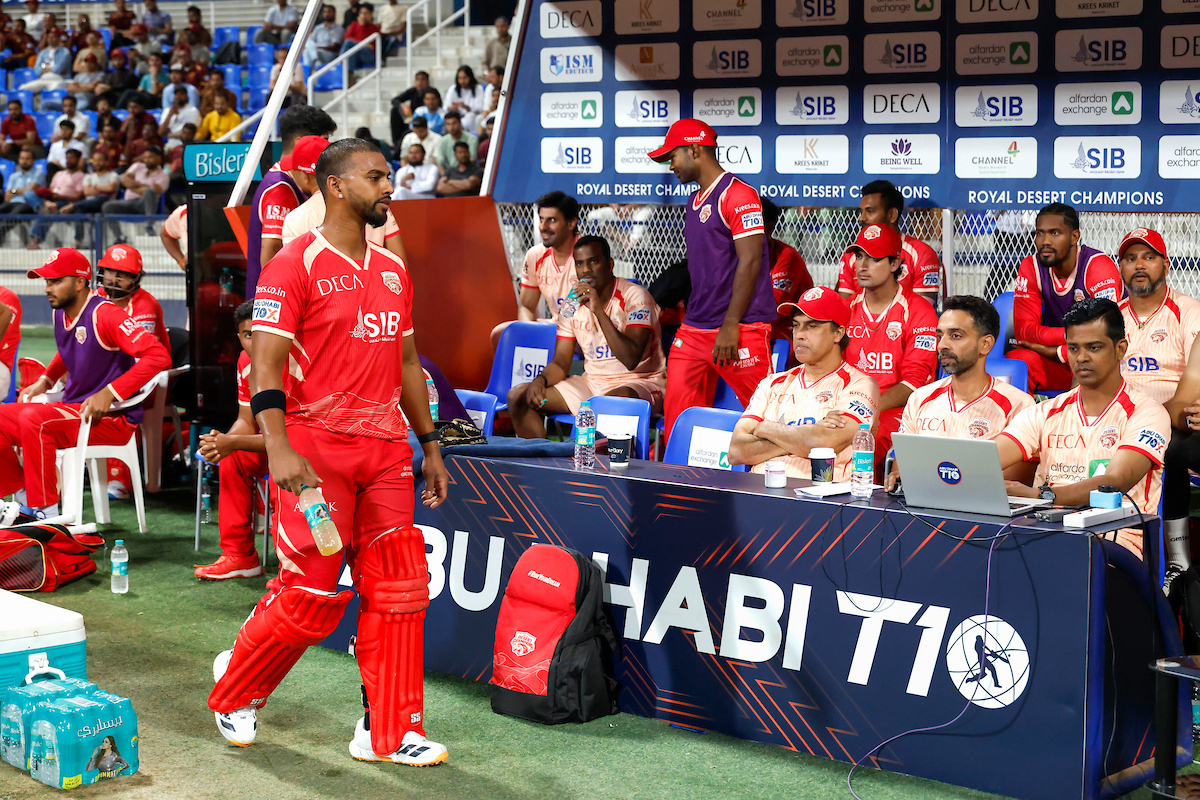
In a format where every delivery can change the course of a match, small mistakes can have significant consequences. For Robin Singh, the Royal Desert Champions’ struggles in the Abu Dhabi T10 have largely come down to missed opportunities, inconsistent performances and an inability to turn promising starts into match-winning totals.
Reflecting on his team’s eight-wicket defeat to Emirates Eagles at Zayed Cricket Stadium on Monday, the former India all-rounder and Royal Desert Champions team director identified a recurring problem throughout their campaign: a lack of consistency with both bat and ball.
“Throughout the tournament we have not really had good starts, and when we do get a start, the guys have not carried on,” Singh said.
He also pointed to injuries, fitness concerns and the failure of senior bowlers to deliver when it mattered.
“We had a few injuries, small niggles and stuff, and I think the bowlers really didn’t execute. Most of the senior bowlers didn’t really stand up.”
Singh acknowledged that the demands of the ten-over format leave little room for inconsistency, with teams needing to build momentum quickly and string victories together.
“It’s a tough tournament. You need to have some rhythm in place and win back-to-back games. That’s very important, and I think we did that only once,” he added.
Pooran’s run-out proves costly
Monday’s contest offered another example of how quickly fortunes can change in T10 cricket.
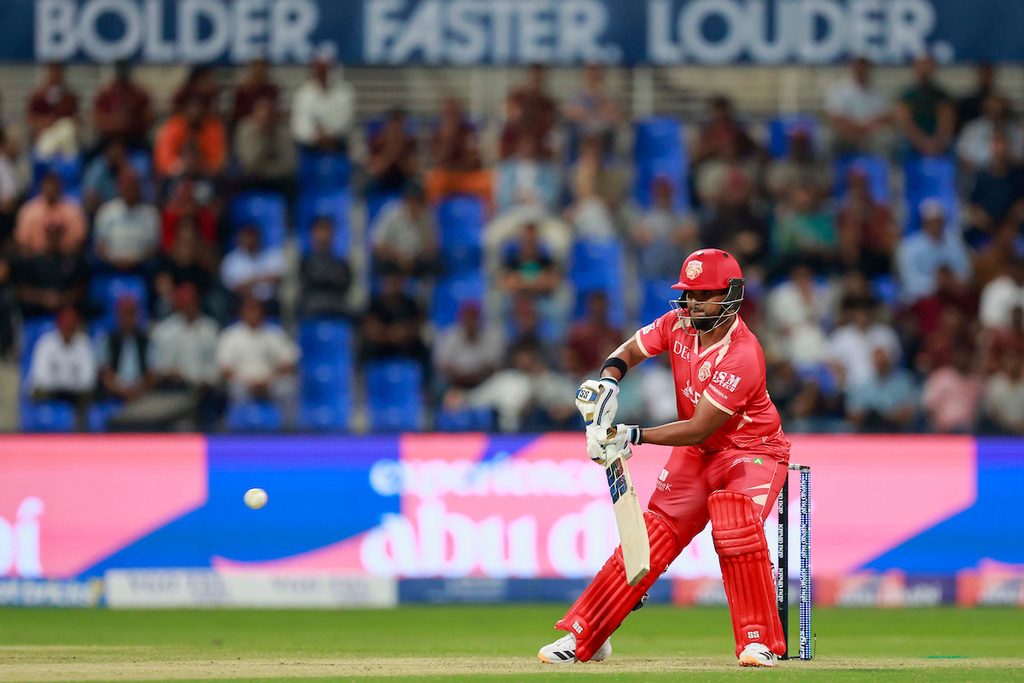
Nicholas Pooran was looking in excellent touch, scoring 50 off just 23 deliveries, before being run out by Hardus Viljoen in the eighth over. The Champions eventually finished on 110 for four, a total that proved insufficient as Shimron Hetmyer’s unbeaten 59 guided Emirates Eagles to an eight-wicket victory with ten balls remaining.
For Singh, Pooran’s dismissal came at a particularly crucial stage, with the Champions well positioned to post a considerably bigger total.
“Everything is crucial in T10, whether it’s one ball or two balls,” he said. “At that stage we were set up to get about 130.”
Asked about Pooran’s run-out, Singh felt the batter could perhaps have made a different decision while running between the wickets.
“Probably, at the end of the day, he should have just continued running. But it’s just one of those things,” he said.
Singh calls for more recovery time
Beyond individual performances, Singh believes the tournament’s demanding schedule presents a significant challenge, particularly for bowlers who have limited time to recover between matches.
While stopping short of questioning the players’ commitment, he suggested that teams need to find ways to manage the physical and mental demands of a competition played at such a rapid pace.
“I think players need to be more committed. I’m not saying they’re not committed, but it’s quite a tough tournament to play considering you’re playing four or five games on the trot,” he said.
Singh also suggested that organisers consider introducing an additional rest day to give players more time to recover.
“It’s a tournament that’s so rapid, and it’s very difficult for anyone to come back in these sort of tournaments, especially bowlers,” he added.
Bigger boundaries could restore the bat-ball balance
One of Singh’s strongest observations concerned the balance between bat and ball in modern limited-overs cricket.
With T10 increasingly rewarding aggressive batting and power-hitting, the former Indian cricketer believes slightly larger playing boundaries could give bowlers a better opportunity to compete.
He would like to see boundary dimensions return to around 75 metres, arguing that the game needs to offer something more for bowlers and create closer contests.
“What I would like to see in cricket is the grounds a little bigger. I think it’s important to get the boundaries back to 75 metres, so there’s a little bit in it for the bowlers,” Singh said.
“It’s an uneven match as far as I’m concerned. As a cricket lover, I’d like to see a lot more bat versus ball. If you can weigh it 60/40, I think you will see a lot more close games.”
Singh also recognised how dramatically cricket has evolved since his playing days, particularly with the growing emphasis on aggressive stroke-making and the freedom to take risks.
“There’s a lot more intensity and a lot more cricket, so people are not afraid to play a lot more shots. You have a lot more opportunities to fail, and that allows you to play quite fearlessly,” he said.
“When we were playing, most of the time your focus was on 50-over cricket.”
While acknowledging that T10 offers batters opportunities to attack from the outset, Singh believes the fundamentals of the game remain important.
“Look, it’s relatively easier to play T10 cricket as long as you know how to play the game and can execute your skills. In the longer format, you will get tested in many ways,” he added.
Waseem needs to give himself time
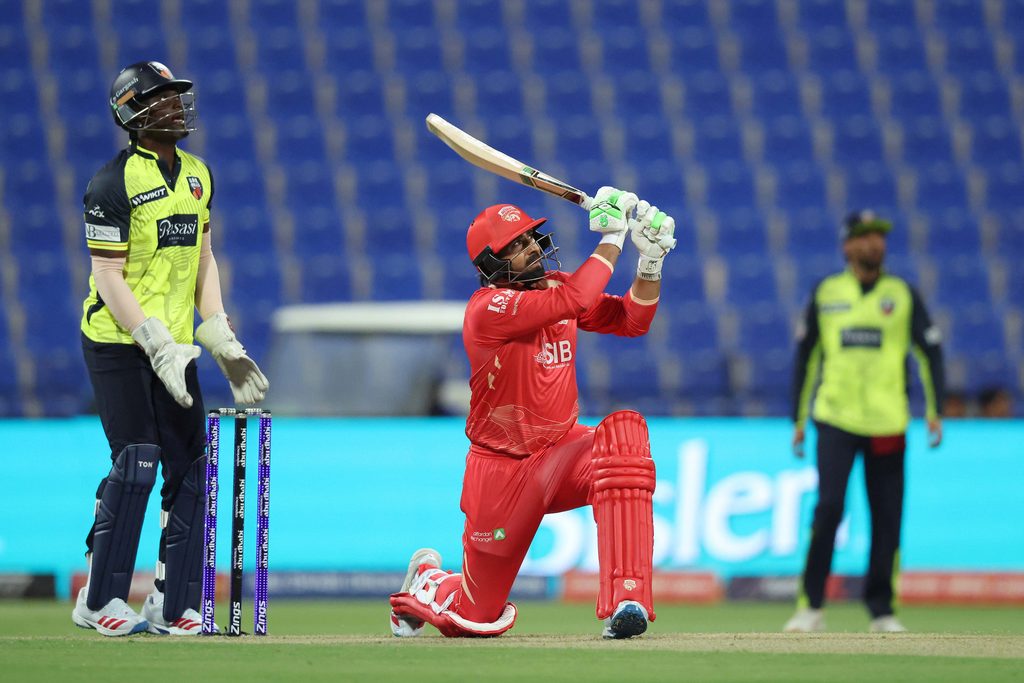
Singh was also candid when discussing Muhammad Waseem’s relatively quiet campaign with the bat.
The UAE international has struggled to make a consistent impact, and Singh believes the talented batter needs to show greater patience before attempting to dominate opposition bowling.
“I think he’s got enough opportunities to show his mettle. He has played some poor shots in most of the games that he’s got out in, so it’s really up to him. We’ve been telling him,” Singh said.
While backing Waseem’s ability, he stressed that even in a format as short as T10, batters cannot afford to abandon the basics.
“He’s a quality batter, but you have to give yourself a little time, even if it’s T10. One or two balls to have a look at what’s going on, and then back yourself to play your shots,” he added.
No obvious successor to India’s great finishers
Asked to identify India’s next great finisher, Singh was reluctant to single out an individual, although he expressed confidence in the depth of batting talent available in Indian cricket.
“No one really comes to mind at the moment. But at the same time, Indian cricket has a lot of good batters,” he said.
He also pointed out that the true quality of a batter becomes clearer when conditions offer a more balanced contest between bat and ball.
“We know Indian wickets are normally very good for batting. I think most people will get tested when it’s an even contest,” he added.
Challenges of defending totals
Fielding was another area Singh addressed, particularly after several missed catches across the tournament raised questions about the challenges of defending totals under lights.
He acknowledged that judging the trajectory and depth of the ball can become difficult during night matches, especially in T10, where batters frequently generate tremendous power.
“At night it’s not that easy to field, because it’s difficult to judge the depth of the ball. And in T10 the ball tends to travel much faster, because people are not afraid to hit it very hard. So you have to anticipate those things,” he said.
However, while recognising the technical challenges, Singh insisted that fielding standards ultimately depend on a player’s mindset and willingness to take responsibility.
“I think fielding is an attitude, to be honest,” he said.
“As a cricketer, you need to take pride. That’s all about you, not about anybody else.”
For a cricketer who built much of his reputation on athleticism and outstanding fielding, the message remains as relevant as ever. In a format where margins are exceptionally small, Singh believes commitment, concentration and pride in one’s work can make the difference between winning and losing.

Virat Kohli may never have played ten-over cricket, but that has not stopped the former India captain from keeping a close eye on the Abu Dhabi T10.
According to his childhood coach Rajkumar Sharma, Kohli is following the tournament after being informed about Sharma’s involvement with United Tigers this season. The experienced coach also believes the batting superstar would thrive if he ever decided to try the fast-paced format.
“I told him I’m going there and what my role is. He knows about the tournament, and I know he’s watching it,” Sharma said after United Tigers suffered a seven-wicket defeat to Arabian Aces at Zayed Cricket Stadium on Monday.
Asked whether he would like to see Kohli feature in T10 cricket, Sharma was confident about his former pupil’s prospects.
“He hasn’t played this format, but if he plays, he will do well, and people will love it,” he said.
From coaching Kohli to learning the T10 format

Having spent nearly three decades developing cricketers, Sharma is no stranger to the demands of the game. As founder of the West Delhi Cricket Academy, he played a pivotal role in Kohli’s development during his formative years.
However, his latest assignment with United Tigers has introduced him to a very different challenge.
Making his first appearance in the T10 format as a coach, the Dronacharya awardee admitted that even his extensive experience in the game has not fully prepared him for its intensity.
“I’m definitely enjoying this role. The team is good, the atmosphere is very good, and I’m really excited,” he said.
“It’s a different kind of cricket. Honestly, this is my first time in T10, and as an old-timer, I’m still understanding it. But it’s very exciting. I’ve done 50 overs and 20 overs, and now ten overs is a new lesson for me.”
He added that the format’s relentless pace leaves little room for recovery after a setback.
“There’s a lot of energy, the intensity is high, and it’s hard to make a comeback. It’s very competitive cricket.”
Test cricket remains the ultimate benchmark
Despite embracing the excitement of T10, Sharma remains firmly rooted in his traditional cricketing philosophy.
For him, Test cricket continues to be the ultimate examination of a player’s technique, temperament and ability.
“As an old-timer, I feel Test cricket is actual cricket,” he said.
“If someone is good at Test cricket, he can always play one-day, T20 or T10. But I don’t think a T10 or T20 player can easily become a good Test player.”
Sharma acknowledged that there are exceptions, but believes the technical demands of the longer format are fundamentally different from those of the shorter versions.
“There are exceptions, but technically it’s different, because there is a lot of power-hitting here,” he added.
Pakistan players have welcomed Sharma’s experience

Sharma’s transition to T10 has also brought him into a dressing room featuring several prominent Pakistan international cricketers.
United Tigers boast an experienced line-up that includes captain Fakhar Zaman, Iftikhar Ahmed, Sahibzada Farhan, Faheem Ashraf, Abbas Afridi and Usman Tariq.
Despite the different cricketing backgrounds, Sharma said the working relationship within the squad has been positive.
“We have a very good bond. I’m helping them, and they are responding very well,” he said.
However, the Tigers’ latest outing did not produce the desired result. They suffered a seven-wicket loss to Arabian Aces after managing 103 for five in their 10 overs.
With Fakhar departing for just one, Iftikhar Ahmed’s 46 off 24 deliveries provided the backbone of the innings. But the total proved insufficient as Moeen Ali, Sam Billings and Andre Russell guided the Aces to victory with seven balls remaining.
Reflecting on the defeat, Sharma admitted that his side had fallen considerably short of its target.
“We were expecting around 125 to 130, so we fell short by at least 20 runs. Fakhar’s wicket was a big setback. He is our main player, and he was trying to hit. It happens,” he said.
Abhishek Sharma is coach’s pick for T10
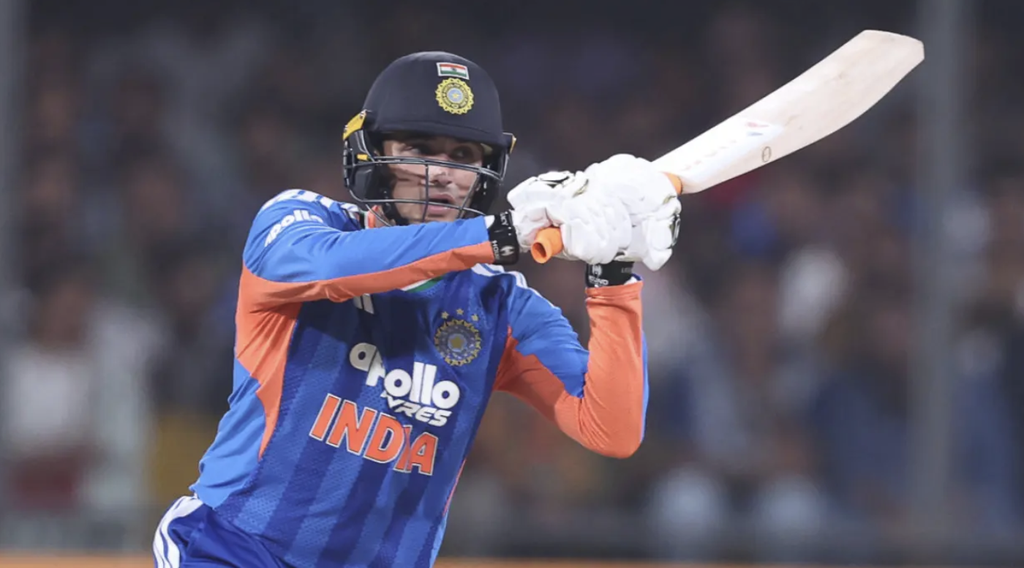
Looking beyond Kohli, Sharma has identified another Indian batter he believes would be particularly suited to the demands of ten-over cricket.
Young India opener Abhishek Sharma is his preferred choice, with the coach impressed by the attacking ability of India’s emerging generation.
“If you look at Abhishek Sharma and the rest of our youngsters, they are just too good,” he said.
However, Sharma was reluctant to draw comparisons between the next generation and Kohli, insisting that the former India captain’s achievements cannot be replicated overnight.
“No one can replace Virat. It takes very long to become Virat Kohli,” he said.
“Somebody has to play for more than ten years to be in contention with such players. Youngsters are coming, and they are very talented. We have a lot of good players.”
He also singled out India Test and ODI batter Shubman Gill alongside Abhishek as two of the country’s exciting talents.
“Shubman Gill is one of the best we have, and Abhishek Sharma is also a good player. But they need time. Play a few years, perform consistently, and then we can think about whether someone can replace Virat.”
For now, Sharma is focused on guiding United Tigers through his first T10 campaign. But his revelation that Kohli is following the tournament adds an intriguing subplot to this year’s Abu Dhabi T10, particularly with the coach convinced that the Indian superstar would be just as entertaining in the game’s shortest format.
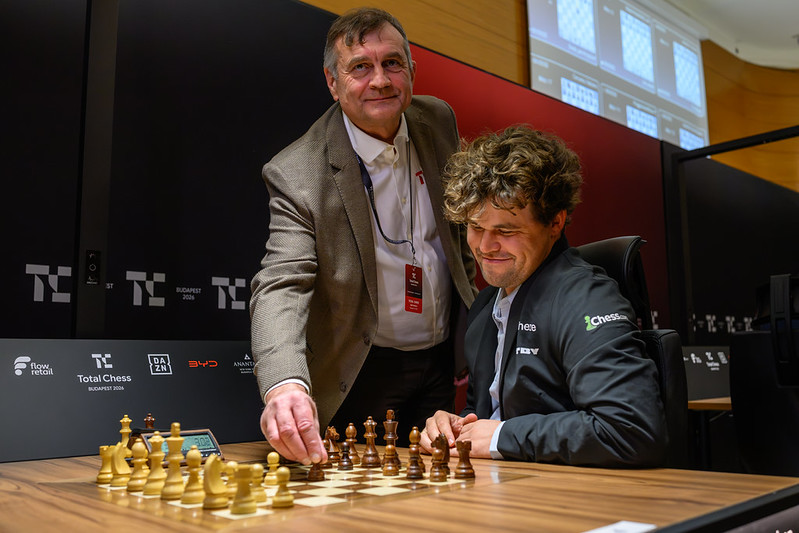
The UAE could be in line to host an edition of the Total Chess World Championship Tour, with organisers expressing strong interest in bringing the newly launched, FIDE-approved circuit to either Dubai or Abu Dhabi.
Speaking to UAE media on the sidelines of the tour’s pilot event at the Anantara New York Palace in Budapest, Total Chess CEO Kjell Madland confirmed that discussions with potential stakeholders in the region have already taken place.
“Of course, Dubai is very interesting for us,” Madland said. “We have been in contact with some people, and we still want to be there.”
He described the UAE as an attractive destination for the competition, adding that the region had the infrastructure and appeal to make it a suitable host.
2028 emerges as a potential target
While the organisers have largely mapped out the inaugural 2027 season, Madland indicated that a UAE edition could become a realistic prospect from 2028 onwards.
“2027 is maybe difficult, because we have done a lot with 2027 already. But for the future, after 2027, everything is possible,” he said.
The timing could prove particularly significant for Abu Dhabi, which is scheduled to host the 47th FIDE Chess Olympiad at the Abu Dhabi National Exhibition Centre (ADNEC) from 28 October to 11 November 2028.
Asked whether the Total Chess Tour could capitalise on the increased international attention surrounding the Olympiad, Madland welcomed the possibility of staging an event in the same year.
“I think it’s always a good momentum, and it could be a good thing to do in the same year. I think that more chess will help to grow the interest,” he said.
The CEO also suggested that the UAE opportunity could extend beyond a single tournament, revealing that the organisers are open to multi-year agreements with host cities.
“When we are thinking of host cities, it’s also interesting for us to have a longer contract, not only for one year. It could be three years, five years. Then everything is easier for everyone,” he added.
Haaland’s backing adds star power

The prospect of a UAE event also carries an interesting connection through Manchester City forward Erling Haaland, one of the prominent figures backing the new circuit.
Haaland co-founded the investment company Chess Mates alongside Norwegian businessman Morten Borge and is a significant owner of Norway Chess. His involvement helped the organisers secure about $10 million to launch Total Chess.
With Abu Dhabi-based City Football Group owning Manchester City, Haaland’s involvement offers an additional link between the tournament and the UAE.
Although Madland acknowledged the demands of the footballer’s professional schedule, he emphasised that Haaland is enthusiastic about the project and would support an event in the region.
“He’s very interested in this and what we are doing. We know they have a very busy calendar, they are playing matches all the time. But he likes what we do, and I think he will support us if we want to go there and have a tournament,” Madland said.
UAE has the infrastructure and commercial appeal
Madland identified several key requirements for prospective host cities, including a high-quality hotel and tournament venue, convenient access for players and spectators, and strong commercial support.
He believes both Dubai and Abu Dhabi meet those requirements.
“Dubai and Abu Dhabi, they have everything. So it should be easy to find good ways to do it,” he said.
The Total Chess business model is built around a combination of global and local sponsorships. Commercial partners can support the entire annual circuit, while individual tournament hosts can attract sponsors specifically for their events.
“One sponsor normally doesn’t pay for everything,” Madland explained. “It’s possible to be a global sponsor for all four events through the year, but it’s also possible to be a local sponsor and just be a sponsor for one event.”
Beyond its competitive format, the tour aims to appeal to a broader audience by making chess more accessible to casual viewers and newcomers.
“It should be something for almost everyone, not only for chess fans. They don’t need to be very good chess players to watch,” Madland said.
Building on the UAE’s growing chess profile
A potential Total Chess event would add another major international competition to the UAE’s expanding chess calendar.
Dubai previously hosted the 2021 FIDE World Championship match during Expo 2020 and staged the inaugural Global Chess League in 2023. Abu Dhabi, meanwhile, is preparing to welcome the 2028 Chess Olympiad, marking the country’s second hosting of the prestigious team competition after Dubai staged the 1986 edition.
Madland pointed to the success of Norway Chess in Stavanger as an example of how major international tournaments can help develop a stronger chess ecosystem, particularly among younger generations.
“We can see a big difference from the early stage until the last years. There are a lot more chess players, good chess players, children playing. We have done programmes with chess in schools. It’s much, much more people who are interested in chess,” he said.
The organisers believe a similar impact could be achieved through the Total Chess Tour’s expansion into new markets.
With initial discussions already underway and 2028 emerging as a possible target, the UAE appears firmly on the organisers’ radar. While no host city or agreement has been confirmed, a tournament in Dubai or Abu Dhabi could further strengthen the country’s position as a leading destination for international chess.

‘Fielding is an attitude’: Robin Singh on Royal Desert Champions struggles, Pooran’s run-out and T10’s bat-ball balance

Virat Kohli is following Abu Dhabi T10, says childhood coach Rajkumar Sharma


