Connect with us

News

Earth Hour 2022: Dubai saves 329mw of electricity

Published

on

Spread the love

Dubai Electricity and Water Authority (Dewa) recorded savings of 329 megawatts (mw) in electricity consumption in the Emirate during Earth Hour 2022, equivalent to a reduction of 132 tonnes of carbon dioxide emissions. These savings are 13 per cent higher than the 291mw savings recorded during Earth Hour 2021. This year’s savings are the biggest since 2008 when Earth Hour was first observed in Dubai.

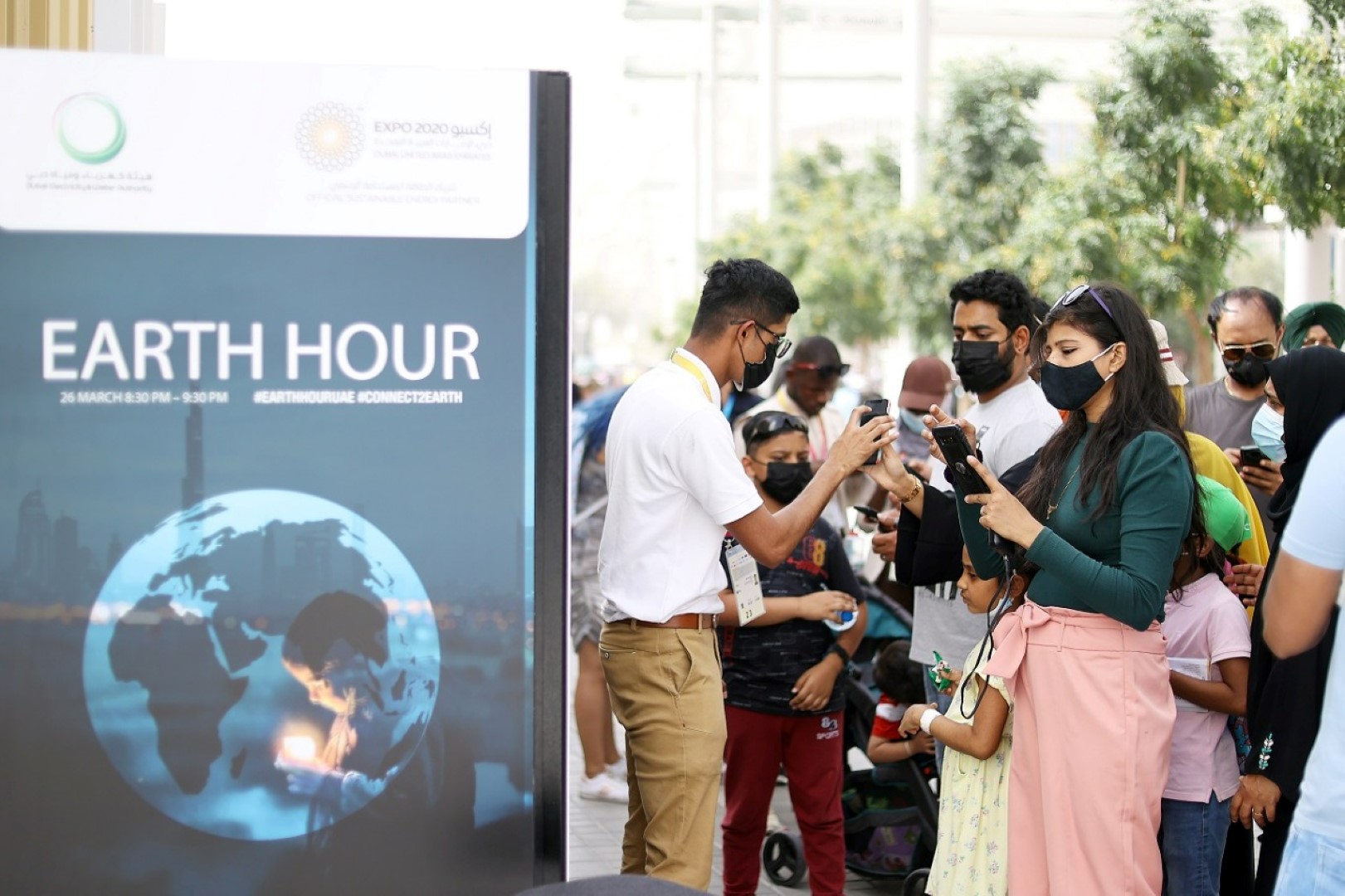
Dubai residents joined millions worldwide in expressing their solidarity with efforts to reduce climate changes by turning off unnecessary lights and electric appliances during Earth Hour between 8.30pm and 9.30pm on Saturday, March 26, 2022. This year’s Earth Hour was held under the theme ‘Shape Our Future’. Dubai’s landmarks and government and private buildings also took part in the event by turning off their lights for an hour.

Saeed Mohammed Al Tayer, MD & CEO of Dewa, commended everyone who took part in the Earth Hour, emphasising that the goal goes beyond just turning off unnecessary lights and electric appliances for 60 minutes. Earth Hour aims to make electricity and water conservation a daily practice to cut carbon emissions and combat environmental challenges such as climate change and global warming.
“At Dewa, we work in line with the Dubai Clean Energy Strategy 2050 and the Dubai Net Zero Carbon Emissions Strategy, which aims to provide 100 per cent of Dubai’s total power capacity from clean energy sources by 2050. We also raise awareness among society members on the importance of conservation and highlight sustainability practices that positively impact climate action. The results achieved during Earth Hour in Dubai every year underline the key role of society members in conservation and reduction of carbon footprint. The goal of Earth Hour is to encourage society members to adopt a conscious and responsible lifestyle to support national efforts to limit carbon emissions and protect natural resources to ensure their sustainability for generations to come,” said Al Tayer.
Khawla Al Mehairi, executive vice president of Strategy and Government Communications at Dew, said that Earth Hour is one of the most significant environmental initiatives that millions worldwide observe by turning off unnecessary lights, including key landmarks, from 8.30pm–9.30pm on the last Saturday of March. It highlights the importance of strict measures to combat Earth’s challenges, such as climate change and global warming. Dubai was the first Arab city to host Earth Hour activities in 2008.

Dewa’s buildings participated in Earth Hour by turning off unnecessary lights from 8.30pm to 9.30pm. This included Dewa’s pavilion at Expo 2020 Dubai, which also organised various activities, including traditional performances by the Emirati Al Harbiya band. Dewa’s conservation mascots, Noor and Hayat, also participated in the Earth Hour Switch-Off Parade at Expo 2020 Dubai. Additionally, Dewa organised Earth Hour competitions through its social media accounts, with valuable gifts for the participants.

News

Motorist alert: Abu Dhabi lowers speed limits on major roads from this Monday

Published

on

Spread the love

Drivers in Abu Dhabi are being advised to slow down and check road signage as new lower speed limits come into force on three of the capital’s busiest roads from Monday, February 9.

Abu Dhabi Mobility has confirmed that the updated limits apply to key routes leading to Al Ain, Bani Yas, and Al Rawdah, as part of ongoing efforts to improve road safety and traffic flow.

Which roads are affected?

E22 Abu Dhabi – Al Ain Road

  • Speed limit reduced from 160km/h to 140km/h
  • Applies from Al Nahda Interchange to Bani Yas Interchange
  • In effect, in both directions

Bani Yas Interchange to Bridge Complex

  • Speed limit reduced from 140km/h to 120km/h
  • Applies in both directions

E30 Al Rawdah Road

  • Speed limit reduced from 120km/h to 100km/h
  • Applies in both directions

Motorists are advised to watch for updated road signage and adjust their driving accordingly.

Part of wider road safety changes

The latest reductions are part of a broader series of traffic and speed management measures introduced across Abu Dhabi in recent months.

Previously announced changes include:

  • Sheikh Khalifa bin Zayed International Road: reduced from 160km/h to 140km/h
  • Abu Dhabi–Sweihan Road: reduced from 120km/h to 100km/h
  • A reduction to the minimum speed limit on Sheikh Mohammed bin Rashid Road in late 2025
  • Introduction of variable speed limits on Sheikh Zayed bin Sultan Street, with limits set at 100km/h or 80km/h depending on factors such as weather and traffic conditions

Authorities say the measures are designed to enhance road safety, traffic flow and accident prevention, particularly on high-speed routes.

Advice for motorists

Drivers are urged to:

  • Follow updated speed limit signs
  • Allow extra travel time
  • Stay alert to variable speed limits
  • Avoid fines by complying with the new regulations

SEO keywords

Abu Dhabi speed limit, Abu Dhabi Mobility roads, E22 speed limit change, Al Ain road speed limit, Abu Dhabi traffic rules, UAE road safety


Continue Reading

News

Dubai officially launches fully autonomous taxis as Sheikh Hamdan rides Baidu driverless vehicle

Published

on

Spread the love

Dubai has officially launched the operational phase of fully autonomous RT6 taxi vehicles, marking a major milestone in the emirate’s push toward future mobility and smart transport solutions.

Sheikh Hamdan bin Mohammed bin Rashid Al Maktoum, Crown Prince of Dubai, Deputy Prime Minister and Minister of Defence, inaugurated the service after taking a ride in the driverless RT6 taxi, developed by Baidu Apollo Go, to the World Governments Summit at Madinat Jumeirah.

The move clears the way for the public launch of autonomous taxi services in the first quarter of 2026.

Why AI taxis are good for city roads

The RT6 autonomous taxis rely on artificial intelligence, advanced sensors and real-time decision-making systems to operate safely across urban environments and open roads.

Each vehicle is equipped with more than 40 sensors, including:

  • LiDAR
  • Radar
  • High-resolution cameras

These systems allow the taxis to detect surroundings, respond instantly to traffic conditions and navigate complex city streets with precision.

The vehicles use advanced software that combines real-time data, high-definition maps and deep-learning algorithms, enabling them to safely interact with intersections, pedestrians and other vehicles while fully complying with traffic laws.

Proven technology with global track record

Baidu’s autonomous driving platform has already completed more than 150 million kilometres of safe driving worldwide and delivered over 10 million passenger trips, providing a mature and reliable foundation for large-scale deployment in Dubai.

Rapid rollout through global partnerships

The project is the result of close collaboration between Dubai’s Roads and Transport Authority (RTA) and Baidu Apollo Go, following initial discussions at the World Governments Summit 2025.

The launch aligns with Dubai’s long-term vision to expand autonomous transport solutions, reduce reliance on private vehicles, enhance road safety and improve overall mobility efficiency across the city.


Continue Reading

Crime

WhatsApp refund message binding, events firm must pay Dh13,000, says Abu Dhabi court

Published

on

Spread the love

The Abu Dhabi Commercial Court of First Instance has ordered an events management company to refund Dh13,000 to a woman after ruling that the company had confirmed the refund in writing via phone messages but failed to repay the amount.

According to court records, the woman filed a lawsuit seeking recovery of the money she paid to organise a private event, along with legal interest, expedited enforcement, and compensation for court costs and legal fees.

Refund promised after event shortcomings

The claimant told the court that she had entered into a contract with the company to organise a private function. The agreement explicitly stated that payments would be refunded in the event of organisational shortcomings.

She said the company later acknowledged defects in the event arrangements and agreed to return the full amount, but failed to do so despite repeated follow-ups, according to reports.

WhatsApp messages used as evidence

To support her claim, the woman submitted:

  • A copy of the signed contract
  • A company-issued document
  • Bank transfer records
  • WhatsApp messages exchanged with the company’s representative

The messages included a written confirmation that the company would refund Dh13,000 within 14 days of the event date.

Company disputes claim

The company’s owner attended the hearing and requested the case be dismissed, arguing that the claimant lacked legal standing. Alternatively, he asked the court to reject the claim, stating the woman was not entitled to interest because she was not a trader.

Court rejects defence, orders payment with interest

In its ruling, the court found that the documents established a valid contractual relationship between both parties. It noted that the WhatsApp messages were sent from the same phone number listed in the contract, confirming they were issued by the company’s representative.

The court said there was no evidence the refund had been made, and ruled that the owner’s appearance did not negate the debt or its value.

On interest, the court held that the unpaid amount constituted a known and confirmed debt, and that delay in payment entitled the claimant to compensation.

The company was ordered to:

  • Pay Dh13,000
  • Pay delay interest at 3% per year from the date of filing the claim until full settlement (capped at the principal amount)
  • Cover court costs and legal fees

The ruling highlights that written commitments made via WhatsApp or phone messages can carry legal weight in UAE courts, particularly when linked to a valid contract.

Continue Reading

Popular

© Copyright 2025 HEADLINE. All rights reserved

https://headline.ae/