
Sports
Vaughan cleared of using racist language by England panel






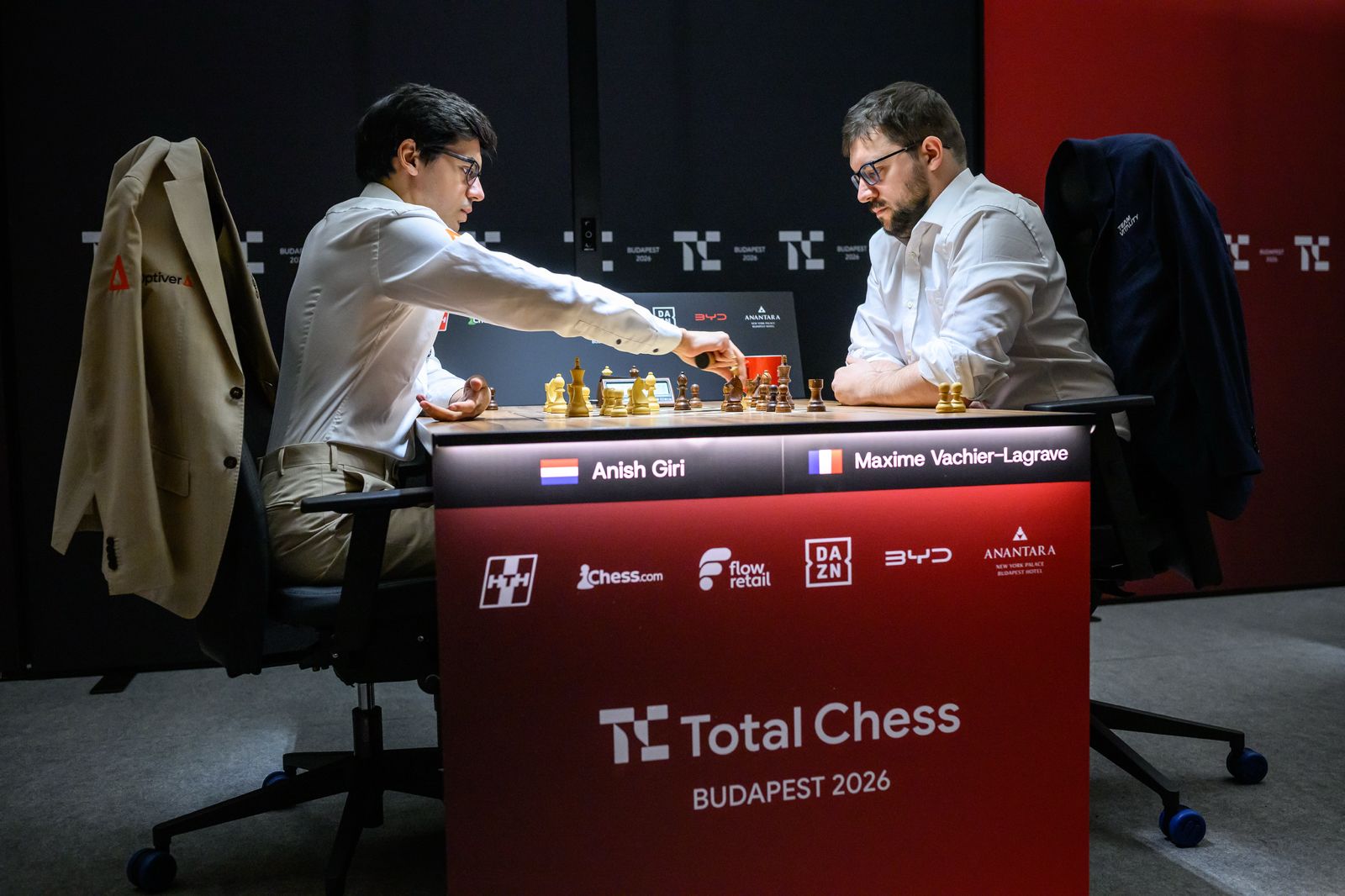
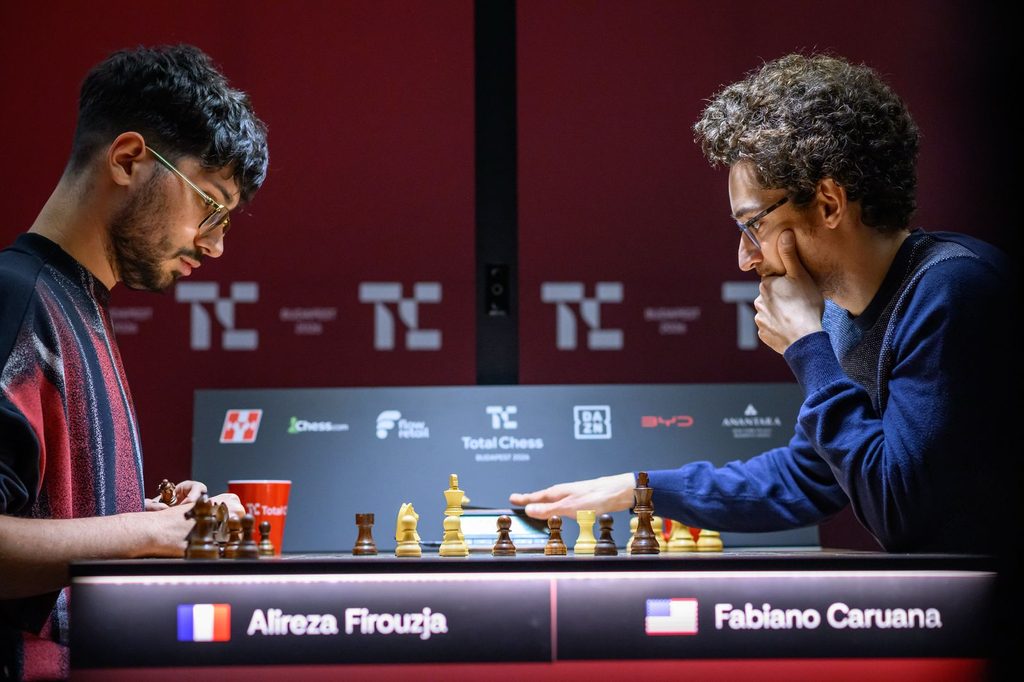
Anish Giri and Alireza Firouzja made strong starts in the semifinal stage of the Total Chess World Championship Tour Pilot in Budapest, Hungary, on November 17, 2026.
Giri defeated top seed Maxime Vachier-Lagrave with a score of 14.5-5.5, while Firouzja secured a 12-8 victory over Fabiano Caruana on the opening day of the knockout competition.
The tournament introduced a new format in which Blitz, Rapid and Fast Classic games all contribute to the same match score. All 24 players returned to action across six different brackets, competing for positions ranging from first to 24th place.
Giri and Firouzja move closer to the final
The four semifinalists earned their places through five days of Fast Classic group-stage matches.
Vachier-Lagrave and Caruana finished as the highest scorers, collecting 17 points each to win Groups D and B. Firouzja topped Group A, while Giri secured first place in Group C with 15 points.
The opening Blitz Swiss competition determined the semifinal pairings, bringing Giri up against Vachier-Lagrave and Firouzja face-to-face with Caruana.
Giri started by winning the Blitz section 2.5-1.5. Both Rapid games ended in draws, giving him a narrow 6.5-5.5 advantage before the final Fast Classic encounter.
However, Giri produced a decisive performance with the white pieces in the final game. The victory was worth eight points and helped him finish the day with a comfortable 14.5-5.5 lead.
Firouzja also delivered an impressive performance against Caruana. He won all four Blitz games to take an early 4-0 lead.
Caruana responded by winning the first Rapid game, bringing the scores level at 4-4. Firouzja then bounced back with another victory in the second Rapid encounter, taking an 8-4 advantage.
The final Fast Classic game ended in a draw, allowing Firouzja to secure a 12-8 overall win for the day.
How the new Total Chess format works
The Budapest tournament is testing a combined format featuring three different chess time controls.
Each knockout match consists of seven games:
- Four Blitz games played at 3+2.
- Two Rapid games played at 15+10.
- One Fast Classic game played at 45+30.
The scoring system gives different importance to each format. A Blitz victory earns one point, a Rapid win is worth four points, and a Fast Classic victory carries eight points. Draws award half of the available points.
This means that winning the final Fast Classic game can completely change the outcome of a match, even after a player has fallen behind in the faster formats.
The scores reset at the beginning of each day, making Wednesday’s matches crucial for all semifinalists.
Wednesday’s matches will decide the finalists
Giri and Firouzja will face the same opponents again on Wednesday, November 18.
Both players need to avoid losing the second day to secure their places in the championship final, scheduled for Thursday and Friday.
Vachier-Lagrave and Caruana, meanwhile, must win Wednesday’s matches to force an Armageddon decider.
In the event of an Armageddon game, the player with the higher combined score across the two days will get to choose their colour.
Magnus Carlsen dominates his bracket
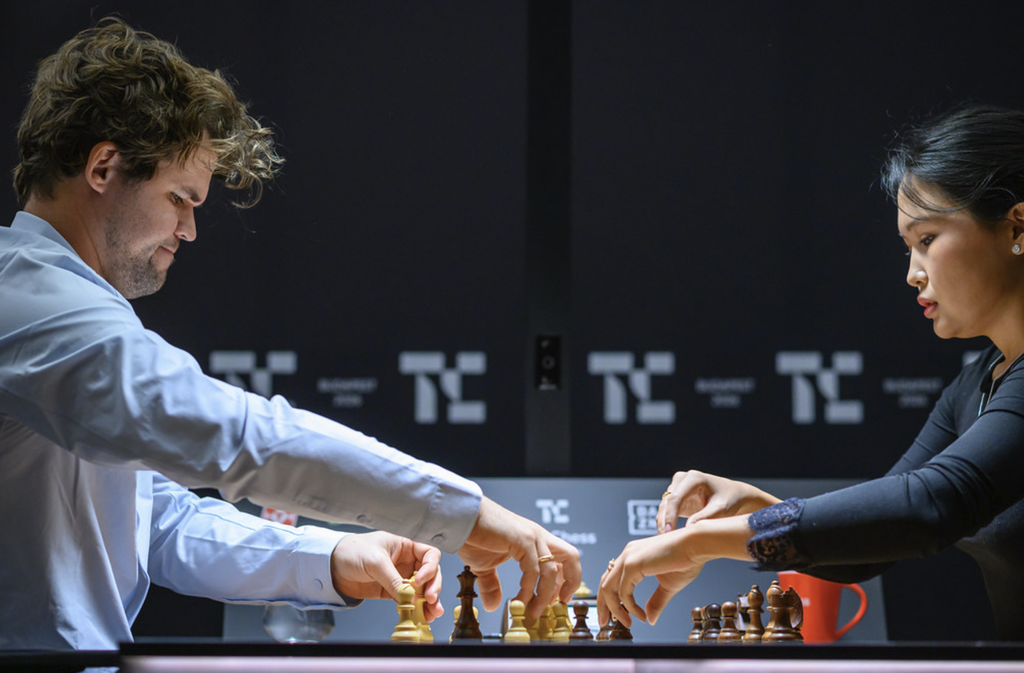
Magnus Carlsen, who won the opening Blitz Swiss competition, continued his strong performance in the faster formats.
Competing against Bibisara Assaubayeva in the bracket for positions 17 to 20, Carlsen won the Blitz section 3.5-0.5 and claimed victories in both Rapid games.
After building an 11.5-0.5 lead, he forfeited the final Fast Classic game, which did not change his overall victory.
Another notable result came in the bracket for positions 9 to 12. Richard Rapport led Haik Martirosyan 9-3 before the final game, but Martirosyan produced a comeback by winning the Fast Classic encounter with the black pieces. He finished the day with an 11-9 victory.
Hans Moke Niemann and Wesley So also benefited from the eight-point Fast Classic game. Niemann defeated Liem Le 13.5-6.5, while So beat Vincent Keymer 14-6.
Indian chess players’ performances
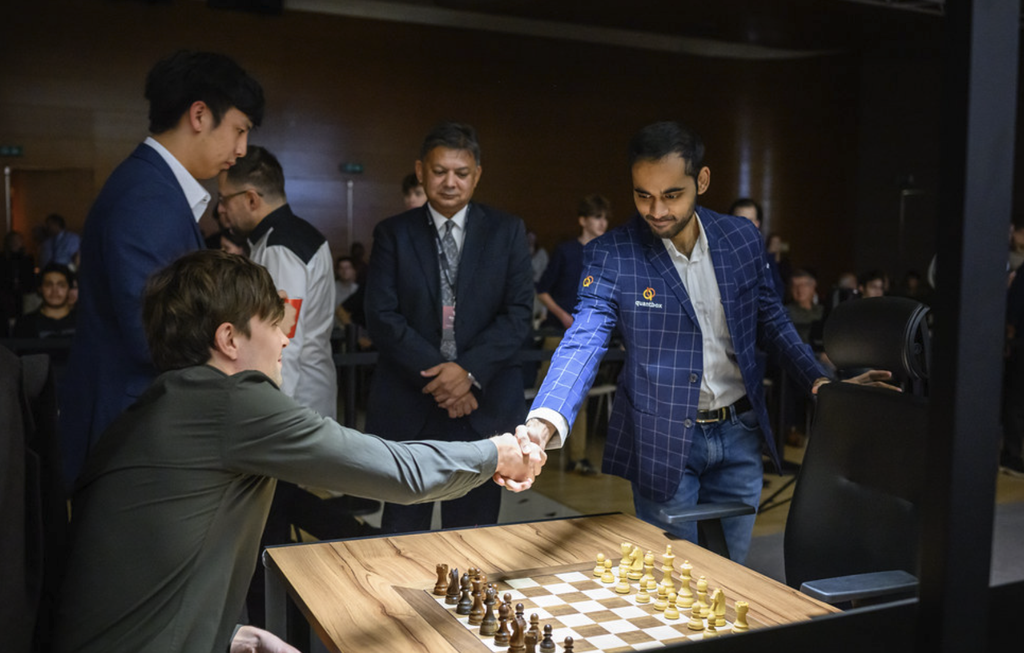
Indian players also featured prominently across the different knockout brackets.
Arjun Erigaisi defeated Jorden van Foreest 11.5-8.5 in the competition for positions 9 to 12.
Praggnanandhaa Rameshbabu recovered from a 1-3 deficit after the Blitz games against Nodirbek Abdusattorov. He won the opening Rapid game and held his opponent to a draw in Fast Classic, securing an 11-9 overall victory.
Vaishali Rameshbabu faced Abhimanyu Mishra in the bracket for positions 21 to 24. Although she managed to draw the final Fast Classic game, Mishra’s earlier advantage proved decisive, giving him a 13-7 win.
Results from all six knockout brackets
The first day’s results across the tournament were:
Championship semifinal matches
- Anish Giri defeated Maxime Vachier-Lagrave: 14.5-5.5
- Alireza Firouzja defeated Fabiano Caruana: 12-8
Positions 5 to 8
- Hans Moke Niemann defeated Liem Le: 13.5-6.5
- Ian Nepomniachtchi defeated Jan-Krzysztof Duda: 15-5
Positions 9 to 12
- Arjun Erigaisi defeated Jorden van Foreest: 11.5-8.5
- Haik Martirosyan defeated Richard Rapport: 11-9
Positions 13 to 16
- Shakhriyar Mamedyarov defeated Levon Aronian: 11-9
- Wesley So defeated Vincent Keymer: 14-6
Positions 17 to 20
- Magnus Carlsen defeated Bibisara Assaubayeva: 11.5-8.5
- Vladislav Artemiev defeated Andrew Hong: 17-3
Positions 21 to 24
- Praggnanandhaa Rameshbabu defeated Nodirbek Abdusattorov: 11-9
- Abhimanyu Mishra defeated Vaishali Rameshbabu: 13-7
Total Chess tournament schedule and prize money
The semifinal stage continues on Wednesday, November 18, with the same schedule of games.
The day’s matches begin with Blitz at 3 pm CET, followed by Rapid games at 4:15 pm and 5:30 pm. The Fast Classic game is scheduled for 6:45 pm, with Armageddon matches taking place if required.
The finals and third-place matches across all six brackets will be held on November 19 and 20. Players will compete for their final positions, while the tournament will crown the first winner of the Total Chess event.
A total prize pool of $650,000 is on offer across the six brackets.
Budapest event tests a new chess competition format
The Budapest pilot marks the first competitive event in which Blitz, Rapid and Fast Classic results have been combined within a single match.
The organisers are using the tournament to understand how the new scoring system and regulations work in real competition.
Feedback from players, arbiters and other participants will be collected before the inaugural Total Chess season begins in March 2027. The organisers have said that any possible changes will depend on the feedback and observations gathered during the pilot.
The tournament is being broadcast to more than 200 countries and territories. DAZN is the worldwide broadcast partner, while NDTV is bringing the competition to Indian audiences through television and digital platforms.
Fans can also follow the action through Chess.com, ChessBase India, Norway’s TV 2 and the Norway Chess YouTube channel.
For match results, schedules and further updates, visit www.totalchess.com.
Sports
‘Fielding is an attitude’: Robin Singh on Royal Desert Champions struggles, Pooran’s run-out and T10’s bat-ball balance

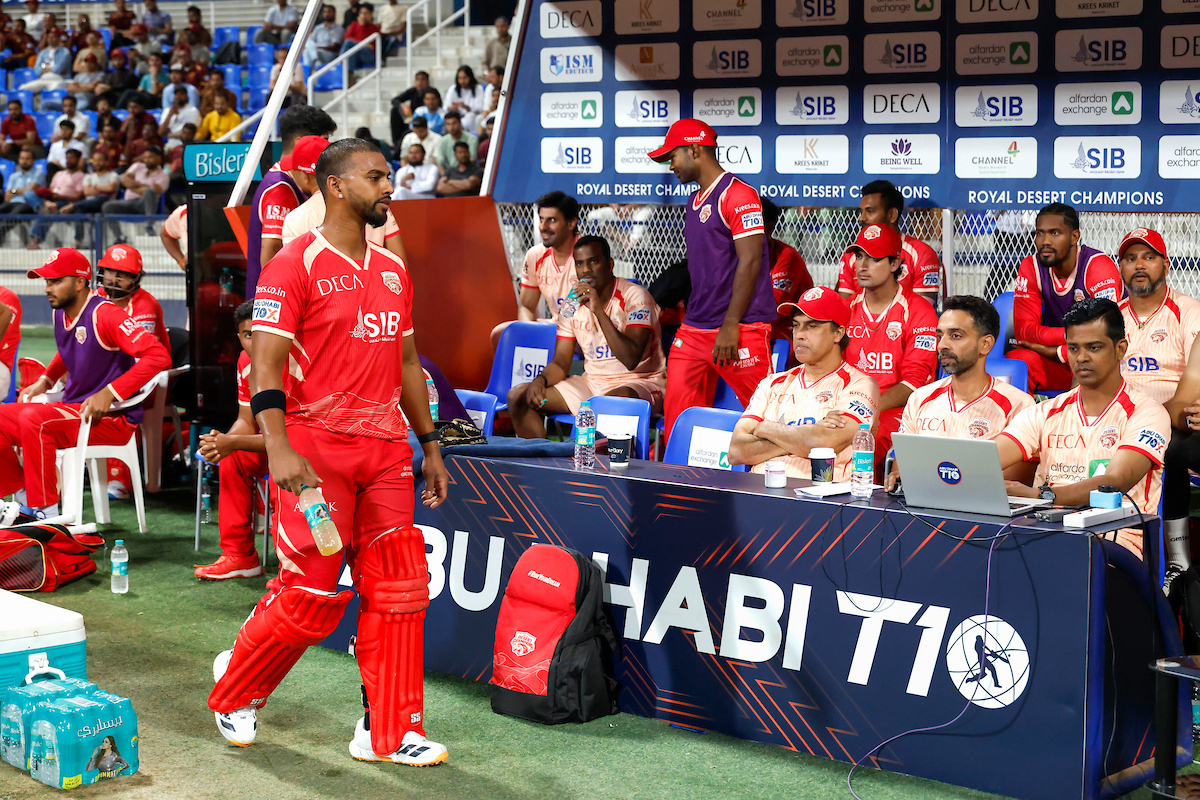
In a format where every delivery can change the course of a match, small mistakes can have significant consequences. For Robin Singh, the Royal Desert Champions’ struggles in the Abu Dhabi T10 have largely come down to missed opportunities, inconsistent performances and an inability to turn promising starts into match-winning totals.
Reflecting on his team’s eight-wicket defeat to Emirates Eagles at Zayed Cricket Stadium on Monday, the former India all-rounder and Royal Desert Champions team director identified a recurring problem throughout their campaign: a lack of consistency with both bat and ball.
“Throughout the tournament we have not really had good starts, and when we do get a start, the guys have not carried on,” Singh said.
He also pointed to injuries, fitness concerns and the failure of senior bowlers to deliver when it mattered.
“We had a few injuries, small niggles and stuff, and I think the bowlers really didn’t execute. Most of the senior bowlers didn’t really stand up.”
Singh acknowledged that the demands of the ten-over format leave little room for inconsistency, with teams needing to build momentum quickly and string victories together.
“It’s a tough tournament. You need to have some rhythm in place and win back-to-back games. That’s very important, and I think we did that only once,” he added.
Pooran’s run-out proves costly
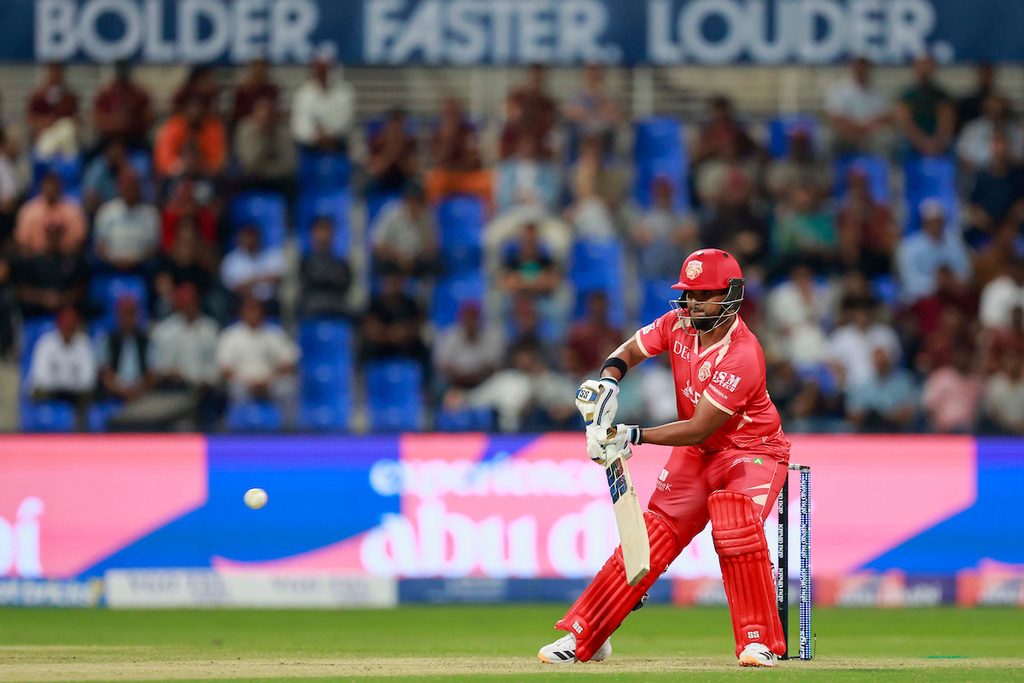
Monday’s contest offered another example of how quickly fortunes can change in T10 cricket.
Nicholas Pooran was looking in excellent touch, scoring 50 off just 23 deliveries, before being run out by Hardus Viljoen in the eighth over. The Champions eventually finished on 110 for four, a total that proved insufficient as Shimron Hetmyer’s unbeaten 59 guided Emirates Eagles to an eight-wicket victory with ten balls remaining.
For Singh, Pooran’s dismissal came at a particularly crucial stage, with the Champions well positioned to post a considerably bigger total.
“Everything is crucial in T10, whether it’s one ball or two balls,” he said. “At that stage we were set up to get about 130.”
Asked about Pooran’s run-out, Singh felt the batter could perhaps have made a different decision while running between the wickets.
“Probably, at the end of the day, he should have just continued running. But it’s just one of those things,” he said.
Singh calls for more recovery time
Beyond individual performances, Singh believes the tournament’s demanding schedule presents a significant challenge, particularly for bowlers who have limited time to recover between matches.
While stopping short of questioning the players’ commitment, he suggested that teams need to find ways to manage the physical and mental demands of a competition played at such a rapid pace.
“I think players need to be more committed. I’m not saying they’re not committed, but it’s quite a tough tournament to play considering you’re playing four or five games on the trot,” he said.
Singh also suggested that organisers consider introducing an additional rest day to give players more time to recover.
“It’s a tournament that’s so rapid, and it’s very difficult for anyone to come back in these sort of tournaments, especially bowlers,” he added.
Bigger boundaries could restore the bat-ball balance
One of Singh’s strongest observations concerned the balance between bat and ball in modern limited-overs cricket.
With T10 increasingly rewarding aggressive batting and power-hitting, the former Indian cricketer believes slightly larger playing boundaries could give bowlers a better opportunity to compete.
He would like to see boundary dimensions return to around 75 metres, arguing that the game needs to offer something more for bowlers and create closer contests.
“What I would like to see in cricket is the grounds a little bigger. I think it’s important to get the boundaries back to 75 metres, so there’s a little bit in it for the bowlers,” Singh said.
“It’s an uneven match as far as I’m concerned. As a cricket lover, I’d like to see a lot more bat versus ball. If you can weigh it 60/40, I think you will see a lot more close games.”
Singh also recognised how dramatically cricket has evolved since his playing days, particularly with the growing emphasis on aggressive stroke-making and the freedom to take risks.
“There’s a lot more intensity and a lot more cricket, so people are not afraid to play a lot more shots. You have a lot more opportunities to fail, and that allows you to play quite fearlessly,” he said.
“When we were playing, most of the time your focus was on 50-over cricket.”
While acknowledging that T10 offers batters opportunities to attack from the outset, Singh believes the fundamentals of the game remain important.
“Look, it’s relatively easier to play T10 cricket as long as you know how to play the game and can execute your skills. In the longer format, you will get tested in many ways,” he added.
Waseem needs to give himself time
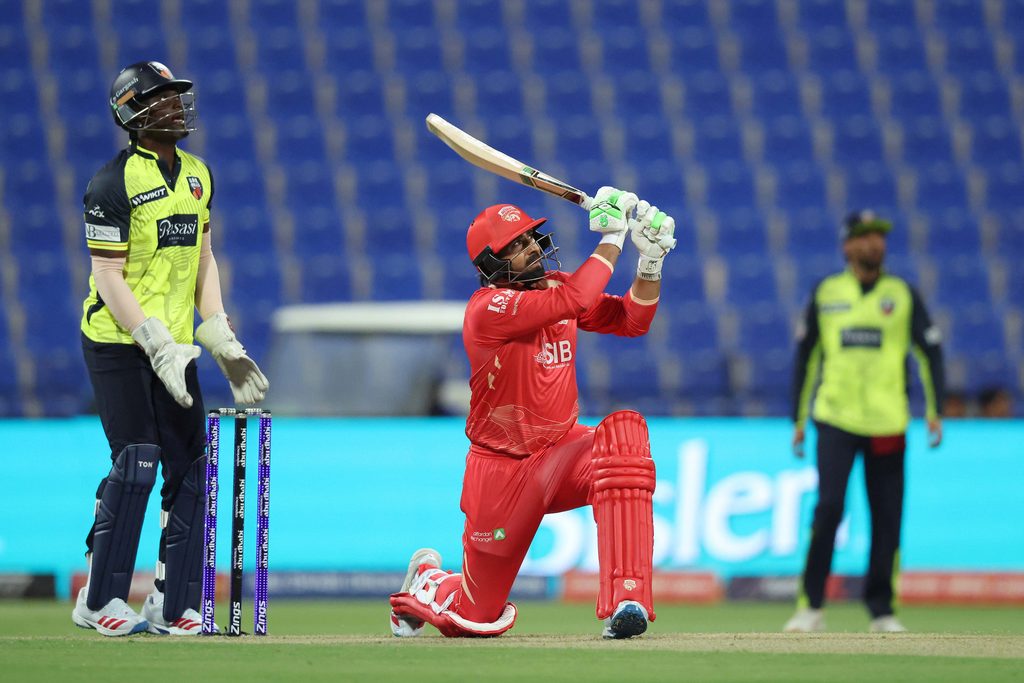
Singh was also candid when discussing Muhammad Waseem’s relatively quiet campaign with the bat.
The UAE international has struggled to make a consistent impact, and Singh believes the talented batter needs to show greater patience before attempting to dominate opposition bowling.
“I think he’s got enough opportunities to show his mettle. He has played some poor shots in most of the games that he’s got out in, so it’s really up to him. We’ve been telling him,” Singh said.
While backing Waseem’s ability, he stressed that even in a format as short as T10, batters cannot afford to abandon the basics.
“He’s a quality batter, but you have to give yourself a little time, even if it’s T10. One or two balls to have a look at what’s going on, and then back yourself to play your shots,” he added.
No obvious successor to India’s great finishers
Asked to identify India’s next great finisher, Singh was reluctant to single out an individual, although he expressed confidence in the depth of batting talent available in Indian cricket.
“No one really comes to mind at the moment. But at the same time, Indian cricket has a lot of good batters,” he said.
He also pointed out that the true quality of a batter becomes clearer when conditions offer a more balanced contest between bat and ball.
“We know Indian wickets are normally very good for batting. I think most people will get tested when it’s an even contest,” he added.
Challenges of defending totals
Fielding was another area Singh addressed, particularly after several missed catches across the tournament raised questions about the challenges of defending totals under lights.
He acknowledged that judging the trajectory and depth of the ball can become difficult during night matches, especially in T10, where batters frequently generate tremendous power.
“At night it’s not that easy to field, because it’s difficult to judge the depth of the ball. And in T10 the ball tends to travel much faster, because people are not afraid to hit it very hard. So you have to anticipate those things,” he said.
However, while recognising the technical challenges, Singh insisted that fielding standards ultimately depend on a player’s mindset and willingness to take responsibility.
“I think fielding is an attitude, to be honest,” he said.
“As a cricketer, you need to take pride. That’s all about you, not about anybody else.”
For a cricketer who built much of his reputation on athleticism and outstanding fielding, the message remains as relevant as ever. In a format where margins are exceptionally small, Singh believes commitment, concentration and pride in one’s work can make the difference between winning and losing.

Virat Kohli may never have played ten-over cricket, but that has not stopped the former India captain from keeping a close eye on the Abu Dhabi T10.
According to his childhood coach Rajkumar Sharma, Kohli is following the tournament after being informed about Sharma’s involvement with United Tigers this season. The experienced coach also believes the batting superstar would thrive if he ever decided to try the fast-paced format.
“I told him I’m going there and what my role is. He knows about the tournament, and I know he’s watching it,” Sharma said after United Tigers suffered a seven-wicket defeat to Arabian Aces at Zayed Cricket Stadium on Monday.
Asked whether he would like to see Kohli feature in T10 cricket, Sharma was confident about his former pupil’s prospects.
“He hasn’t played this format, but if he plays, he will do well, and people will love it,” he said.
From coaching Kohli to learning the T10 format

Having spent nearly three decades developing cricketers, Sharma is no stranger to the demands of the game. As founder of the West Delhi Cricket Academy, he played a pivotal role in Kohli’s development during his formative years.
However, his latest assignment with United Tigers has introduced him to a very different challenge.
Making his first appearance in the T10 format as a coach, the Dronacharya awardee admitted that even his extensive experience in the game has not fully prepared him for its intensity.
“I’m definitely enjoying this role. The team is good, the atmosphere is very good, and I’m really excited,” he said.
“It’s a different kind of cricket. Honestly, this is my first time in T10, and as an old-timer, I’m still understanding it. But it’s very exciting. I’ve done 50 overs and 20 overs, and now ten overs is a new lesson for me.”
He added that the format’s relentless pace leaves little room for recovery after a setback.
“There’s a lot of energy, the intensity is high, and it’s hard to make a comeback. It’s very competitive cricket.”
Test cricket remains the ultimate benchmark
Despite embracing the excitement of T10, Sharma remains firmly rooted in his traditional cricketing philosophy.
For him, Test cricket continues to be the ultimate examination of a player’s technique, temperament and ability.
“As an old-timer, I feel Test cricket is actual cricket,” he said.
“If someone is good at Test cricket, he can always play one-day, T20 or T10. But I don’t think a T10 or T20 player can easily become a good Test player.”
Sharma acknowledged that there are exceptions, but believes the technical demands of the longer format are fundamentally different from those of the shorter versions.
“There are exceptions, but technically it’s different, because there is a lot of power-hitting here,” he added.
Pakistan players have welcomed Sharma’s experience

Sharma’s transition to T10 has also brought him into a dressing room featuring several prominent Pakistan international cricketers.
United Tigers boast an experienced line-up that includes captain Fakhar Zaman, Iftikhar Ahmed, Sahibzada Farhan, Faheem Ashraf, Abbas Afridi and Usman Tariq.
Despite the different cricketing backgrounds, Sharma said the working relationship within the squad has been positive.
“We have a very good bond. I’m helping them, and they are responding very well,” he said.
However, the Tigers’ latest outing did not produce the desired result. They suffered a seven-wicket loss to Arabian Aces after managing 103 for five in their 10 overs.
With Fakhar departing for just one, Iftikhar Ahmed’s 46 off 24 deliveries provided the backbone of the innings. But the total proved insufficient as Moeen Ali, Sam Billings and Andre Russell guided the Aces to victory with seven balls remaining.
Reflecting on the defeat, Sharma admitted that his side had fallen considerably short of its target.
“We were expecting around 125 to 130, so we fell short by at least 20 runs. Fakhar’s wicket was a big setback. He is our main player, and he was trying to hit. It happens,” he said.
Abhishek Sharma is coach’s pick for T10
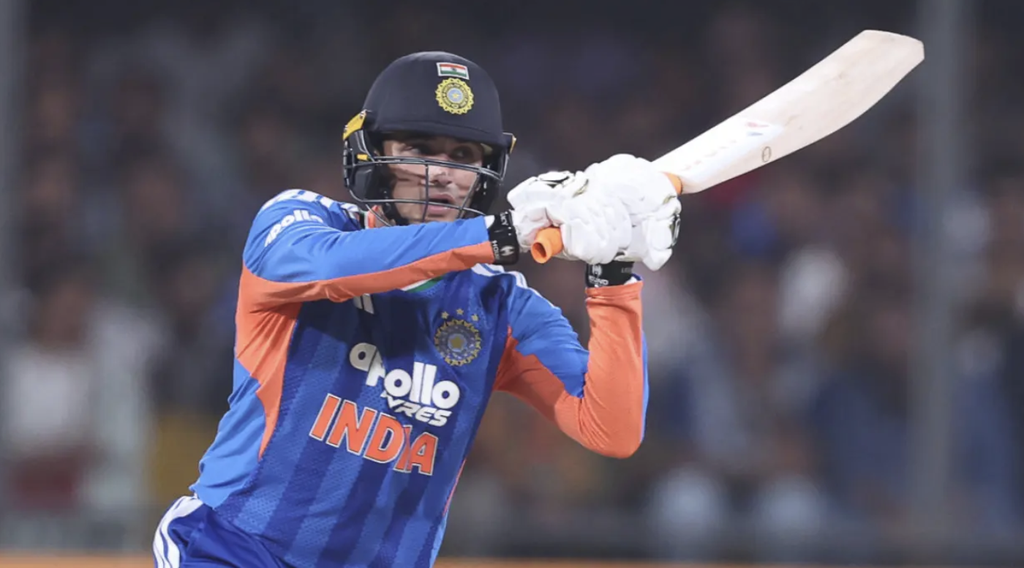
Looking beyond Kohli, Sharma has identified another Indian batter he believes would be particularly suited to the demands of ten-over cricket.
Young India opener Abhishek Sharma is his preferred choice, with the coach impressed by the attacking ability of India’s emerging generation.
“If you look at Abhishek Sharma and the rest of our youngsters, they are just too good,” he said.
However, Sharma was reluctant to draw comparisons between the next generation and Kohli, insisting that the former India captain’s achievements cannot be replicated overnight.
“No one can replace Virat. It takes very long to become Virat Kohli,” he said.
“Somebody has to play for more than ten years to be in contention with such players. Youngsters are coming, and they are very talented. We have a lot of good players.”
He also singled out India Test and ODI batter Shubman Gill alongside Abhishek as two of the country’s exciting talents.
“Shubman Gill is one of the best we have, and Abhishek Sharma is also a good player. But they need time. Play a few years, perform consistently, and then we can think about whether someone can replace Virat.”
For now, Sharma is focused on guiding United Tigers through his first T10 campaign. But his revelation that Kohli is following the tournament adds an intriguing subplot to this year’s Abu Dhabi T10, particularly with the coach convinced that the Indian superstar would be just as entertaining in the game’s shortest format.

Etihad and flydubai extend flight cancellations to Saudi Arabia

Anish Giri and Alireza Firouzja lead Total Chess semifinals in Budapest


