
Entertainment
How Anatomy of a Fall reversed French art cinema’s box office decline


[ad_1]
Anatomy of a Fall, Justine Triet’s courtroom thriller about a writer accused of murdering her husband at their isolated mountain chalet, has won Golden Globes for best non-English language film and best screenplay. It is a triumph for French arthouse drama, which has been in decline in recent years.
Since winning the Palme d’Or (the awards’ biggest prize) at the Cannes Film Festival in May 2023, Anatomy of a Fall has performed impressively well at the international box office. In the US, it earned nearly US$4 million (Pound 3 million), becoming the highest-grossing foreign-language release since the pandemic, according to Neon, its US distributor. In the UK and Ireland, it became the first French-language title in over a decade to surpass Pound 1 million at the box office.
Meanwhile, critics have lauded the film, with a 96% “Certified Fresh” rating on Rotten Tomatoes. Surprisingly, it is out of the running for this year’s Oscar for Best International Feature. The film was snubbed by France’s Oscar committee, with several French insiders suggesting “Triet is possibly being ‘punished’ for calling out the French government in her fiery political speech at Cannes”, according to Variety.
However, the film is expected to garner more accolades over the year, reversing the downward trajectory French art films have been on since 2016.
Troubled relationships
French art films – low-budget dramas marked by realism, ambiguity and a distinct directorial style, often pitched at festivals and specialised movie theatres – have struggled at the international box office in recent years. As detailed in my new book Transnational European Cinema: Representation, Audiences, Identity, between 2005 and 2016, France exported 13 arthouse films that went on to attract 1 million cinemagoers or more in the rest of Europe. However, since 2016, no French arthouse film has achieved this feat.
France still produced acclaimed art films like Ladj Ly’s Les Miserables (2019), an unflinching portrayal of the tensions between black and North African youths and the police in the banlieue, the economically deprived housing projects on the outskirts of Paris. But these have often struggled to attract global audiences. Despite an Oscar nomination, Les Miserables sold less than 400,000 movie tickets in Europe outside France, according to the Lumiere film database.
Two crucial factors explain why Anatomy of a Fall has reversed this trend. First, after a phase when French art films like Les Miserables explored the grittier social problems of the Parisian banlieue, Triet’s film refocuses the spotlight on troubled bourgeois relationships through its story of a middle-class marriage strained by professional rivalry, sexual jealousy and parental guilt.
Troubled bourgeois relationships are explored by earlier French arthouse blockbusters like Two Days in Paris (2007), Amour (2012), and Blue Is the Warmest Colour (2014).
As the focus groups for my book reveal, troubled bourgeois relationships are a topic that resonates particularly well with traditional arthouse audiences. “I like those kind of films generally,” explained one middle-aged British female graduate in relation to Blue Is the Warmest Colour, the story of a turbulent lesbian romance between a Parisian high school pupil and a more worldly art student. “It seems quite emotional and intense.”
By contrast, focus group respondents were less enthusiastic about grittier banlieue art films. “It looks like something too far from our reality,” said a middle-aged Italian female graduate in relation to Girlhood (2014), Celine Sciamma’s coming-of-age drama about a gang of young black women from the Parisian housing projects, which attracted less than 94,000 non-French viewers in Europe. “I don’t know if I would be engaged, or maybe I won’t be able to understand it.”
Palme d’Or triumph
The second crucial factor behind Anatomy of a Fall’s appeal lies in its Palme d’Or triumph, the top prize at the Cannes Film Festival, a champion of popular arthouse cinema. “I trust their decision more,” explained a young Italian student. “If a film has been awarded there, I’ll watch it.”
Exit Polls for the British Film Institute underline the significance of the prestigious award: 44% of cinemagoers at a screening of Amour and 46% at a showing of Blue Is the Warmest Colour said they had come to see these films because they had won the Palme d’Or at the Cannes Film Festival.
Certainly, a Palme d’Or is no guarantee of international box office success. Jacques Audiard’s Dheepan (2015) grossed less than US$200,000 (Pound 157,000) in the UK and around US$260,000 (Pound 204,000) in the US, despite winning the prize in 2015.
But the French drama about three Tamil refugees fleeing the Sri Lankan civil war, who end up admitting the gangland violence of the Parisian banlieue, was perhaps too far outside the comfort zone for traditional fans of French art cinema. The same might also be said of the French body horror Titane (2021), the 2021 Palme d’Or winner, though its theatrical run was also hampered by COVID restrictions.
By securing the Palme d’Or with a drama that refocuses on a troubled middle-class love relationship, Anatomy of a Fall has rekindled the global passion for French art cinema. Yet it also shows that French arthouse fans can be surprisingly conservative in their tastes, often ignoring films with more challenging themes and styles.
Looking for something good? Cut through the noise with a carefully curated selection of the latest releases, live events and exhibitions, straight to your inbox every fortnight, on Fridays. Sign up here.
Author: Huw D. Jones – Lecturer in Film Studies, University of Southampton 
[ad_2]


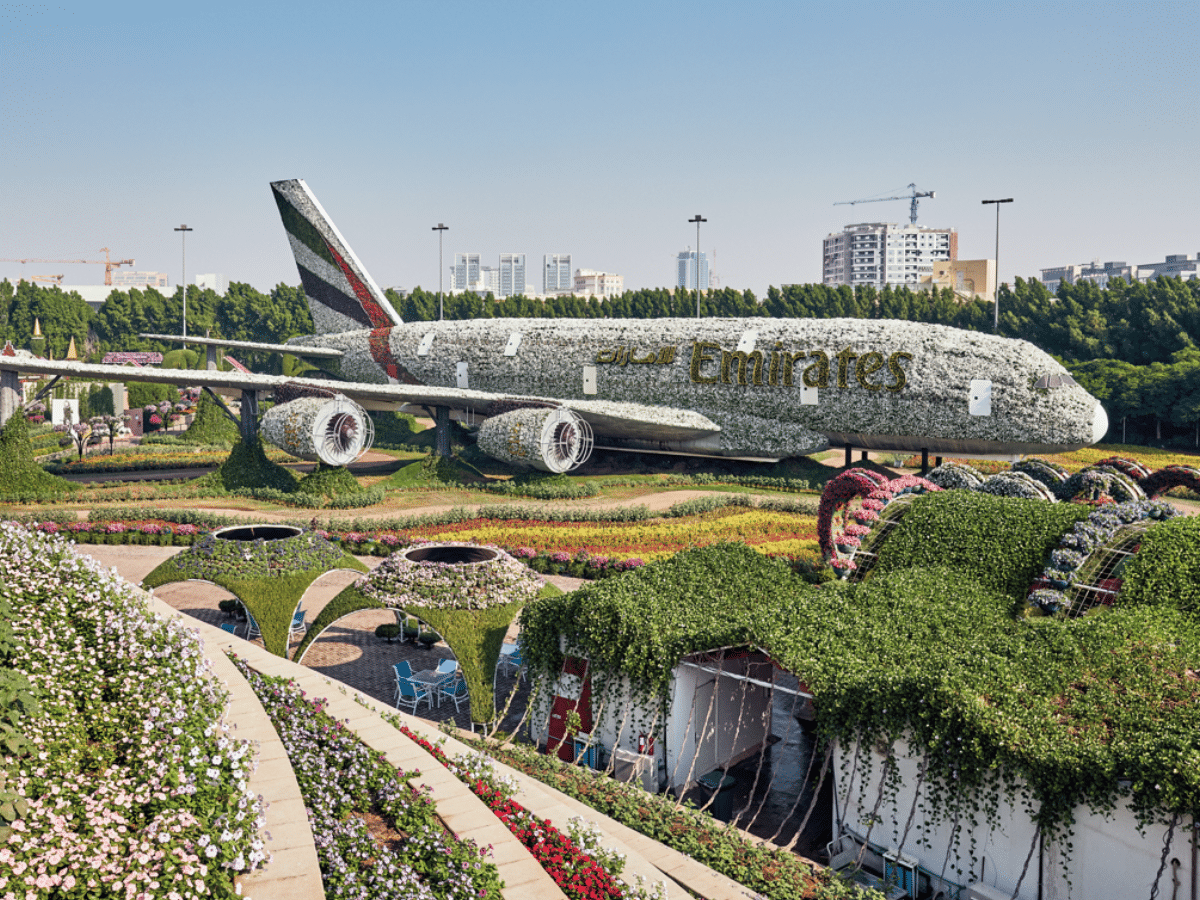

Emirates Dubai 7s is returning to The Sevens Stadium from November 27 to 29, with tickets now on sale for the three-day sports and entertainment festival.
The 2026 edition will bring together international rugby, amateur sports, live music and family entertainment, with organisers promising a bigger programme than previous years.
The festival attracted more than 88,000 visitors in 2025 and will again take place during the final weekend of the Dubai Fitness Challenge.
Ticket prices
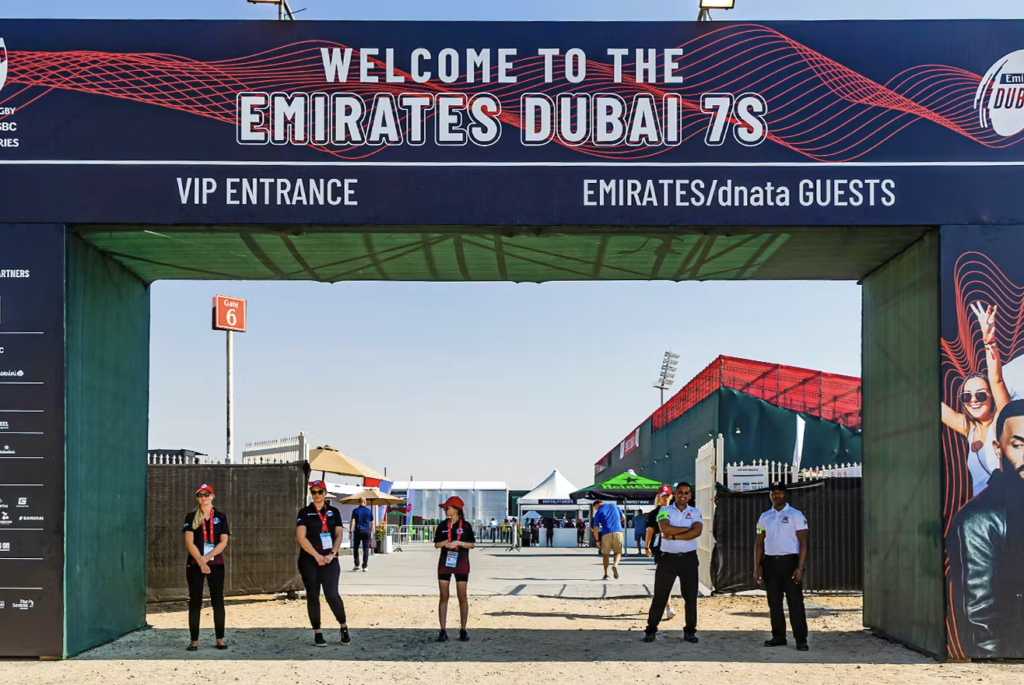
Ticket prices for General Admission and Hospitality have stayed the same for a third consecutive year.
Three-day General Admission tickets cost Dh595 per person, while the three-day Family Pass is Dh1,136 for two adults and two children.
Other ticket options
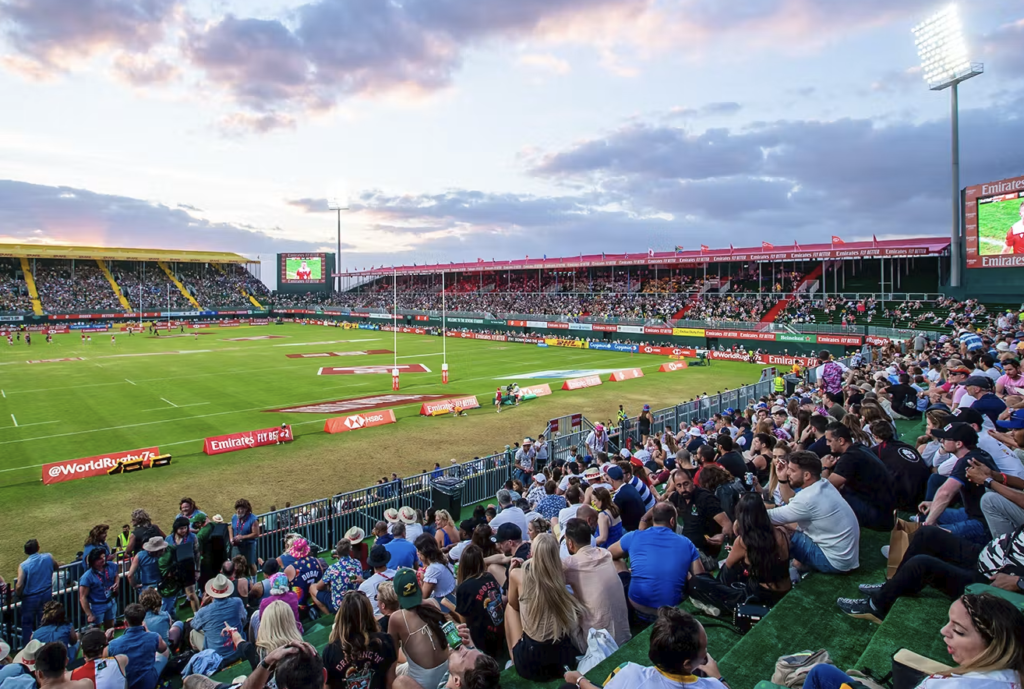
- Group pass: Dh446 per person for four or more adults
- Saturday or Sunday: Dh455
- Friday: Dh75
- Under 15s: Free
- People of Determination + carer: Dh375
Tickets can be purchased through the Emirates Dubai 7s website and app.
Bigger family attractions

Family entertainment will get a major boost this year as the UAE celebrates the Year of the Family.
The festival will feature its biggest-ever Kids’ Zone, including the UAE’s largest inflatable kids’ zone, along with a Ferris wheel and zipline. More attractions are expected to be announced ahead of the event.
Six sports and top rugby action
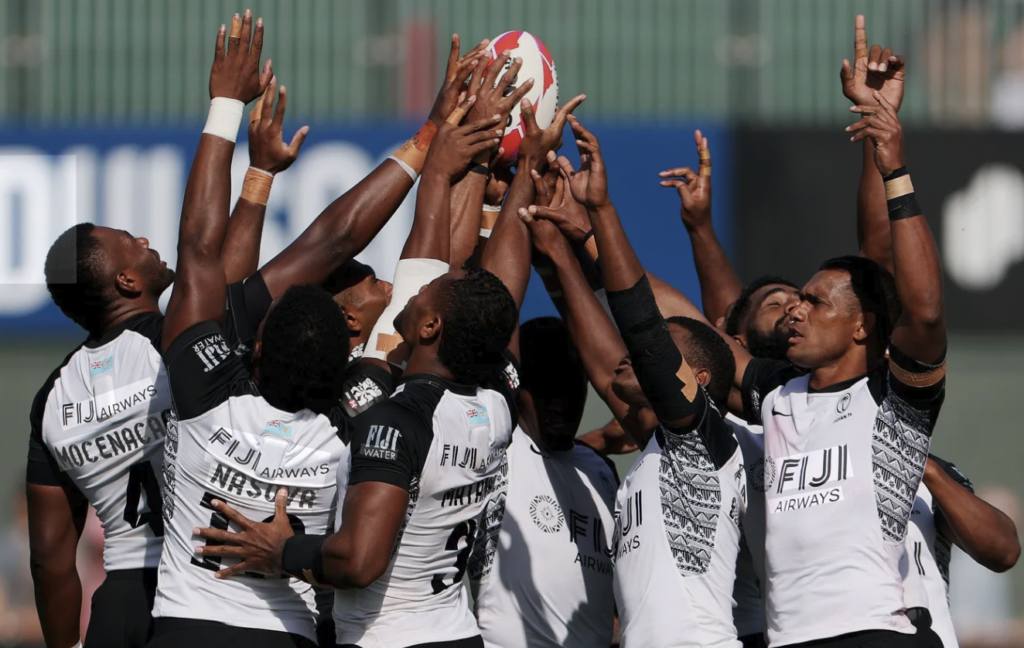
Alongside elite rugby, visitors can watch or take part in competitions across six sports — rugby, netball, cricket, WODON3 fitness, Rebound padel and Gaelic Football.
Gaelic Football will join the festival for the first time in 2026.
The Sevens Stadium will also host the opening round of the HSBC SVNS Series 2027, bringing the world’s leading rugby sevens players to Dubai.
The WODON3 Elite final will take place on Pitch 1 between HSBC SVNS matches, with competitors potentially performing in front of crowds of up to 20,000.
Music all weekend

Live entertainment will run throughout the festival, with local and international artists performing across three days.
Last year’s line-up included Tinie Tempah, Sean Paul and Fisher, while the 2026 headline acts will be announced later.
For a premium experience, The Sunroom returns with all-inclusive food and drinks, shaded seating, prime sporting views and dedicated access. Packages start from Dh1,925 per person.
With sport, music and family attractions packed into one weekend, Emirates Dubai 7s is gearing up for another big Dubai event.
Entertainment
Dubai launches ‘Dubai+’ family streaming platform to boost digital media and creative economy



Dubai Miracle Garden returns as UAE’s cooler season begins

Sultan Al Qasimi Attends Opening of 12th Sharjah Calligraphy Biennial


