
Entertainment
How movies use music to manipulate your memory


[ad_1]
Around one in five American adults manage to squeeze in watching a movie on a daily basis. It’s a great way to escape the daily grind and unwind with loved ones. But, what can you actually remember about last night’s film?
You may be able to remember the title, the rough story outline or the Hollywood star who acted in it. But dig a little deeper. How easily does a specific movie sequence come to mind right now? And more importantly, can you hear or recognise the film’s musical score?
Filmmakers have long used music to try to make movies, scenes and characters more memorable. Now psychological research has started to uncover the science behind this process.
Music is so closely ingrained in our cinematic experience that we sometimes end up having false memory for it. One study showed that, after watching a brief movie sequence, up to two-thirds of participants believed that the sequence was accompanied by a musical score – even when it wasn’t. Scientists call this “expectancy bias”.
A successful musical score often involves earworms – songs that stick in our minds. These tend to be songs that have achieved great success and recent runs in the music charts.
When paired with a movie sequence, fresh takes on old hits help keep audiences entertained. Their sing-along, foot-tapping familiarity reflect the huge exposure they’ve had for decades. They are therefore readily exploited as an effective marketing hook, especially in movie trailers – where there’s little time to make an impact on viewers.
Music also helps us interpret characters. Research shows that listening to a 15 seconds segment of fearful music can act as an important cue to look for signs of fear in the facial expressions of the characters on the screen.
But how are deeper emotional connections made? Filmmakers rely on a range of techniques to try to create enduring and distinctive movie scenes. They often home in on the emotional properties of the pairing between sound and images. But is there any firm evidence that music can actually influence visual memories in this way?
Research into music and memory has unveiled that the two are strongly linked. People are more accurate in recalling the actions, characters and final outcome of a positive or negative film scene if it is accompanied by music with a similar positive or negative emotional quality, respectively.
This match between the emotional content of the film and music is called a mood-congruency effect. It enhances our memory of what was previously viewed by “chunking” memory fragments into a quick, easy and more manageable whole in our minds.
Irony and incongruency
Irony is linked to the ability to say one thing while meaning the opposite. Often considered a linguist device, it is also apparent in sound and image pairings. In the ironic contrast technique, scenes that depict negative events or emotions such as sadness, anger and fear are paired with emotionally positive music.
The outcome of this pairing is that the incongruous background disrupts the emotional tone of the film scene, often creating a sarcastic or melancholic effect that is memorable.
The movies Bowling for Columbine and A Clockwork Orange provide examples of violent episodes that are accompanied by incongruent music.
Mood-incongruency effects represent yet another twist in viewers’ expectations. We rely on our own personal experiences and associations with musical conventions to help shape our understanding of what happens next.
Watching a brief clip of a wedding party set against a backdrop of slow-paced, sad music, for example, alerts us to a mismatch between the visual content and our previous (direct or indirect) experiences of wedding parties. The movie script in our mind might be asking, “where is the upbeat music for the party guests to dance to?” Searching for the answer makes us notice the mood-incongruency effect conveyed by the music even more.
This enables us to develop a more distinctive image in our memory. In fact, we’ve tested this in the lab. We asked 60 participants to view a romantic comedy trailer to either sad, happy or no music. When we tested their memory of the trailer later on, we found that people who had heard the sad music had a better visual memory of the film scene than those who watched it with happy music or without any music at all.
Mood-incongruency effects are not limited to audio-visual pairings. They can be found with other senses too, such as odours, and serve to alert us quickly and efficiently to expectancy violations in our immediate environment. This is almost like a “what’s coming next” setting in our brain that makes us pay more attention – and therefore remember the event better.
These effects appear to be relatively short-lived and whether they can exert any longer-term impact beyond the few minutes of a movie trailer or a film scene is yet to be fully determined. Ultimately, they are informed by our previous experiences and stored in our long-term memory, ready and on standby for the next plot twist.
So what happens if our previous experiences of these music-induced emotions are fragmented or missing altogether, as might be the case in individuals who are deaf or hearing-impaired?
Can captioning a piece of music as “ominous” elicit similar ironic contrast effects on memory as actual, ominous-sounding music, for example? And if the unexpected becomes the expected, is the irony lost? Answers to these questions might just open up a new portal into our movie-viewing universe.
Author: Libby Damjanovic – Research Fellow of Psychology, Lund University 
[ad_2]




Emirates Dubai 7s is returning to The Sevens Stadium from November 27 to 29, with tickets now on sale for the three-day sports and entertainment festival.
The 2026 edition will bring together international rugby, amateur sports, live music and family entertainment, with organisers promising a bigger programme than previous years.
The festival attracted more than 88,000 visitors in 2025 and will again take place during the final weekend of the Dubai Fitness Challenge.
Ticket prices
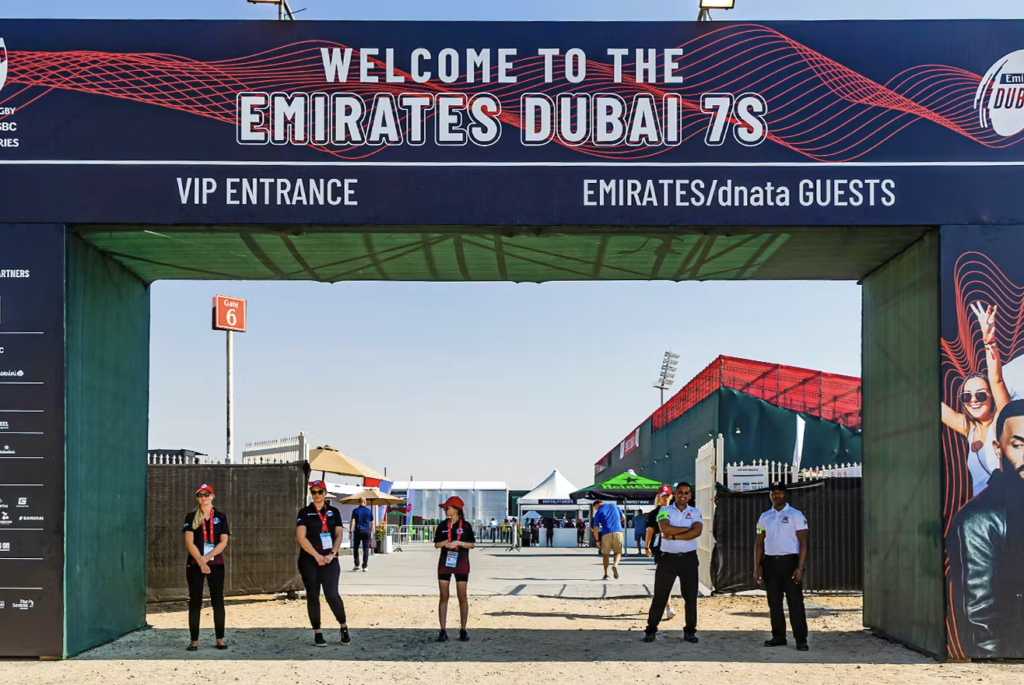
Ticket prices for General Admission and Hospitality have stayed the same for a third consecutive year.
Three-day General Admission tickets cost Dh595 per person, while the three-day Family Pass is Dh1,136 for two adults and two children.
Other ticket options

- Group pass: Dh446 per person for four or more adults
- Saturday or Sunday: Dh455
- Friday: Dh75
- Under 15s: Free
- People of Determination + carer: Dh375
Tickets can be purchased through the Emirates Dubai 7s website and app.
Bigger family attractions

Family entertainment will get a major boost this year as the UAE celebrates the Year of the Family.
The festival will feature its biggest-ever Kids’ Zone, including the UAE’s largest inflatable kids’ zone, along with a Ferris wheel and zipline. More attractions are expected to be announced ahead of the event.
Six sports and top rugby action

Alongside elite rugby, visitors can watch or take part in competitions across six sports — rugby, netball, cricket, WODON3 fitness, Rebound padel and Gaelic Football.
Gaelic Football will join the festival for the first time in 2026.
The Sevens Stadium will also host the opening round of the HSBC SVNS Series 2027, bringing the world’s leading rugby sevens players to Dubai.
The WODON3 Elite final will take place on Pitch 1 between HSBC SVNS matches, with competitors potentially performing in front of crowds of up to 20,000.
Music all weekend

Live entertainment will run throughout the festival, with local and international artists performing across three days.
Last year’s line-up included Tinie Tempah, Sean Paul and Fisher, while the 2026 headline acts will be announced later.
For a premium experience, The Sunroom returns with all-inclusive food and drinks, shaded seating, prime sporting views and dedicated access. Packages start from Dh1,925 per person.
With sport, music and family attractions packed into one weekend, Emirates Dubai 7s is gearing up for another big Dubai event.
Entertainment
Dubai launches ‘Dubai+’ family streaming platform to boost digital media and creative economy



Dubai Miracle Garden returns as UAE’s cooler season begins

Sultan Al Qasimi Attends Opening of 12th Sharjah Calligraphy Biennial


