Connect with us

Entertainment

Saving Romania’s Village Architecture, One Mud House At A Time

Published

on

Spread the love

[ad_1]

The small town of Corbeanca has a reputation for expensive luxury villas and a well-off population of around 11,000 who live within easy commuting distance of Bucharest. But a century ago, Corbeanca was a typical country village of whitewashed mud houses inhabited by farmers who spent their days toiling in the fields.

In January 2023, the life of one old house in Corbeanca, looked set to come to an end. The owner of ‘Casa Frusina,’ named after the family who lived there, had put the house up for sale along with the now valuable land it sat on.

Casa Frusina photographed before its removal

The ‘for sale’ sign displayed outside the 100-year-old house caught the eye of Radu Ștefanescu. A local man who is neither an architect nor a construction specialist but loves old buildings that define the identity of Romania’s regions and has restored several historic houses across Romania.

‘I was lucky, because the owner also wanted to preserve the house but he’s an elderly gentleman and didn’t have the financial or physical ability to do so,’ Ștefanescu explained.

At the end of the 19th century, Corbeanca was home to 1,000 people who lived in 254 houses much like the one Stefanescu spotted for sale. Almost all of them are now gone.

Radu Stefanescu (right) with the former owners of the house

Ștefanescu grew up in Bucharest but holidayed as a child with his grandparents in the countryside. Memories of distinctive Romanian villages stuck with him and as an adult he made it his mission to save old houses that were fast disappearing across Romania.

On condition it would be restored and made available to the public, the house owner agreed to donate his former home. All Stefanescu needed was a place to move the house — since the land it stood on was being sold for development — and a team of people to help restore the building.

Volunteers coat up the exterior of Casa Frusina.

When the call was put out for volunteers to help restore the building, the response was overwhelming. One hundred and seventy people, including lawyers, university professors, businessmen, and pilots came forward.

Many of the volunteers had no experience in construction, let alone the specialized skills needed for adobe mud building or decorative woodworking, but they learned on the go.

Philip, a young volunteer, coats wooden panels recovered from the house in a preservative solution.

Larisa, who runs a travel agency in Romania, volunteered with her husband, Stefan, and two children, Philip (pictured above) and Marc. The family saw news about the restoration project on Facebook and began helping once the house — which was effectively a wooden skeleton — had arrived in the park.

The family learned to fill in the walls the same way as villagers of old, with mud and straw. One son, Marc, carved wooden decorations.

‘We started making corners and ornamental panels for the window. Marc learned to use a circular saw and, together with an English neighbor, he started making simple heart shapes, then cutting out window sills,’ Larisa recalled.

A heart-shaped decoration destined for the awning of Casa Frusina

The ornamental carvings around the awnings of the original house could not all be recovered, so under the guidance of a ‘village elder’ who had grown up in Corbeanca, they learned to remake the decorations.

Radu Ștefanescu received many questions from volunteers during the project. Some children asked about the crossbars that split windowpanes into quarters. ‘Did they only have a structural role to strengthen the windows, or did they serve another purpose?’ the children wondered.

The answer, Stefanescu says, came from Charlie Chaplin’s 1921 movie The Kid, in which a glazier during the Great Depression conspires to break, then repair windows for a fee. Four small pieces of glass were cheaper to buy than one large pane.

A volunteer works on whitewashing the house on November 11.

Work on the house is now largely complete, aside from some of the woodwork, which is on track to be finished in December. After that the house will be officially donated to the Corbeanca community. Various activities for children are being planned inside the building.

Copyright (c) 2018. RFE/RL, Inc. Republished with the permission of Radio Free Europe/Radio Liberty, Washington DC 20036

[ad_2]

Entertainment

Dubai Miracle Garden returns as UAE’s cooler season begins

Published

on

Spread the love

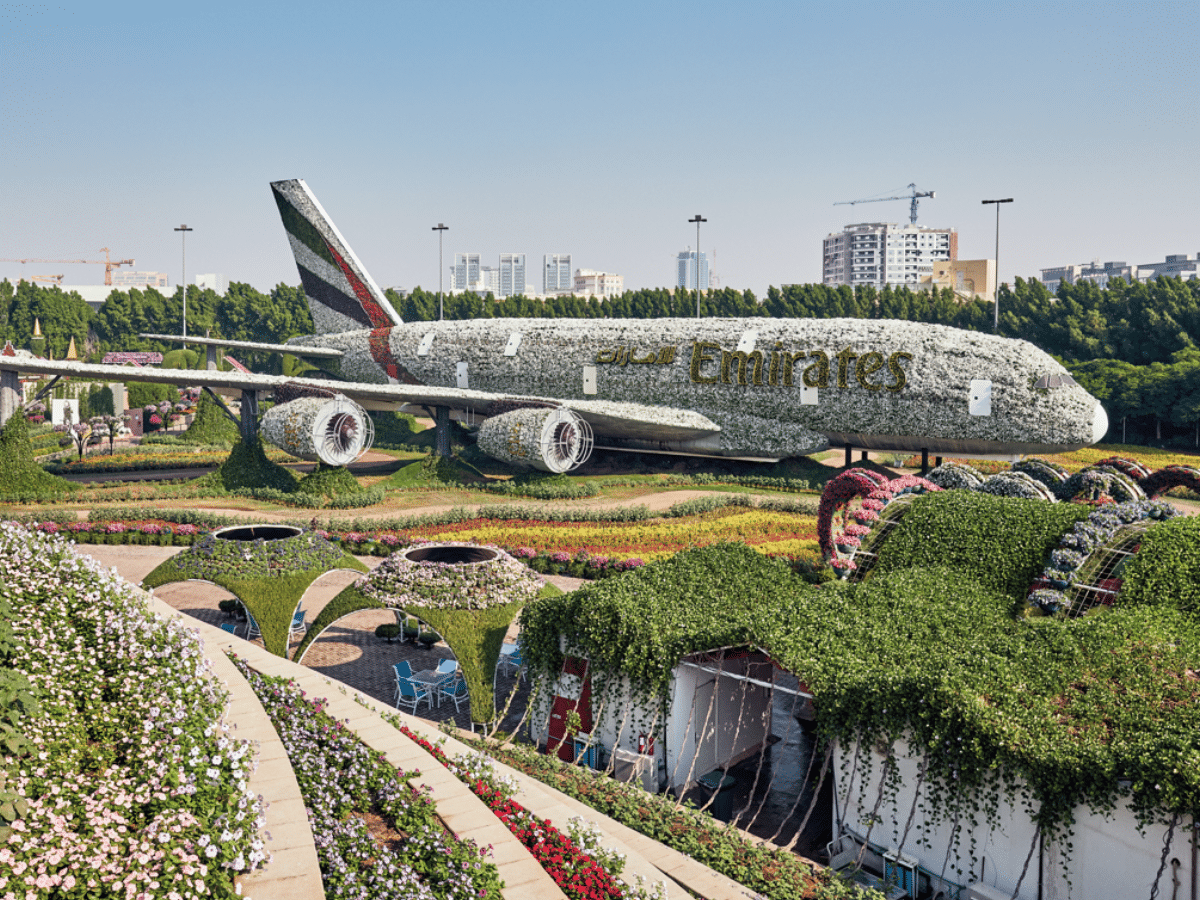
Dubai’s Miracle Garden has reopened for its 15th season as temperatures begin to fall across the UAE. The popular attraction in Al Barsha South welcomed visitors on Thursday, 8 October, with the new season being launched under the theme “Fifteen Years, Blooming Together”.

Sheikh Theyab bin Tahnoon bin Mohammed Al Nahyan, chairman of Miracle Group, inaugurated the new season. The garden will remain open until 31 May 2027, with a programme of weekly themes and events planned around the UAE’s cultural and national calendar.

Visitors will see activities linked to occasions including Pink October, United Nations Day, UAE Flag Day and Diwali. The programme will also include live music, family entertainment and fitness activities held as part of the Dubai Fitness Challenge.

Events are also planned for Commemoration Day and Eid Al Etihad.

“For fifteen seasons, Dubai Miracle Garden has grown alongside Dubai and its people,” Sheikh Theyab said. “This season is dedicated to the community that made it possible, particularly the families and residents who return year after year.”

Mohammed Zaher Hammadih, group chief executive of Miracle Group, said the weekly programme was intended to encourage visitors to return throughout the season.

“As we mark our 15th season, Dubai Miracle Garden continues to bring people together through shared experiences,” he said. “Our weekly programme gives families a new reason to return, with cultural celebrations, live entertainment and activities to enjoy throughout the season.”

The garden features more than 150 varieties of flowers and is known for its large-scale floral displays, some of which have previously set Guinness World Records.

Since opening in 2013, it has attracted millions of visitors and become one of Dubai’s established family attractions.The garden is open daily from 9am to 9pm on weekdays and from 9am to 11pm at weekends.

Tickets start at Dh105 for adults and Dh84 for children. Children under three can enter free of charge.

Continue Reading

Entertainment

Emirates Dubai 7s 2026: Tickets on sale as festival returns with bigger family zone

Published

on

Spread the love

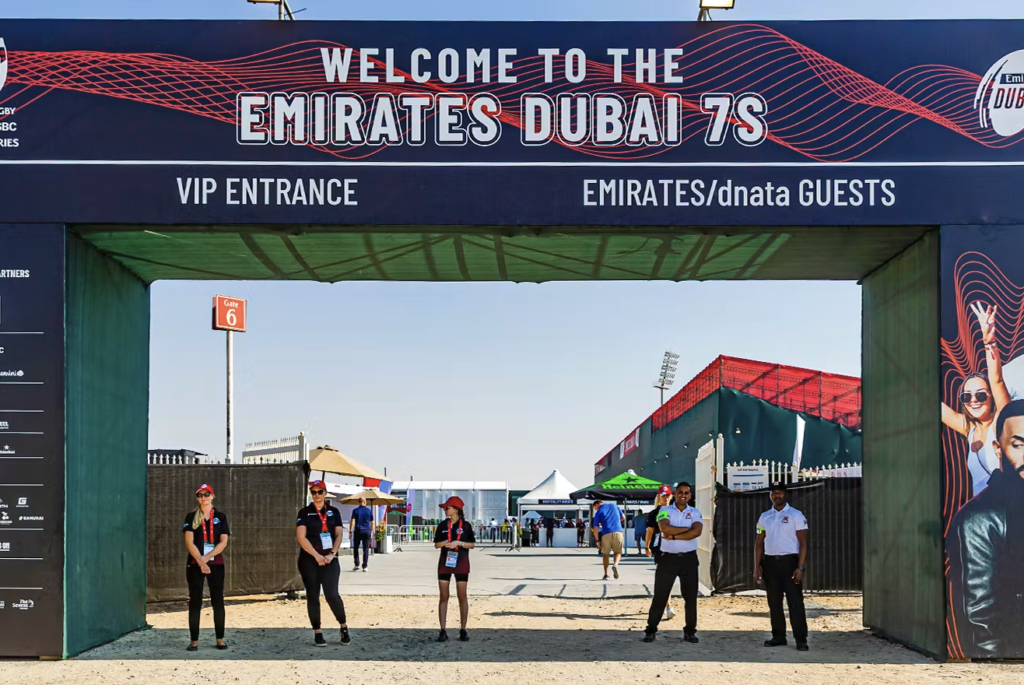
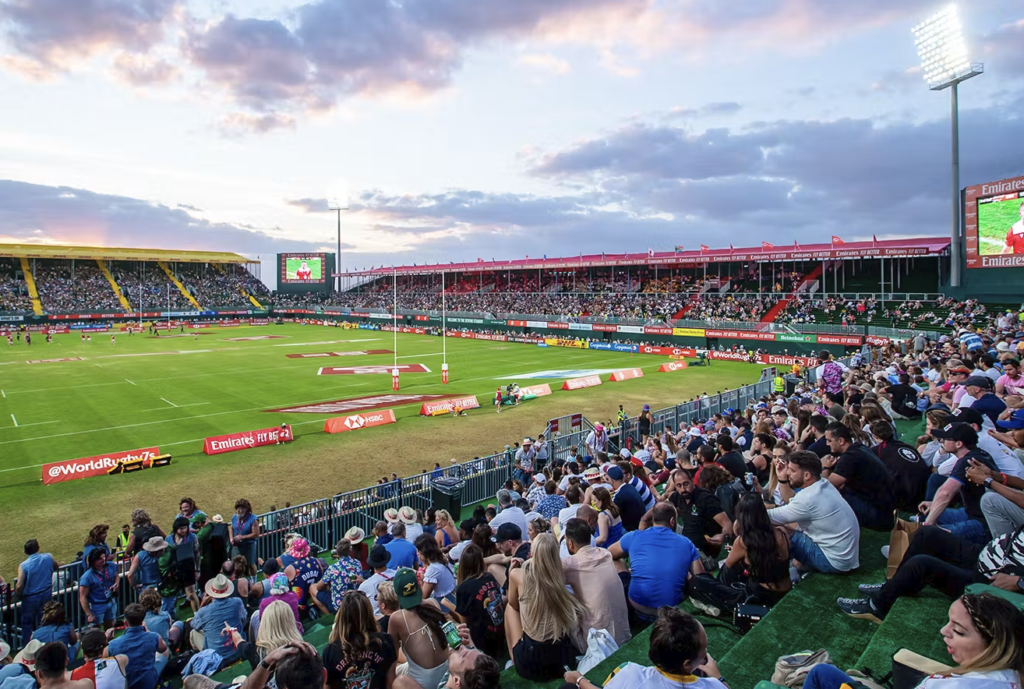
Emirates Dubai 7s is returning to The Sevens Stadium from November 27 to 29, with tickets now on sale for the three-day sports and entertainment festival.

The 2026 edition will bring together international rugby, amateur sports, live music and family entertainment, with organisers promising a bigger programme than previous years.

The festival attracted more than 88,000 visitors in 2025 and will again take place during the final weekend of the Dubai Fitness Challenge.

Ticket prices
Ticket prices for General Admission and Hospitality have stayed the same for a third consecutive year.

Three-day General Admission tickets cost Dh595 per person, while the three-day Family Pass is Dh1,136 for two adults and two children.

Other ticket options
  • Group pass: Dh446 per person for four or more adults
  • Saturday or Sunday: Dh455
  • Friday: Dh75
  • Under 15s: Free
  • People of Determination + carer: Dh375

Tickets can be purchased through the Emirates Dubai 7s website and app.

Bigger family attractions

Family entertainment will get a major boost this year as the UAE celebrates the Year of the Family.

The festival will feature its biggest-ever Kids’ Zone, including the UAE’s largest inflatable kids’ zone, along with a Ferris wheel and zipline. More attractions are expected to be announced ahead of the event.

Six sports and top rugby action

Alongside elite rugby, visitors can watch or take part in competitions across six sports — rugby, netball, cricket, WODON3 fitness, Rebound padel and Gaelic Football.

Gaelic Football will join the festival for the first time in 2026.

The Sevens Stadium will also host the opening round of the HSBC SVNS Series 2027, bringing the world’s leading rugby sevens players to Dubai.

The WODON3 Elite final will take place on Pitch 1 between HSBC SVNS matches, with competitors potentially performing in front of crowds of up to 20,000.

Music all weekend

Live entertainment will run throughout the festival, with local and international artists performing across three days.

Last year’s line-up included Tinie Tempah, Sean Paul and Fisher, while the 2026 headline acts will be announced later.

For a premium experience, The Sunroom returns with all-inclusive food and drinks, shaded seating, prime sporting views and dedicated access. Packages start from Dh1,925 per person.

With sport, music and family attractions packed into one weekend, Emirates Dubai 7s is gearing up for another big Dubai event.

Continue Reading

Entertainment

Dubai launches ‘Dubai+’ family streaming platform to boost digital media and creative economy

Published

on

Spread the love

Sheikh Ahmed bin Mohammed bin Rashid Al Maktoum, Second Deputy Ruler of Dubai and Chairman of the Dubai Media Council, has approved the launch of Dubai+, a new family-oriented digital media platform, reinforcing Dubai’s ambition to become a global hub for digital media and the creative economy.

The approval came as Sheikh Ahmed chaired the Dubai Media Council’s first meeting of 2026 at Dubai Media, where members reviewed sector strategies and plans to strengthen content creation, innovation and local production capabilities.

What is Dubai+?

Dubai+ will offer a wide range of family-friendly content, bringing together:

  • Local and Emirati productions
  • Arab series and films
  • International entertainment

The platform reflects Dubai Media’s integrated digital ecosystem strategy, responding to shifting viewer habits and the growing demand for high-quality, on-demand digital content.

“We believe media is a strategic force that shapes awareness, supports development and builds trust,” Sheikh Ahmed said. 

Boosting Local Film and Content Production

The Council also reviewed plans to:

  • Enhance local production capabilities
  • Support cinema as a cultural and creative industry
  • Invest in programmes that drive creative and economic growth

Samr Al Marzooqi, Director of Films and Production at the Dubai Media Council, outlined upcoming initiatives aimed at showcasing Emirati and international talent while strengthening Dubai’s film sector.

Next Phase of Growth

Mona Al Marri, Vice Chairperson and Managing Director of the Dubai Media Council, said the next phase will focus on monitoring implementation and ensuring measurable outcomes across the sector.

Secretary General Nehal Badri added that priorities include encouraging private sector participation, accelerating content development, and investing in talent, advanced production technologies and future-ready capabilities.


Continue Reading

Popular

© Copyright 2025 HEADLINE. All rights reserved

https://headline.ae/