
Entertainment
‘Star Wars meteorite’ sheds light on the early Solar System

[ad_1]
Locals watched in awe as a fireball exploded and hundreds of meteorite fragments rained down on the city of Tatahouine, Tunisia, on June 27, 1931. Fittingly, the city later became a major filming location of the Star Wars movie series. The desert climate and traditional villages became a huge inspiration to the director, George Lucas, who proceeded to name the fictional home planet of Luke Skywalker and Darth Vader “Tatooine”.
The mysterious 1931 meteorite, a rare type of achondrite (a meteorite that has experienced melting) known as a diogenite, is obviously not a fragment of Skywalker’s home planet. But it was similarly named after the city of Tatahouine. Now, a recent study has gleaned important insights into the the origin of the meteorite – and the early Solar System.
Lucas filmed various scenes for Star Wars in Tatahouine. These include Episode IV – A New Hope (1977), Star Wars: Episode I – The Phantom Menace (1999) and Star Wars: Episode 2 – Attack of the Clones (2002). Various famous scenes were filmed there, including scenes of “Mos Espa” and “Mos Eisley Cantina”.
Mark Hamill, the actor who played Luke Skywalker, reminisced about filming in Tunisia and discussed it with Empire Magazine: “If you could get into your own mind, shut out the crew and look at the horizon, you really felt like you were transported to another world”.
Composition and origin
Diogenites, named after the Greek philosopher Diogenes, are igneous meteorites (rocks that have solidified from lava or magma). They formed at depth within an asteroid and cooled slowly, resulting in the formation of relatively large crystals.
Tatahouine is no exception, containing crystals as big as 5mm with black veins cutting cross the sample throughout. The black veins are called shock-induced impact melt veins, and are a result of high temperatures and pressures caused by a projectile smashing into the surface of the meteorite’s parent body.
The presence of these veins and the structure of the grains of pyroxene (minerals containing calcium, magnesium, iron, and aluminum) suggest the sample has experienced pressures of up to 25 gigapascals (GPa) of pressure. To put that into perspective, the pressure at the bottom of the Mariana Trench, the deepest part of our ocean, is only 0.1 GPa. So it is safe to say this sample has experienced a pretty hefty impact.
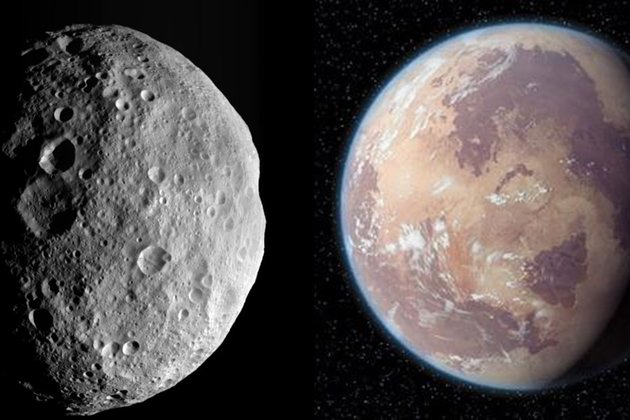
By evaluating the spectrum (light reflecting off their surface, broken down by wavelength) of meteorites and comparing it to asteroids and planets in our Solar System, it has been suggested that diogenites, including Tatahouine, originate from the second largest asteroid in our asteroid belt, known as 4 Vesta.
This asteroid possesses interesting and exciting information about the early Solar System. Many of the meteorites from 4 Vesta are ancient, around ~4 billion years. Therefore, they offer a window to the past events of the early Solar System that we are unable to evaluate here on Earth.
Violent past
The recent study investigated 18 diogenites, including Tatahouine, all from 4 Vesta. The authors undertook “radiometric argon-argon age dating” techniques to determine the ages of the meteorites. This is based on looking at two different isotopes (versions of elements whose nuclei have more or fewer particles called neutrons). We know that a certain argon isotope in samples increases with age at a known rate, helping scientists estimate an age of a sample by comparing the ratio between two different isotopes.
The team also evaluated deformation caused by collisions, called impact events, using a type of electron microscope technique called electron backscatter diffraction.
By combining the age dating techniques and the microscope technique, the authors managed to map the timing of impact events on 4 Vesta and the early Solar System. The study suggests that 4 Vesta experienced ongoing impact events until 3.4 billion years ago when a catastrophic one occurred.
This catastrophic event, possibly another colliding asteroid, resulted in multiple smaller rubble pile asteroids being produced known as “vestoids“. Unravelling large scale impact events such as this, reveals the hostile nature of the early Solar System.
These smaller bodies experienced further collisions that caused material to hurtle to Earth over the last 50 to 60 million years – including the fireball in Tunisia.
Ultimately, this work demonstrates the importance of investigating meteorites – impacts have played a major role in the evolution of asteroids in our Solar System.
Read more: ‘Star Wars’ planet with two suns: a step towards Luke Skywalker’s Tatooine
Author: Ben Rider-Stokes – Post Doctoral Researcher in Achondrite Meteorites, The Open University 
[ad_2]


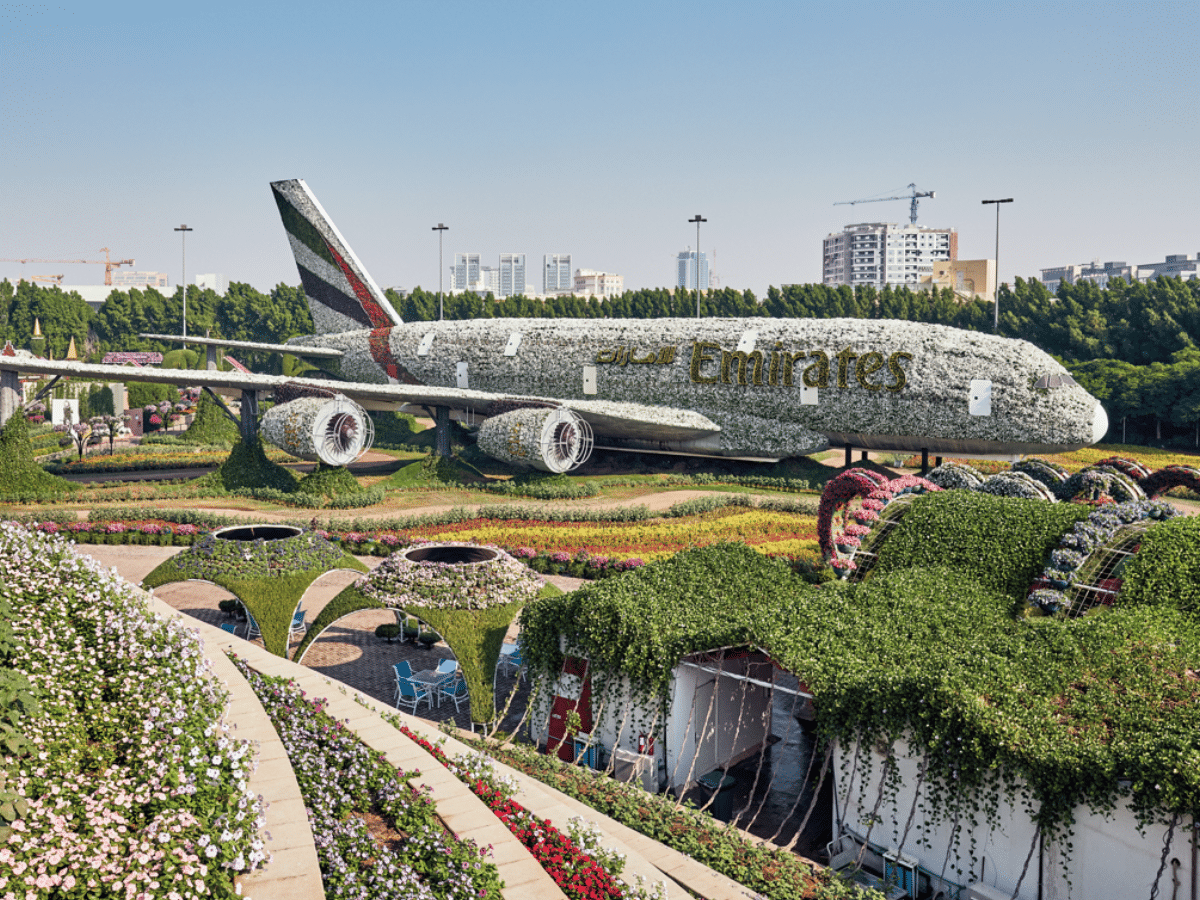

Emirates Dubai 7s is returning to The Sevens Stadium from November 27 to 29, with tickets now on sale for the three-day sports and entertainment festival.
The 2026 edition will bring together international rugby, amateur sports, live music and family entertainment, with organisers promising a bigger programme than previous years.
The festival attracted more than 88,000 visitors in 2025 and will again take place during the final weekend of the Dubai Fitness Challenge.
Ticket prices
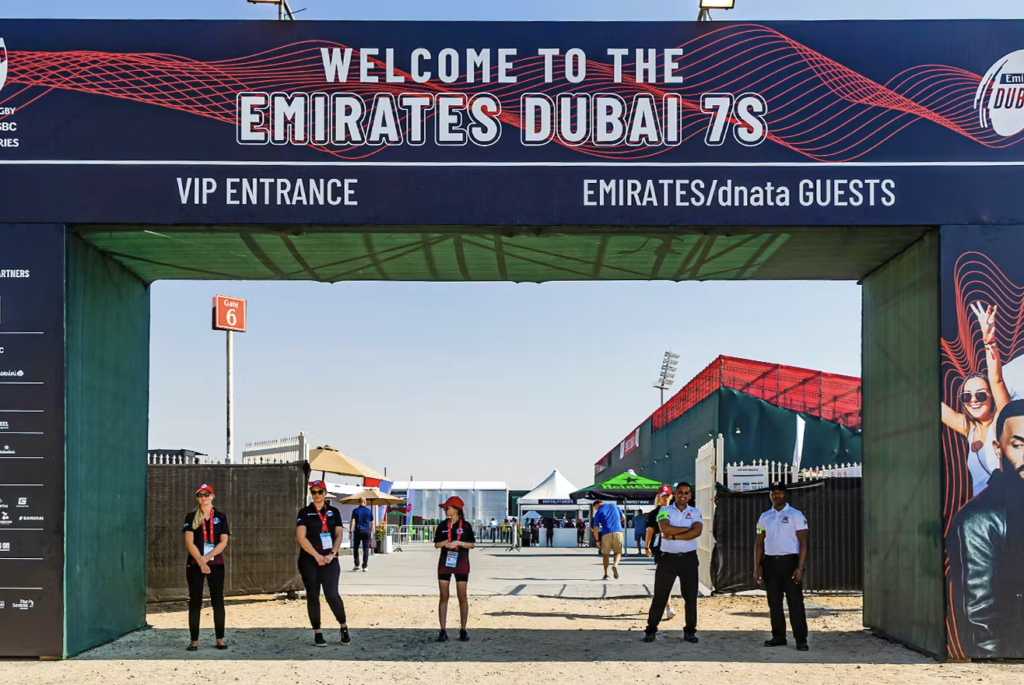
Ticket prices for General Admission and Hospitality have stayed the same for a third consecutive year.
Three-day General Admission tickets cost Dh595 per person, while the three-day Family Pass is Dh1,136 for two adults and two children.
Other ticket options

- Group pass: Dh446 per person for four or more adults
- Saturday or Sunday: Dh455
- Friday: Dh75
- Under 15s: Free
- People of Determination + carer: Dh375
Tickets can be purchased through the Emirates Dubai 7s website and app.
Bigger family attractions

Family entertainment will get a major boost this year as the UAE celebrates the Year of the Family.
The festival will feature its biggest-ever Kids’ Zone, including the UAE’s largest inflatable kids’ zone, along with a Ferris wheel and zipline. More attractions are expected to be announced ahead of the event.
Six sports and top rugby action
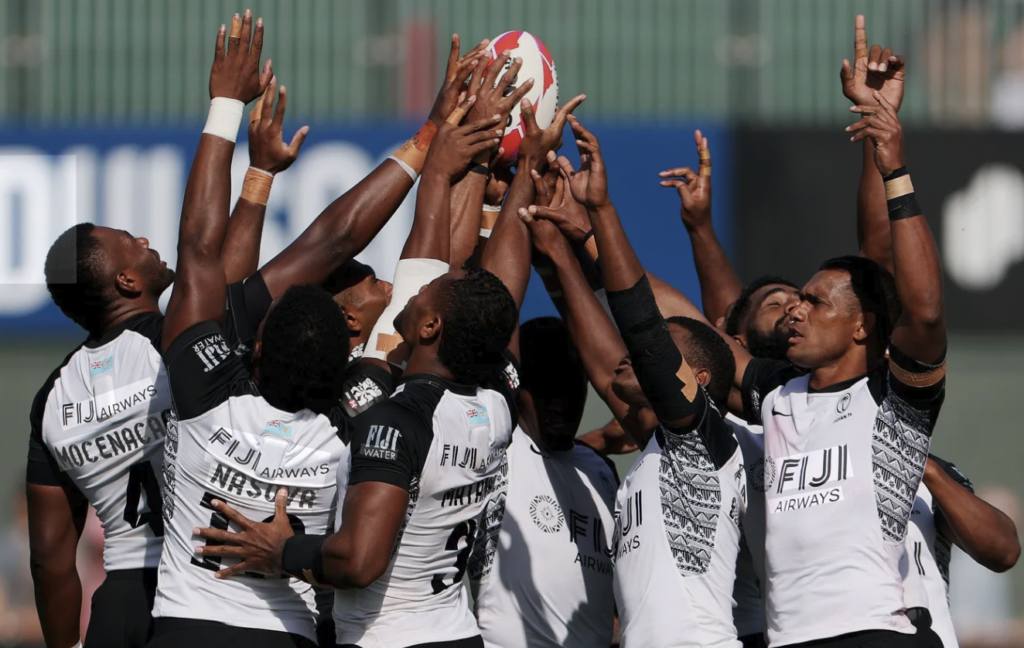
Alongside elite rugby, visitors can watch or take part in competitions across six sports — rugby, netball, cricket, WODON3 fitness, Rebound padel and Gaelic Football.
Gaelic Football will join the festival for the first time in 2026.
The Sevens Stadium will also host the opening round of the HSBC SVNS Series 2027, bringing the world’s leading rugby sevens players to Dubai.
The WODON3 Elite final will take place on Pitch 1 between HSBC SVNS matches, with competitors potentially performing in front of crowds of up to 20,000.
Music all weekend

Live entertainment will run throughout the festival, with local and international artists performing across three days.
Last year’s line-up included Tinie Tempah, Sean Paul and Fisher, while the 2026 headline acts will be announced later.
For a premium experience, The Sunroom returns with all-inclusive food and drinks, shaded seating, prime sporting views and dedicated access. Packages start from Dh1,925 per person.
With sport, music and family attractions packed into one weekend, Emirates Dubai 7s is gearing up for another big Dubai event.
Entertainment
Dubai launches ‘Dubai+’ family streaming platform to boost digital media and creative economy



Dubai Miracle Garden returns as UAE’s cooler season begins

Sultan Al Qasimi Attends Opening of 12th Sharjah Calligraphy Biennial


