Connect with us

Business

Tata’s first super app ‘Neu’ goes live

Published

on

Tata-Neu-app
Spread the love

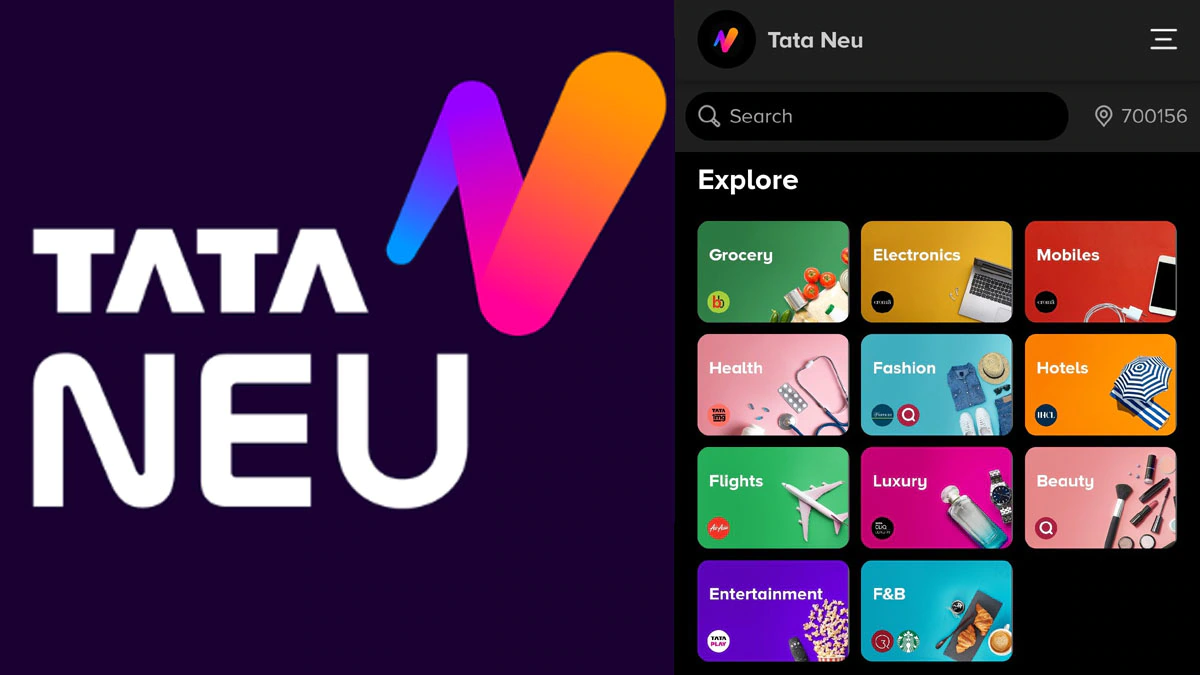
Tata has recently launched its ‘Neu’ app which seamlessly connects and merges product commerce, service commerce and financial service into a consumer-friendly experience that is futuristic and provides a complete experience to the consumer at one stop.

Labelled as the Tata’s first super app, ‘Neu’, was unveiled to the public on April 7, during the IPL match between Delhi Challengers and Lucknow Super Giants.

The application combines many segments of consumer needs, which includes grocery, hotel booking, airline booking and medicine. All these services and more are provided in one single app ‘neu’.

Pratik Pal, CEO, Tata Digital, said the journey of Tata Neu has begun with a cumulative consumer base of 120 million users, 2,500 offline stores, along with an 80 million app footprint across the group’s digital assets.

As the Tata Neu app goes live, it makes me proud to see so many of our trusted and loved brands Air Asia, BigBasket, Croma, IHCL, Qmin, Starbucks, Tata 1Mg, Tata CLiQ, Tata Play, Westside on the Tata Neu platform already. Vistara, Air India, Titan, Tanishq and Tata Motors are soon to join,” N Chandrasekaran, the chairman and head of Tata Sons, wrote in a LinkedIn post.

“Tata Neu is an exciting platform that gathers all our brands into one powerful app. Combining our traditional consumer-first approach with the modern ethos of technology, it is an all-new way to discover the wonderful world of Tata,” he added.

Tata’s new ad to promote its ‘neu’ app.


View this post on Instagram


A post shared by Tata Neu (@tataneuofficial)

The app has been in development for a year. The ‘neu’ app has a loyalty program to retain customers. Each brand on Tata Neu is “connected by a commmon reward called Neucoins, which can be later used to get discounts on products.

Business

UAE warns public as two unlicensed investment firms flagged by regulator

Published

on

Spread the love

The UAE’s Securities and Commodities Authority (SCA) has issued a fresh investor alert, warning the public about two companies operating without the required licences.

In a statement on Friday, December 12, the authority identified XC Market Limited and XCE Commercial Brokers LLC as unlicensed entities, noting that both firms are conducting financial activities without SCA approval.

The regulator stressed that the companies are not authorised to carry out regulated investment services or offer any related financial products in the UAE. It also clarified that it bears no responsibility for any transactions conducted with the firms.

The warning follows a series of recent alerts as part of the SCA’s ongoing push to combat fraudulent operators. Earlier this month, the authority cautioned investors about Global Capital Securities Trading, which was posing as a licensed trading firm. On December 3, it also flagged an entity calling itself the Gulf Higher Authority for Financial Conduct, which was found using a misleading website and falsely claiming regulatory status.

The SCA reiterated that investors should verify the licensing status of any company before engaging in financial dealings, as the regulator continues monitoring for unlicensed operators and cloned platforms targeting the UAE market.


Continue Reading

Announcements

UAE to crack down on businesses not complying with electronic invoicing rules

Published

on

Spread the love

The UAE Ministry of Finance has introduced a Cabinet Resolution imposing administrative fines on businesses that fail to comply with the country’s Electronic Invoicing System (EIS), reinforcing the nation’s drive for digital transformation and stronger tax compliance.

The rules apply to all entities required to adopt EIS under Ministerial Decision No. (243) of 2025. Companies using the system voluntarily are exempt from penalties until compliance becomes mandatory.

Fines include:

  • Dh5,000 per month for failing to implement EIS or appoint an approved service provider on time.
  • Dh100 per electronic invoice not issued or sent on time, capped at Dh5,000 per month.
  • Dh100 per electronic credit note not issued or sent on time, capped at Dh5,000 per month.
  • Dh1,000 per day for not notifying the Federal Tax Authority of system malfunctions.
  • Dh1,000 per day for delays in updating approved service providers on registered data changes.

Officials stressed that the resolution underlines the UAE government’s commitment to international best practices and the development of a fully integrated digital economy.

Continue Reading

Announcements

UAE VAT rules are changing in 2026: Here’s what businesses need to know

Published

on

Spread the love

The UAE’s Ministry of Finance has announced a new set of amendments to the country’s VAT law, with the revised rules taking effect on January 1, 2026. The changes are designed to make the tax system easier to use and more aligned with international best practices.

In a statement, the Ministry said the move supports the UAE’s ongoing efforts to streamline its tax framework and improve administrative efficiency. The updates are also designed to provide businesses with greater clarity and reduce unnecessary paperwork.

Simpler filing, fewer steps

One of the biggest changes removes the requirement for businesses to issue self-invoices when using the reverse charge mechanism. Instead, companies will simply need to keep the usual documents that support their transactions, such as invoices, contracts and records, which the Federal Tax Authority (FTA) can review when checking compliance.

According to the Ministry, this adjustment “enhances administrative efficiency” and provides clear audit evidence without placing extra paperwork burdens on businesses.

Five-year window for VAT refunds

The updated law also introduces a five-year limit for claiming back refundable VAT after accounts have been reconciled. Once this period ends, businesses lose the right to submit a claim. Officials say this helps prevent long-delayed refund requests and gives taxpayers more certainty about their financial position.

Tighter rules on tax evasion

To protect the system from misuse, the FTA will now have the authority to deny input tax deductions if a transaction is found to be linked to a tax-evasion arrangement. This means businesses must ensure the supplies they receive are legitimate before claiming input VAT.

Taxpayers are expected to verify the “legitimacy and integrity” of supplies as part of these strengthened safeguards.

Supporting a competitive economy

The Ministry said the amendments will boost transparency, ensure fairness across the tax system and support better management of public revenue. The updated rules also aim to maintain the UAE’s competitive edge while supporting long-term economic sustainability.


Continue Reading

Popular

© Copyright 2025 HEADLINE. All rights reserved

https://headline.ae/